Queen Rania’s seldom-seen engagement ring still draws attention decades later
Queen Rania’s engagement ring is striking because it feels more like a royal artifact than daily jewelry. Its rare appearances have only sharpened its appeal as a bold, heirloom-minded design.
A ring that appears only when the moment calls for it
Queen Rania’s engagement ring has the kind of presence that lingers long after the hand is lowered. It is vivid, visibly substantial, and tied to one of the most recognizable royal love stories of the 1990s, yet it is rarely worn now, which is exactly why it still fascinates jewelry watchers. When a ring moves from everyday adornment to a piece reserved for major family milestones, its meaning changes: it stops being merely personal jewelry and starts reading like an archive of a marriage.
That shift matters because the ring’s appeal is not just sentimental. It also speaks to a current taste for engagement rings that feel sculptural, intentional, and a little more formal than the default solitaire. Queen Rania’s ring has exactly that quality. It is not trying to disappear into a stack.
The design: bold center stone, vintage framing, and a royal-scale silhouette
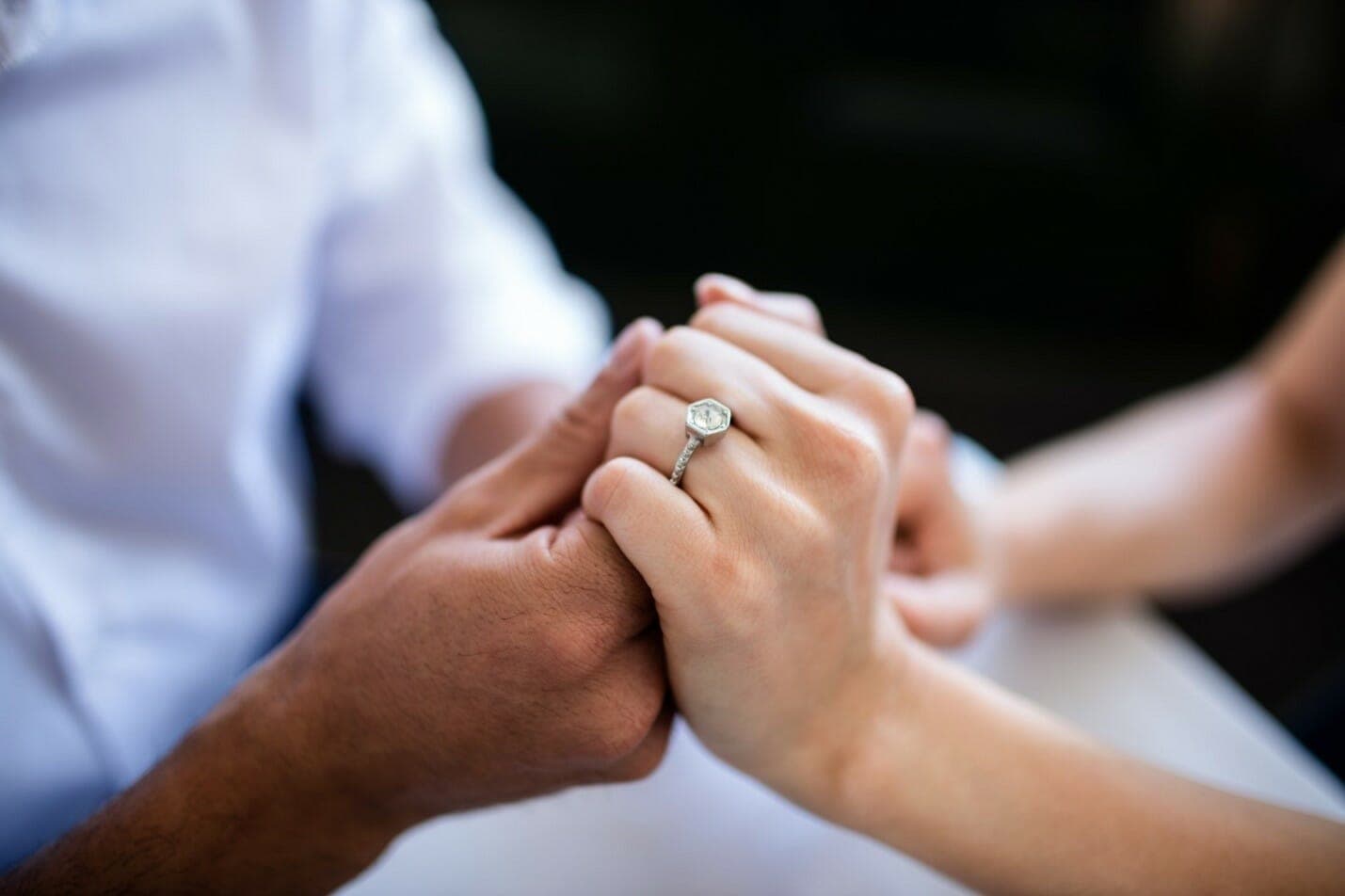
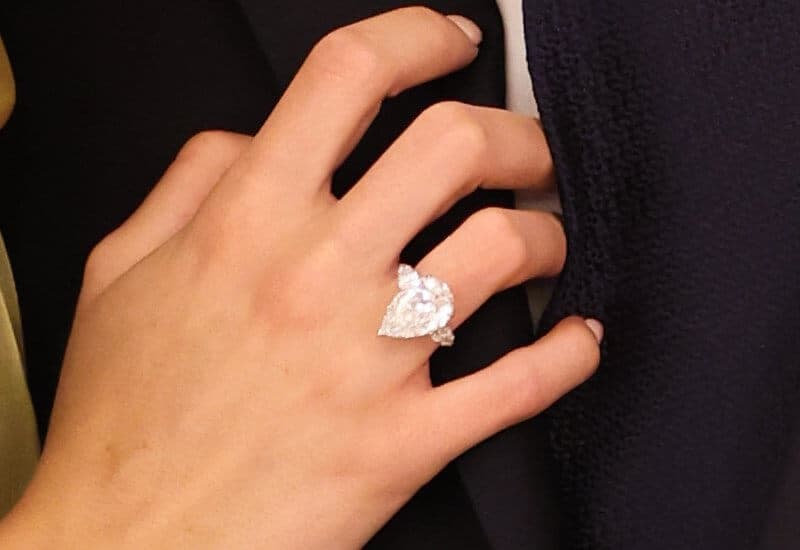
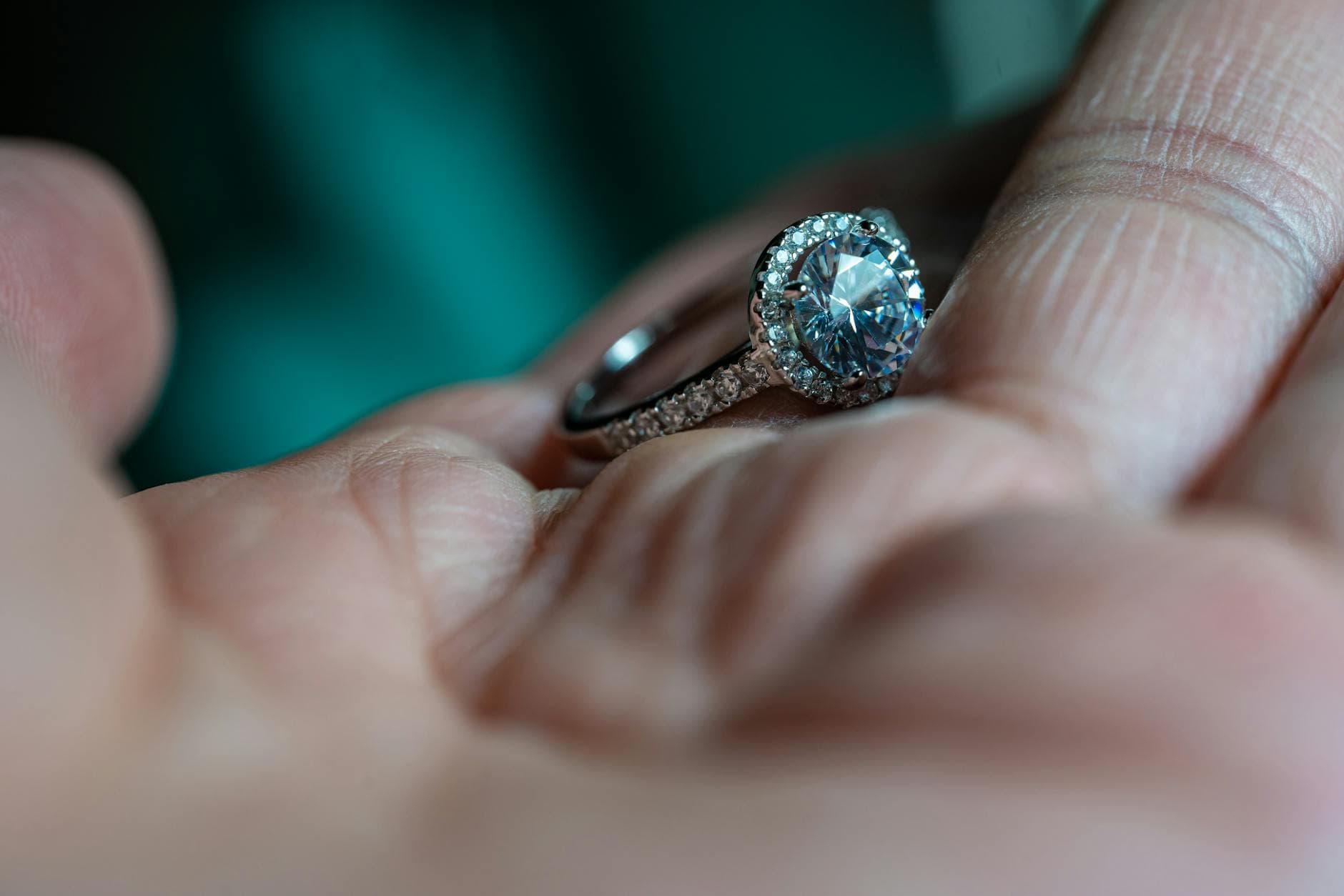
The most widely repeated jewelry reading of the ring comes from Jessica Flinn-Allen, who described it as appearing to be “an oval cut diamond with a vintage-style halo design with a diamond set band.” That description places the ring firmly in the tradition of halo settings, where a central stone is surrounded by a ring of smaller diamonds to enlarge the visual footprint and sharpen the contrast between center and frame. A diamond-set band extends that shimmer down the finger, making the whole piece read as a single uninterrupted statement rather than a lone stone on a plain shank.
Other coverage describes the ring more broadly as a large circular diamond on yellow gold, which is a useful reminder that public descriptions of royal jewels often vary depending on angle, image quality, and how much of the setting is visible. What remains consistent is the impression of scale. Whether you read it as oval or round, haloed or simply large, the ring is undeniably built to be seen.
That is part of what gives it staying power. A bezel would have turned the stone inward and softened its outline. Prongs would have elevated the diamond into a more open, airier profile. Instead, the reported halo and diamond-set band give the ring a denser, more ornate feel, one that sits comfortably alongside the sort of jewelry a queen wears for public life rather than private sentiment alone.
The love story behind the ring was fast, and the timeline still gives it charge
The romance behind the ring was famously swift. Queen Rania and King Abdullah II met at a dinner party in January 1993, became engaged that same month, and married on June 10, 1993, in Amman at Zahran Palace. Royal coverage also notes that they had only been dating for a few months before the wedding, which makes the engagement ring feel even more like a compressed symbol of a relationship moving at full speed.
There is also an important ceremonial detail: the engagement celebration, or Al Fatiha, was held at Rania’s parents’ house on February 22, 1993, where Abdullah gave her a diamond ring. That setting matters. A ring presented in a private family home, before a wedding at Zahran Palace, belongs to a very specific royal geography, moving from intimate domestic space into public state symbolism in a matter of months.
The ring’s emotional force comes from that velocity. It marks not only an engagement, but a life changing almost in real time.
Why the ring still feels modern
Queen Rania broke with tradition at her 1993 wedding by not wearing a tiara, a choice that subtly shifted attention away from the formal machinery of court dressing and toward her own jewelry language. That decision still feels modern because it suggests discernment rather than ornament for ornament’s sake. She was never dressing like a woman who wanted every jewel on at once.
That restraint helps explain why her engagement ring remains so compelling now. In an era when engagement rings often chase either maximal sparkle or bespoke novelty, Rania’s ring occupies a useful middle ground: it is rich, recognizable, and unmistakably special, but it is not overloaded with trend signals. The halo design gives it softness, the scale gives it authority, and the yellow gold reported in other coverage gives it warmth. It is a ring with enough formality to endure.
The fact that she very rarely wears it only deepens that effect. Scarcity turns the ring into a visual event. When it does surface, it reads less like a piece of daily jewelry and more like a ceremonial object, one reserved for moments that matter enough to carry family history with them.
The other jewels help tell the story
Queen Rania is often seen in other signature pieces, including Ralph Masri’s Arabesque Deco ring, which has become part of her recognizable style vocabulary. That contrast is instructive. Rather than relying on the engagement ring as her default emblem, she appears to treat it as one jewel among several, each with its own role in the public narrative she builds through dress.
The ring’s modern relevance became especially clear during Princess Iman’s wedding celebrations in March 2023, when Queen Rania wore it again. That appearance matters because it frames the ring as something activated by family ceremony. It is not absent because it is forgotten. It reappears when the occasion is large enough, and that makes the piece feel inherited in spirit even though it is still very much part of a living marriage.
What Queen Rania’s ring teaches about occasion-only design
The lasting lesson here is simple: an engagement ring does not have to work hardest as an everyday accessory to remain meaningful. Queen Rania’s ring shows the power of designing for memory, not just routine. A stone with presence, a setting with architectural definition, and a metal choice that supports the whole composition can create a jewel that holds up over decades, even if it spends much of that time tucked away.
That approach is especially persuasive for anyone drawn to heirloom-feeling rings. A piece like this does not depend on constant wear to justify itself. It gains value through rarity, through the occasions that summon it back, and through the way it keeps its silhouette intact across changing tastes. Queen Rania’s engagement ring still draws attention because it was made to signify more than sparkle. It was made to endure as part of a royal life, and that is why it remains so arresting now.
This article was produced by Prism’s automated news system from verified source data, official records, and press releases, then run through automated quality and moderation checks before publishing. The system is built and supervised by the people who set the standards it runs under. Read our full AI policy.
Did this article answer your question?