AGTA Confirms GemFair Tucson Dates for 2027, 2028, and 2029
GemFair Tucson is now locked through 2029 with a new Sunday start and 150+ returning exhibitors. Here is your custom-order timeline.
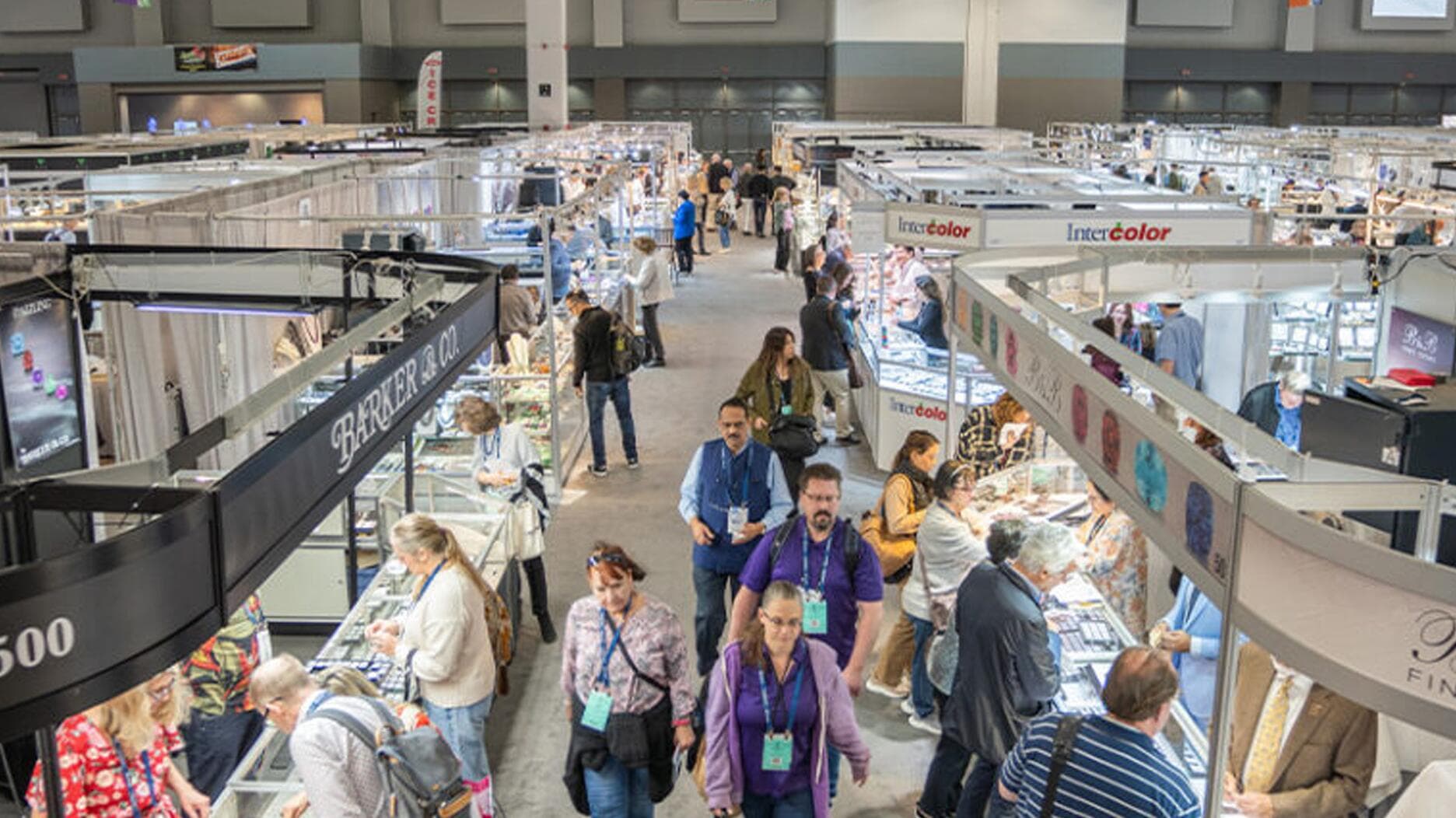
The stones that will eventually become your next significant piece of jewelry are traveling a long road before they reach you. Often starting in a mine in Sri Lanka, Madagascar, or Colombia, passing through a cutter's hands, then landing on a velvet tray at a trade show in Tucson, Arizona, what happens on that convention floor each January determines what your jeweler brings home, what enters the workshop, and ultimately what becomes available for the custom commission you have been considering.
The American Gem Trade Association announced last week that GemFair Tucson will run on a fixed five-day Sunday-through-Thursday schedule for the next three years: January 31 to February 4, 2027; January 30 to February 3, 2028; and January 28 to February 1, 2029. The dates matter to you even if you have never set foot in Tucson, because they set the clock for every sourcing decision between now and the time you sit down with a jeweler to design something.
The scheduling shift carries a detail worth noting: more than 150 companies that skipped the 2026 show are expected to return under the new calendar. The 2026 edition ran Monday through Friday, February 2 to 6, and those absent companies historically favored weekend dates. AGTA board president Bruce Bridges said the board adopted the Sunday-to-Thursday format "with the strategic objective of reengaging the more than 150 companies that did not participate in 2026 and that have historically favored weekend dates." For a collector sourcing through a trusted jeweler, 150 additional vendors means a substantially deeper pool of colored stones to draw from. The pieces those companies carry, and the relationships they maintain with cutters and miners, do not appear in retail showcases when those companies stay home.
Bridges also reported that buyer attendance at the 2026 show rose 7% compared to the same five-day pattern in 2025, and that "the vast majority of exhibitors reporting exceptional results." AGTA CEO John W. Ford Sr. framed the multi-year commitment in terms of logistics: "I am thrilled that AGTA has set the format and the dates for GemFair Tucson for the next three years, allowing our attendees to plan their schedules and coordinate their travel." That planning certainty, designed for exhibitors and trade buyers, is something you can leverage just as deliberately.
GemFair opens each year with the Toast to Tucson Party on the Sunday evening that kicks off the five-day run. The show continues with two days of seminars and closes with the Spectrum and Cutting Edge Awards gala, a recognition ceremony for exceptional colored gemstone and cutting artistry. Specific dates for the seminars and gala have not yet been announced for 2027 through 2029. What this structure means for the working jeweler is that the first serious sourcing conversations happen Sunday through Tuesday. By Wednesday, the strongest stones have frequently found buyers. By Thursday close, what remains on the tables tends to be inventory that did not catch fire early in the week.
If you want a jeweler to source a specific stone for you at Tucson, the conversation needs to start well before they board the plane. October and November, in the year before the show, is the right window to begin a custom project if you want it anchored by a Tucson-sourced stone. A jeweler needs time to sketch, price, and fully understand what you are looking for before they start scanning trays in a crowded convention hall. Approaching a jeweler for the first time in January with a vague wish list, asking them to grab something while they are there, is asking them to shop blind. Bring specifics: approximate carat weight, preferred color saturation (a vivid padparadscha sapphire is a very different commission than a pastel one), country-of-origin preferences if you have them, and a realistic budget ceiling.
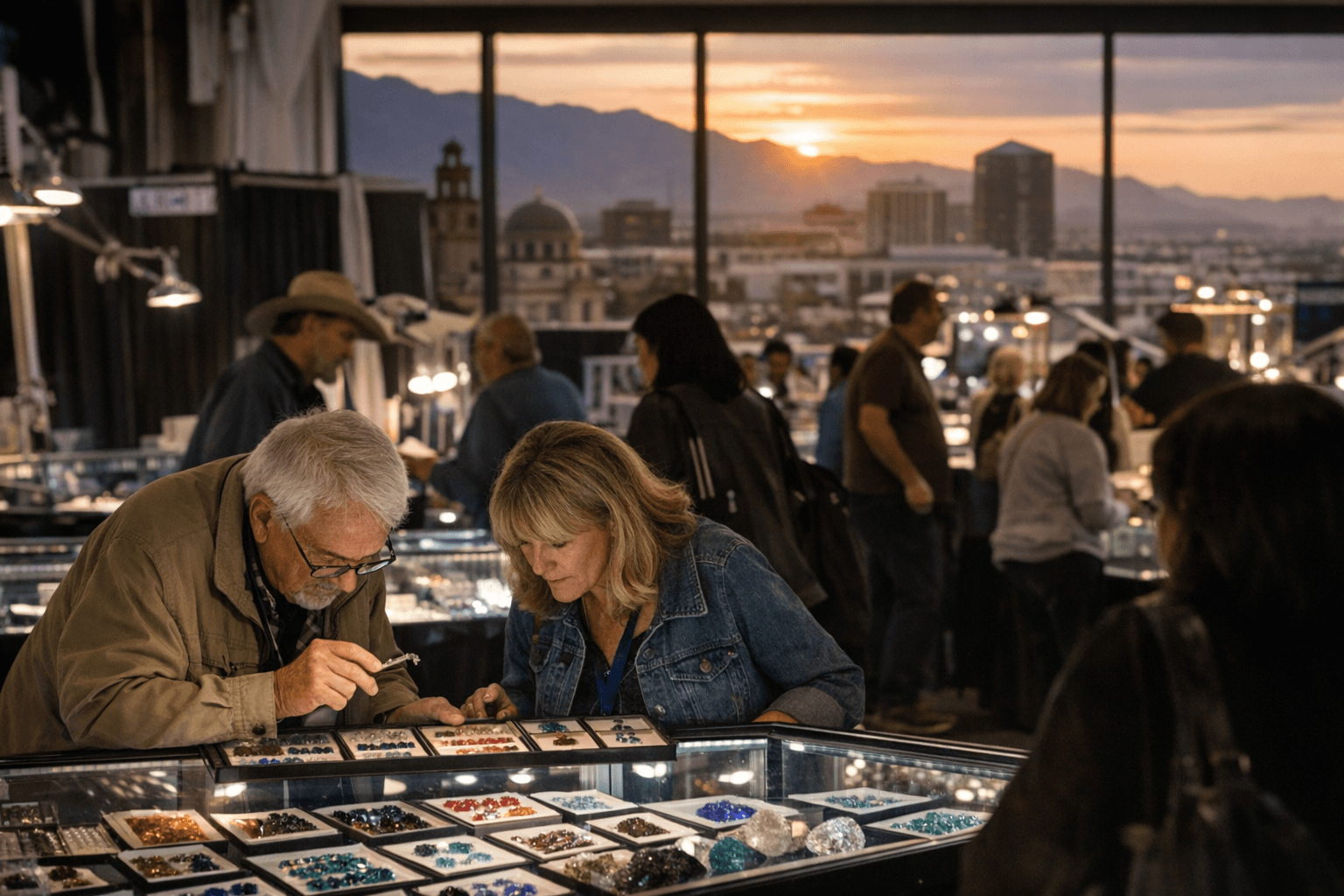
December, six to eight weeks before the January show, is the moment to confirm with your jeweler whether they are attending GemFair. Not every studio sends someone to Tucson, and not every jeweler who attends is positioned to source stones on commission for clients. If yours does not go, ask whether they work with a Tucson-attending supplier who could source on their behalf. The 150-plus companies returning for the Sunday-to-Thursday format means the supply of new colored stones in circulation post-show will be meaningfully larger in 2027 than in 2026, but only for buyers whose jewelers are on the floor.
January, two to three weeks before the show opens, is the time to send your jeweler a written brief. Put your parameters in writing: stone type, approximate size, color description, treatment preferences (many collectors specify unheated, or ask about origin certifications from labs such as Gübelin or GRS), and a firm budget with a stretch number. Ask explicitly whether your jeweler plans to photograph options for your review during the show or bring stones back on memo for you to see in person. Some jewelers will send images directly from the show floor; others make selections and present them afterward. Knowing which working style suits both of you prevents miscommunication when the show is live.
In the weeks immediately following GemFair, mid-February onward, stones sourced on memo typically need to be settled within two to three weeks of the show closing. For the 2027 edition, clear your schedule for a meeting shortly after February 4. Once a stone is selected, the custom work begins in earnest. For a ring or pendant with significant metalwork, a timeline of three to five months from stone selection to finished piece is reasonable. For a simple bezel or tension setting, a skilled bench jeweler can sometimes work faster, but not if they return from Tucson with a full workshop queue.
Late February and March represent a window that patient shoppers sometimes overlook entirely. Stones that exhibitors carry back unsold from Tucson occasionally become available at more favorable terms, particularly from vendors looking to move inventory before their next show commitment. If you are flexible on specific origin or treatment status and are focused primarily on value, ask your jeweler to follow up with their Tucson contacts in the weeks after the show closes.
The 2027 show opens on a Sunday for the first time under the new multi-year schedule. That single-day shift, engineered specifically to bring more than 150 companies back to the floor, means the first Monday morning of that week could be one of the most inventory-rich moments GemFair Tucson has seen in years. Getting your jeweler there, briefed and ready, is entirely a function of the groundwork you lay now.
Know something we missed? Have a correction or additional information?
Submit a Tip