AMBERIF Spring 2026 Spotlights Baltic Amber in Wearable Designs and Trade Education
A Baltic amber piece with a trapped insect inclusion can fetch $2,000 for just 3 grams. Here is how to know if yours is genuine before you buy.

Hold a piece of Baltic amber up to the light and you are looking at something between 40 and 50 million years old: fossilized resin from forests that no longer exist, carrying the occasional ant, beetle, or fly as proof. It is one of the few gemstones that can be verified with table salt. It is also one of the most frequently faked.
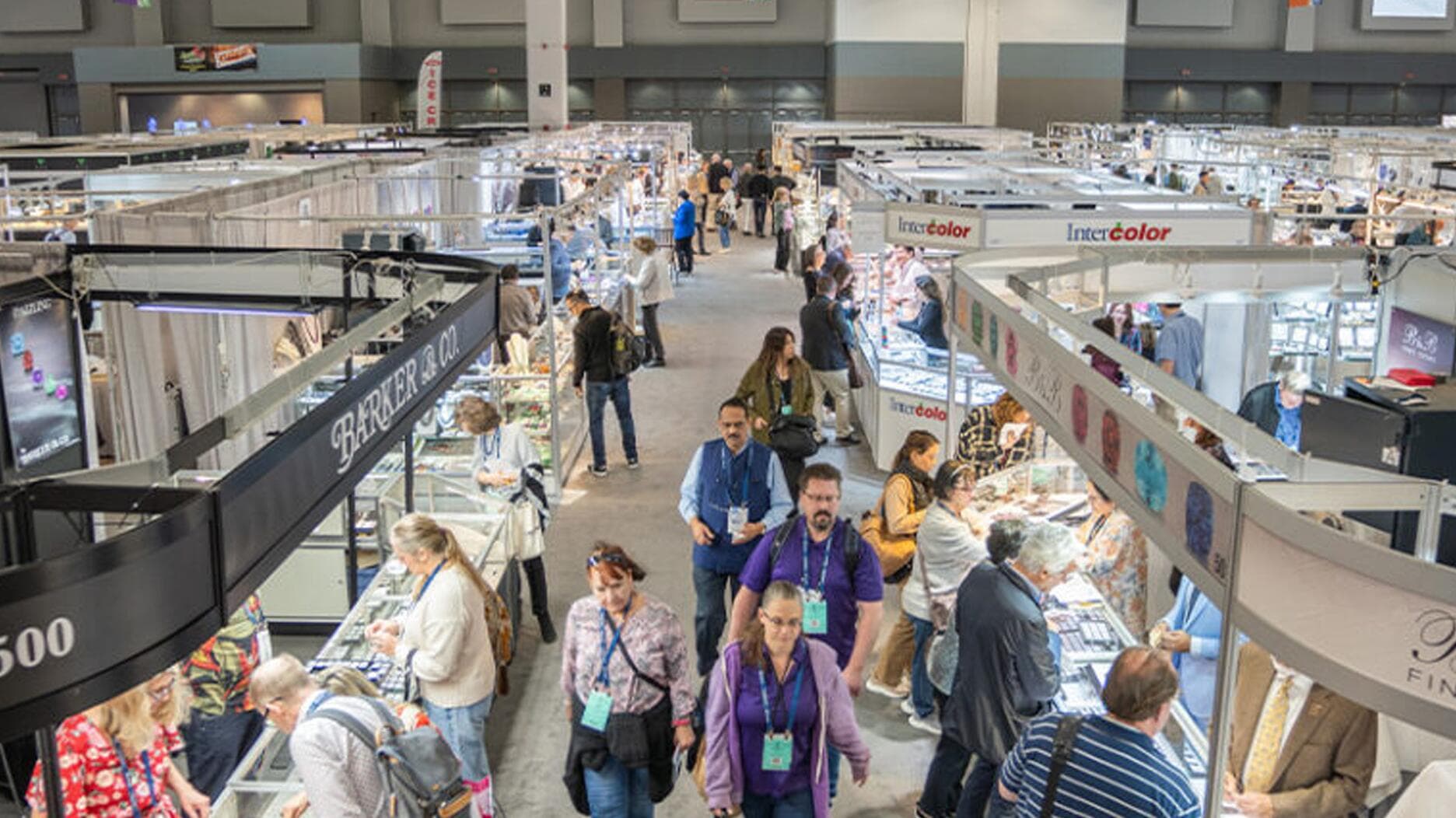
AMBERIF Spring 2026 closed in Gdansk, Poland on Saturday after three days of exhibitions, live craft demonstrations, and an awards ceremony honoring the year's most innovative amber work. Founded in 1994, the fair has grown into what its organizers describe as the world's largest exhibition dedicated to amber and the leading jewelry fair in Central Europe. This spring's edition drew designers and retailers to the AMBEREXPO Exhibition and Congress Centre, where Baltic amber appeared in everything from classical cabochon pendants to sculptural contemporary settings in oxidized silver and polished gold.
The centerpiece of the closing program was the AMBERIF Design Award, whose 2026 theme, "The Magic of Matter," challenged jewelers to reconsider amber as raw material rather than ornament. The previous edition drew 365 entries from 34 countries, making it among the more competitive design prizes in the specialty gemstone world. The companion AMBER Vibes show, staged after the fair's opening day under artistic director Lidia Popiel, featured work by young artists from the Image Creation School Complex in Gdansk alongside established AMBERIF exhibitors, an unusual pairing that made the fair feel less like a wholesale market and more like a genuine conversation about where amber design is headed.
On the exhibition floor, the range of wearable styles was considerable. Traditional polished drops and baroque bead strands shared space with contemporary bezel settings and clean geometric forms that would not look out of place at any fine jewelry fair. The most commercially significant shift was the growing presence of everyday-weight pieces: amber studs, slim chain pendants with a single cognac cabochon, stacking rings set in sterling silver. These are designs built for daily wear, not display cases.
That accessibility, however, comes with a genuine consumer risk. Baltic amber occupies the high end of a market flooded with look-alikes: copal, which is younger tree resin not yet fully fossilized and sometimes sold as amber; pressed amber, reconstituted from chips and dust that have been heated and compressed into solid form; clarified amber, heat-treated to remove natural cloudiness; and outright plastic or glass substitutes. At first glance, several of these convincingly mimic the real thing. The difference in price, and in what you actually own, is significant.
The salt water test is the most accessible starting point. Dissolve three tablespoons of table salt in two cups of warm water and drop in your piece: genuine Baltic amber floats because its density sits close to that of salt water, while glass and most plastics sink. A second confirmation comes from static electricity. Rub the piece briskly against a wool or flannel cloth and hold it near small scraps of paper. Real amber generates a static charge and will attract them; most fakes will not. For those with access to acetone, a drop applied to an inconspicuous spot will leave genuine amber unaffected, while plastic becomes tacky or partially dissolves.
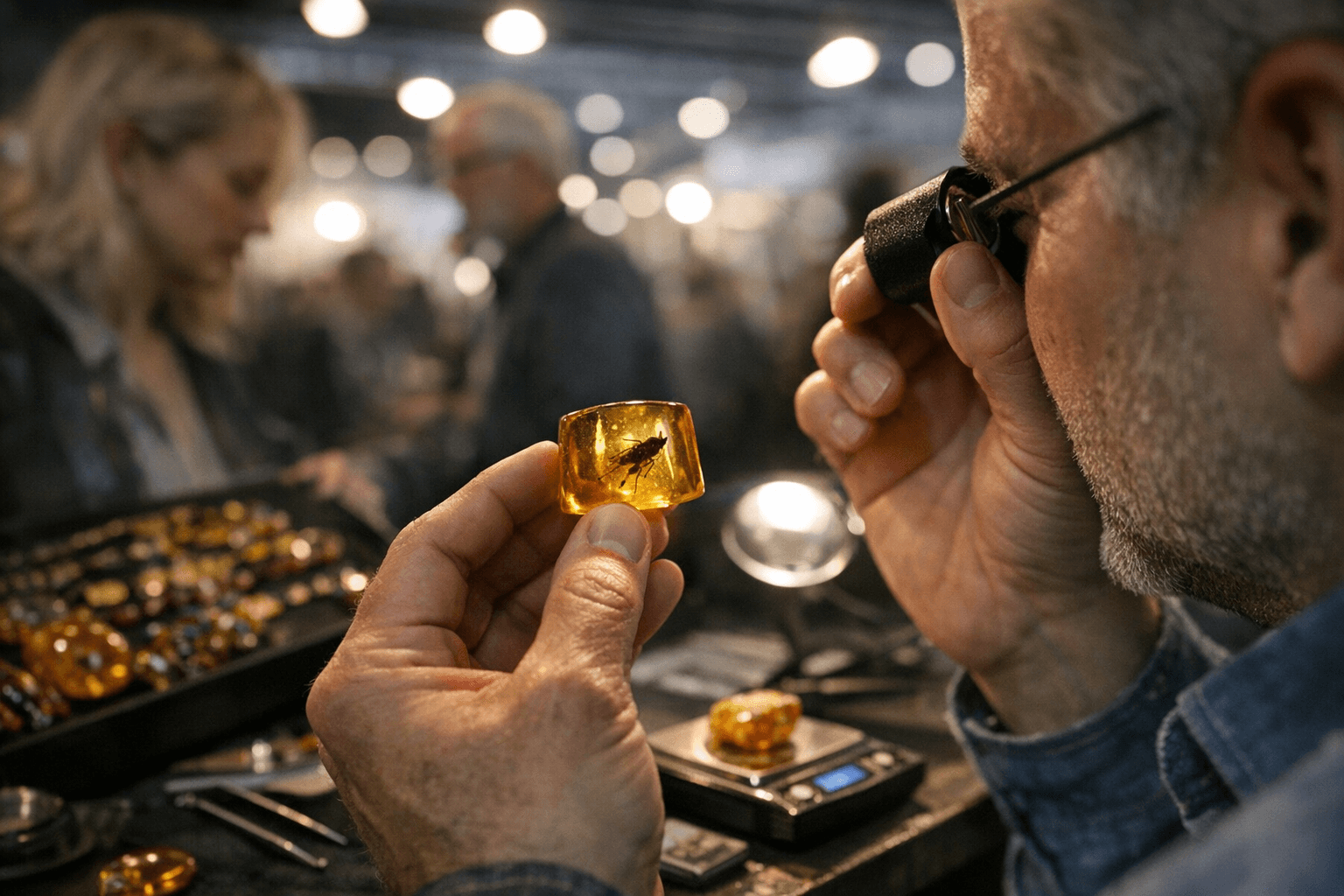
Inclusions are the most elegant authentication tool and the most visually rewarding. Baltic amber frequently contains plant material, air bubbles, or trapped insects representing species that lived 40 to 50 million years ago, many now extinct. These biological inclusions cannot be replicated in synthetic material. When evaluating a piece with an apparent inclusion, look at the surrounding amber under magnification: in genuine stones, the amber flows around the organic material, often with micro-fractures radiating outward from the trapped object. Inclusions in fakes tend to sit artificially centered, with the surrounding material uniformly and suspiciously clear.
Pressed amber deserves its own attention because it is technically made of amber, just not in one piece. Reconstituted from amber chips under heat and pressure, it is legal to sell but should always be disclosed and priced accordingly. Under polarized light it shows a characteristic mosaic or flow pattern absent in natural material. Without polarized equipment, look for air bubbles arranged in elongated, parallel lines rather than the irregular, organic clusters found in unprocessed pieces.
Understanding price helps calibrate expectations before any transaction. Common jewelry-grade Baltic amber trades at roughly $5 to $50 per gram; natural, clear material falls at the upper end of that range. A single polished five-to-ten-gram piece suitable for a pendant runs from approximately $50 to $800 depending on clarity and color, with rare colors, among them green, blue, and milky white, commanding premiums at every size. Small amber pieces with a confirmed, well-preserved insect inclusion can reach $100 to $2,000 for just one to three grams. Round butterscotch bead strands in the 10-to-15-millimeter range run approximately $13 to $15 per gram at retail. The baseline rule: if Baltic amber pricing feels like a fashion accessory bargain, examine the piece carefully before committing.
Caring for amber well is straightforward but specific. Warm water and a drop of mild soap, applied with a soft cloth, is the cleaning method the Gemological Institute of America recommends. Skip ultrasonic cleaners, steam, and chemical jewelry dips entirely. Dry immediately with a lint-free cloth; prolonged water exposure softens and damages the surface over time. If the piece has gone dull, a small amount of amber-specific wax or a touch of olive oil, buffed gently, restores luster. Store amber separately from harder stones: at a Mohs hardness of 2 to 2.5, it scratches easily against diamonds, quartz, or even most metal hardware. Keep it away from direct sunlight, sustained heat, and synthetic fragrances; the chemicals in perfume and hairspray cloud the surface quickly. Remove it before exercise, swimming, or anything involving impact or heavy perspiration.
Before committing to any purchase, a short conversation with the seller reveals everything essential. Ask directly whether the piece is natural, untreated Baltic amber or has been heat-treated, clarified, or pressed. Reputable sellers answer without hesitation. Follow with a request for a certificate of origin or gemological report; well-sourced material can be traced to specific regions, and the Lithuanian Assay Office issues widely recognized certifications. Then ask for the weight in grams and the per-gram price: that calculation immediately reveals whether the pricing makes sense for the claimed quality tier. If the piece contains an inclusion, ask the seller to identify it and explain how they verified it. A confident dealer working with natural material will know. Finally, ask about the return policy if you choose to have the piece independently tested. A seller who answers that question easily is, in itself, a form of authentication.
AMBERIF has been transmitting this curriculum to the trade since 1994. The question, as always, is whether buyers encounter it at the retail level. The best pieces from Gdansk's exhibition floor will find their way into boutiques and online shops without the fair's educational context around them. Knowing how to read a piece of amber before you buy it, which tests to run, which inclusions to study, and what the per-gram math should look like, is the only way to carry that knowledge with you.
Know something we missed? Have a correction or additional information?
Submit a Tip