De Beers London refreshes Lotus collection for everyday wearers
De Beers London’s Lotus refresh turns a signature diamond motif into a case for self-bought jewelry that can earn a place in daily rotation.

Why Lotus feels relevant now
De Beers London is making a sharp argument for jewelry that lives outside the velvet box. The refreshed Lotus campaign is built for the self-purchasing woman, with slimmer profiles, stackable rings, and a promise that fine jewelry can function as a constant, not a special-occasion exception.
That message matters because the center of gravity in luxury jewelry has shifted. A 2025 De Beers-linked survey found that more than 40% of women expected to purchase or receive natural diamond jewelry in the next two years, and 23% expected to buy jewelry for themselves. By February 2026, Jewelers Mutual was still describing self-purchasing as a durable behavior, driven by personal milestones, holidays, and the very human logic of “just because.” In other words, the emotional case for buying has become as important as the ceremonial one.
A signature motif, sharpened for daily life
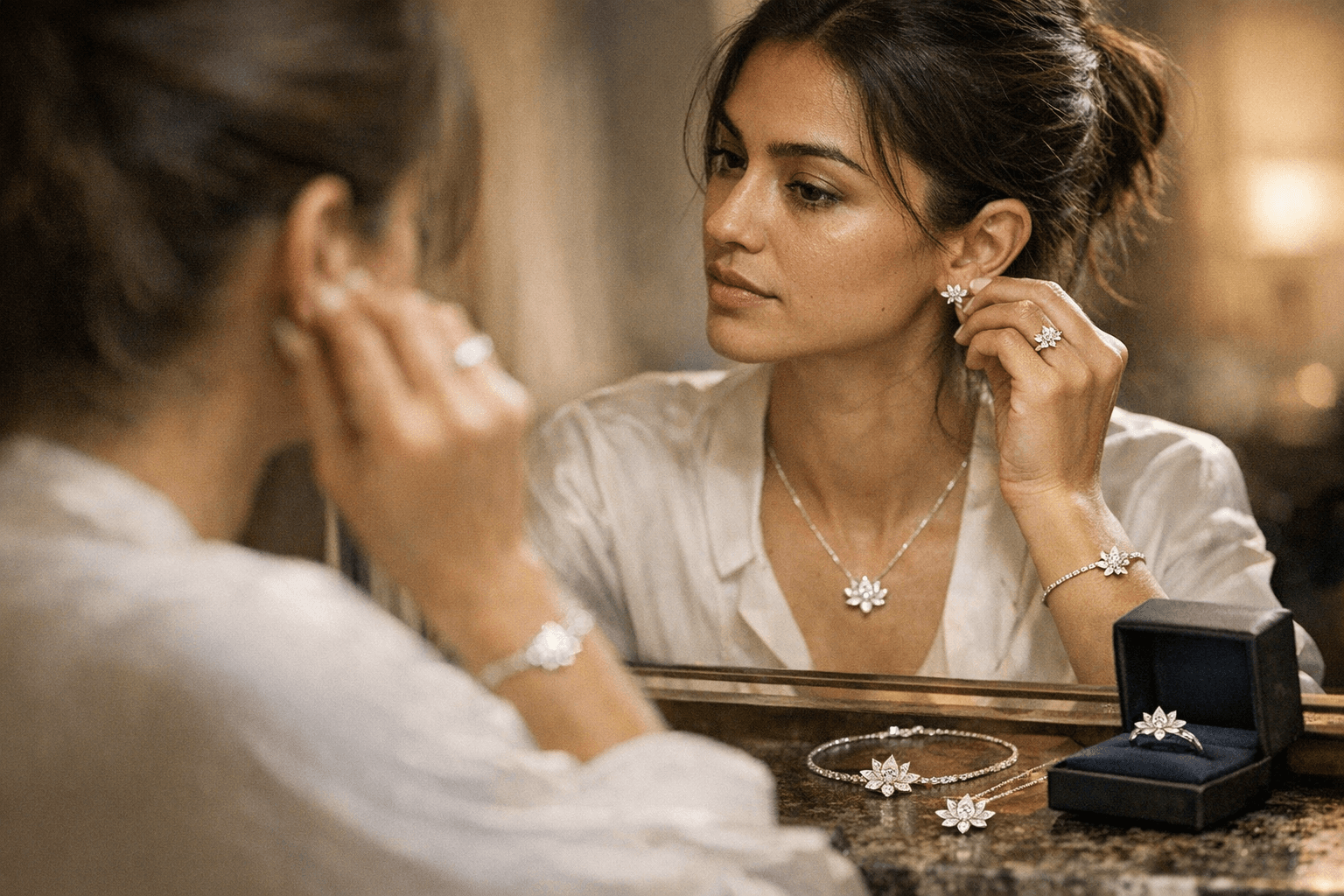
Lotus by De Beers is not a new idea dressed up as one. De Beers says the collection has been a signature of De Beers London since 2009, and its identity still comes from the lotus flower’s four-petal silhouette. The pieces are crafted in white and rose gold and centered by a round brilliant diamond, which keeps the design legible at a glance and easy to wear across different wardrobes.
The motif also carries a geographic and symbolic resonance that gives it more depth than a simple floral outline. De Beers says the lotus pays tribute to the wetlands of southern Africa, especially Botswana’s Okavango Delta, a landscape the house describes through water, light, and cyclical renewal. That connection matters because it gives the collection a narrative beyond decoration: the jewelry is meant to suggest continuity, not ornament for its own sake.
The refresh is about proportion, not reinvention
What changed in the 2026 campaign is less the identity of Lotus than its scale and attitude. De Beers says the pieces are designed to be worn from morning to night, alone or layered, and the campaign leans into movement and permanence as a dual idea. That is exactly where everyday luxury succeeds now: the piece must be recognizable enough to feel intentional, but restrained enough to disappear into real life.
Slimmer silhouettes are part of that equation. A ring or pendant that sits closer to the hand or body feels less fragile in practice, and it reads as more versatile when paired with watches, wedding bands, or other stacks. In the hierarchy of daily jewelry, the most compelling pieces are often the ones that do not demand a costume change, and the Lotus refresh understands that subtlety is a form of confidence.
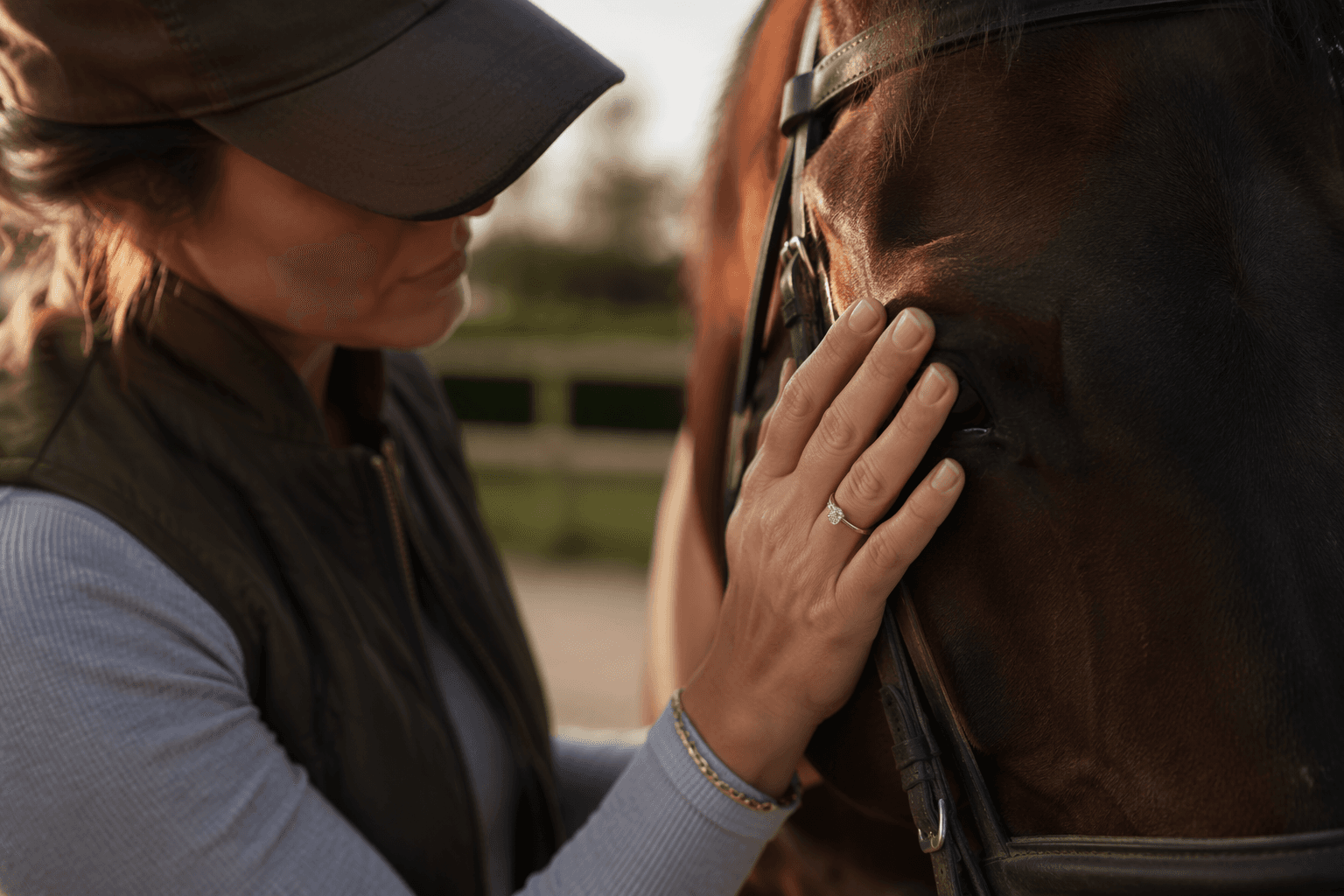
The campaign imagery reinforces that point. Shot by Anthony Seklaoui and brought to life in film by Ben Miethke in London, the visual language is intimate rather than theatrical. That choice matters because it frames the jewelry as part of a personal rhythm, not a display case fantasy.
The brand context makes the shift more significant
De Beers London’s repositioning did not begin with this campaign. In February 2025, De Beers Jewellers was renamed De Beers London, aligning the house with London as a global luxury capital. That change gave the brand a cleaner, more contemporary identity, and Lotus now functions as one of its clearest expressions.
Seen in that light, the refreshed collection is less a product drop than a statement of intent. The house is trying to meet a customer who wants recognizable fine jewelry, but wants it to work hard enough to justify frequent wear. That is a different proposition from old-school occasion jewelry, where beauty was often tied to scarcity of use.
What makes a piece feel worth repeating
The best endurance jewelry has a few things in common, and Lotus shows how those cues work in practice:
- A silhouette you can recognize immediately, but that does not overpower a look.
- Precious metals that feel polished rather than precious in a fragile way, as white and rose gold do here.
- A central stone or focal point that anchors the design without making it overly formal.
- A profile that can sit comfortably beside other pieces, especially in a stack.
- A design story strong enough to make the piece feel personal after the first wear, not just expensive.
That last point is crucial. Jewelry gets repeated when it feels attached to identity, not trend. Lotus’s lotus flower shape, its Okavango Delta reference, and its long-running status inside the house all help it read as something with memory, which is often what buyers are really paying for when they spend more on a piece they plan to wear often.
Why self-purchase is reshaping fine jewelry
The self-buying consumer is not necessarily looking for a one-time statement. She is often looking for a piece that can mark a promotion, a move, a birthday, a difficult year, or simply the satisfaction of choosing beauty on her own terms. That is why De Beers’ research, paired with the Jewelers Mutual view of self-purchasing, is so useful: it shows that the market is no longer organized only around engagements and anniversaries.
A 2025 Ipsos and De Beers survey of 18- to 74-year-olds found that more than 40% of women and 50% of men expected to purchase or receive natural diamond jewelry in the next two years, with 23% of women expecting to acquire jewelry for themselves. That is a striking signal for a category once defined by gifting rituals. It suggests that fine jewelry is increasingly being purchased for continuity, not just ceremony, and that everyday wearability is now central to the value proposition.
The appeal of Lotus is emotional as much as visual
The cleverness of the refreshed Lotus collection is that it translates a poetic idea into something practical. The campaign’s tension between movement and permanence is not just branding language; it is the reality of how jewelry is actually worn. If a piece can move with a day full of handwashing, commuting, working, dinners, and small interruptions, while still feeling composed, it has earned its place.
That is the standard today for jewelry that justifies repeat wear and higher spend. It must be beautiful, of course, but it also has to withstand the ordinary. Lotus succeeds because it does not ask to be saved for later, and that may be the most modern luxury gesture of all.
This article was produced by Prism’s automated news system from verified source data, official records, and press releases, then run through automated quality and moderation checks before publishing. The system is built and supervised by the people who set the standards it runs under. Read our full AI policy.
Did this article answer your question?