Designers turn to wood and leather as gold prices soar
Soaring gold prices are pushing jewelry beyond shrinkage, toward wood, leather, platinum and silver in pieces that feel more considered than compromised.

The new luxury response to expensive gold
Gold has become so costly that designers are no longer treating it as the only answer. With the metal briefly touching $3,500 an ounce in April 2025, the pressure has moved beyond price tags and into the grammar of design itself: fewer grams, yes, but also smarter construction, more intentional collections, and a wider material palette that makes room for wood, leather, fabric, ceramic and resin.
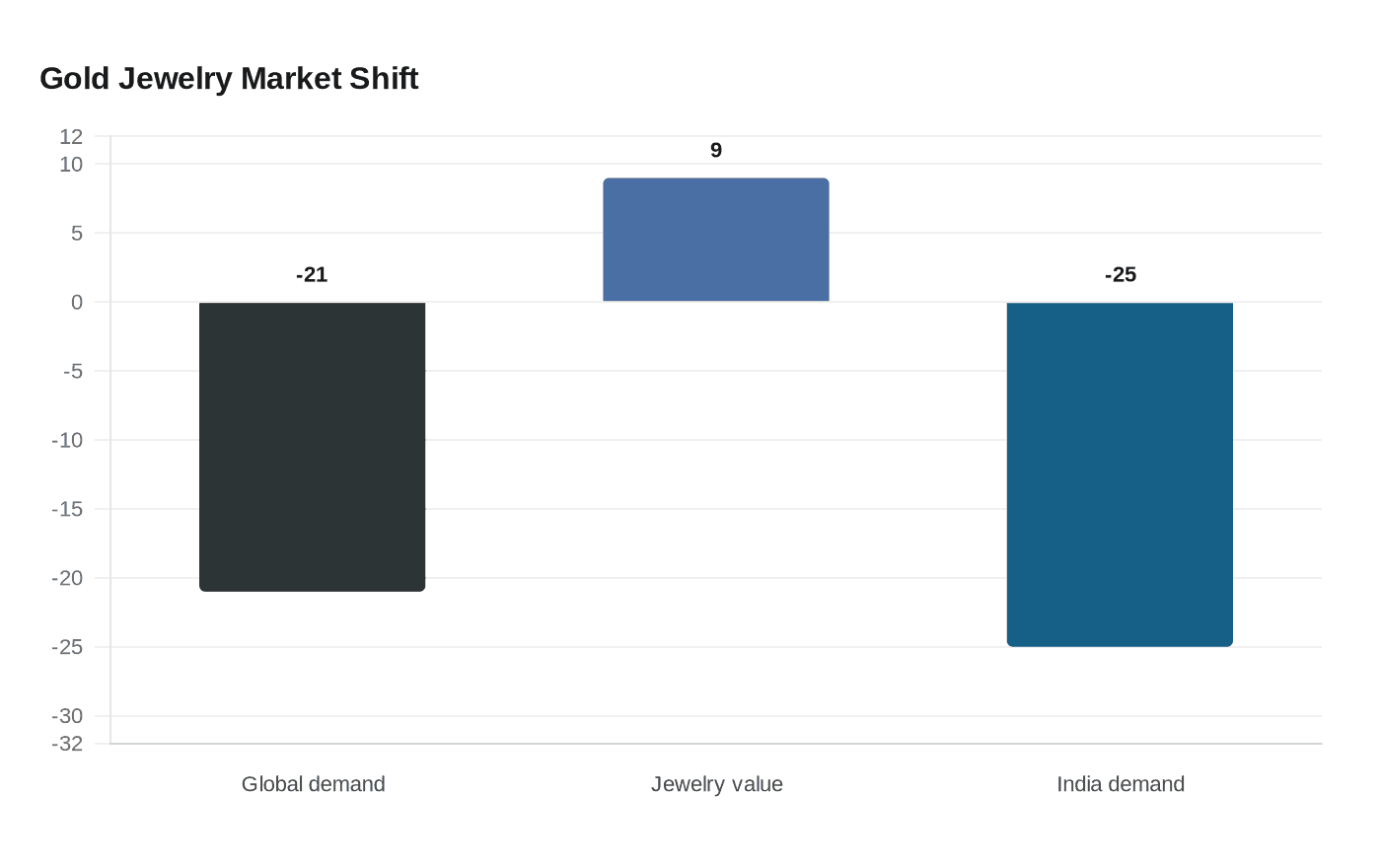
That shift matters because the market is not merely getting pricier, it is changing shape. The World Gold Council said global gold-jewelry demand in the first quarter of 2025 fell 21 percent year over year to 380 tonnes, even as the value of jewelry consumption rose 9 percent to $35 billion. In China, demand hit a five-year Q1 low, and in India it fell 25 percent year over year to 71 tonnes. When affordability bites this hard, the next design language often comes from necessity.
Less gold, but not less design
Some makers are responding by trimming weight, a practical move that preserves the visual presence of a piece while using less metal. Independent jewelers have also been shifting from white gold to platinum or silver, while larger houses can hedge and buy in bulk, giving them more room to absorb volatility. The difference is structural: the big players can buffer the shock, while smaller designers have to build their collections around it.
That reality has produced a more deliberate kind of jewelry making. A 2025 industry report described jewelers altering designs, using gold plating more strategically, sourcing from countries with ample deposits, or pivoting away from gold jewelry altogether. In November 2025, WWD noted independent jewelers were reducing the weight of solid-gold pieces and leaning more often on platinum and silver. Stephen Webster, one of the most recognizable names in contemporary jewelry, said he was steering clients from white gold to platinum, a notable move because platinum was about one-third the price of gold at that moment.
Why wood and leather are more than substitutes
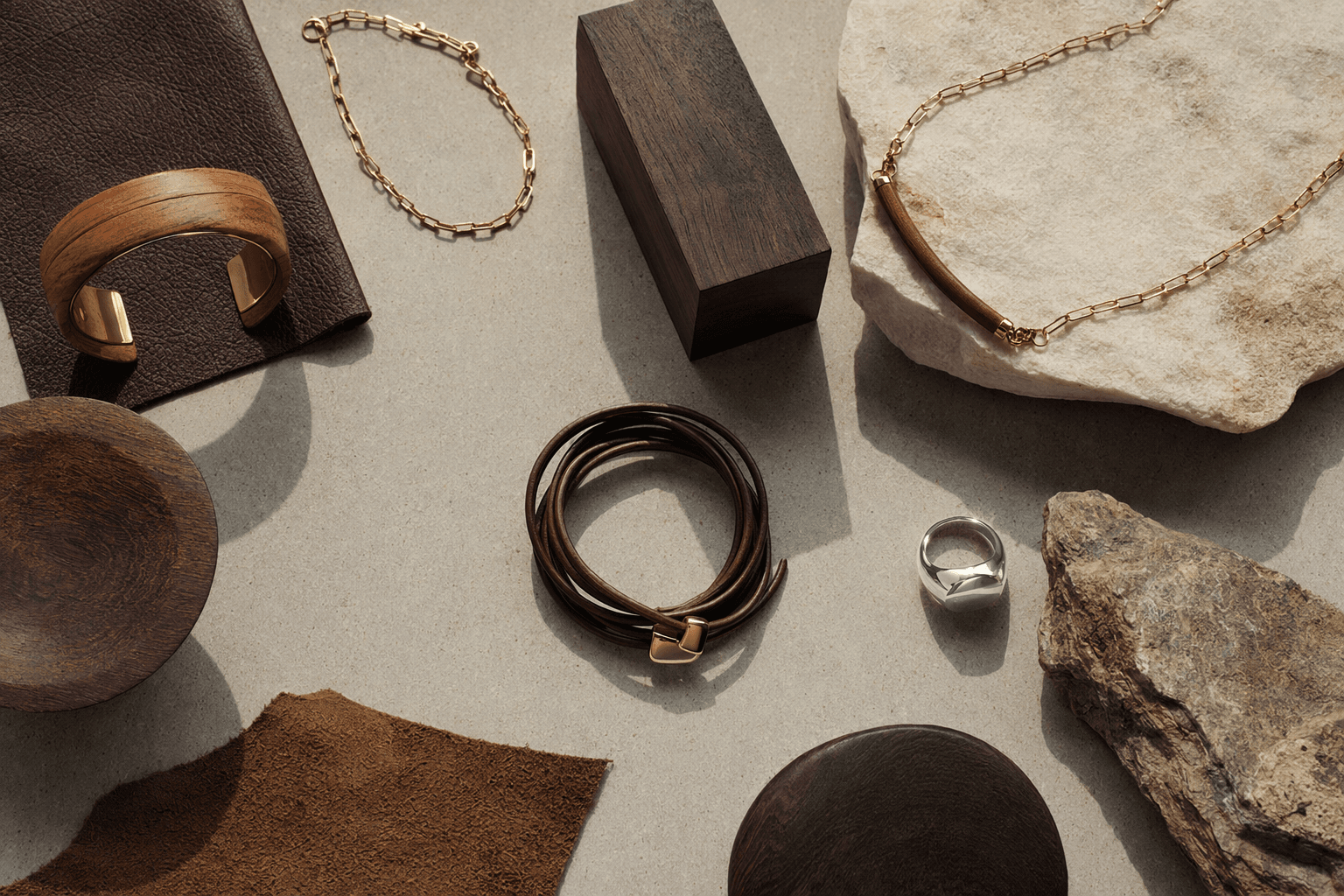
The most interesting response to gold’s climb is not subtraction, but substitution with purpose. Designers are working with wood and leather not as filler, but as tactile counterpoints to metal, materials that can soften the formality of fine jewelry and give it a more grounded, wearable character. In the best hands, these accents do not cheapen a piece. They change its temperature.
That is where the new creative advantage lies. Wood, when ethically sourced and properly treated, can read as luxurious rather than rustic, especially when paired with polished gold details or set into precise geometric construction. Leather brings flexibility and warmth, while also allowing designers to rethink how a necklace or bracelet moves against the body. The result is jewelry that feels less like a fixed object and more like part of daily dress, which is exactly where the market is headed.
Material mix is becoming the new signature
Fabric, ceramic and resin have joined wood and leather in the broader vocabulary of unconventional jewelry design. Their appeal is not just economic, though cost pressure certainly helps. These materials offer color, texture and scale that precious metals alone cannot always provide, especially when designers want volume without a punishing gold bill.
That is a meaningful break from the old assumption that luxury must be defined by density. A piece can now feel rich because of its contrast, a gold clasp against leather, a polished setting around carved wood, a ceramic element that catches light like a stone. This is especially compelling in everyday jewelry, where a more relaxed material mix can make a piece feel less ceremonial and more lived-in, without sacrificing craftsmanship.
The long view: this is not a new instinct
The current turn toward unconventional materials also has a deeper precedent. Indian jewelry traditions have long incorporated materials outside the expected precious-metals-and-gemstones formula, from Harappan conch-shell bangles to jadeite archer’s rings from Shah Jahan’s era. That history matters because it reframes today’s experiments as part of a longer pattern of material intelligence, not a desperate workaround.
Seen that way, the present moment looks less like a decline in luxury and more like a reset. Designers are being reminded that value in jewelry has never come from gold alone. It comes from proportion, ingenuity, wearability and the emotional logic of how a piece sits on the body.
What this means for the next definition of fine jewelry
The strongest takeaway is that the most resilient designers are not simply making everything smaller. They are deciding where gold should still do the heavy lifting, where silver or platinum can take over, and where wood or leather can introduce character that metal cannot. That is a more mature response to scarcity than shrinkage alone.
For buyers, this may change what feels worth investing in. The future of fine jewelry may be less about the total weight of gold and more about the intelligence of the build: a slimmer solid-gold frame, a platinum setting that preserves value, a leather cord that gives a necklace ease, a wood inlay that turns a familiar form into something memorable. The compromise is real when a piece is merely stripped down. The creative progress begins when material limits force better ideas.
This article was produced by Prism’s automated news system from verified source data, official records, and press releases, then run through automated quality and moderation checks before publishing. The system is built and supervised by the people who set the standards it runs under. Read our full AI policy.
Did this article answer your question?