GIA guide shows how to choose diamond studs for daily wear
Diamond studs earn their keep when the cut, scale, metal and backing vanish into the day, leaving only a polished flash that works from desk to dinner.
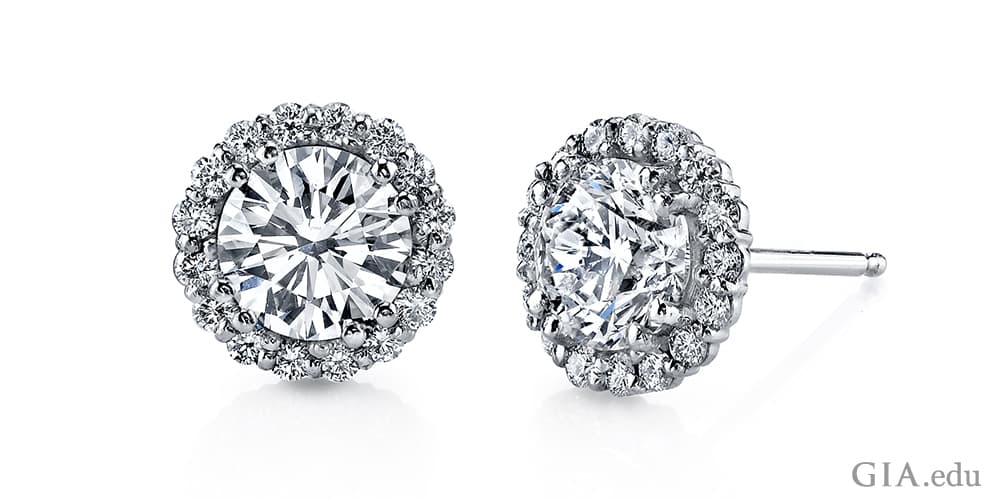
Diamond studs sit close to the ear, stay clear of scarves and collars, and move from tailoring to denim without asking for an outfit change. That is exactly why the details matter more than the carat weight alone.
Why the right pair disappears into daily life
GIA, established in 1931, set out its online guide to diamond stud earrings on May 30, 2018. The 4Cs, cut, color, clarity and carat weight, are the universal standard for judging diamond quality. In that framework, quality is tied to price, but for everyday studs the real question is whether the pair looks polished from morning to night without snagging, drooping, or feeling precious.
Cut is the first place to look because studs are usually seen from conversational distance, not under a loupe. A well-cut pair can look brighter and more lively than a larger pair with weaker proportions, which is why “bigger” is often the wrong goal for earrings meant to live in the drawer by the bed and on the ear all week.
Start with the 4Cs, then judge the earring on the ear
Color and clarity still matter, especially because studs sit close to the face and stay visible all day. The grading language is precise, but the everyday test is visual: the diamond should look crisp and lively in ordinary light, not only under bright counters and showroom spots.
Carat weight deserves the most restraint. A common benchmark is 1/2 carat each, which is why many everyday pairs cluster around modest sizes rather than statement-scale stones. That middle ground can feel intentional and refined, while oversized studs often lose the very quality that makes them useful, comfort.
A smaller pair with strong cut quality will usually read as more polished than a heavier pair that looks sleepy.
Scale is the difference between elegant and exhausting
Frank Darling’s visual guide centers size and proportion in the decision. The best everyday studs are scaled to the face and the lobe, not to an abstract carat number, so they look like part of the person wearing them instead of a detachable event.
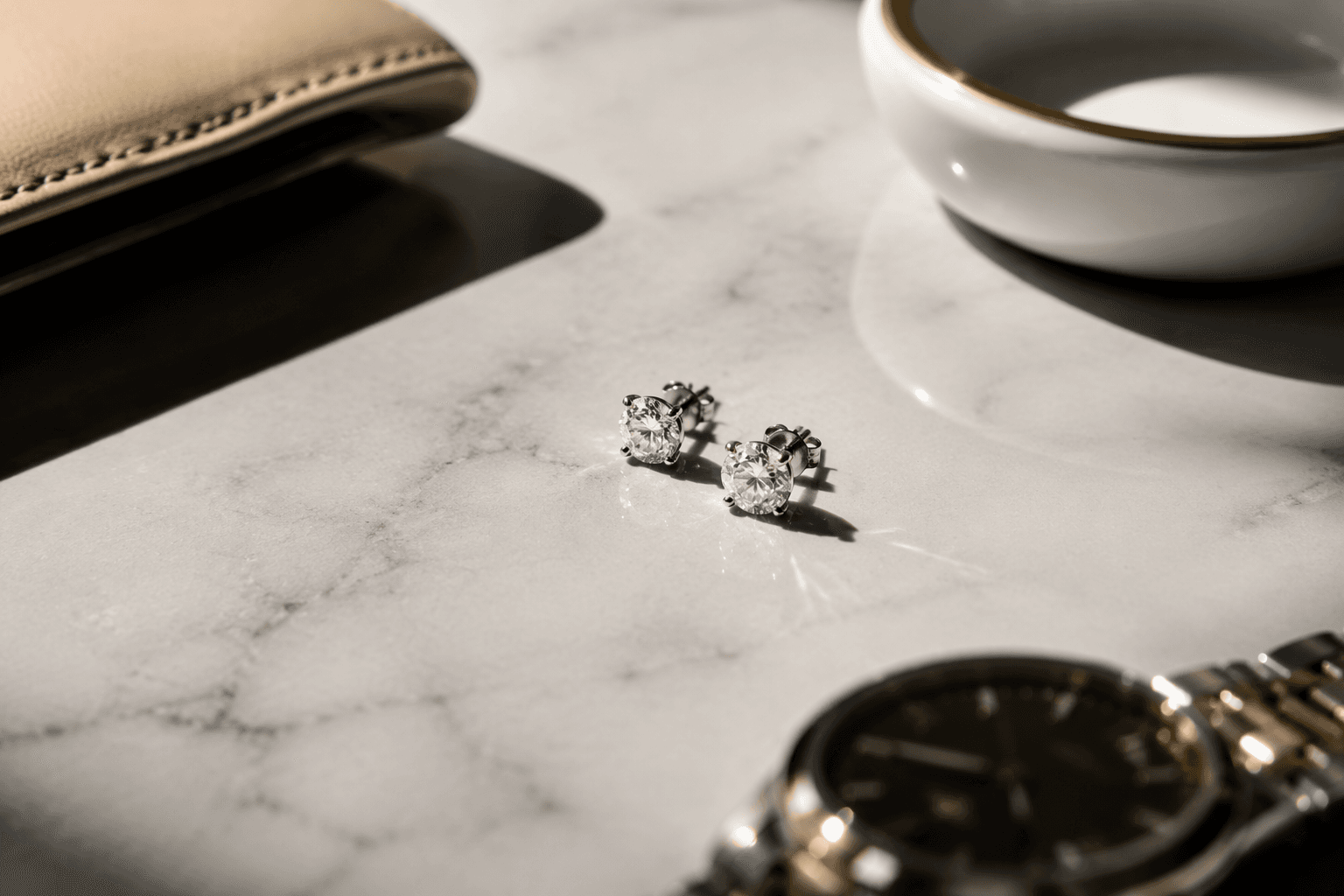
This is where the practical wear test becomes useful. Studs that are too large can feel heavy, pull at the ear, and catch more easily on hair, knitwear, and coat collars. A pair in the right proportions disappears in motion.
In a 2025 trends post, Bhindi Jewelers called classic, minimalist studs timeless and suitable for casual and formal occasions. Minimalism is not about being plain; it is about letting scale and proportion do the work so the earrings can move between a white shirt, a cashmere sweater, and evening black without looking misplaced.
Metal, mounting and backing decide comfort
The metal matters more than many shoppers expect, especially if the goal is an earring you can forget you are wearing. Platinum is hypoallergenic, which makes it a smart choice for people with sensitive ears or for anyone who wears studs for long stretches.
The mounting should support that ease. A low-profile setting keeps the diamond closer to the lobe and reduces the chance of the stone catching, while the backing needs to hold securely without adding bulk behind the ear. In daily wear, the best-built studs are the ones that feel symmetrical and steady, not the ones that remind you they are there every time you put on a sweater.
They are not meant to be admired only when removed from the box; they are meant to function as part of the body’s outline. If the setting sits too high, the pair can look fussy. If the backing is awkward, even beautiful stones start to feel like a project.
The classic pair is the one that keeps its shape in real life
Retail and education guides published in 2025 and 2026 treated diamond studs as versatile, everyday pieces.
This article was produced by Prism’s automated news system from verified source data, official records, and press releases, then run through automated quality and moderation checks before publishing. The system is built and supervised by the people who set the standards it runs under. Read our full AI policy.
Did this article answer your question?