Waterproof Necklaces Are Now Stylish Enough for Every Outfit and Occasion
Smarter materials have made waterproof necklaces a genuine style staple — here's how PVD coatings, surgical steel, and smart styling choices make the case for keeping yours on 24/7.

For a long time, "waterproof jewelry" conjured images of rubbery silicone bands or cheap chains that left green rings on your collarbone. That era is over. A wave of material innovation has quietly transformed the category, and the waterproof necklace has become one of the most practical — and legitimately stylish — everyday accessories available.
The shift is real and it's happening at every price point, driven by shoppers who are tired of making the same calculation before every gym session or beach day: do I take it off, or risk ruining it?
Why the Materials Changed Everything
The foundation of today's waterproof necklace is surgical-grade stainless steel, specifically the 316L alloy that has long been trusted for medical implants. Its composition, built around chromium and iron rather than high concentrations of nickel, creates a natural chromium oxide layer that prevents any residual nickel from leaching onto skin. For the majority of people with mild to moderate metal sensitivities, 316L steel causes no allergic reaction, making it one of the most skin-safe base metals in the jewelry category.
What takes a surgical steel piece from clinical to genuinely beautiful is the coating applied over it. PVD, or Physical Vapor Deposition, is the process behind the most durable waterproof finishes on the market. Unlike traditional electroplating, which bonds gold to a surface through a chemical bath, PVD works through a high-tech vacuum deposition process: solid material is vaporized and deposited onto the piece in ultra-thin, tightly bonded layers. The result is a coating that is up to ten times more durable than conventional gold plating. Critically, PVD seals the jewelry completely during the process, leaving no microscopic gaps for water or moisture to penetrate the surface. Titanium nitride and zirconium nitride are the compounds most commonly used to achieve gold, rose gold, and black PVD finishes — each one scratch-resistant, corrosion-resistant, and built to survive chlorine, saltwater, and daily sweat without fading.
Well-executed plating, when applied over stainless steel at an appropriate thickness, can also deliver strong waterproof performance. The caveat is in the phrase "well-executed": ultra-thin flash plating will still wear through. The difference is visible in the price and in brand transparency about their production process.
Dressing It Down: Casual and Everyday Wear
The easiest entry point into the category is a slim water-resistant chain in gold or silver tone, worn alone or with a small pendant against a T-shirt or open-collar shirt. The proportional logic here is straightforward: a delicate 1–2mm cable or box chain at 16 to 18 inches sits neatly above a crew neckline without competing with it. A small geometric pendant, a bezel-set stone, or a simple bar keeps the look intentional rather than accidental.
With denim, the rules loosen considerably. A slightly chunkier chain, a snake or herringbone style, pairs well with the casual weight of denim fabric without looking overdressed. The key principle is matching chain thickness to the visual weight of the outfit: lighter fabrics call for more delicate chains, while sturdier textiles can carry more substantial links.
Mixed-metal finishes — combining gold- and silver-toned pieces — are no longer a styling faux pas. In fact, they're one of the more modern approaches to building a stack, allowing you to connect a new waterproof piece to whatever existing jewelry you already own without starting from scratch.
The Layered Look
Layering is where waterproof necklaces genuinely earn their place in a more considered wardrobe. The technique relies on varying chain lengths by at least two inches between each piece so they sit as distinct lines rather than clumping together. A choker at 14 to 16 inches, a princess-length chain at 18 inches, and a longer pendant at 20 to 24 inches creates a graduated effect that reads as intentional and styled rather than accidental.
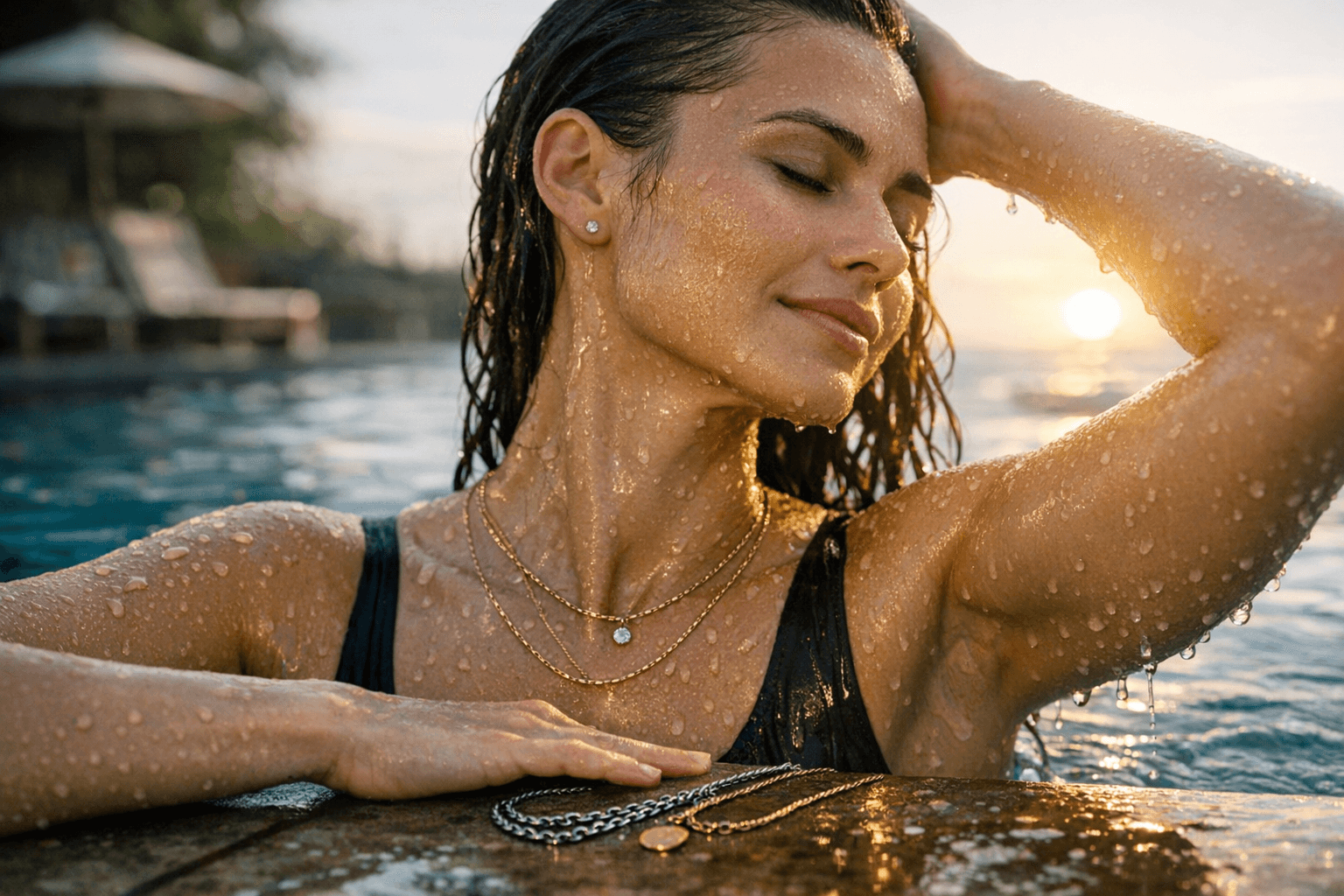
To keep chains from tangling, a layering clasp connects multiple chains at the back into a single fastening point. Mixing chain weights adds another dimension: pairing a lighter, more fluid chain with a slightly heavier one keeps both pieces moving independently rather than sticking together.
One clear guideline on pendants: one statement piece per stack. Using a bold pendant or charm as the focal point, and letting simpler chains frame it, prevents the neckline from looking cluttered. A zodiac charm, an engraved disc, or a birthstone in a simple bezel setting all work well as anchors to an otherwise minimal layer.
Office-Ready and Professional Styling
The case for waterproof jewelry at work comes down to restraint in scale and design. Polished, minimal pieces with a fine chain and a simple pendant read professional without drawing attention away from the face or the outfit. A 16-inch gold-tone cable chain with a small geometric or bar pendant, for example, complements a blazer or tailored shirt without distraction.
The mistake to avoid is carrying the same layering logic from a casual weekend into a work context. Three chains that look deliberately cool with a linen tee can read as too busy against a tailored jacket. In professional settings, scaling back to one or two pieces, with a preference for simpler chain styles over ornate pendants, keeps the look polished. This is also where the neckline matters most: a V-neck blouse calls for a pendant that mirrors the plunge, sitting an inch or so above the neckline's edge, while a higher crew or boat neck pairs cleanly with a choker or short collar chain.
The 24/7 Convenience Factor
What has actually moved this category from niche to mainstream is less about styling theory and more about the removal of a daily decision. Waterproof necklaces are now bought specifically because they can stay on through a morning swim, a gym session, a commute, and a dinner without requiring a second thought. That wear-24/7 proposition is now a deciding purchase factor for a significant portion of buyers, and it represents a genuine shift in how people relate to everyday jewelry.
This has pushed brands to be more transparent about exactly what their pieces can withstand. "Water-resistant" and "waterproof" are not interchangeable terms. A water-resistant piece may handle light splashes but fail under sustained submersion in a chlorinated pool. True waterproof construction, built on PVD-sealed stainless steel, is designed to handle both. When evaluating a piece, the distinction worth asking about is whether the base metal is stainless steel and whether the coating is PVD-applied rather than conventionally plated, since those two factors together are the most reliable predictors of long-term durability.
Care and Longevity
Even the most durable waterproof jewelry benefits from basic maintenance. A wipe-down with a soft microfiber cloth after saltwater or chlorine exposure removes residues that can, over time, dull even the most resilient surface. Storage in a dry, shaded spot, away from direct sunlight and perfume sprays, preserves the finish. When cleaning is needed, mild dish soap diluted in water and a gentle scrub with a soft toothbrush will clear away sweat and cosmetic buildup without scratching the coating.
The payoff for that small investment in care is a piece that holds its finish for years rather than months. That durability, more than any single styling trend, is what makes the waterproof necklace a genuinely sound addition to an everyday jewelry collection. It asks very little of you and delivers consistently in return: the rarest combination in any accessory.
This article was produced by Prism’s automated news system from verified source data, official records, and press releases, then run through automated quality and moderation checks before publishing. The system is built and supervised by the people who set the standards it runs under. Read our full AI policy.
Did this article answer your question?