Celebrity Stylists Predict 2026 Gold Jewelry Shifts to Bold, Textured Looks
Gold is getting bolder: sculptural shapes, mixed metals and textured finishes are the buys that will work hardest, while vague sustainability claims won’t.
What to buy now
Gold jewelry is moving away from whisper-thin minimalism and back toward pieces with shape, texture and personality. The smartest buys are not the loudest ones, but the ones that can sit next to everyday chains, watches and rings without looking forced. That is the real 2026 shift: statement pieces are being worn with softer layers, and the result feels more personal than precious.
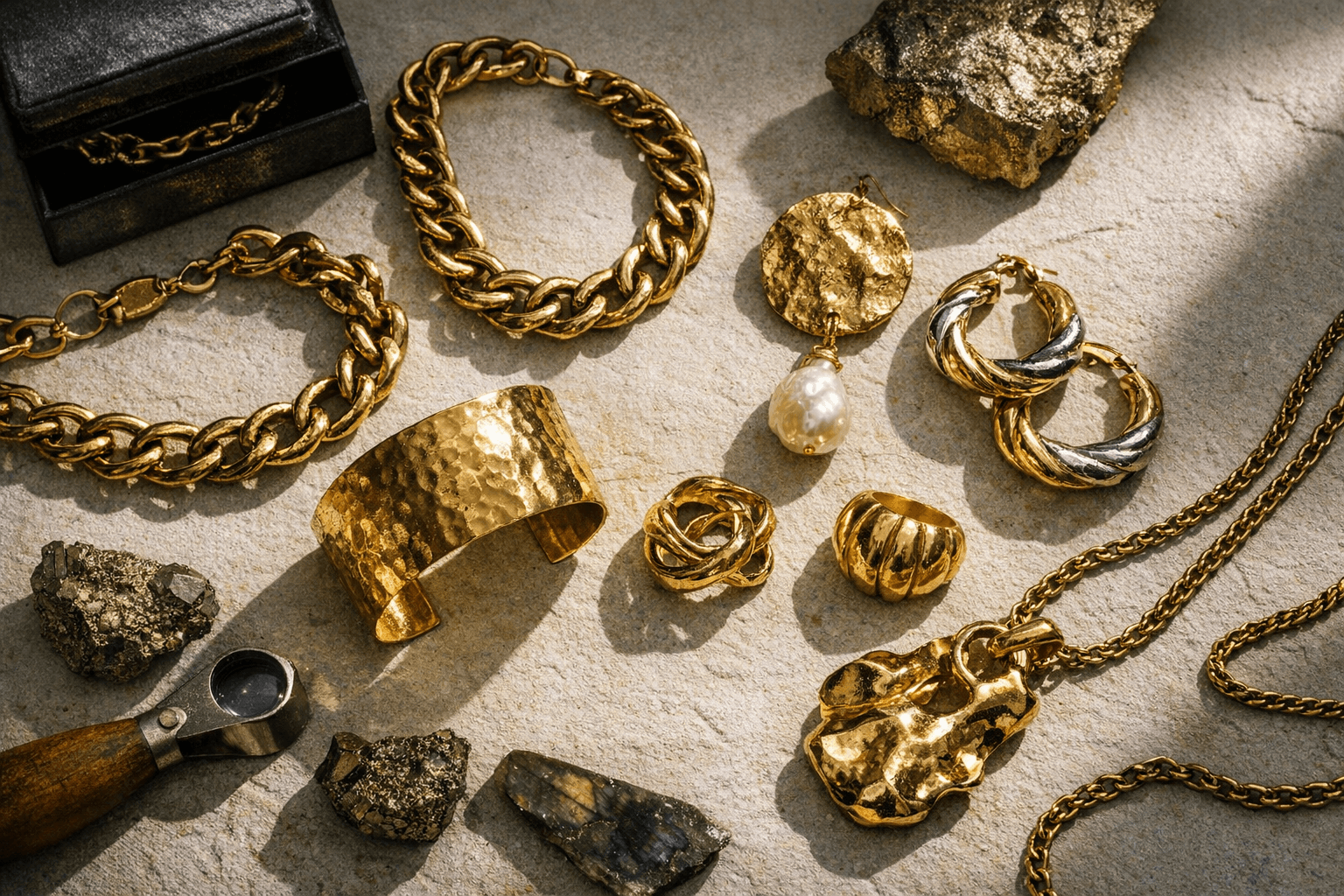
If you want to spend where the trend has staying power, look first at sculptural silhouettes. Think wide cuffs, interlocking rings, chunky hoops, torque-style necklaces and curved forms that read as design objects even when they are worn with a white tee. Brands stylists already keep in the conversation include Spinelli Kilcollin for interlocking rings, Agmes for sculptural pieces, Jennifer Zeuner for layered necklaces and Bulgari for more dramatic gold forms. Those are the pieces that can move from daytime layers to evening polish without needing a wardrobe change.
Mixed metals are the other smart buy, and this is where the trend becomes practical rather than theatrical. Gold does not need to live in an all-yellow-gold universe anymore, and the most wearable versions already bridge silver, gold and white metals inside one design or one stack. A bicolor ring, a bracelet that combines tones, or a necklace layered over a steel watch feels current because it solves the old problem of matching everything too perfectly. That flexibility is what gives mixed metal jewelry its cost-per-wear value: it expands the number of outfits it can work with.
Texture is the quiet upgrade worth paying for. Hammered surfaces, ribbed bands, rope twists, brushed finishes and granulated details catch the light better than flat, high-polish metal and often make a piece look richer without adding stones. They also hide minor wear more gracefully, which matters if you plan to wear the piece often rather than saving it for occasions. In practical terms, texture gives you visual depth without pushing you into anything so ornate that it starts to feel like costume jewelry.
What feels like editorial noise
The pieces most likely to date quickly are the ones that depend on extreme minimalism alone. Ultra-thin chains, barely visible pendants and completely smooth, featureless bands can still be beautiful, but they are no longer the center of the story. The market has shifted toward jewelry that says something, and pieces without shape or surface interest now have to work much harder to justify themselves.
Matching sets are another weaker buy unless the design is genuinely distinctive. A necklace, bracelet and earring trio that only works when worn together can look polished in a lookbook and rigid in real life. The stronger pieces are the ones that can be broken apart, mixed into a drawer of older favorites and worn with everyday layers, because that is how the trend is actually being styled.

How to verify the gold before you buy
The most important question is still the simplest one: what exactly are you buying? Gold purity is measured in karats, and GIA notes that jewelry reports can include metal testing results, item weight and markings, which is the kind of documentation that keeps a polished sales pitch from doing the work of disclosure. For stone-set pieces, that paperwork matters even more, because the same visual effect can hide very different metal and stone quality underneath.
Do not let “sustainable” or “recycled” substitute for specifics. The Responsible Jewellery Council’s Chain of Custody standard is built for gold that is fully traceable and responsibly sourced, while CIBJO has pushed for a clearer definition of recycled gold because the term can cover both manufacturing scrap and material recovered after consumer use. If a brand claims recycled gold, ask whether it is pre-consumer, post-consumer or a blend, and whether the supply chain is independently certified.
The broader supply picture explains why that distinction matters. The World Gold Council says mine production typically accounts for about 75 percent of global gold supply, with recycling filling the shortfall, and its 2025 supply update says recycled gold supply rose only 3 percent even as gold prices surged. In other words, recycled gold is important, but it is not a magic word, and the claim deserves the same scrutiny as a karat stamp.
The pieces worth betting on
If you want one gold purchase that will still feel right when the rest of the season has moved on, choose a piece with architecture, not decoration. A sculptural cuff, a substantial hoop, an interlocking ring or a textured chain can carry the new mood without locking you into a costume-like trend cycle. The strongest 2026 gold jewelry is the kind that looks intentional with jeans, tailoring or eveningwear, which is why bold shape, mixed metal and tactile finish are the only three trends that really need your money.
This article was produced by Prism’s automated news system from verified source data, official records, and press releases, then run through automated quality and moderation checks before publishing. The system is built and supervised by the people who set the standards it runs under. Read our full AI policy.
Did this article answer your question?