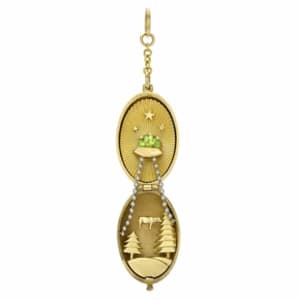
Gold Earrings Span Accessible Fashion To High-End Fine Jewelry
Gold earrings now span $285 plated brass to $24,000 fine jewelry, but the smartest buys are the shapes that fit how people actually wear and gift them.
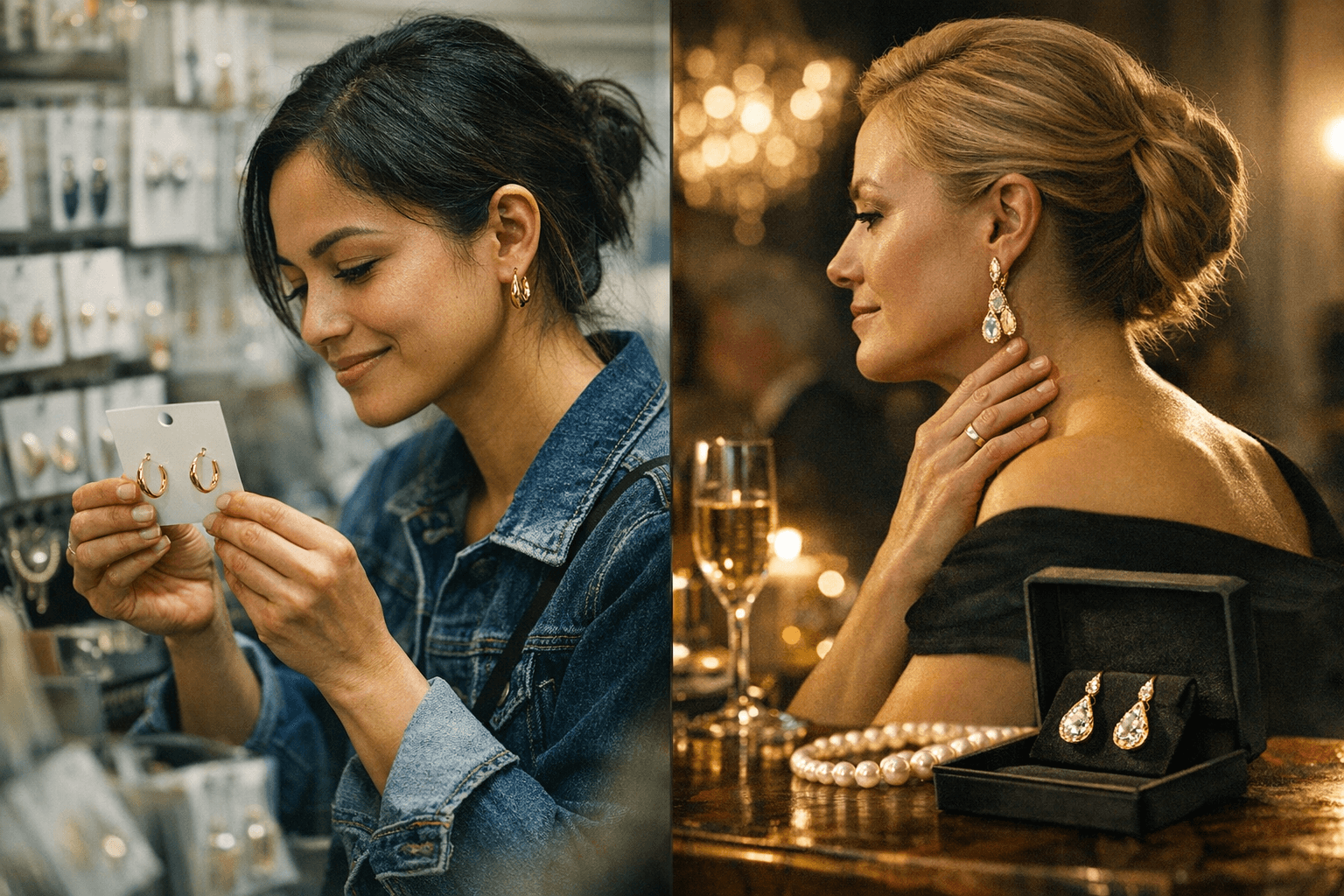
Gold earrings, from easy yes to serious investment
Earrings are the rare jewelry purchase that can feel impulsive and rational at the same time. They do not ask for a ring size or a chain length, and that makes them a natural self-purchase, a dependable gift, and one of the easiest ways to move a customer up into fine jewelry.
A recent INSTORE gallery of 14 designs captures that range neatly, with “From daring dangles to subtle stunners, jewelry for the ear is all the rage.” The message is clear: gold earrings are not a niche corner of the case, but one of the most flexible merchandising categories a jeweler can offer, especially when shoppers want something beautiful that also makes immediate practical sense.
The strongest long-term buys are solid gold
If the goal is repeated wear, solid gold still deserves the first look. True 18K pieces carry the richest gold content in this group, and they justify their prices when the construction, gemstone selection, and finishing are all working together. Hueb’s 18K yellow gold earrings, set with VS-GH diamonds, citrine, and rutilated quartz, are priced at $11,300, a number that makes sense only because the design is doing more than simply showing metal weight. It is building a miniature composition around color, texture, and sparkle.
Monika Krol Jewelry’s 18K yellow gold earrings at $3,840 sit in a more restrained lane, but they still belong to the same long-wear conversation. Cleanly made solid-gold earrings tend to earn their keep through frequency of use, not drama alone. If a pair is meant to become part of a daily rotation, the metal should be doing real work, not just borrowing gold color from a surface treatment.
Psyche Fine Jewelry’s 14K yellow gold huggie earrings at $2,880 belong in that same practical camp. Fourteen-karat gold is a little less saturated than 18K, but for earrings, especially smaller silhouettes, it often offers a sensible balance of durability and price. When the shape is compact and the mechanism is secure, 14K can be one of the smartest long-term buys in the case.
Then there is Melinda Lawton Jewelry’s 14K white gold pair, priced at $24,000, with opal, zircon, rubellite, and diamonds. This is the high-jewelry end of the spectrum, where gemstone composition and design ambition matter more than the metal category alone. It is a reminder that earrings can climb into serious territory quickly when stones take the lead and the gold simply becomes the setting for a far more elaborate statement.
Vermeil is the middle ground that makes sense for many shoppers
For buyers who want the look of gold without committing to solid-gold pricing, vermeil is often the most defensible compromise. Jorge Revilla’s 18K yellow gold vermeil over sterling silver earrings with moss agate, priced at $415, show why. The sterling-silver core keeps the piece accessible, while the thicker gold finish gives it a more substantial visual presence than basic plating.
Vermeil works best when the design is intentionally style-driven rather than pretending to be heirloom-fine. Moss agate brings an earthy, softly patterned look that feels current without being loud, and that is exactly where vermeil shines: in pieces that rely on silhouette, color, and mood. It is the category for the shopper who wants gold tone, gemstone character, and a controlled price, but does not need the daily-wear promise of solid 18K.
Gold-plated styles are the quickest way into the trend
At the lower entry point, gold-plated earrings are about immediacy. Aracheli Studio’s earrings, priced at $285, are made from 18K gold-plated brass with vintage glass beads and 22K yellow gold. That combination tells you almost everything you need to know about the role of the piece: this is about visual impact, texture, and a fresh idea, not metal value.
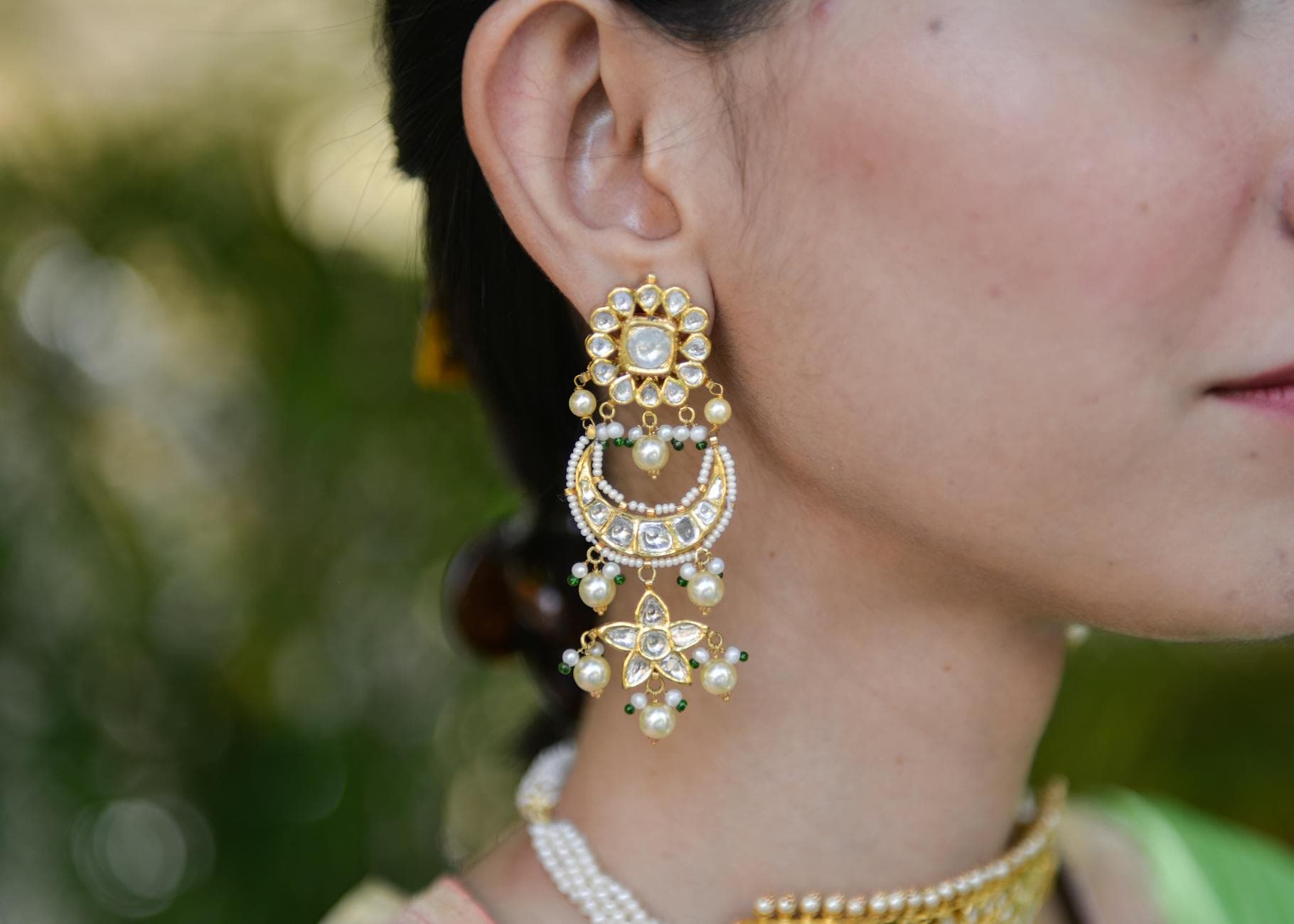
Gold-plated earrings are the strongest choice when the silhouette is the point and the buyer is responding to a trend, a color story, or a special occasion. They are especially effective when the design includes tactile details like vintage glass beads, which give the earrings a more collected, less disposable feeling. The trade-off is durability. Plating is not built for the same level of repeated wear as solid gold or even vermeil, so this is the place for the deliberate impulse buy, the piece worn to complete a look rather than anchor a jewelry wardrobe.
The silhouettes selling now are practical, not precious in the old sense
The current demand story is not just about metal type. Hoops remain a staple across age groups, price points, and store formats, and that is no accident. A hoop can read minimal, polished, or bold depending on scale, and that adaptability keeps it relevant from first-time buyers to collectors.
Huggies are rising for a similar reason. Their mechanism feels more secure than a standard post, which matters to customers who want jewelry that stays put through a full day, not just a dinner reservation. In a market where earrings are one of the hottest categories for gifts and self-purchases, security is not a minor detail. It is part of the product promise.
Hoops in all sizes are also performing especially well for some retailers. That matters because it explains why the category keeps trading between fashion and fine jewelry so easily. A tiny huggie in 14K can feel like a staple, while a larger gold-plated hoop can satisfy the same customer in a trend mood. Earrings are one of the few categories where that range is not a weakness but a selling point.
How to decide what earns your money
The cleanest way to shop gold earrings is to ask how often you will really wear them.
- Choose solid 18K if you want a pair that can live in your rotation for years and hold up to repeated wear.
- Choose 14K if you want fine-jewelry credibility with a slightly more accessible price and a practical everyday profile.
- Choose vermeil if you want the color and visual weight of gold at a lower entry point, especially for styles led by gemstone color or shape.
- Choose gold-plated if you are buying the silhouette first and treating the piece as a fashion move rather than a long-term asset.
That framework matters more now that gold prices have climbed to historic highs, because the price conversation has become part of the product conversation. Retailers are rethinking pricing, inventory, and how they talk about value, while hollow gold styles face added pressure as metal costs rise. In that environment, the best gold earrings are the ones that justify themselves clearly, through construction, comfort, and the kind of wear that makes a purchase feel earned, not merely admired.
This article was produced by Prism’s automated news system from verified source data, official records, and press releases, then run through automated quality and moderation checks before publishing. The system is built and supervised by the people who set the standards it runs under. Read our full AI policy.
Did this article answer your question?