Hancocks London spotlights circa-1970 Illario gold bracelet with turquoise, lapis lazuli
Hancocks London cast a circa-1970 Illario bracelet as a case study in heavy Italian gold, pairing turquoise, lapis lazuli and diamonds with a Bulgari-linked pedigree.
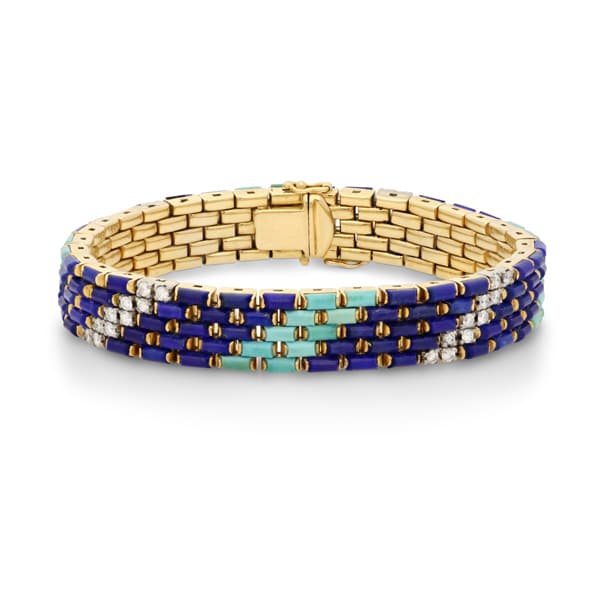
Hancocks London chose a circa-1970 Illario bracelet as its June Jewel of the Month, and the piece lands squarely in the market sweet spot collectors keep chasing: thick yellow gold, crisp geometry and a maker name with a Bulgari connection. Built in highly articulated 18k yellow gold, the bracelet uses brick-link construction to carry turquoise, lapis lazuli and diamond accents in a tight, architectural rhythm that reads as distinctly Italian.
That construction matters. Vintage gold jewelry rises and falls on how convincingly it is made, and this bracelet shows the kind of engineering that gives weight a visual purpose. The geometric motif is not decorative noise; it is the design. In a market crowded with lighter modern pieces, a bracelet like this signals endurance, both in metal and in taste. Hancocks has priced it at £27,500, about $37,000, a figure that reflects not only gold content but also the appeal of period design with a recognized workshop behind it.
Illario’s name strengthens the case. The house was founded in 1920 by Carlo, Vincenzo and Luigi Illario in Valenza Po, Piedmont, one of Italy’s key goldsmithing centers. That origin matters because Valenza built its reputation on technically exact handwork, and Illario became known for the kind of precision that drew major Italian houses. The workshop’s partnership with Bulgari ran from the 1950s through the 1970s, and its work included Serpenti watch bracelets, the sort of lineage that pushes a vintage jewel from attractive to genuinely collectible.
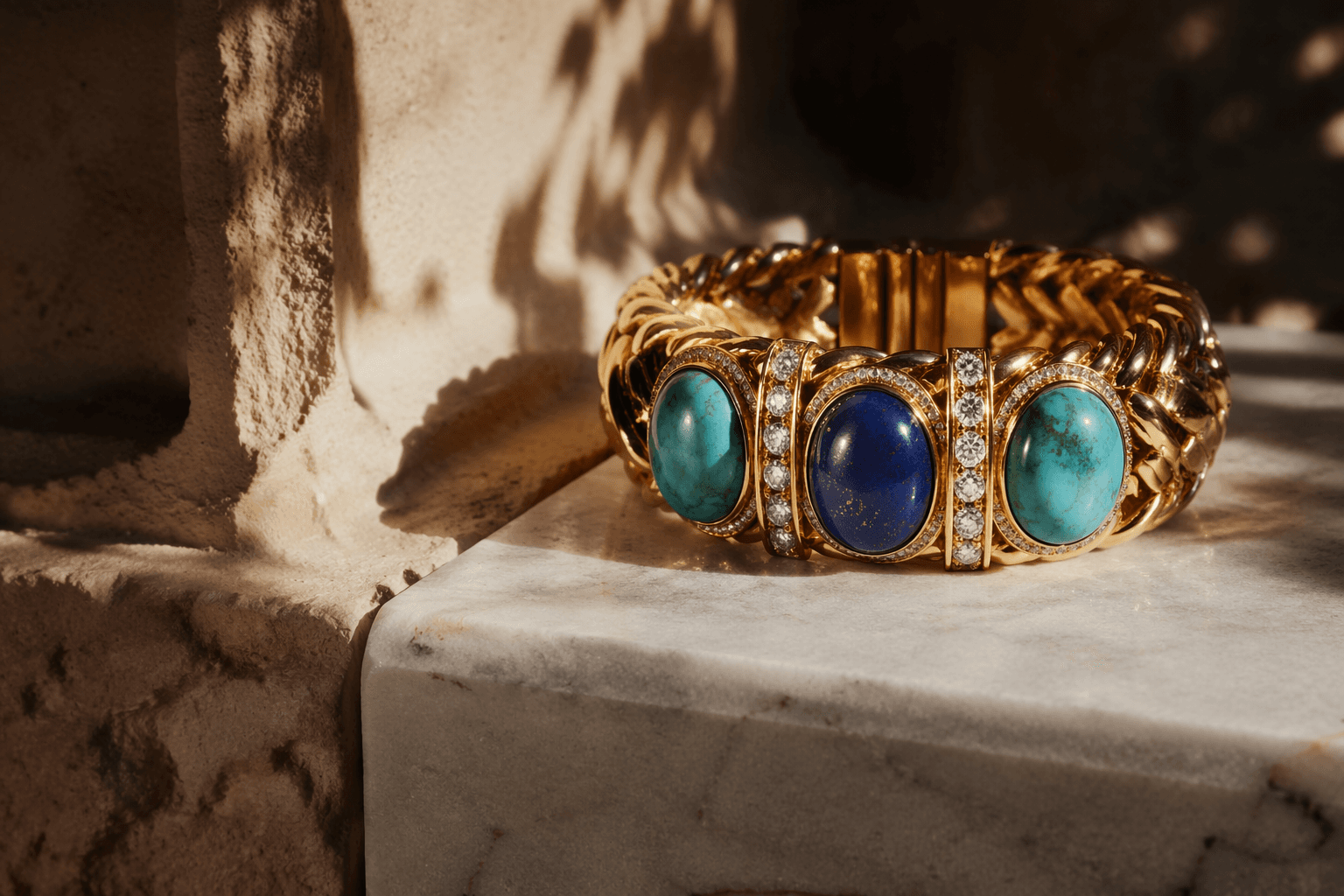
The Bulgari link also places the bracelet inside a broader design story. Bulgari was founded in Rome in 1884 by Sotirio Bulgari, and from the 1940s onward the maison’s style increasingly embraced yellow gold and the sinuous Serpenti line. Sotheby’s dates the Serpenti collection’s first appearance to 1948, with the Serpenti Tubogas bracelet-watch, a milestone that helps explain why midcentury and 1970s Italian gold now commands so much attention. Collectors are not just buying metal; they are buying a chapter in the evolution of modern jewelry.
Displayed at Hancocks London at 62 St James’s St, the bracelet fits neatly with the dealer’s own history. Hancocks of London was founded in 1849 and remains family-owned, a long tenure that gives it credibility in the vintage and estate market. For buyers weighing provenance against pure sparkle, this Illario bracelet offers both: substantial 18ct gold, a disciplined gem palette and a maker association that still carries weight in the room.
This article was produced by Prism’s automated news system from verified source data, official records, and press releases, then run through automated quality and moderation checks before publishing. The system is built and supervised by the people who set the standards it runs under. Read our full AI policy.
Know something we missed? Have a correction or additional information?
Submit a Tip