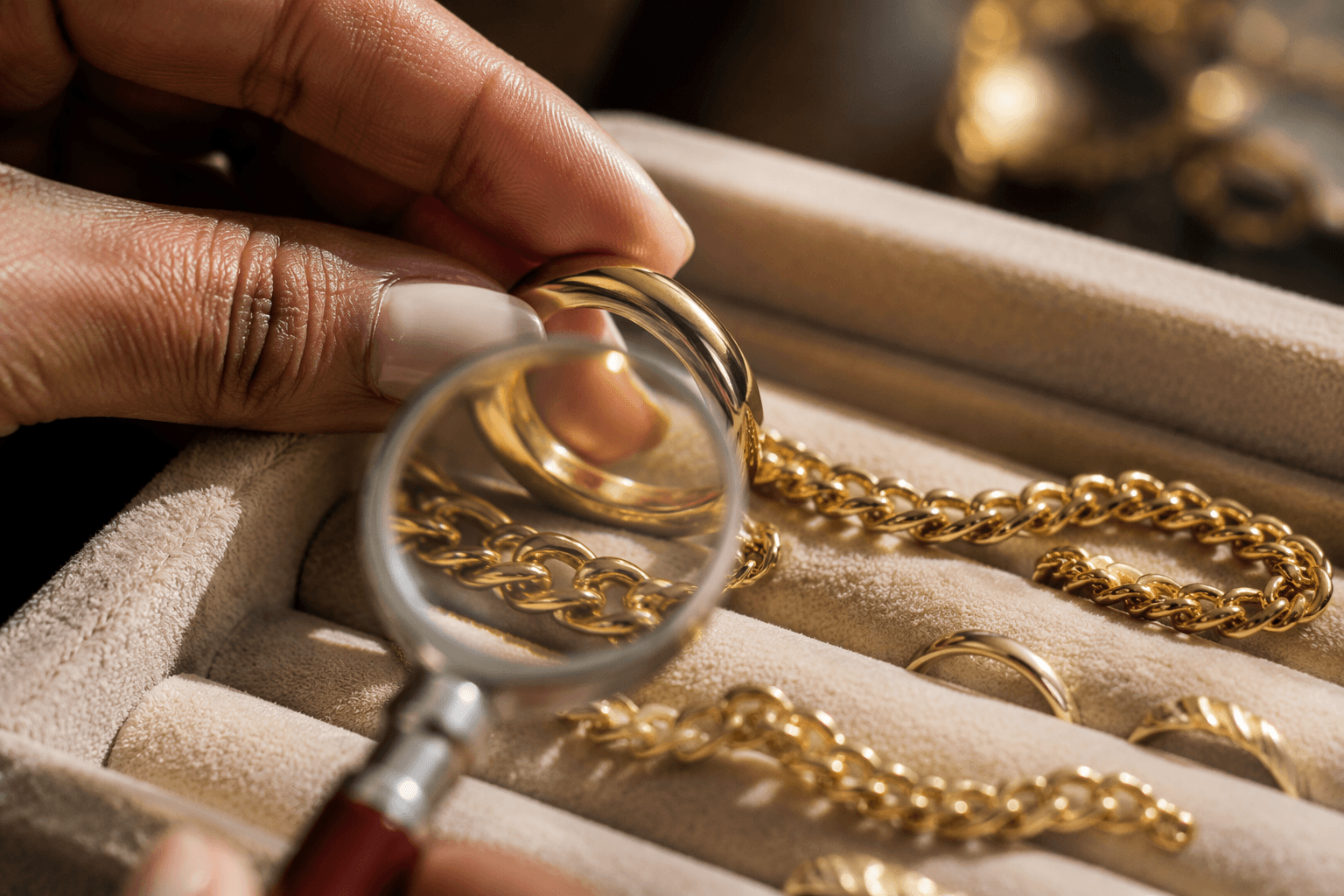
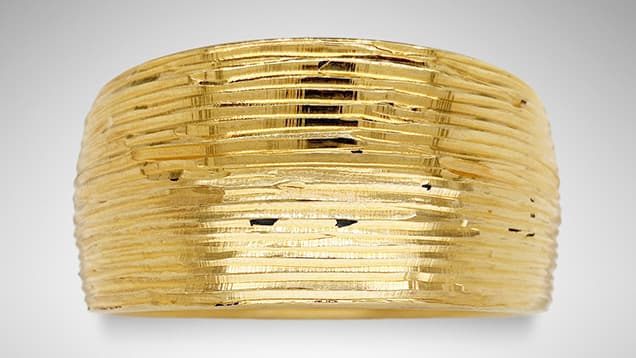
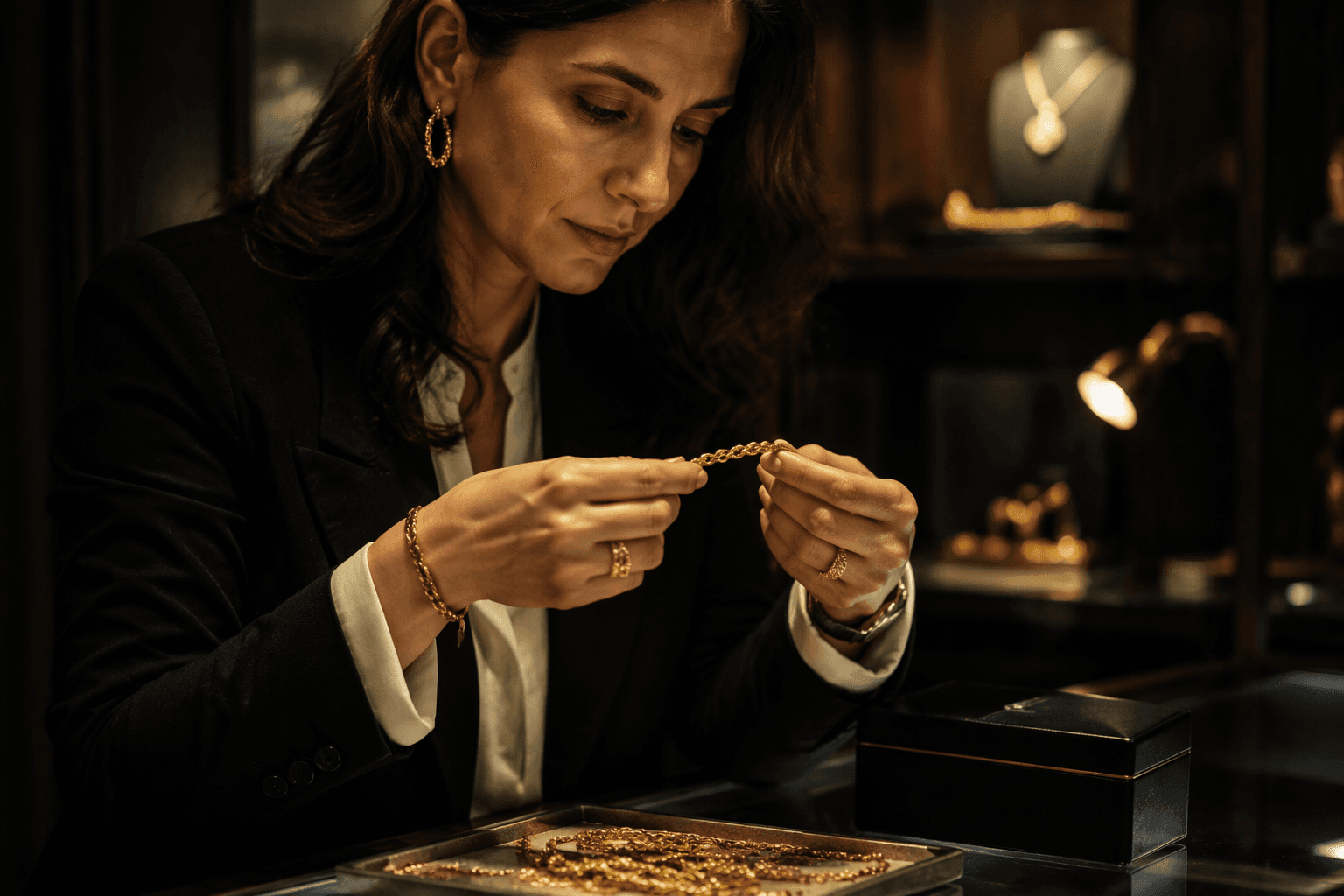
How GIA tests gold jewelry authenticity, four methods compared
No single gold test settles the question. GIA’s four-method comparison shows how jewelers balance speed, cost and certainty before buying or reselling.
A clasp engraving is not the final word on what a gold bracelet, chain, or ring actually contains. Meredith E. Mercer’s GIA study treats verifying the gold content of karat-gold jewelry as a problem for the entire industry, which is why professionals keep several tests at hand instead of trusting a stamp alone.
Why the stamp is not enough
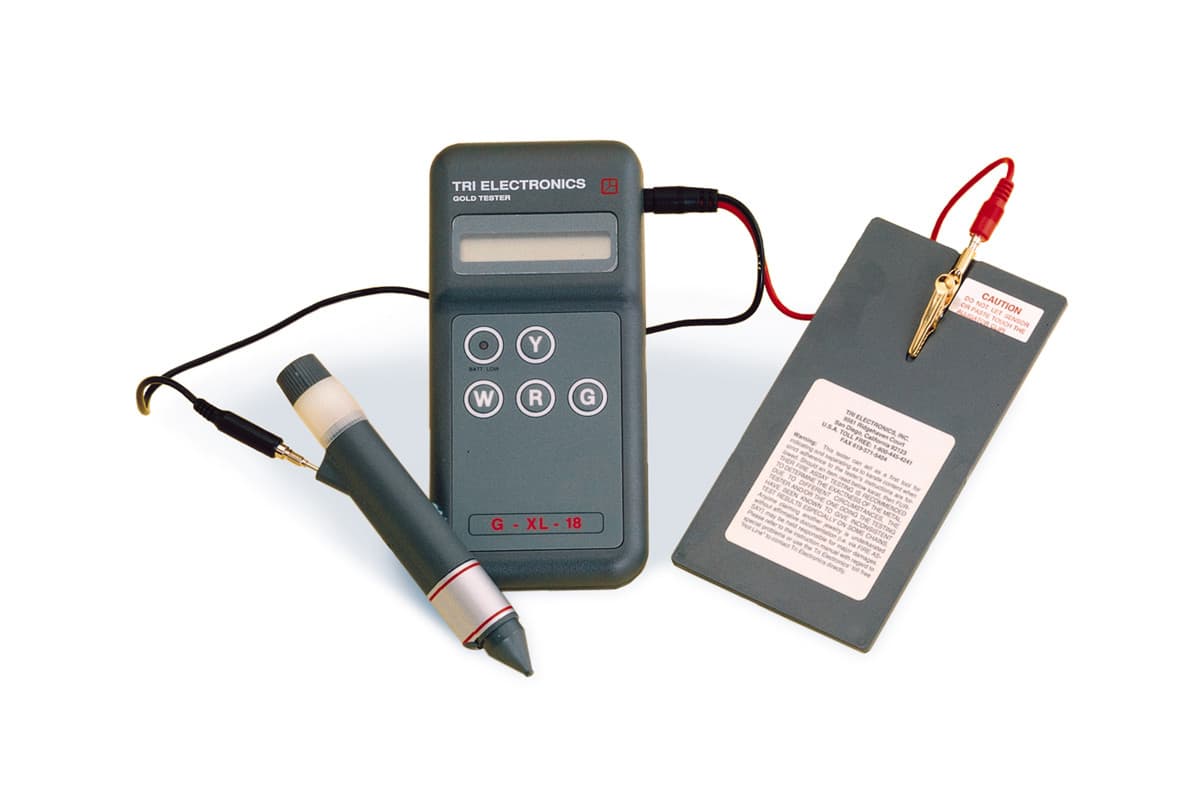
Mercer’s comparison puts four common methods in one frame: density measured by hydrostatic weighing, touchstone testing, capacitive decay using the Tri-Electronics G-XL-18 Gold Tester, and X-ray fluorescence with the Seiko Instruments SEA 2001 Jewelry Assay System. The point is not that one device wins every time. It is that gold testing is a tradeoff between speed, expense, invasiveness, and the kind of certainty a transaction requires.
GIA’s Bench Tip #9 lays out the same tradeoff: fire assay is destructive, X-ray fluorescence is nondestructive, and both demand costly equipment, special procedures, and a well-lit, ventilated area. That is why a jeweler may use a simpler screen in the shop, then escalate only when a suspicious chain, vintage bangle, or estate piece needs a firmer answer.
The four methods jewelers actually use
Density and hydrostatic weighing
Hydrostatic weighing turns gold into a question of density. Instead of looking at a surface stamp or polished finish, the method measures how the piece behaves in air and in water, which makes it one of the more scientific ways to compare a claimed karat with the metal’s actual bulk.
Density is only as clean as the object being measured. In practice, it works best when the piece can be assessed as a whole object rather than a cleverly constructed one.
Touchstone testing
Touchstone testing is the old-world method that still survives because it is straightforward. It is a simpler way to determine gold purity in jewelry, and 24k gold resists all but the strongest acids.
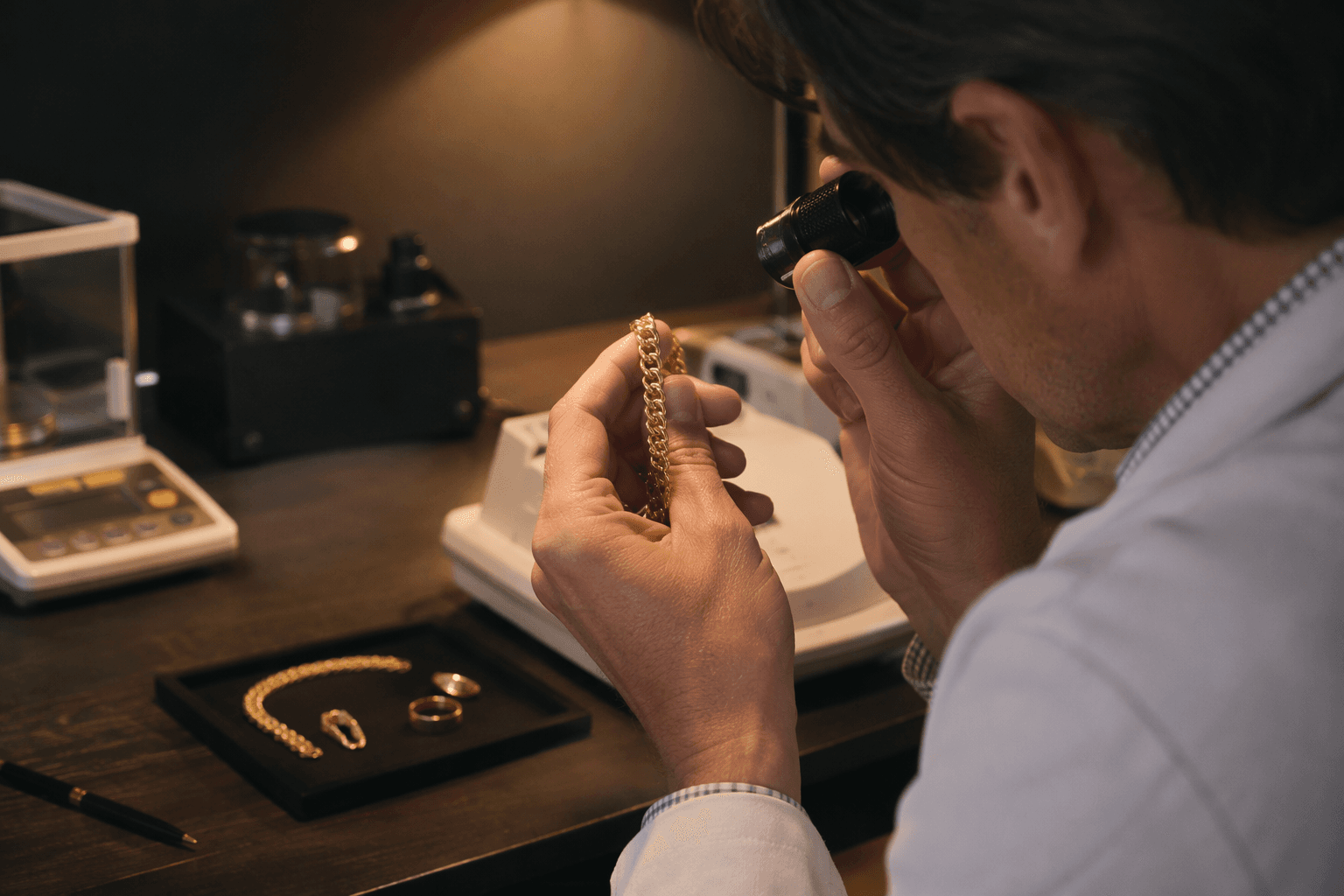
A stone rubbed with the piece leaves a streak that is then compared with acid reactions, which makes touchstone especially useful as a quick screening step. It is not the last stop for a high-value sale, but it can quickly tell a buyer or seller whether a piece deserves deeper scrutiny.
Capacitive decay and the G-XL-18
Mercer’s GIA study also includes capacitive decay, tested with the Tri-Electronics G-XL-18 Gold Tester. It gives the trade a read on gold content without immediately moving to a more invasive procedure.
That matters on a busy buying counter, where the goal is often to sort material efficiently. Many gold transactions are not made on a laboratory bench, but across a case, with a dealer trying to separate obvious karat gold from pieces that need another look.
X-ray fluorescence and the SEA 2001
X-ray fluorescence, using the Seiko Instruments SEA 2001 Jewelry Assay System in Mercer’s comparison, is the method many buyers think of as the modern answer. It is nondestructive, which is a real advantage when a piece has collector value, family history, or a setting too delicate to risk.
Its limitation is equally important: XRF reads the surface. That makes it powerful for fast screening, but less complete when a piece is layered, plated, or built from mixed materials that do not reflect the whole object. A stamped ring can still be disputed if the surface tells one story and the core tells another.
Where each test can mislead
The biggest mistake in gold buying is treating one reading as a final verdict. Touchstone testing can be useful, but it is still a comparative method, and XRF can be fooled when the surface is not representative of the whole piece. Hydrostatic weighing brings objectivity, yet it still depends on a piece that can be measured cleanly enough to give a meaningful density result.
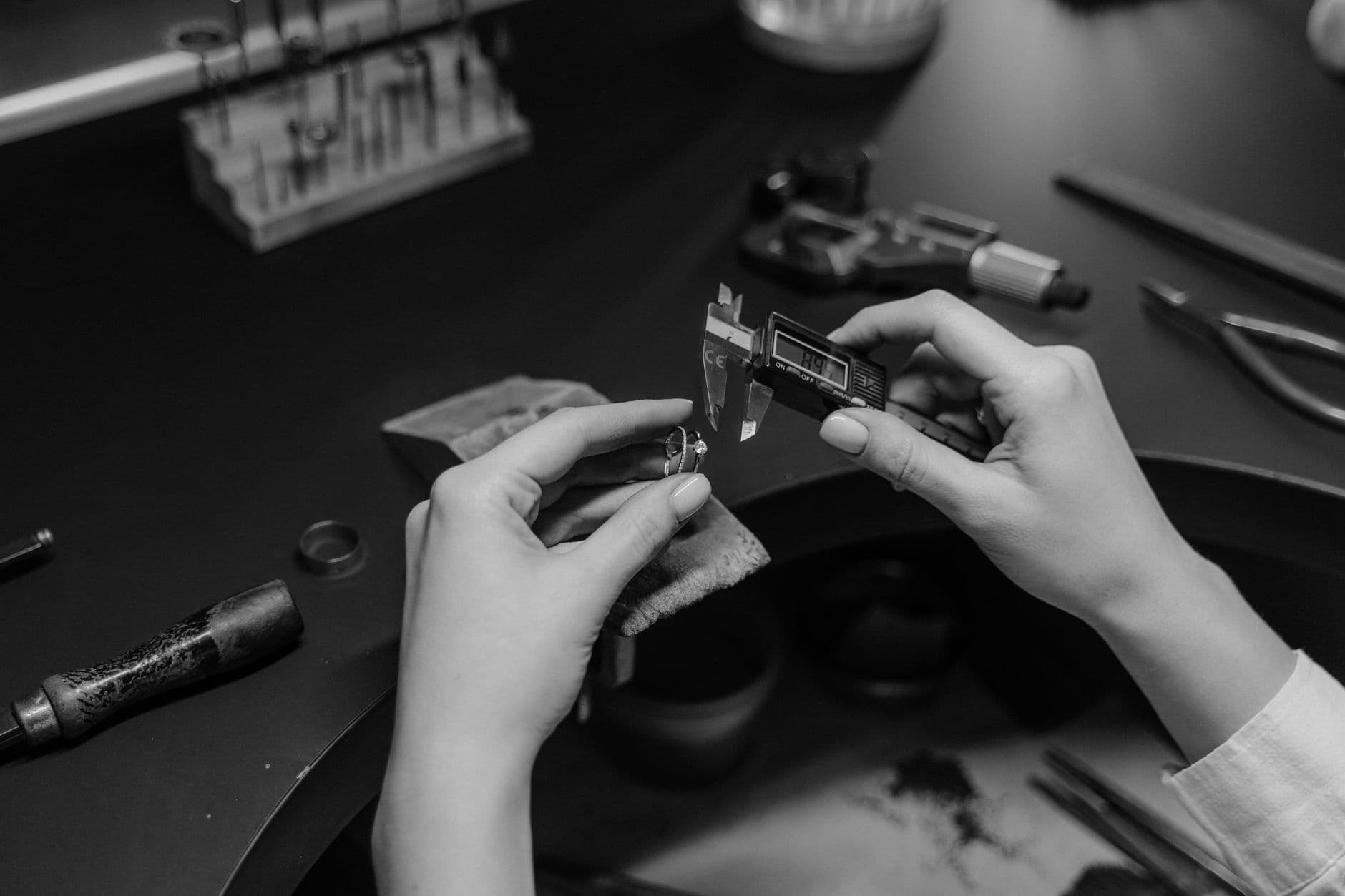
A shop might use touchstone to sort inventory, XRF to examine a questionable item, and a more exacting method when the metal value is large enough to justify the cost and procedure. Thermo Fisher Scientific analyzes precious metals testing for the same business case: pawn shops, jewelers, and cash-for-gold operations rely on precise techniques to determine whether something is actual gold or an alloy.
A Santa Fe Symposium paper puts annual demand for un-fabricated and un-alloyed fine gold at around 4,000 metric tons, or 130,000,000 troy ounces, in recent years.
What to ask before you buy or resell
When a piece is being priced, insured, inherited, or sold back into the market, the smartest question is not simply “Is it gold?” It is “How was it tested, and what could that method miss?” A surface-only result on a layered piece is not the same as a whole-piece assessment, and a quick screening method should not be mistaken for a laboratory conclusion.
A useful set of questions looks like this:
- Which method was used: hydrostatic weighing, touchstone, capacitive decay, or XRF?
- Was the result based on the surface only, or on the metal as a whole?
- If the piece is plated, repaired, or mixed in construction, how was that accounted for?
- If the item is valuable enough to matter, should it be checked again with a second method?
Those questions are especially relevant in the secondary market, where gold jewelry and gold scrap move through jewelers, pawnshops, consolidators, dental and medical offices, and even electronic manufacturers before being resold or processed.
Gold verification has ancient roots
People learned metalworking thousands of years ago and were already making jewelry and decorative objects from native gold and copper well before the Bronze and Iron Ages. Dr. Christopher W. Corti’s World Gold Council paper on assaying gold jewelry dates deliberate alloying of gold with copper to the second millennium BC and places the use of gold and silver as coinage around the 7th century BC.
This article was produced by Prism’s automated news system from verified source data, official records, and press releases, then run through automated quality and moderation checks before publishing. The system is built and supervised by the people who set the standards it runs under. Read our full AI policy.
Did this article answer your question?