2026 Jewelry Layering Trends Embrace Mixed Metals, Color, and Curated Stacks
Mixed metals and colored stones are reshaping how we stack in 2026, with the SS26 runways signaling a shift from accumulation to deliberate, story-first curation.
The Stack Has Changed
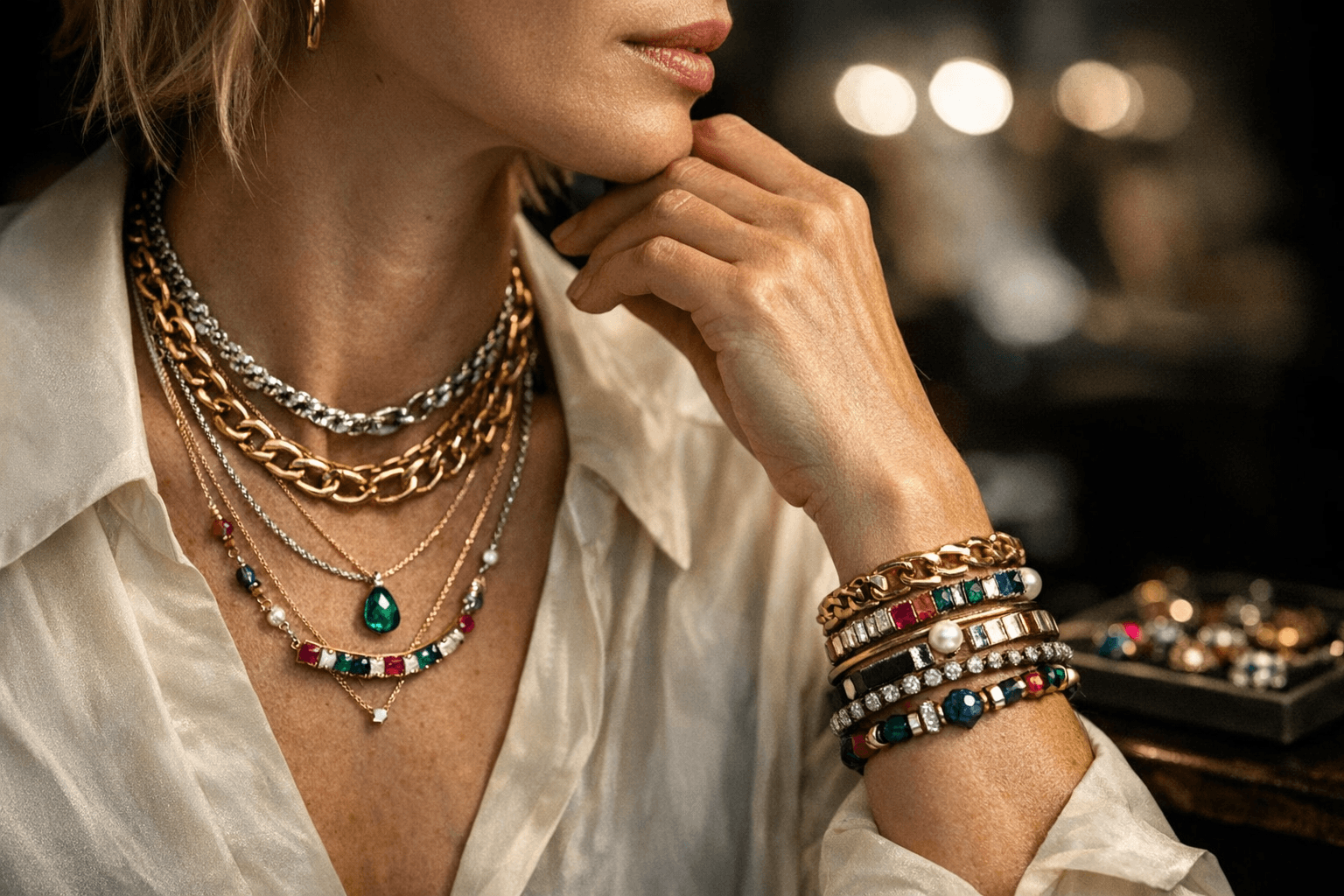
There is a particular confidence that comes from wearing jewelry well in 2026: the sense that someone understood the rules before deciding when to bend them. The shift on this season's runways was unmistakable. At Celine, Di Petsa, and Julie De Libran, SS26 looks featured necklaces layered over necklaces, rings crowding multiple fingers, and bracelets stacked against structural cuffs. Acne Studios closed its SS26 chapter in cascading silver hardware; Susan Fang and Tory Burch went bolder still, with maximalist color and sculptural weight. The headline from all of it: jewelry stacking has moved from accumulation to deliberate architecture, and the old rule book, the one demanding you match your metals and pick a lane, has been retired.
Searches for mixed-metal jewelry have increased by 22% year-on-year, signaling the end of rigid metal rules. That is the quantifiable proof point the trend needed. Jillian Sassone, founder of Marrow Fine Jewelry, put the cultural shift plainly: "A few years ago, the focus was on pieces that were minimal, clean and very polished. But now people want pieces that feel collected, expressive and a little unexpected." Layering and stacking are how that desire is being expressed.
Thesis: Curation, Not Accumulation
The central idea shaping jewelry stacks in 2026 is that each additional piece must earn its place. The framework starts with an anchor: a meaningful pendant, an heirloom link, or a bold cuff that carries enough visual or personal weight to orient everything else. Supporting pieces, textural chains, delicate beads, hammered bands, layer around the anchor for depth rather than volume. "Jewelry in 2026 feels sculptural, statement-making and personal," Sassone says. That word, personal, is the operating principle.
Trend 1: Mixed Metals as Visual Tension
The most commercially significant direction is purposeful metal mixing, specifically the contrast of warm yellow gold against oxidized or cooler silver. Silver jewelry is experiencing a resurgence, up 22% in the last quarter and stable year-on-year, aligning with SS26's cooler-toned styling, where sleek silver appears across necklaces, earrings, and sculptural cuffs. Pairing an oxidized silver cable chain with a warm yellow-gold pendant does not read as an accident; it reads as intention, which is the whole point.
How to wear it tomorrow (3-step formula):
1. Base chain: An oxidized sterling silver cable chain at 16-18 inches, sitting at the collarbone.
2. Focal pendant: A warm yellow-gold coin or disc pendant on a 20-22-inch chain, dropped into the chest.
3. Texture layer: A fine recycled-gold hammered chain or a raw-finish silver totem at 24-26 inches to close the stack with contrast and movement.
- V-neck: The downward pull of a V-neck naturally frames a pendant; your focal piece lands in the notch. Keep the base chain short and the pendant chain long. Do not crowd the V with a choker.
- Crew neck or round collar: The fabric acts as a ledge. A choker grazing the neckline reads modern; longer chains cascade freely below. Avoid mid-weight chains all at the same length; they collapse into each other against a crew neck's compressed frame.
- Off-shoulder or strapless: Push chain length lower. Totem chains at 26-30 inches fill bare skin elegantly. Wide chokers compete with an open collarbone; skip them here.
- Turtleneck: Begin your stack at 20 inches, minimum. Heavier chain links read better against thick fabric; delicate chains disappear.
Neckline notes:
Trend 2: Color-Blocked Layering and Stone Accents
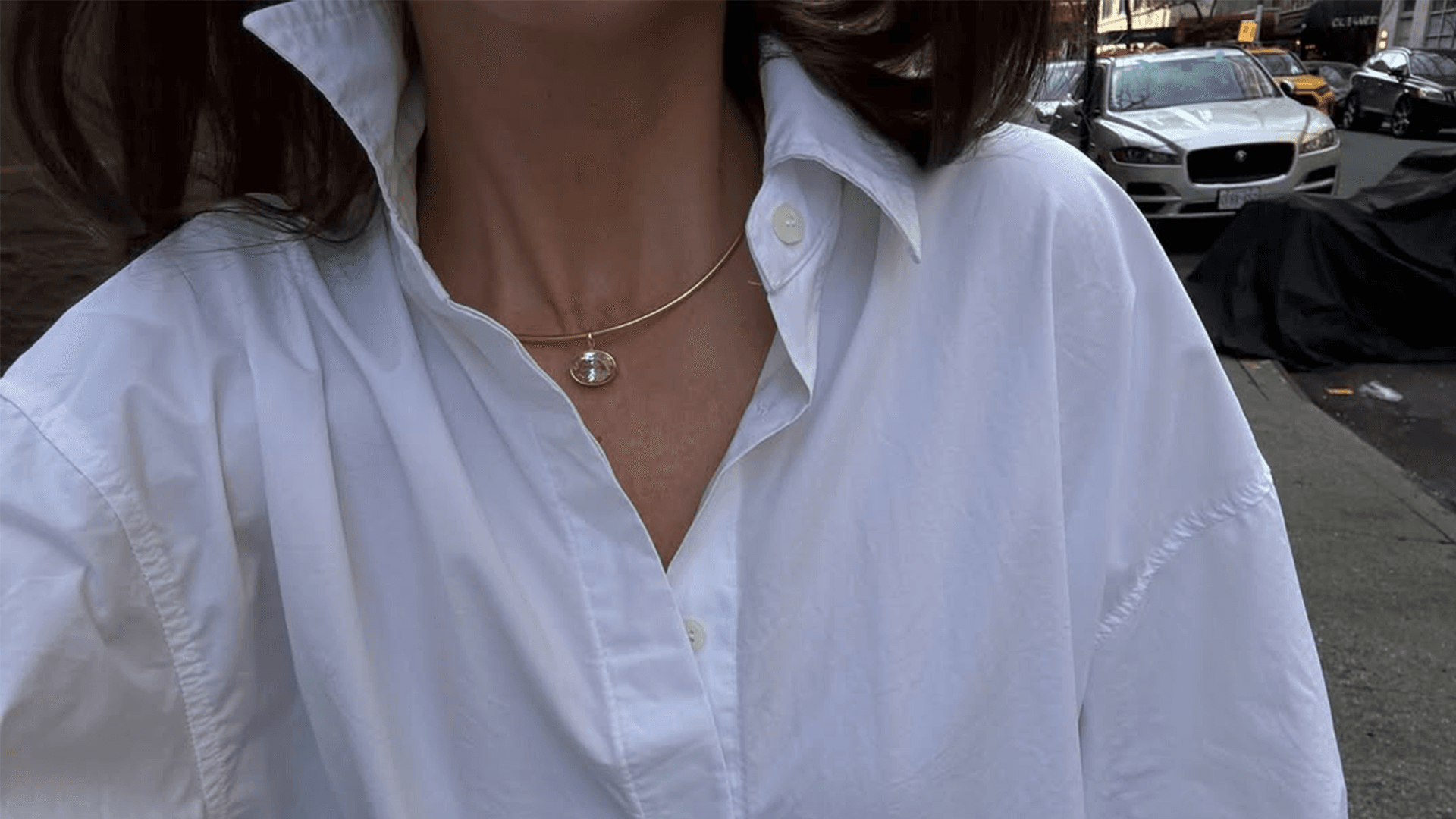
Color is officially jewelry's personality play. After years of neutral diamonds and barely-there sparkle, fashion lovers are gravitating toward gemstones that tell a story. The specific formula gaining traction is color-blocked layering: a small, vividly colored stone pendant, think a pale aquamarine set in a yellow-gold bezel, worn against a stack of plain chains. The colored stone is the signal; the chains amplify without competing.
The refinement is repetition: pulling the same stone tone across multiple pieces, a small aquamarine pendant at 18 inches, a single aquamarine bead on a ring, a chip of blue stone in a bracelet charm, ties layers together without demanding they match. Beads and natural stones add depth and personality, making jewelry feel expressive and personal rather than overly precious.
How to wear it tomorrow (3-step formula):
1. Base chain: A fine yellow-gold chain at 16 inches, unadorned, to anchor warmth without competing with color.
2. Focal pendant: A small colored-stone pendant (aquamarine, tourmaline, or labradorite) set in yellow gold at 18-20 inches. This is your anchor piece.
3. Texture layer: A second strand of beaded chain or a semi-precious stone collar at 22-24 inches, echoing the accent color in a smaller, supporting role.
- Do let the colored pendant sit in open space below a V-neck or scoop; it functions as a focal jewel.
- Don't bury a small stone pendant under a crewneck or a structured collar. It will vanish against fabric. If your neckline is high, push the pendant length to at least 22 inches.
Neckline notes:
Trend 3: The Layered Choker Comeback and the Totem Stack
The SS26 runways showed necklaces layered over necklaces, rings on multiple fingers, and bracelets worn with cuffs: less delicate, more deliberate. "Think sculptural chains with sleek pieces, chokers making a very triumphant 90s comeback." The three-tier necklace formula from the runway translates cleanly to everyday wardrobes: a fitted choker at 14-16 inches, a mid-length pendant chain at 18-20 inches, and a longer totem or statement chain at 24-28 inches. Spacing matters precisely here. Maintain 1-2 inches of visible chain between each length; when layers collapse, the stack reads as clutter rather than curation.
How to wear it tomorrow (3-step formula):
1. Base chain (choker): A fitted chain, bead, or velvet choker at 14-16 inches, sitting high on the neck.
2. Focal pendant: A meaningful mid-length pendant, an heirloom locket, a sculptural charm, at 18-20 inches.
3. Texture layer: A longer totem chain with a larger link or interesting finish at 24-28 inches. Oxidized or raw-finish metals add weight and contrast without adding volume.
- Do use the choker-plus-layers formula with boat necks and off-shoulder cuts; it frames the collarbone as jewelry real estate.
- Don't attempt all three tiers against a turtleneck or high collar. The choker disappears; the stack loses its lowest anchor. Start instead at tier two and build downward.
Neckline notes:
The Ring Formula: Variable Width, Not Matched Sets
The same architecture applies below the shoulder. The ring stack that performs best in 2026 is built on contrast in width and texture across adjacent fingers: a slender pavé band, a textured signet, and a thin hammered band worn on the same hand. Variable widths read as curated; identical bands read as a retail set. Place the signet (the heaviest visual piece) on your index or middle finger as the anchor, then taper to finer bands on surrounding fingers.
Story-Driven Shopping: Buy Now vs. Wait
The broader consumer shift running beneath these trends is away from single-season statements and toward assembled sets built over time. This has practical implications for how to approach shopping.
- A textural base chain in your preferred metal, the workhorse of any stack
- A colored-stone accent pendant in a bezel setting (aquamarine, labradorite, or tourmaline are the accessible entry points)
- One mixed-width ring set for hand stacking practice
Buy now:
- A designated anchor piece. Meaningful pendants, heirloom links, and statement signet rings are worth choosing slowly.
- Full pre-made layered sets. They read as kits, not curation, and limit how the stack evolves.
- Trend-reactive colored stones in expensive cuts. The direction is toward small, deliberately placed accents; a major stone purchase is better timed after you've identified your palette.
Wait on:
The deeper idea here is patience as a styling strategy. In 2026, jewelry is no longer just an accessory; it's a conversation with the past, a declaration of personal style, and an essential element of any wardrobe. A stack built over six months, one anchor, two textural chains, a colored accent, will always outperform a stack purchased in an afternoon. That is the rule the runways are enforcing, and it is one worth keeping.
Know something we missed? Have a correction or additional information?
Submit a Tip