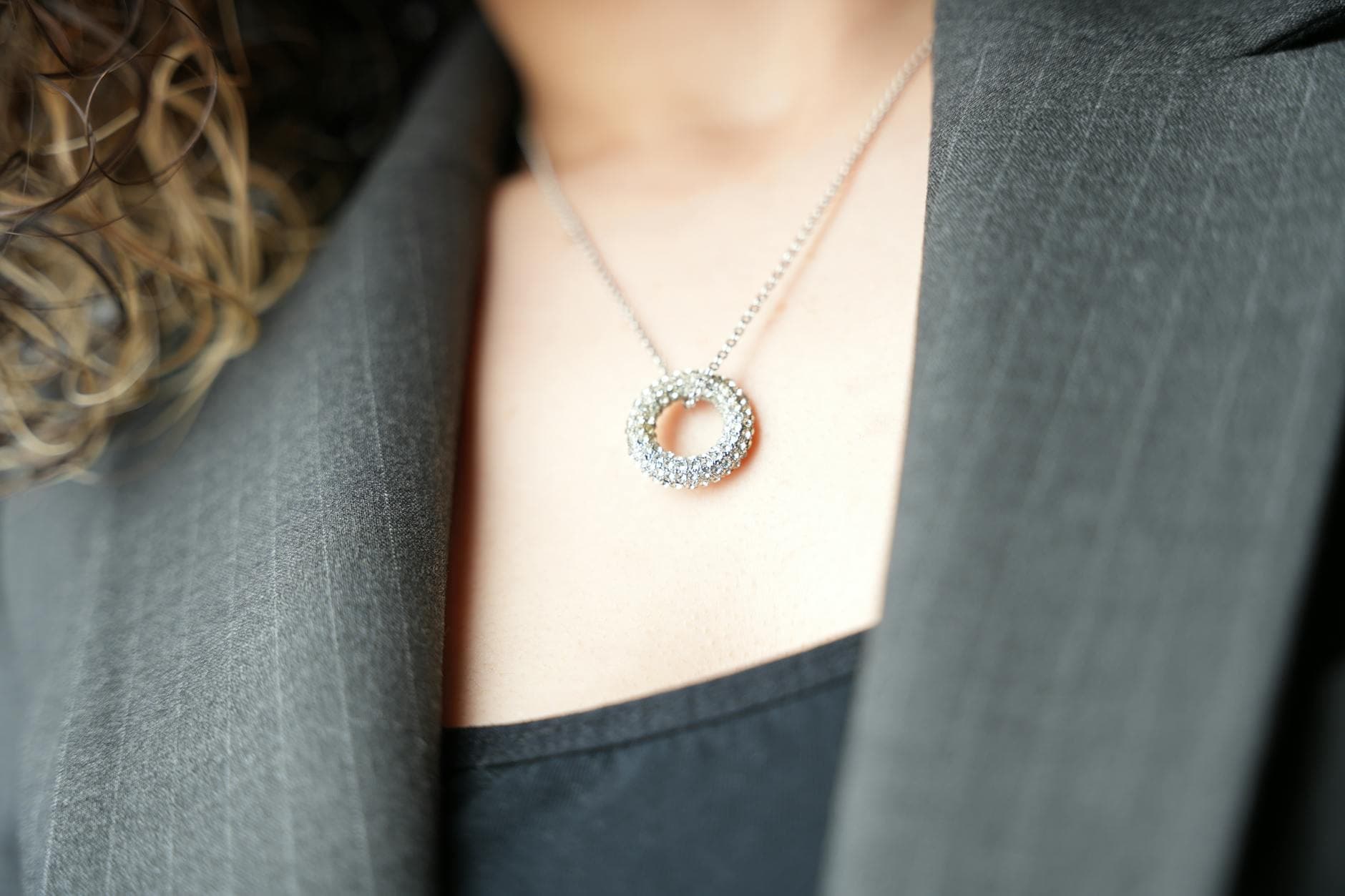
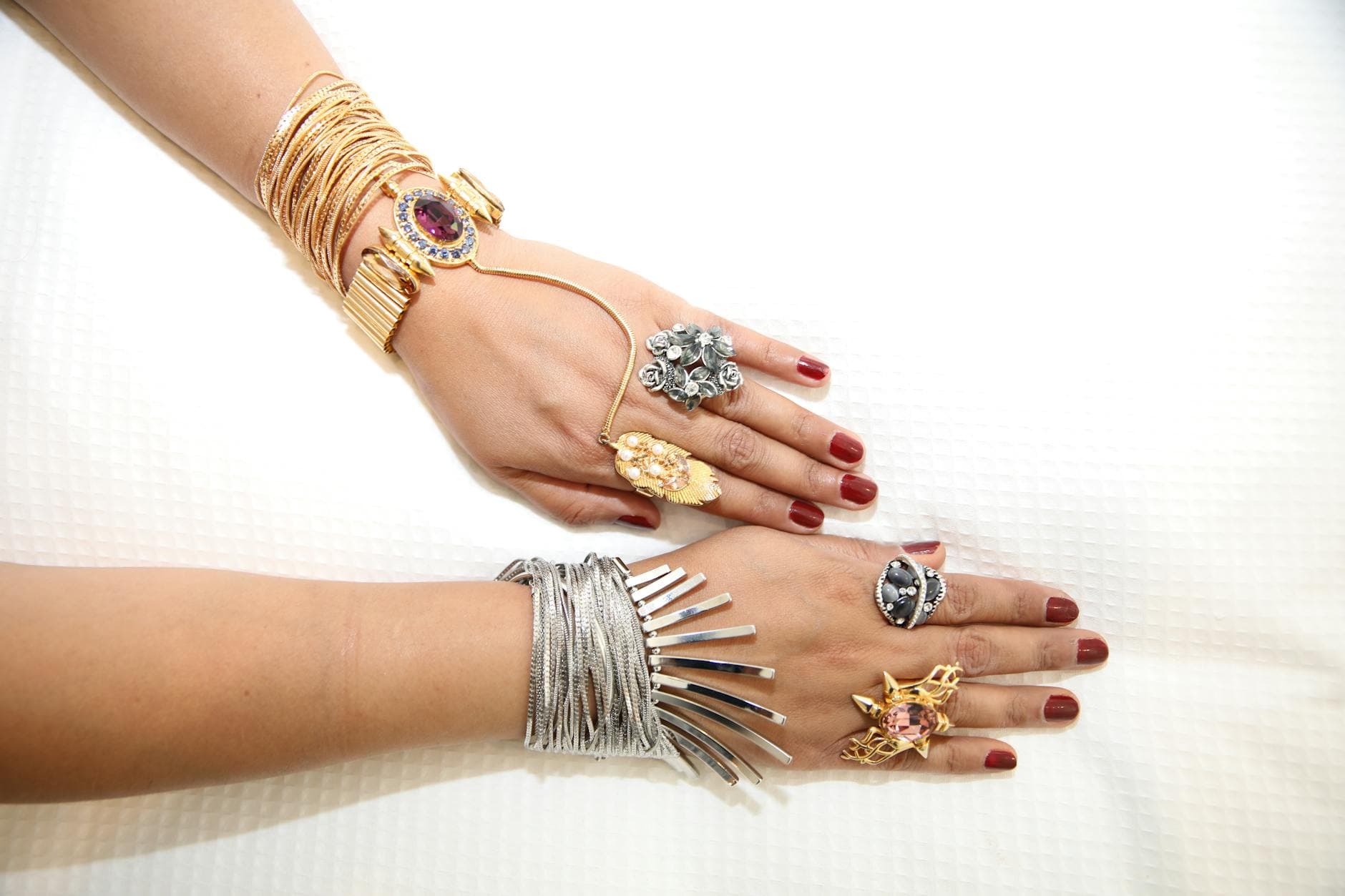
Collar necklaces lead 2026's move toward sculptural statement jewelry
Collar necklaces are replacing delicate chains as 2026's sharpest layering move, with sculptural shapes that reset the neckline in one stroke.
The shape of the shift
The necklace story has changed its scale. What felt polished last season now looks tentative next to the new collar necklace, the fastest way to turn a layered look into something more modern, more deliberate, and far more architectural.
Who What Wear calls collar necklaces one of 2026’s most important jewelry silhouettes, and the timing tracks with a larger swing toward sculptural jewelry across the industry. Fashionista captures the mood in one line from Marrow Fine Jewelry founder Jillian Sassone: “Jewelry in 2026 feels sculptural, statement-making and personal.” At Paris Fashion Week, WWD saw spring 2026 jewelry defined by self-expression, geometric interplays, sinuous lines, chunky volumes, and an intensified focus on craftsmanship. Buyers singled out accessories from Chanel, Dior, Bottega Veneta, Prada, Miu Miu, Loewe and Celine, which gives the collar necklace revival commercial weight, not just stylistic heat.
Why the collar reads so current
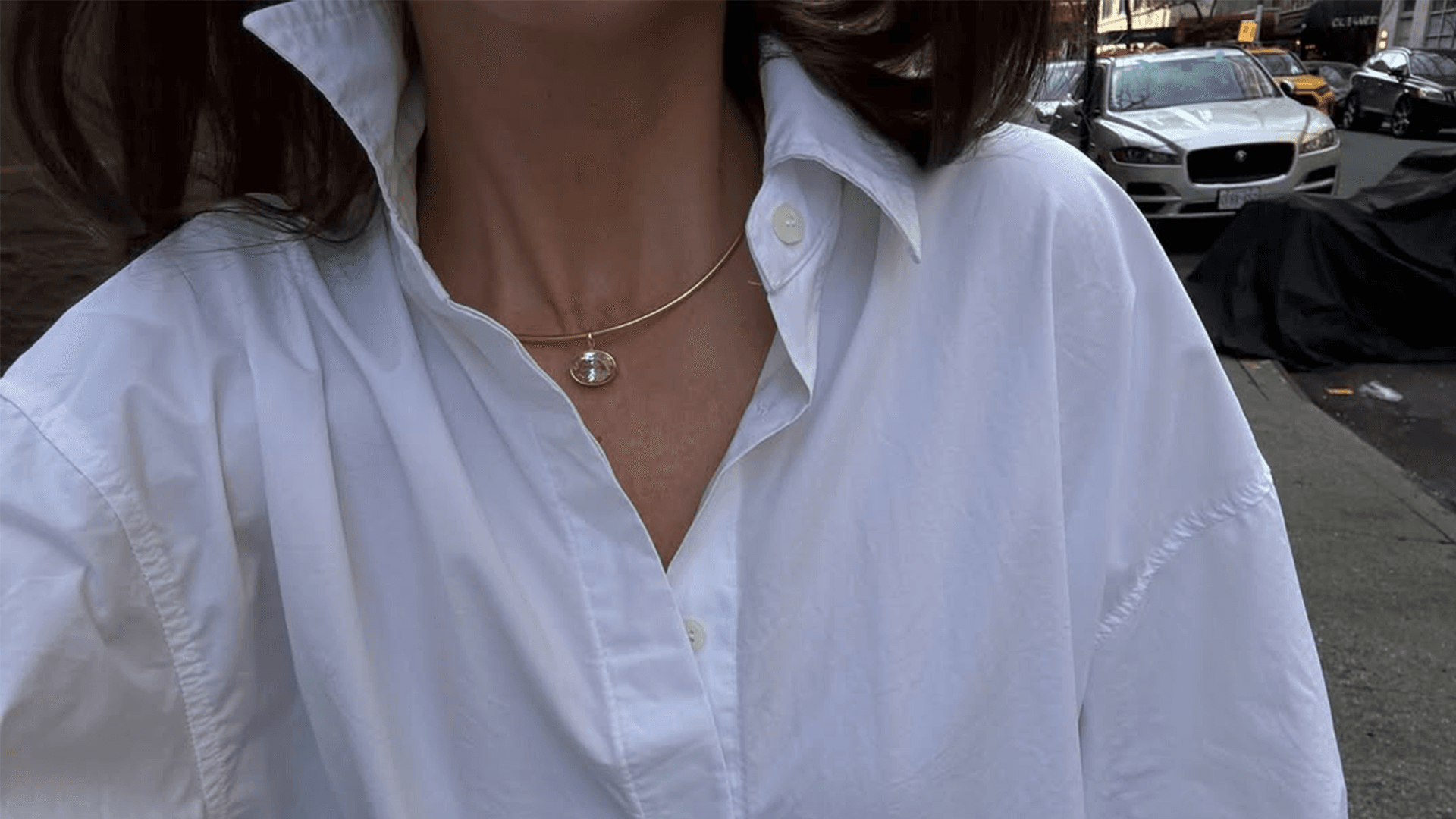
The collar works because it changes proportion in one clean move. A delicate pendant hangs inside the neckline, but a sculptural collar redraws the frame of the face, shoulders, and upper chest. A torque-style choker, especially, tightens the visual line at the throat and makes the rest of an outfit feel sharper and more intentional.
That is why the silhouette feels especially effective with pieces that already have a strong outline. A crewneck tee becomes less casual the moment a polished collar sits just above the rib of the neckline. An open-collar shirt feels more edited when the jewelry occupies the space where fabric would otherwise stop. Evening dressing, meanwhile, gets a fresh dose of tension when a collar replaces the expected pendant and lets bare skin become part of the composition.
The outfit formulas that make it work
The easiest way to wear the new necklace language is to let one strong piece do the heavy lifting, then keep everything else clean. The best combinations are simple because the collar itself already carries the visual architecture.

- A white or black crewneck tee, tailored trousers, and a smooth metal collar create the clearest high-low contrast. The tee keeps it grounded, while the necklace does the work of making the look feel current.
- An open button-down, worn with the top two buttons undone, gives a torque choker room to sit exactly where the collar of the shirt breaks. The effect is crisp and slightly subversive, especially in a crisp cotton or silk shirt.
- A strapless dress or a square neckline is the natural evening setting for a broader collar. The necklace becomes part of the garment line, almost like a second neckline drawn in metal.
- A minimal knit with a close neck benefits from a rigid or sculptural collar that sits just outside the fabric, creating contrast without needing any other necklace at all.
The point is not to stack endlessly. The point is to shift from accumulation to precision. In this mood, a single broad collar can do more for an outfit than three chains with different lengths.
Why the form has such deep roots
Part of the collar necklace’s authority comes from how old the idea is. The Metropolitan Museum of Art dates a Villanovan “Necklace or Torque” to the 9th to 8th century BCE, and it notes that a Celtic gold neck ring may have been twisted from a cast gold blank. It also places broad collar necklaces among the most frequently worn jewelry pieces for royalty and the elite in ancient Egypt, especially by the New Kingdom.
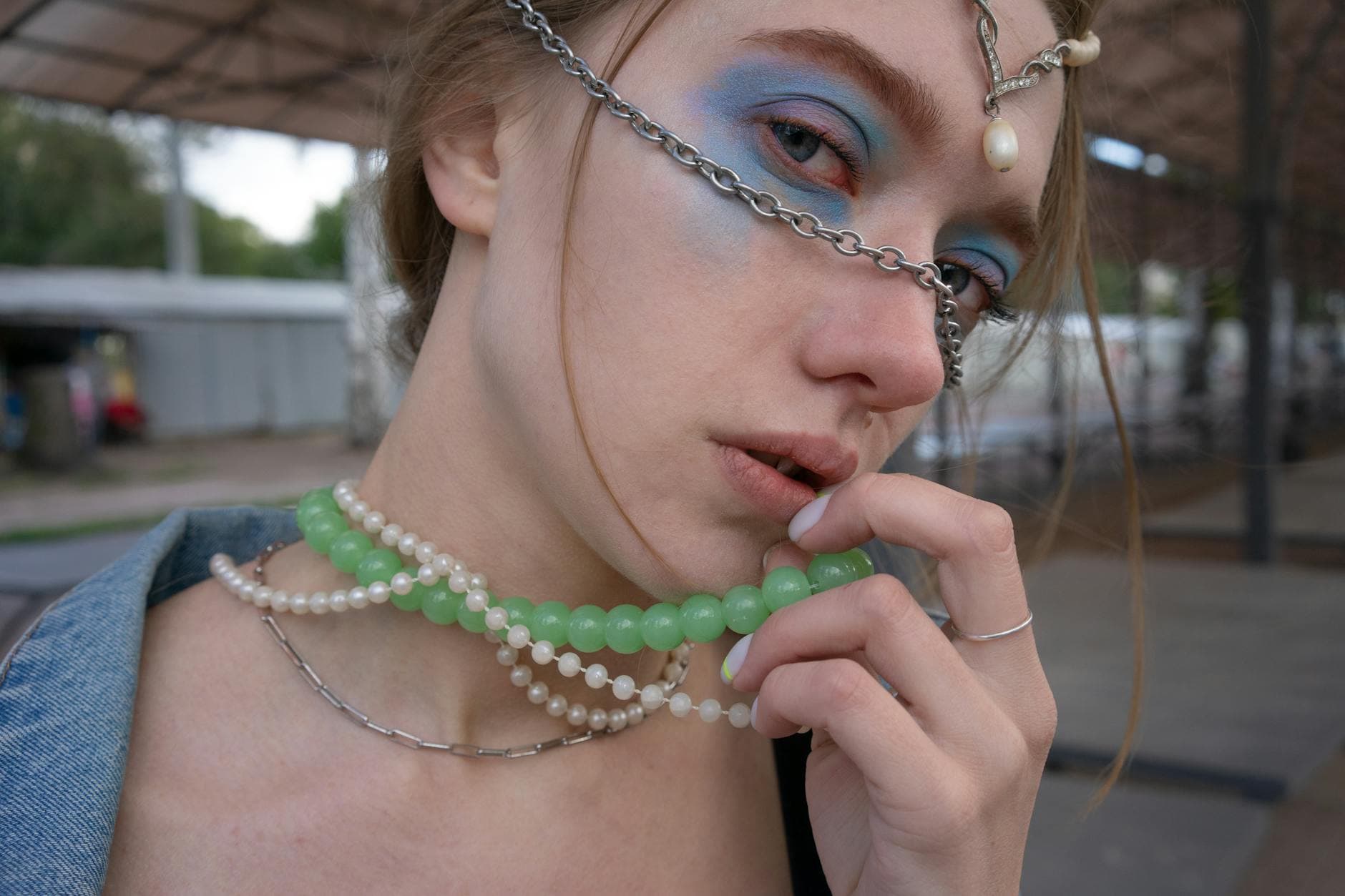
The Met describes a broad collar as a multi-strand necklace that covers the upper chest and shoulders, which is exactly why the shape still feels so powerful now. It does not simply decorate the neckline; it changes the body’s proportions. One Egyptian example even survives as a durable version of the elaborate floral collars worn by banquet guests, a reminder that this is a form built to signal occasion, status, and visual control.
That ancient line also runs westward. The Roman historian Diodorus Siculus wrote about Celts in Gaul wearing massive solid-gold collars around their necks, a detail that helps explain why torques still read as both spare and forceful. These forms have always carried meaning because they sit at the intersection of ornament and armor.
What to look for in a modern collar
The best collars in 2026 should feel resolved in their structure. A good piece has enough presence to define the neckline, but not so much bulk that it overwhelms the clothes around it. The most convincing versions tend to have a clear shape, a confident finish, and a material story you can actually read from the piece itself.
Bronze and gold anchor the historical examples, and that material clarity matters now. Whether the finish is polished, brushed, or sculpted into linked segments, the necklace should look intentional from every angle. If a brand’s language is vague about construction or material, the piece usually loses the very thing that makes this silhouette compelling: its authority.
The collar necklace revival is not just a return to old forms. It is a shift toward jewelry that behaves like design, not decoration, and that is why it lands so cleanly with the broader sculptural mood moving through 2026.
Know something we missed? Have a correction or additional information?
Submit a Tip