Advanced Jewelry Layering Techniques for Effortless Style and Personal Expression
Learn how to build dimensional, expressive layers using focal anchors, graduated chain weights, and thoughtful spacing, plus practical rules for rings, bracelets, mixed metals, and care.
1. Why layering matters
Layering is more than ornament; it sculpts depth and personality into otherwise simple dressing. “Mastering the art of jewelry layering can feel a little daunting. You want it look effortless yet pristine at the same time,” writes Covetps, and when done well, layering extends the life and versatility of every piece in your box, turning a favorite necklace into a focal point and a handful of rings into an architectural statement.
2. Foundational architecture: focal pieces, anchors and graduated weights
Begin every deliberate stack with a single, intentional center: a focal piece. As Shoplemel counsels, “Choose one statement jewelry item, like a large Initial Diamond Pendant to anchor your look. This will be the star of your layered ensemble.” The Original Report likewise frames advanced strategy as “dimensional necklace stacks (use of focal points, intentional spacing, and graduated chain weights),”, which is to say, think in layers of purpose: an anchor that reads as the star, supporting chains that move from light to substantial, and rings built around an “anchor ring” with contrasting textures.
3. Necklace sequencing: choker, mid-length, long
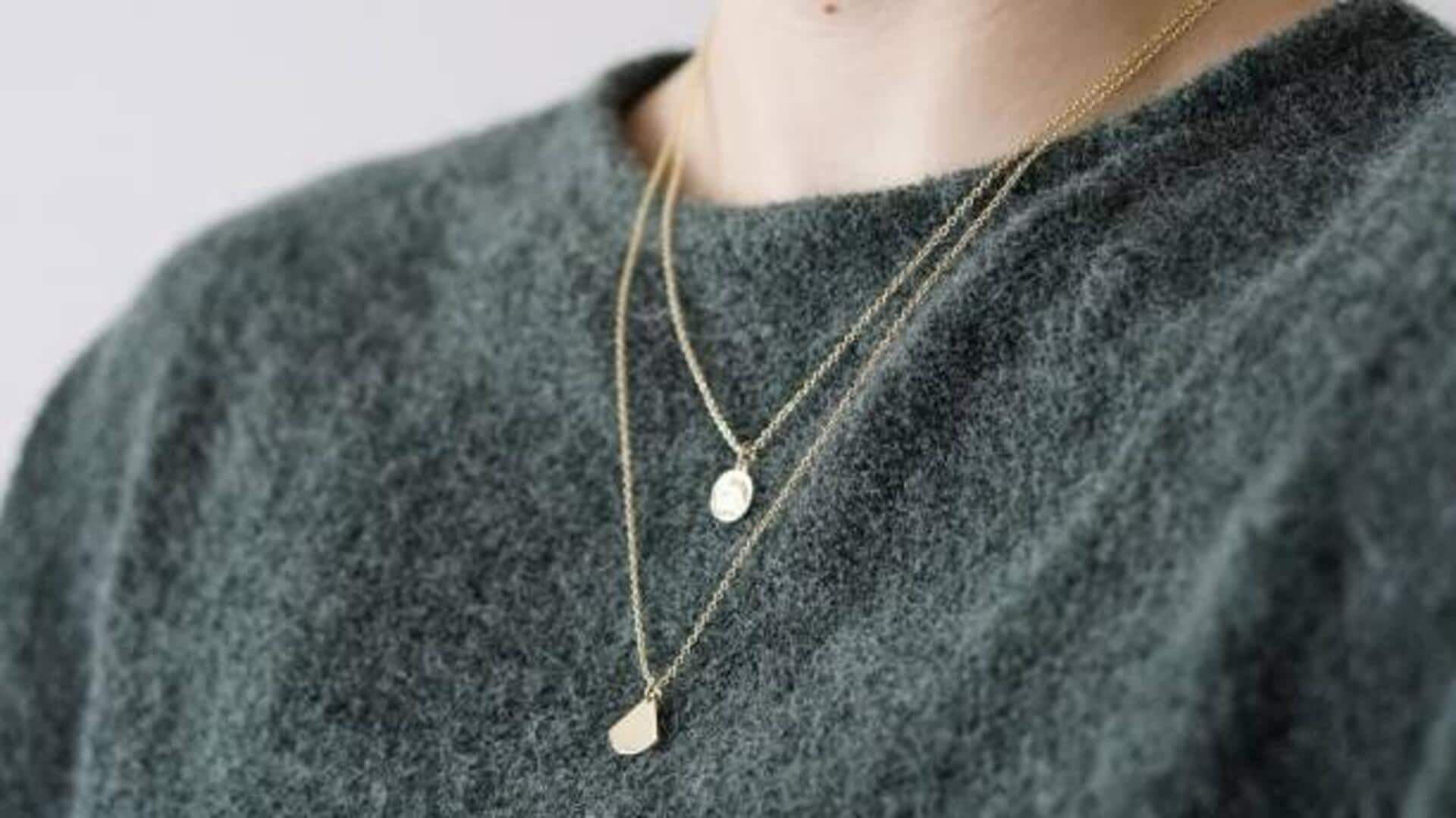
The easiest architecture for necklaces is sequential: short, mid, long. “The key to a stylish stack lies in mixing different lengths to create depth and visual interest. Start with a choker or a short necklace, add a mid-length piece, and finish with a longer chain,” Catbirdnyc advises. Mirea echoes this with a practical example: pair a dainty choker, a mid-length with a small pendant, and a longer chain with a larger charm or gemstone for balance; Asjewelrydesign gives a specific metric: “aim for at least 1 inch of height between each layered necklace… make sure that the length difference between each necklace is 2 inches or more. For example, try pairing a choker with a 16-inch necklace, then add a 20-inch pendant necklace.”
4. Spacing and graduated chain weights: how thickness changes the math
Spacing is not only about inches; chain weight alters how a necklace hangs and how much visible separation you need. “It’s essential to create a balanced look when layering; spacing is key,” Covetps reminds us. Use thinner, lighter chains nearer the throat and progressively stronger, heavier chains below, this “graduated chain weights” approach prevents shorter pieces from being overwhelmed by heavier ones and preserves the intended 1‑inch visible gaps or the roughly 2‑inch length differences suggested by some stylists.
5. Textures, chain styles and mixing metals
A layered stack should feel intentionally varied, not uniform. “Mix metals, textures and stones; this creates a more natural and interesting feel. It doesn’t need to feel like a matching set,” writes Covetps, while Shoplemel notes that “By combining different metals, chain lengths, and pendant styles, you can craft a signature look that is uniquely your own.” Alternate cable, curb, paperclip and figaro links; pair a hammered chain with a polished one; introduce a small beaded strand to soften metal edges. The visual tension between finishes is what reads as sophistication rather than clutter.
6. Ring‑stacking architecture: anchor rings + texture contrast
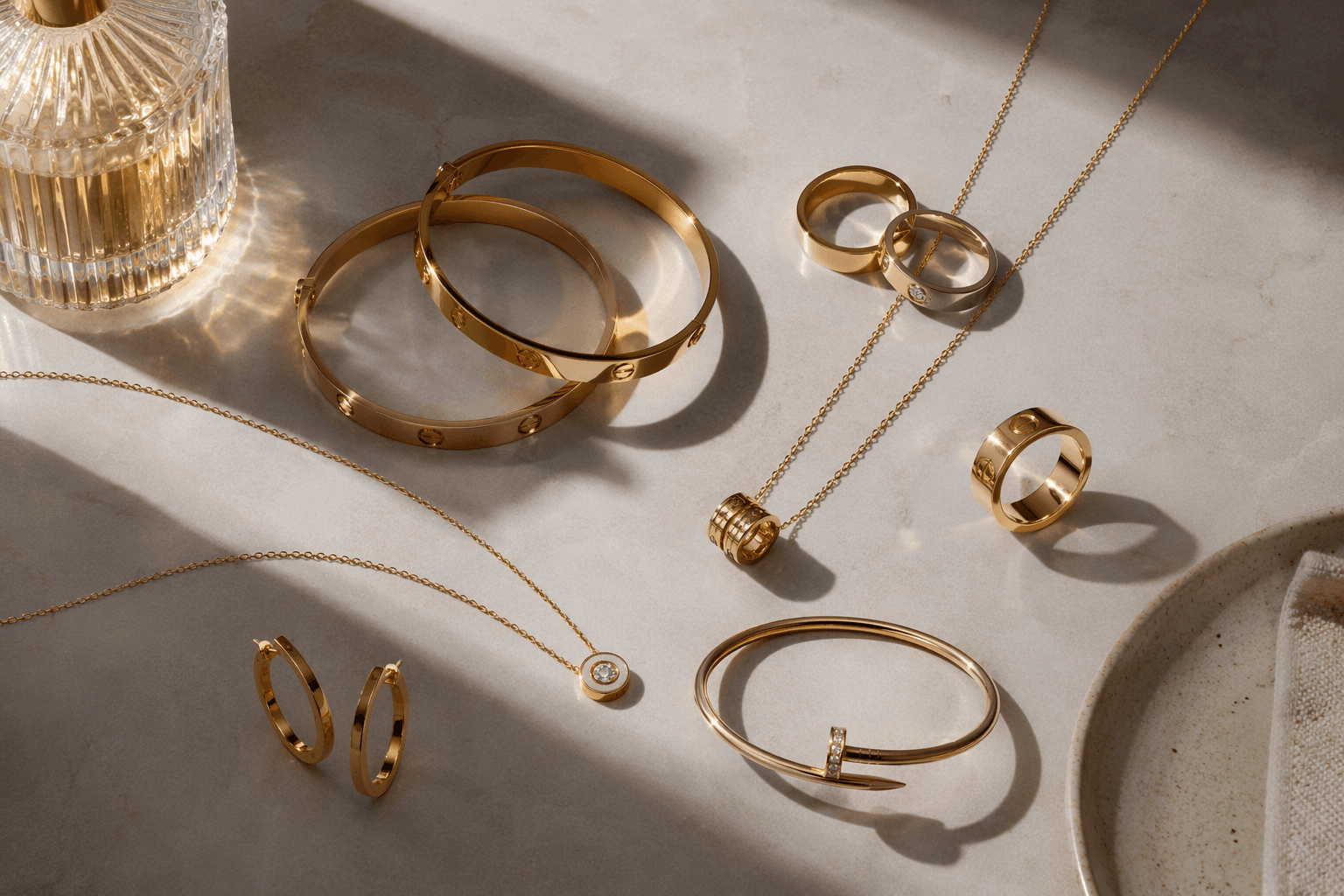
The Original Report captures the concept succinctly: “ring-stacking architecture (anchor rings + texture contrast +”, the fragment points to a durable strategy. Build a ring composition around a central anchor ring (a signet, solitaire or bold band), then add textured bands, hammered, pavé, milgrain, or slim plain rings to create contrast. Covetps’ broader counsel to “mix bold statement pieces with fine and delicate ones” applies here: alternate widths and surface treatments to keep the hand legible and sculptural.
7. Bracelet stacks and arm balance
Bracelets call for a similar compositional eye, with an awareness of overall balance. “If you’re stacking bracelets on one arm, consider keeping the other wrist simple or bare for balance. This creates a chic, polished look that doesn’t feel overwhelming,” Mirea recommends. Stack bracelets by weight, tiny bead strands and friendship bracelets closest to the hand, then a medium curb or bangle, finishing with a singular statement cuff; keep the opposite wrist quiet so the ensemble feels curated, not accidental.

8. Avoiding common pitfalls: the Mister T test and the virtue of variety
Too much of one thing reads as costume. “It’s great to mix bold statement pieces with fine and delicate ones. Too many chunky pieces can give you that 'Mister T' look, or too many dainty pieces can look messy. So variety is key,” warns Covetps. Temper chunky chains with slender pendants, and counter pavé-heavy rings with plain bands. The objective is a harmonious hierarchy, one star, several supporting players.
9. Outfit, neckline and proportional considerations
Consider what your clothes are doing before you add jewelry. “Consider the neckline you’re wearing when layering necklaces, the simpler it is, the more elaborate your layers can be. Generally, wearing more neutral and plain colors when layering is best. It really makes the necklaces stand out,” Covetps writes. A scoop neck or V-neck invites a three-tiered necklace; a turtleneck begs for a single bold pendant or a stacked choker and collar. Neutral or plain colorways let the metals and stones speak more vividly.
- “Individual Storage: Store each necklace separately to prevent them from intertwining.”
- “Clasp and Hook: Securely fasten the clasps and hooks when storing to avoid loops.”
- “Jewelry Trays: Use jewelry trays with dividers to keep necklaces organized and separated.”
10. Storage, care and practical tips
Good layering begins with how you keep pieces between wears. Catbirdnyc’s practical checklist is one to follow:
Organize by length and weight so you can reach for coordinated combinations quickly; secure clasps before laying a chain down to avoid tangles and stress on links.
11. Curated sets, shopping notes and price signals
If you’re building a collection, curated layered sets remove guesswork: “Layered necklace sets are essential… These sets take the pressure out of layering necklaces, offering a perfectly curated collection,” Catbirdnyc says. Retail pricing can signal craftsmanship and metal weight: for example, Catbirdnyc lists a “1976 Gold Chain, from $468.00,” a “Memento Custom Gold Charm Holder Necklace, from from $208.00,” and highlights a “Diamond Pinprick Necklace, yellow gold, Ready To Ship!, Best Seller.” Retailers also use incentives, Shoplemel advertises “Free USA Shipping Orders $500+ • Easy Returns,” Asjewelrydesign posts “FREE SHIPPING ON ORDERS OVER $100 & FREE RETURNS\ DETAILS,” and Mirea offers “Get 10% off Direct in your Inbox”, all helpful when deciding whether to invest in real gold or gold-filled alternatives.
12. Permission to play: personal pieces, heirlooms and voice
Above technique sits permission: “Here’s the best part, folks, jewelry layering has no rules. It's all about expressing your unique style and having a blast,” Asjewelrydesign declares. Incorporate a vintage heirloom, a birthstone pendant or a custom charm, Shoplemel advises to “Incorporate Personalized Jewelry: Add a touch of personal style by including name, birthstone, or sentimental pieces.” These choices are what transform a technically sound stack into a narrative you wear.
13. The final note: master the rules, then break them
Advanced layering is a game of architecture and instinct: anchor thoughtfully, sequence for depth, modulate weight and texture, and store with care. Remember Covetps’ counsel to “have fun and express your personal style” and the Original Report’s blueprint of dimensional stacks and ring architecture; once you master those basics, layering becomes less about rules and more about the language you choose to speak with metal and stone. Wear it with confidence, the composition will read.
This article was produced by Prism’s automated news system from verified source data, official records, and press releases, then run through automated quality and moderation checks before publishing. The system is built and supervised by the people who set the standards it runs under. Read our full AI policy.
Did this article answer your question?