Brooches Return as Personal Statement Pieces for Everyday Layering
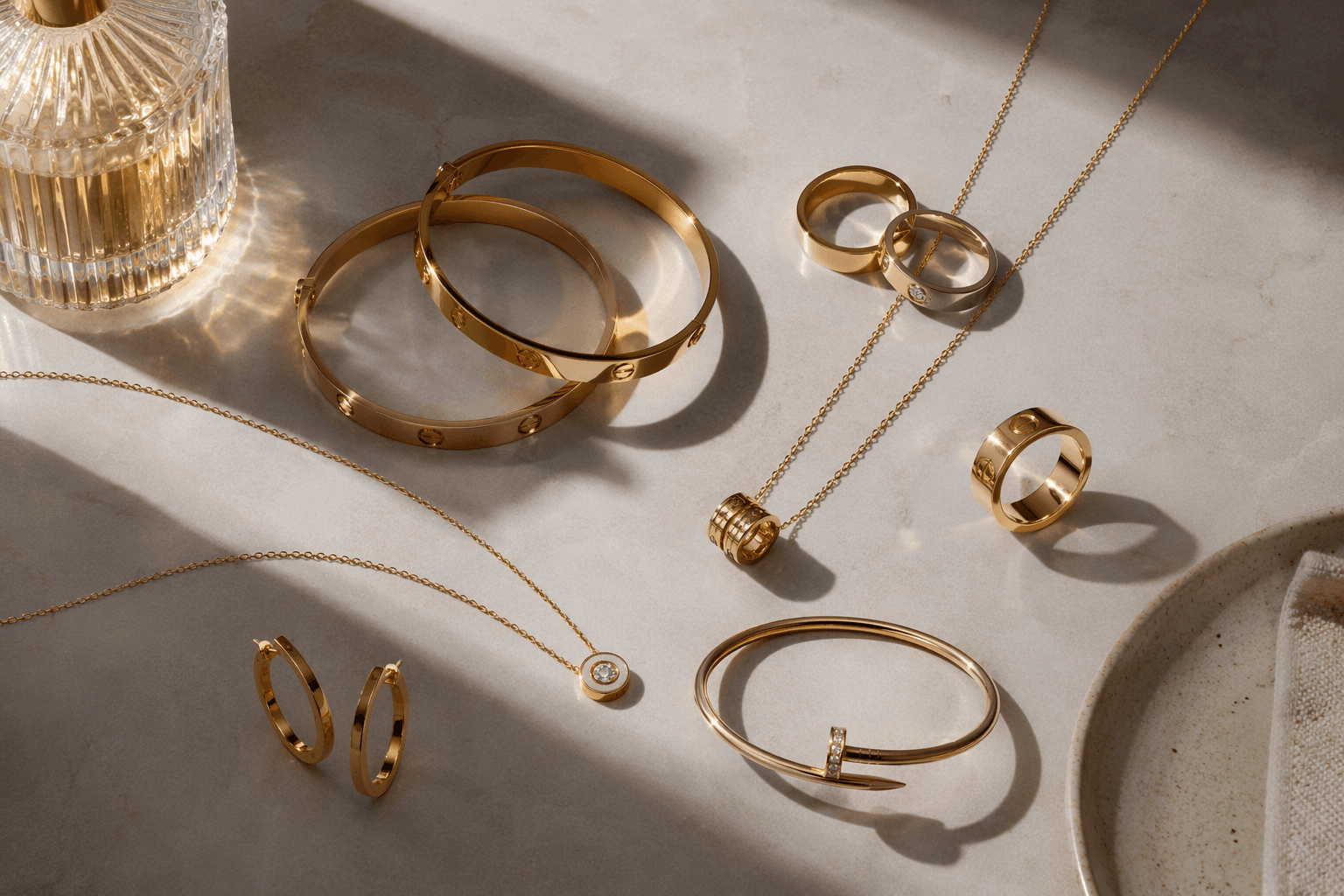
The brooch is back as a practical layer: pin one to a chain, collar, knit, or bag strap and the jewelry you already own looks newly composed.
The brooch is no longer a relic, it is a layering tool
The smartest brooch styling today has very little to do with nostalgia. Its new appeal is practical: one pin can turn a plain chain into a focal point, steady a necklace stack, or give a cardigan, lapel, or bag strap the kind of finish that makes an outfit feel edited rather than assembled.
That shift has been building in plain sight. WWD reported in 2024 that brooches were gaining traction with Gen Z and turning up in many different ways, while the men’s jewelry category was also expanding around statement pieces like brooches and gemstones. Christie’s added another useful signal in the first half of 2025, saying sales in its luxury cluster, which includes fine jewelry, rose 29% to $468 million. In other words, collectible jewelry is still commanding attention, even as everyday wearability is becoming the point.
How to wear a brooch with the jewelry you already own
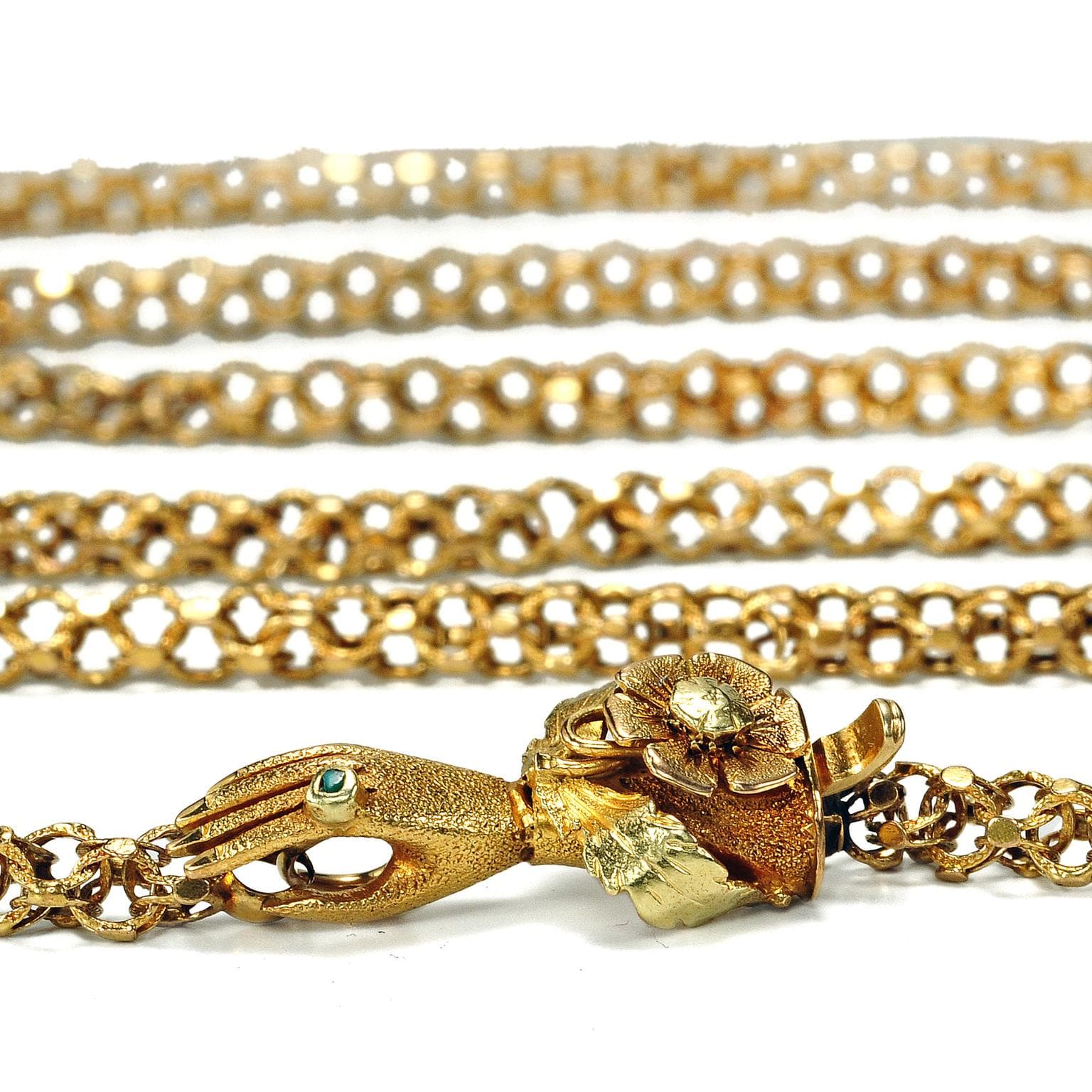
The easiest way in is the necklace trick. Pin a brooch onto a simple chain and it stops reading as a basic chain at all. The brooch becomes the center of gravity, especially when you place it slightly off-center or at the hollow of the collarbone, where it catches the eye without fighting every other layer around it.
That matters if you already like necklace stacks. A brooch can solve the most common layering problem, which is visual clutter. When multiple chains begin to tangle or compete for attention, one brooch on the shortest chain can anchor the composition and let the longer layers fall behind it. Think of it as the punctuation mark in a sentence of metal and stone.
At the collar, a brooch does different work. On a button-down or a coat, it can transform a simple necklace stack by creating a deliberate upper point, especially if your chains are varying in length. Instead of letting every necklace chase the same space, the brooch gives the eye a place to land first, then lets the rest of the look unfold below it.
Where the brooch feels most modern
The best part of this comeback is how unfussy it is. A brooch can sit on a cardigan closure and make knitwear feel precious without making it fragile. It can pin a tank strap into something more intentional, especially when you want one side of an outfit to look slightly undone but still composed. It can also clip to a bag strap, which is one of the easiest ways to make the piece feel current rather than ceremonial.
On lapels, the brooch returns to one of its oldest roles, but with a sharper sense of proportion. A single piece on a jacket can do what a pendant does at the neckline: create a center. The difference is that a brooch can move with the architecture of the garment, which is why it feels so useful alongside layered jewelry rather than separate from it.
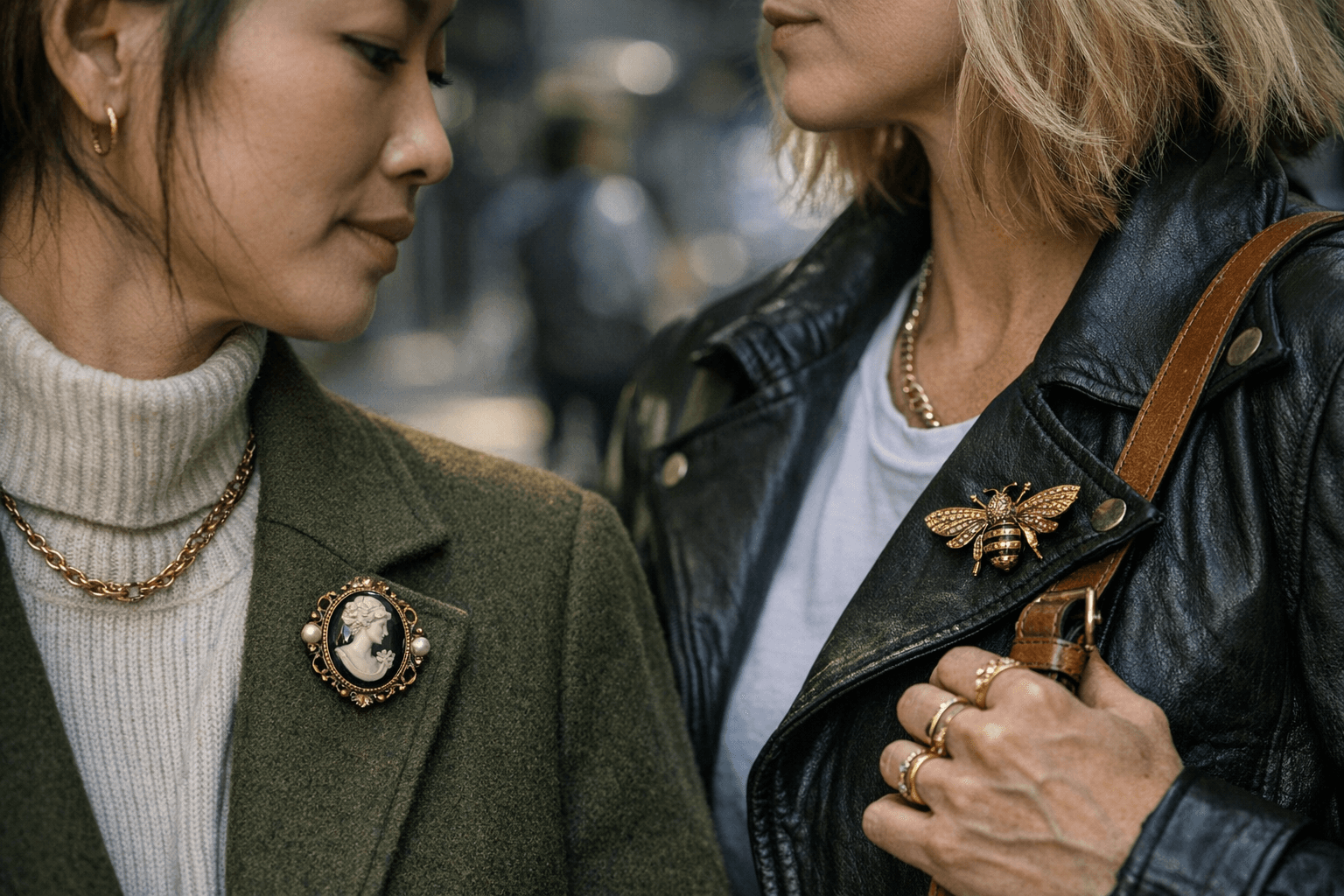
This is also where scale matters. A petite brooch can behave like a whisper on silk or fine knit, while a larger, more sculptural piece can take charge on wool, tweed, or a structured blazer. The goal is not to overpower the rest of your jewelry. It is to give the outfit a point of view.
Why the brooch has always belonged to both fashion and function
The reason the brooch feels newly relevant is that it never really belonged to one era. The Metropolitan Museum of Art notes that brooches have long served as both functional fasteners and decorative jewelry, which is exactly the combination modern dressing keeps asking for. They are not only ornaments. They are tools that happen to be beautiful.
The Met’s historical examples make that dual role even clearer. In eighteenth-century England and America, brooches of this type were popular accessories and were customarily set with deep red garnets, a detail that still reads richly against today’s cashmere and tailoring. By the nineteenth century, increased interest in natural history helped fuel novelty jewelry in the form of birds, animals, and especially insects, with jeweled insects pinned to hairdos and gowns. That instinct for ornament with personality has not disappeared. It has simply moved into a more everyday register.
The museum’s example of the American Arts & Crafts jeweler Marie Zimmermann is telling, too. Her work was admired during her lifetime and continues to attract attention now, which says something important about the brooch as a category. The best pieces are not merely decorative. They carry design intelligence, material presence, and the kind of individuality collectors remember.
What to look for when you want the brooch to earn its place
If you want a brooch to work in a layered wardrobe, choose one with enough visual weight to hold its own but not so much that it drags at fabric or overwhelms a neckline. The pin should feel secure, because placement is part of the appeal. A brooch that sits cleanly on a chain, collar, or lapel looks deliberate; one that shifts awkwardly defeats the point.
Look at the relationship between the brooch and the pieces already in your jewelry box. If you wear slender chains, a compact brooch with clear lines will read elegantly. If your stacks are fuller, a more sculptural piece can create balance by giving the eye a strong central shape. The best brooches do not interrupt layering. They organize it.
That is why the comeback feels less like a throwback than a new styling language. The brooch is returning as the piece that can tie together everything you already own, and in a season of personal dressing, that kind of versatility is the rarest luxury of all.
This article was produced by Prism’s automated news system from verified source data, official records, and press releases, then run through automated quality and moderation checks before publishing. The system is built and supervised by the people who set the standards it runs under. Read our full AI policy.
Did this article answer your question?