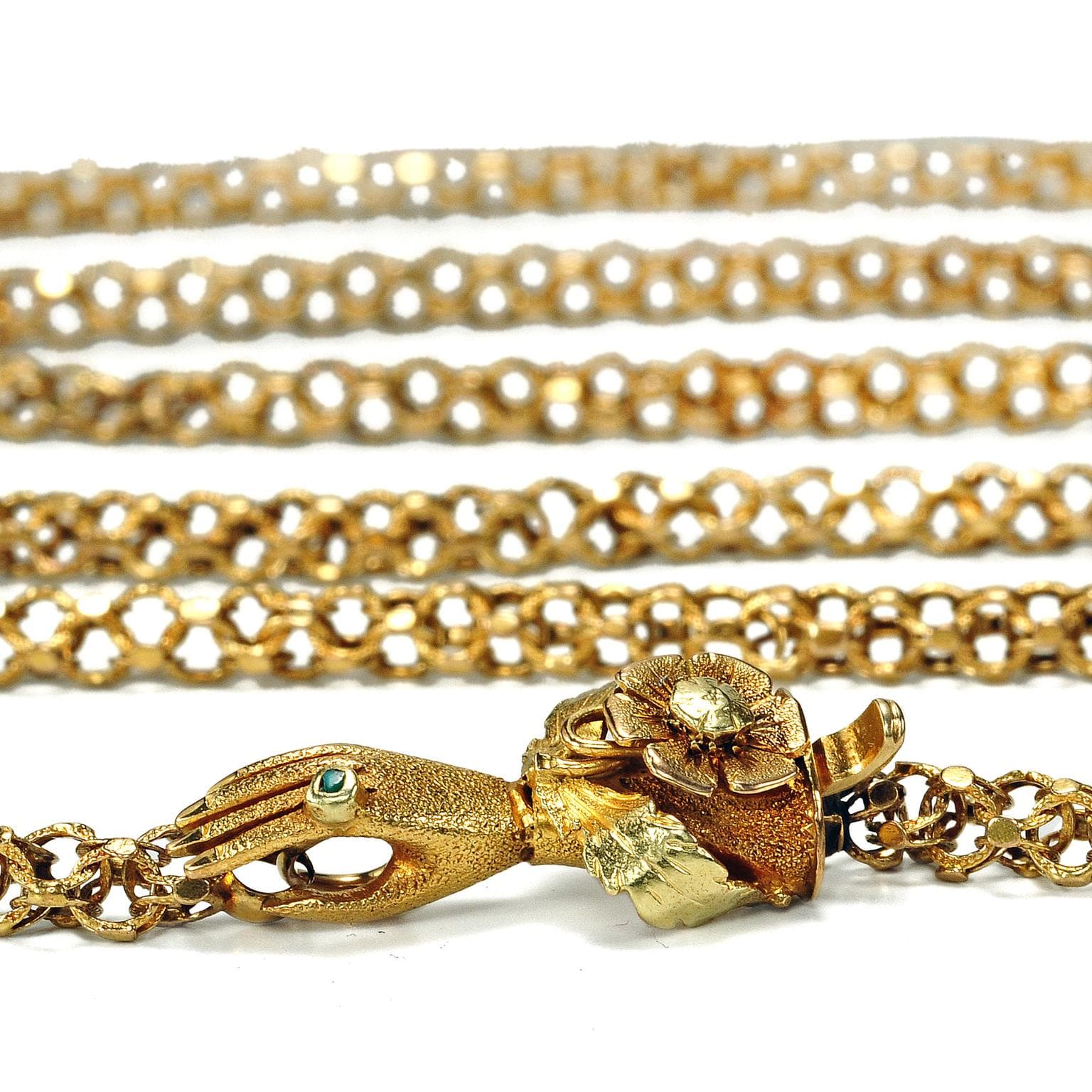
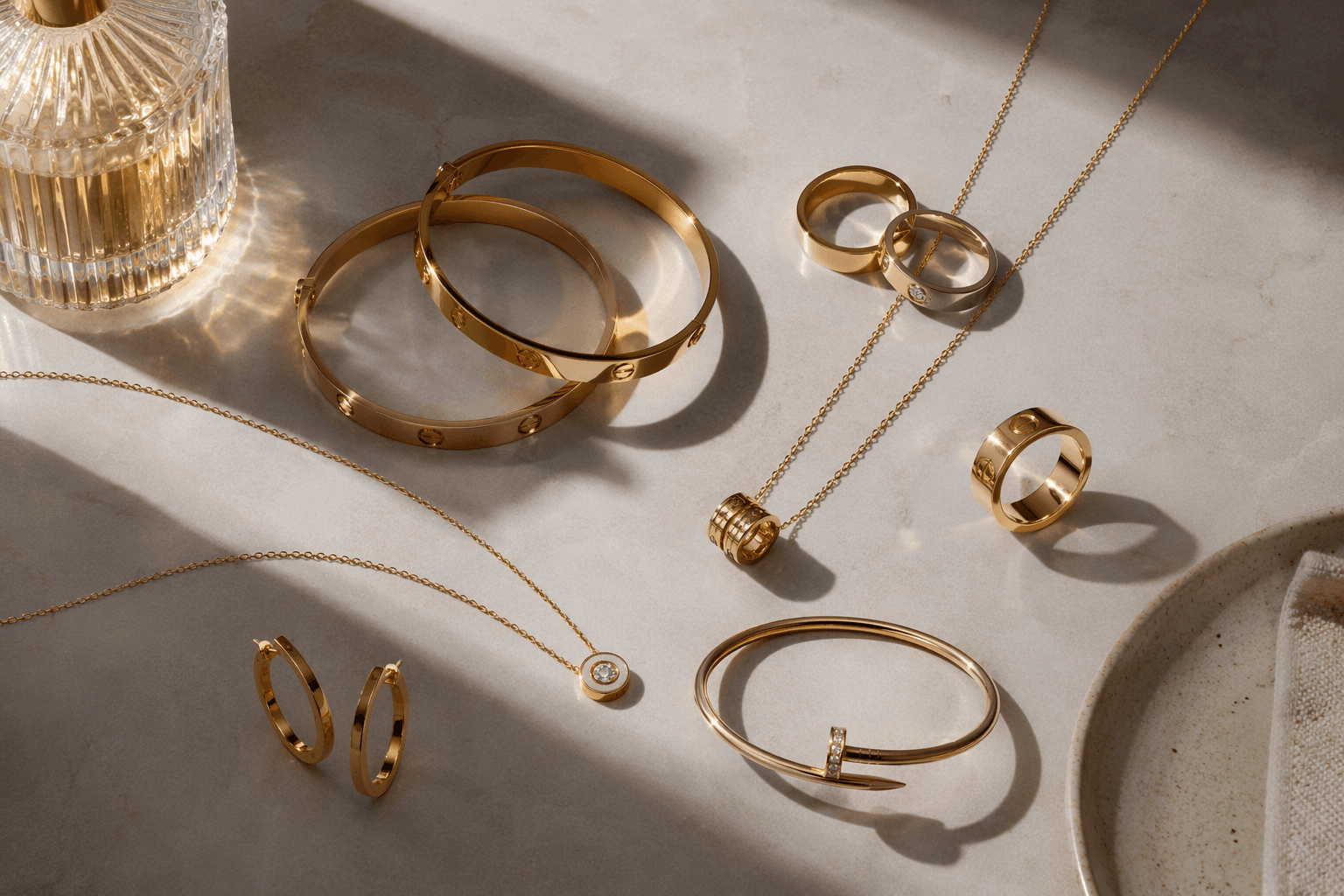
Floral jewelry blooms across layers, from high jewelry to accessible pieces
Floral jewelry is moving from sweet to sculptural, with bloom motifs that layer cleanly from daisy chains to $400,000 high jewelry. The key is scale, texture, and one confident focal point.
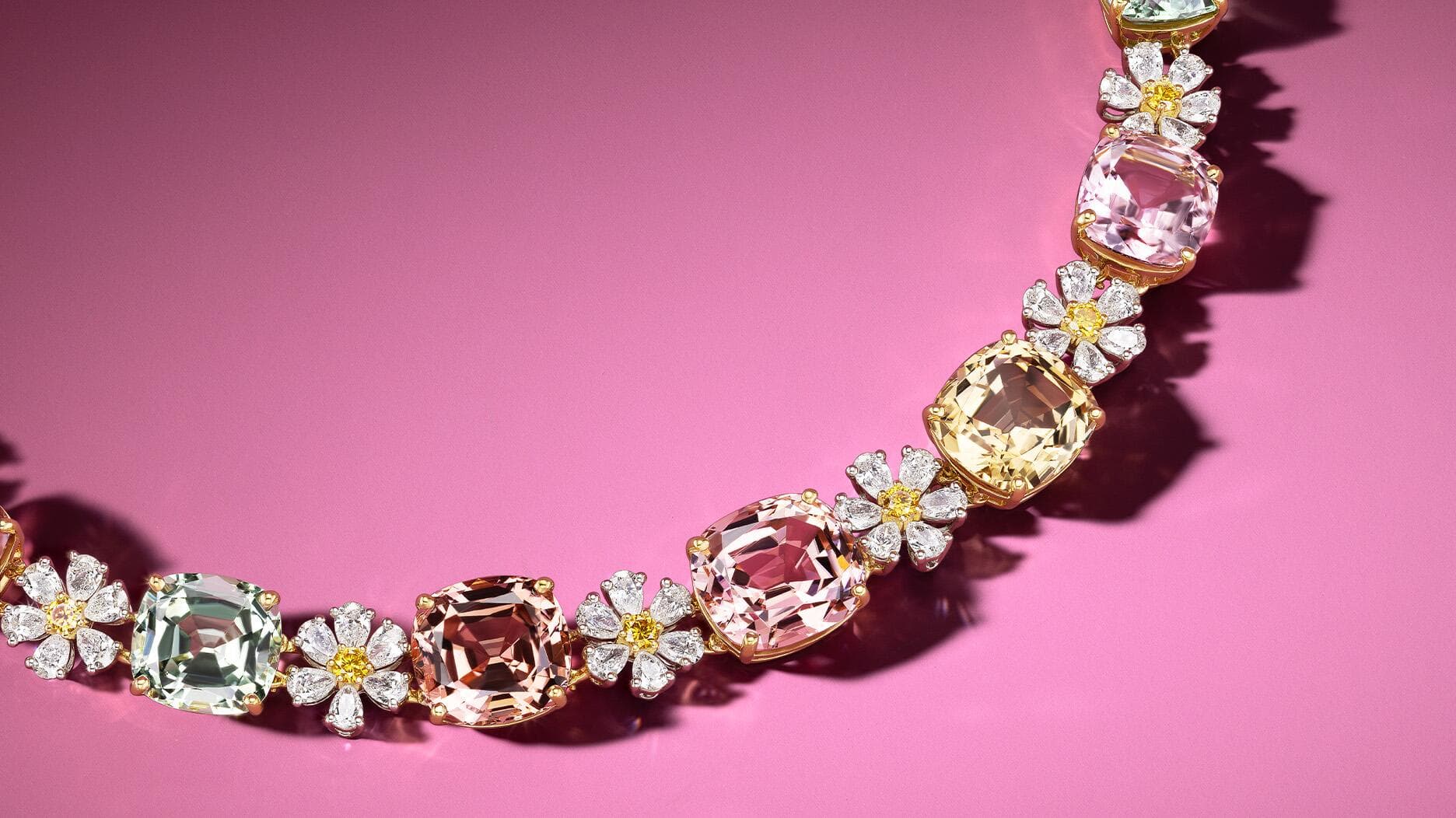
Floral jewelry with structure, not sweetness
The best spring florals right now do not flutter around the neckline like costume petals. They sit closer to the body, built in platinum, yellow gold, diamonds, titanium, suede, horn, and hand-painted porcelain, and they read as design objects first, decoration second. National Jeweler’s April 17, 2026 feature makes the point plainly: floral motifs are showing up across necklaces, rings, bracelets, earrings, and brooches, and they are being treated as collectible pieces that can be layered rather than worn once and stored away.
That matters because the floral category has a long memory. Houses such as Tiffany & Co., Cartier, and De Beers have spent years proving that nature themes can carry real weight in fine jewelry. This season’s difference is scale and styling. A flower no longer needs to be dainty to feel wearable, and it does not need to be precious only in the traditional sense to feel worthy of investment.
Choose one bloom to lead the look
The cleanest way to wear floral jewelry without tipping into costume territory is to let one piece do the heaviest lifting. Oscar Heyman’s platinum and 18-karat yellow gold Flower necklace, priced at $400,000, is exactly the sort of sculptural centerpiece that can anchor a look on its own. Its value is not just in the materials, but in the fact that it reads as a serious high-jewelry composition, the kind of piece that can sit above a very simple chain and still dominate the frame.
The same principle works at a lower price point. Monica Rich Kosann’s Loves Me two-tone daisy necklace, at $795, is far more approachable, but it succeeds for the same reason: the flower motif is clear, graphic, and easy to pair with a second, finer chain. Pippa Small’s 18-karat yellow gold Flora Flower fringe necklace, priced at $9,915, pushes the idea further by adding movement, which makes it feel more modern than precious and decorative.
Layer necklaces by texture, not by theme alone
A floral stack works best when the flower is the visual pause, not the entire sentence. Pair a sculptural bloom with a slim, undecorated chain so the eye can move from polished metal to motif without visual clutter. That is where Emily P. Wheeler’s one-of-a-kind Flower bolo tie, priced at $20,000, becomes useful inspiration: it has the kind of directional silhouette that can break up a row of softer chains and keep the composition from feeling too neat.
The material mix in this spring’s floral jewelry also invites smarter layering. Titanium, suede, horn, and porcelain bring a different surface rhythm than diamonds and yellow gold, so mixing them can keep florals grounded. A hand-painted porcelain flower, for example, reads lighter and more artisanal beside a plain gold chain than beside another ornate bloom. The trick is to combine one hard, reflective surface with one matte or tactile one so the stack feels deliberate rather than overloaded.
Use rings as punctuation, not repetition
Floral rings work best when they behave like punctuation marks. Tacori’s Dahlia sculpted double-petal engagement ring, priced at $16,990 without the center stone, is built to stand on its own, which means it does not need to be surrounded by equally ornate bands to make a point. Its petal structure already supplies volume, so a slim pavé band or a plain polished ring nearby will keep the hand looking composed.
That is the more elegant answer to floral ring layering: one blossom with clean lines, then one or two supporting bands that repeat a metal tone or finish rather than a literal flower shape. If every ring in the stack is petaled, the effect can drift toward theme dressing. If only one ring carries the bloom and the others are streamlined, the hand looks collected.
Brooches and bracelets can carry the strongest personality
If necklaces establish the composition, brooches and bracelets can change its mood. Boochier’s Rainbow Flower Puff bracelet, at $37,870, is a reminder that floral jewelry does not have to be delicate to be wearable. Its name alone signals volume and color, which makes it the sort of piece that should be given space, not crowded into a wrist full of competing forms.
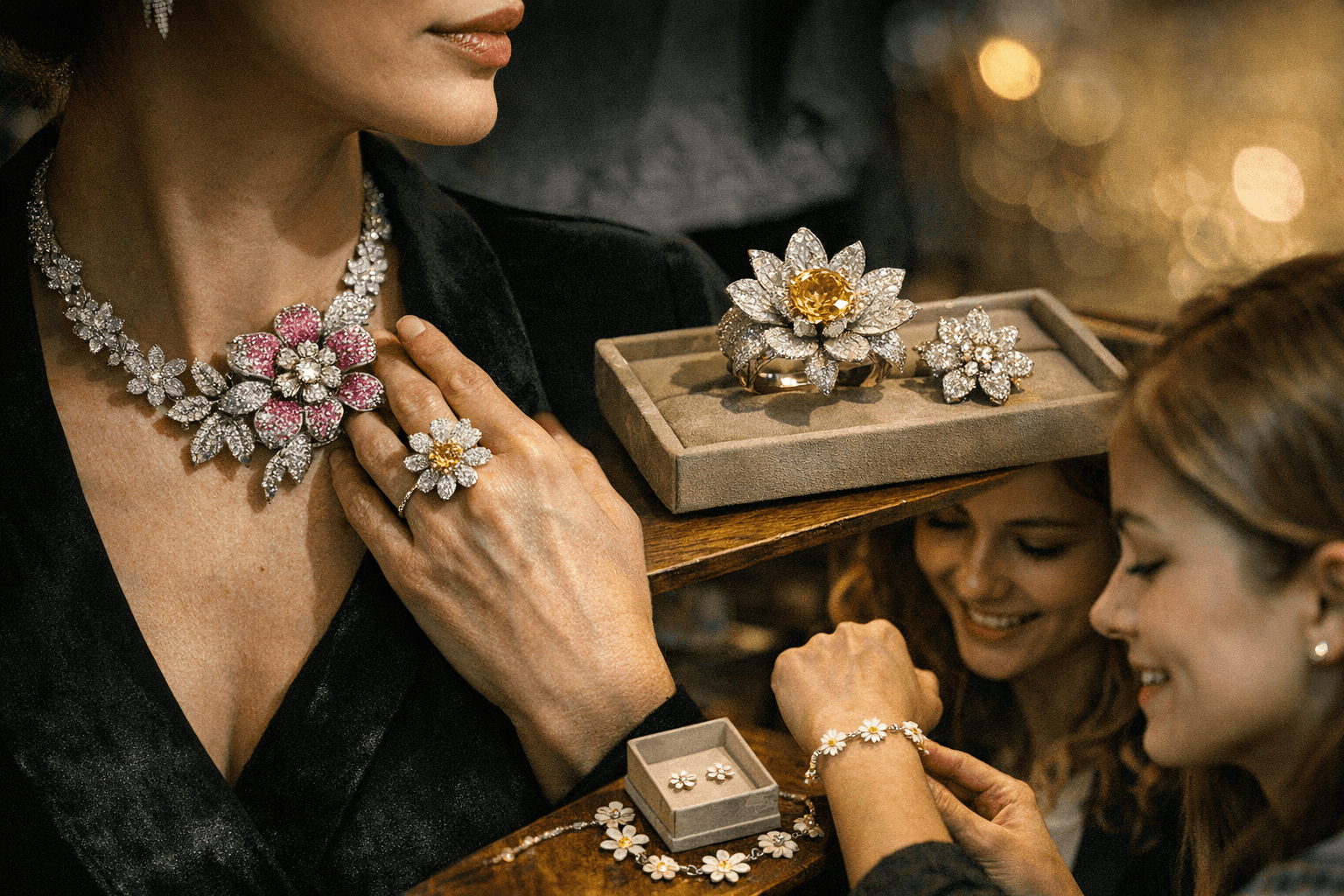
Brooches, especially, belong in this conversation because they can shift a whole layered look from pretty to editorial. Worn on a lapel, scarf, or even a structured cardigan, a floral brooch gives you the one flourish that allows the rest of the jewelry to stay restrained. That is useful in a market where floral motifs are increasingly being used as a design language, not a seasonal wink.
The luxury houses are still writing the floral code
The spring 2026 bloom is not happening in isolation. Tiffany & Co.’s Blue Book 2026, Hidden Garden, reinterprets Jean Schlumberger’s flora and fauna motifs into sculptural high jewelry, keeping that lineage alive in a more architectural register. Cartier’s Flora & Fauna and Faune et Flore collections continue to range from hyper-realism to stylization and abstraction, proving that flowers can be treated as either recognizable nature study or pure form.
De Beers approaches the same idea through diamond storytelling. Its Portraits of Nature high jewelry uses white and fancy-colored diamonds to evoke butterfly wings and transformation, while the house’s Lotus collection stretches across diamond necklaces, rings, earrings, and bands. Together, those collections show why floral jewelry endures: it can read as organic, symbolic, and deeply luxurious all at once.
A simple formula for everyday flower layering
If you want the look to feel personal rather than themed, keep the structure clear:
- Start with one hero flower, ideally in a stronger silhouette or richer material.
- Add one plain chain or band to create breathing room.
- Mix metals only when one element is more sculptural than the others.
- Repeat a motif sparingly, such as a daisy with a petal shape, rather than stacking three identical blooms.
- Let one material lead, whether that is yellow gold, platinum, porcelain, or diamond.
That approach is what makes spring florals feel current. The pieces on offer, from Oscar Heyman’s high-jewelry statements to Monica Rich Kosann’s accessible daisy necklace, are not asking to be worn as a costume of flowers. They are asking to be composed.
This article was produced by Prism’s automated news system from verified source data, official records, and press releases, then run through automated quality and moderation checks before publishing. The system is built and supervised by the people who set the standards it runs under. Read our full AI policy.
Did this article answer your question?