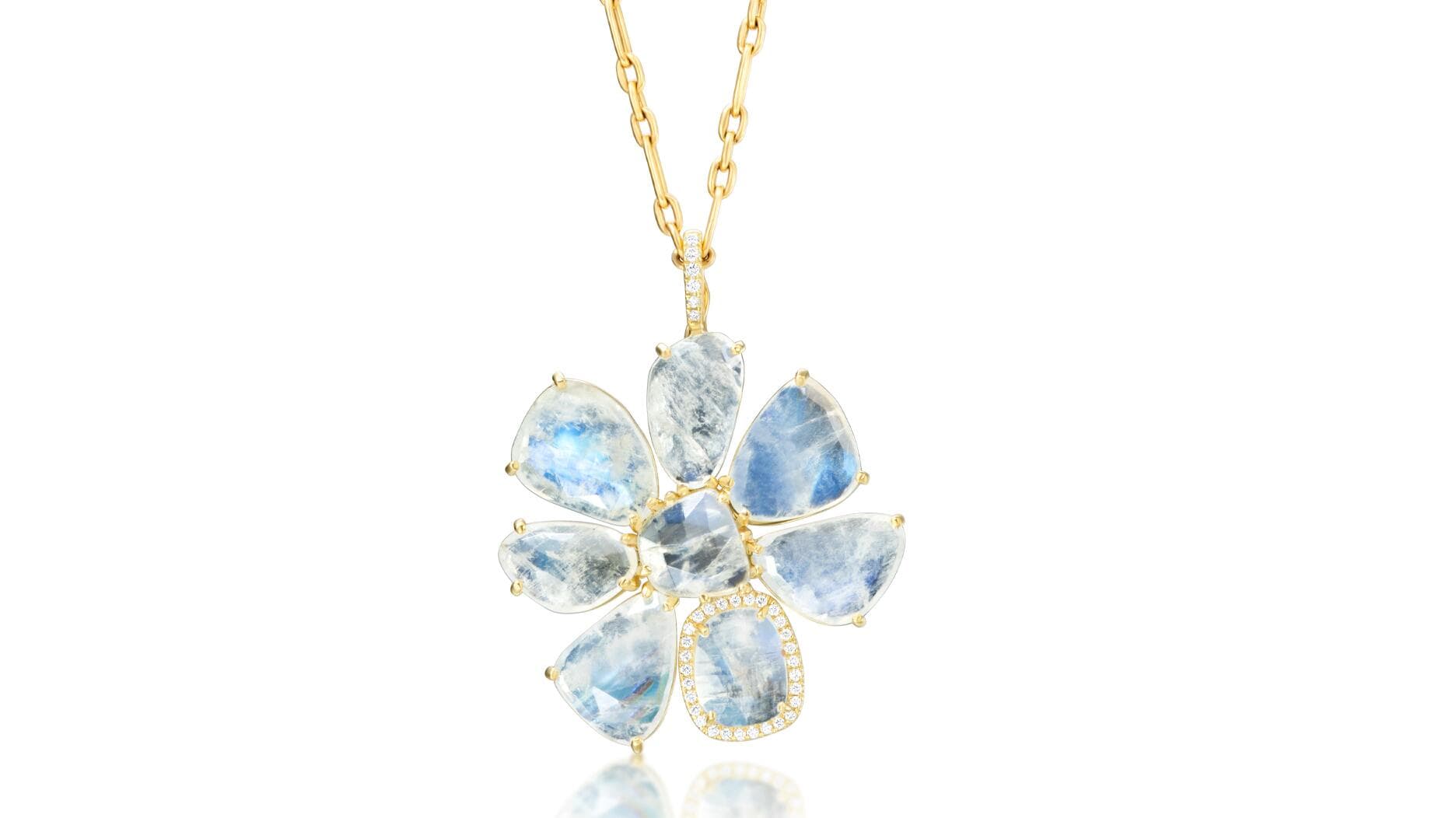
Celebrity stylists share necklace layering tips, from length to mixed metals
The smartest necklace stacks in 2026 look edited, not crowded, with balanced lengths, mixed metals, and one strong base piece leading the way.

What people still get wrong about necklace layering is treating it like accumulation. The modern stack is not a pileup of pretty things, but a composition: one anchor, a few carefully spaced lengths, and enough contrast to keep the eye moving without turning the neckline into clutter. That is why the look keeps returning, from FW24 runway shows to recent red-carpet appearances, and why it now reads less like a trend than a styling language.
Why the necklace stack still feels fresh
Luxury fashion coverage has made one thing clear: necklace layering has become a visible return, not a brief detour. PORTER tied the look to runway and red-carpet momentum, while broader jewelry coverage has framed it as part of a longer shift toward personalization, individuality, and day-to-night versatility. That is the real reason it keeps resonating: a layered necklace can feel polished at noon and more personal by dinner, without changing the entire outfit.
The mistake is assuming “more” automatically means “better.” The strongest stacks today are deliberate, and they usually begin with one piece that does the visual heavy lifting. David Yurman’s guidance is useful here because it names what many people miss: the “ultimate trick” is to start with a signature piece and build with scale, texture, and color.
Start with one foundation piece
Every good stack needs a base. PORTER points to chunky chains from David Yurman, Foundrae, and Lauren Rubinski as especially effective foundations because they can hold their own before charms, motifs, or gems are added. A base like that gives the rest of the look structure, so the neckline does not collapse into a tangle of equal-weight strands.
Multi-strand necklaces and long cords that can be double-looped also make layering easier, because they create built-in variation without requiring six separate chains to do the work. The smartest approach is to let one piece establish scale, then add smaller or more delicate strands around it. That creates hierarchy, and hierarchy is what keeps layering from looking accidental.
The length spacing that makes or breaks the look
If the stack looks messy, it is usually because the lengths are too close together. David Yurman’s guide gives a practical map for where necklaces tend to fall: 16 inches sits at the base of the neck, 18 inches falls between the collarbone and upper chest, 24 inches lands at the upper chest, 32 inches rests below the chest, 34 inches sits just above the navel, 36 inches falls at the lower torso area at the navel, while 41 and 72 inches are designed to pass the waist for wrapping and layering.
That spacing matters because every neckline needs breathing room. A 16-inch chain and an 18-inch chain can work together beautifully if one is visibly lighter or more textural, but two nearly identical strands with no gap will read as crowded. The edit should feel intentional: close enough to relate, far enough apart to be distinct.
Body proportions matter too. David Yurman notes that neck circumference, height, and body proportions affect where layers fall, and that is the kind of detail that separates a good stack from a great one. A narrow neck tends to allow necklaces to hang lower, while a broader neck can create a shorter drape. In practice, that means the same set of chains can read differently on different bodies, so the eye should decide the final arrangement, not a rigid rulebook.
Mixing metals is no longer a mistake
One of the most useful corrections from celebrity-stylist advice is that mixed metals do not need to follow old rules. Jaclyn Elbaum, co-founder of Audry Rose, has said, “Jewelry is personal. It shouldn’t come with instructions,” and that attitude fits the way people actually wear jewelry now. The stack looks more current when it reflects instinct rather than an outdated sense of matchy-matchy discipline.
Elbaum also notes that contrast between white and yellow gold can add depth and balance, which is exactly why mixed metals can make a layered look feel richer. The point is not to clash for the sake of contrast, but to use different tones the way a stylist uses different textures in clothing. A cool-toned chain can sharpen a warmer one; yellow gold can soften the clinical feel of a very bright white-metal necklace. The result is not chaos, but dimension.
How to avoid the tangle problem before it starts
Tangles are usually a spacing and weight issue, not a bad-luck issue. Pieces that sit too close together or share the same drape are more likely to twist into each other, especially when all of them are fine, smooth chains. Starting with one substantial base piece helps because it creates a visual center of gravity, and adding necklaces with different textures or link sizes reduces the chance that everything will move in the same way.
Long cords that can be double-looped are particularly practical because they create a layered effect with less friction. Multi-strand necklaces also solve part of the problem by building separation into the design itself. If you are combining several individual chains, keep the distribution varied: one short and close to the neck, one at the collarbone, and one clearly lower, so each layer has room to sit on its own.
The most elegant anti-tangle strategy is restraint. A clean three-piece composition will often look more luxurious than five chains fighting for the same space. Once the eye stops reading each strand separately, the whole stack begins to lose its shape.
Know when to stop adding pieces
The finishing mistake is the hardest one to resist: one charm too many, one chain too far, one extra strand that ruins the balance. In layered jewelry, stopping early often looks more expensive than continuing until every available inch is covered. The best stacks have a pause built into them, a moment where the neckline feels complete rather than overloaded.
That stopping point often comes after the base piece, one mid-length chain, and one longer necklace that gives the composition movement. From there, the decision should be editorial, not emotional. If the new piece does not add either scale, texture, or color, it probably does not belong.
The broader trend pieces that have defined the last two seasons all point in the same direction: necklace layering is no longer about proving you own many necklaces. It is about wearing a few well-chosen ones with enough spacing, contrast, and discipline to make the whole composition feel like a deliberate signature.
This article was produced by Prism’s automated news system from verified source data, official records, and press releases, then run through automated quality and moderation checks before publishing. The system is built and supervised by the people who set the standards it runs under. Read our full AI policy.
Know something we missed? Have a correction or additional information?
Submit a Tip