Chanel couture makes a case for bold, layered necklace overload
Chanel makes necklace clutter look deliberate, turning fairy-tale couture into a lesson in controlled layering.
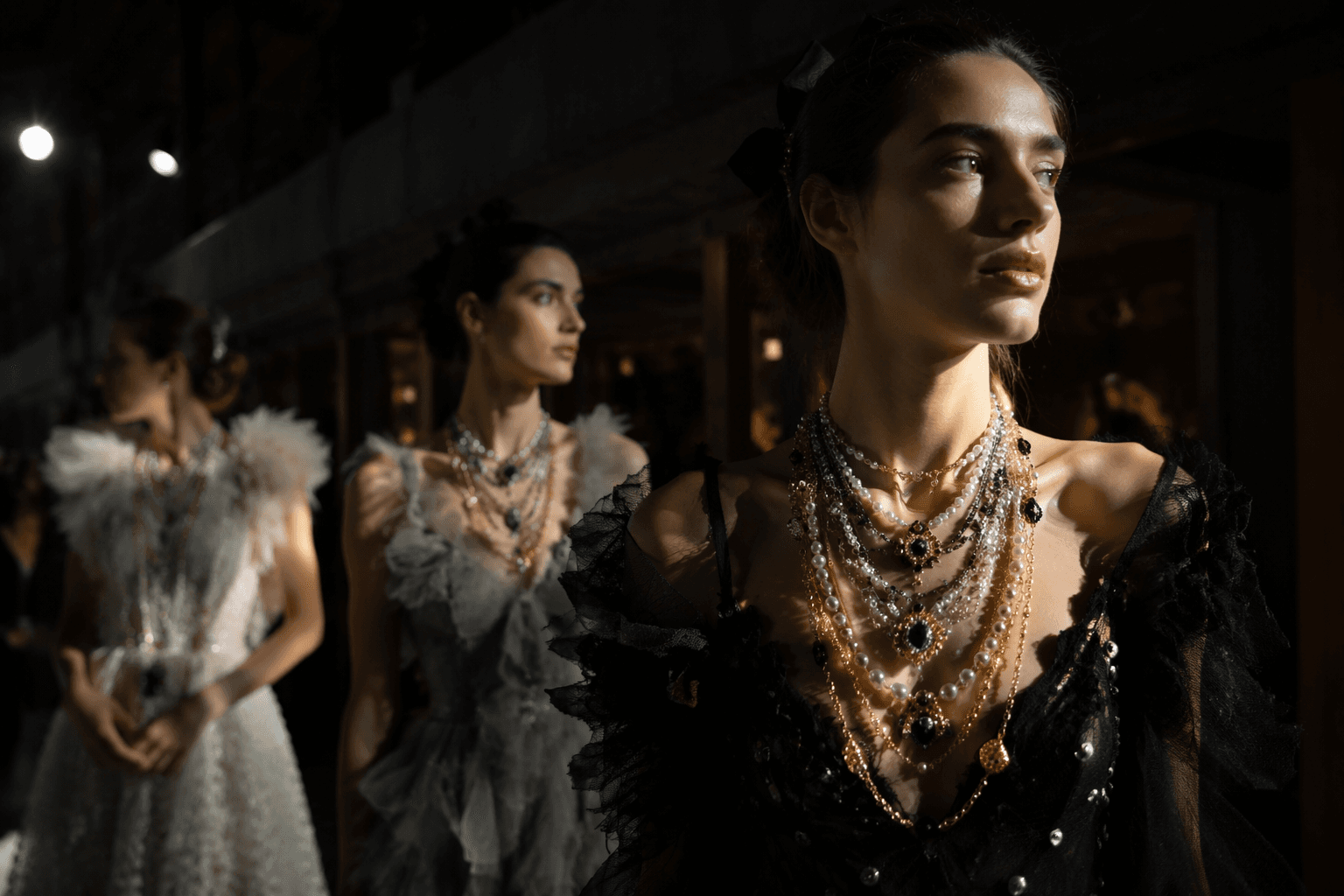
Matthieu Blazy’s latest Chanel couture outing made a clean argument for intentional chaos: the necklace stack only looks unruly until you notice how tightly it is edited. At the Grand Palais in Paris on July 7, 2026, Chanel wrapped fairy-tale references, a giant beanstalk, and psychedelic flowers around jewelry that was layered, twisted, and left visibly in place, then backed it with Blazy’s reminder that “Chanel couture is not about the big ‘wow.’ Chanel couture is about the details.”
The Chanel code: why overload looks polished
The look is built from a story, not a pile of trends. Blazy said he found an old leather-bound book of fairy tales in Gabrielle Chanel’s Paris apartment and used it as the starting point for a show built around fairy tales and the storybook life of Coco Chanel. The jewelry reads as part of the set’s narrative rather than accessory clutter, especially after spring’s couture show took the opposite tack with a translucent tweed suit held together by fine chains and pearls sewn into the hems.
Chanel has been building this language in layers. The spring 2026 collection leaned toward restraint, but it still relied on the same idea that jewelry can be structural, with chains and pearls functioning almost like seams. The fall show turned that principle up with multiple focal points instead of a single neat accent.
How to translate the runway into a real stack
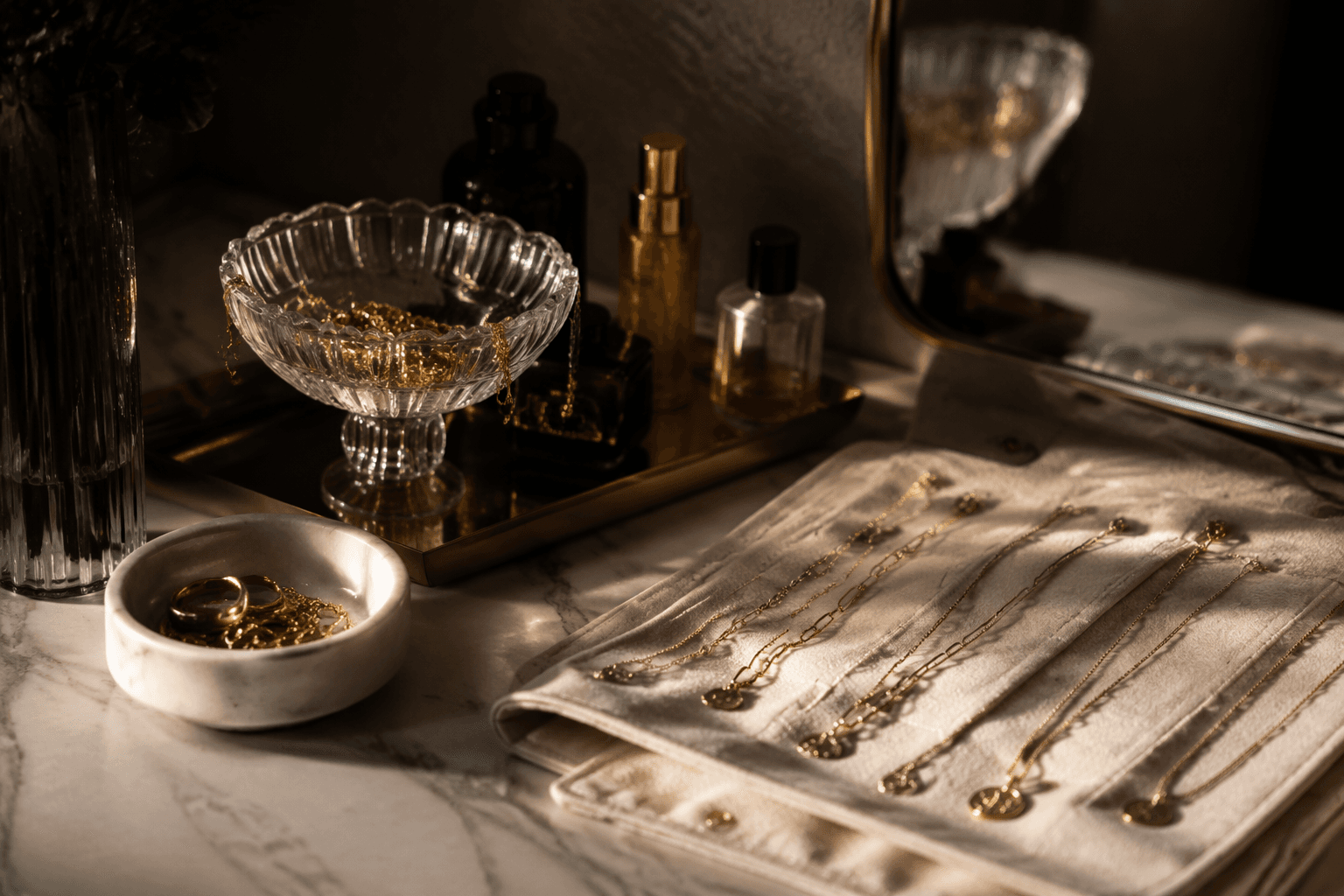
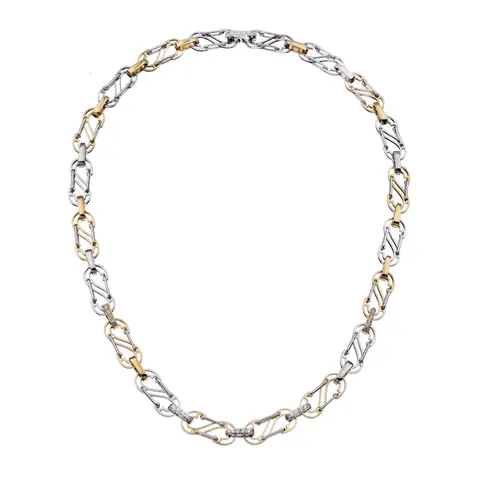
Chanel’s fine-jewelry range includes chokers, chains, pendants, sautoirs, and medals in gold set with diamonds or colored gemstones. In the COCO line, some pieces are “designed to be stacked” and are inspired by Gabrielle Chanel’s childhood nickname. Chanel still loves the idea of “one piece and one only,” but it also gives you a built-in permission slip to layer when the pieces are made to relate to each other.
In practice, the strongest stack usually lands at two or three necklaces, not five. One should sit close to the throat, one should hit the chest as a chain or pendant, and one can drop longer as a sautoir or elongated line; that spread keeps the eye moving and prevents the look from collapsing into one thick band. The scale contrast is what makes the layering legible: a beaded or charm-heavy layer can sit above a slimmer chain, and a smoother line below it gives the composition somewhere to breathe.
Once every strand has the same visual weight, the stack starts to feel costume-like; once the lengths are staggered and one motif repeats, the whole arrangement looks considered. The stackable COCO pieces and the broader necklace category are built around contrast rather than uniformity.
Why Chanel’s version feels rooted, not random
Coco Chanel elevated costume jewelry to high fashion, made faux jewelry fashionable, and used gold-tone chains as a recurring design language. The house has long treated adornment as part of the silhouette, not an afterthought hung on top.
Vintage Chanel necklaces show the same thing from the collector’s side: the appeal lies in pieces that already know how to converse with each other. Chanel’s current styling does not invent that code so much as revive it, then push it into a louder, more cinematic register with beaded florals, charms, and high-jewelry polish.
Gucci makes the same point from a different angle. Its 2026 high-jewelry collection turns Flora, Nodo, Everlasting G, Horsebit, and Marina Chain into precious stones, gold, titanium, and diamonds, while the house’s modern high-jewelry history began in 2019 with Hortus Deliciarum and a Place Vendôme boutique.
This article was produced by Prism’s automated news system from verified source data, official records, and press releases, then run through automated quality and moderation checks before publishing. The system is built and supervised by the people who set the standards it runs under. Read our full AI policy.
Did this article answer your question?