Couture jewelry trends point to colorful gemstones and versatile layering
Colorful gemstones, dome rings, and lariat necklaces signal a more flexible 2026 jewelry mood, where layering turns eclectic and personal.
The strongest signal from COUTURE in Las Vegas is not just that jewelry is getting bolder. It is getting easier to wear in multiple ways, and that flexibility is reshaping how layering looks now. At Wynn Las Vegas, where the 2026 show ran from May 27 to May 31, the mood pointed toward colorful gemstones, long lariats, and sculptural dome rings that invite stacking rather than stand-alone display.
The new layering story is about movement, not uniformity
What stood out on the floor was how many pieces resisted a single fixed identity. Necklaces were designed to drape, wrap, or sit long over other chains, while rings leaned into rounded dome shapes that read as statement-making but still leave room for companions on adjacent fingers. That versatility matters because it reflects the broader shift in jewelry toward curated layering that feels personal, not overly polished.
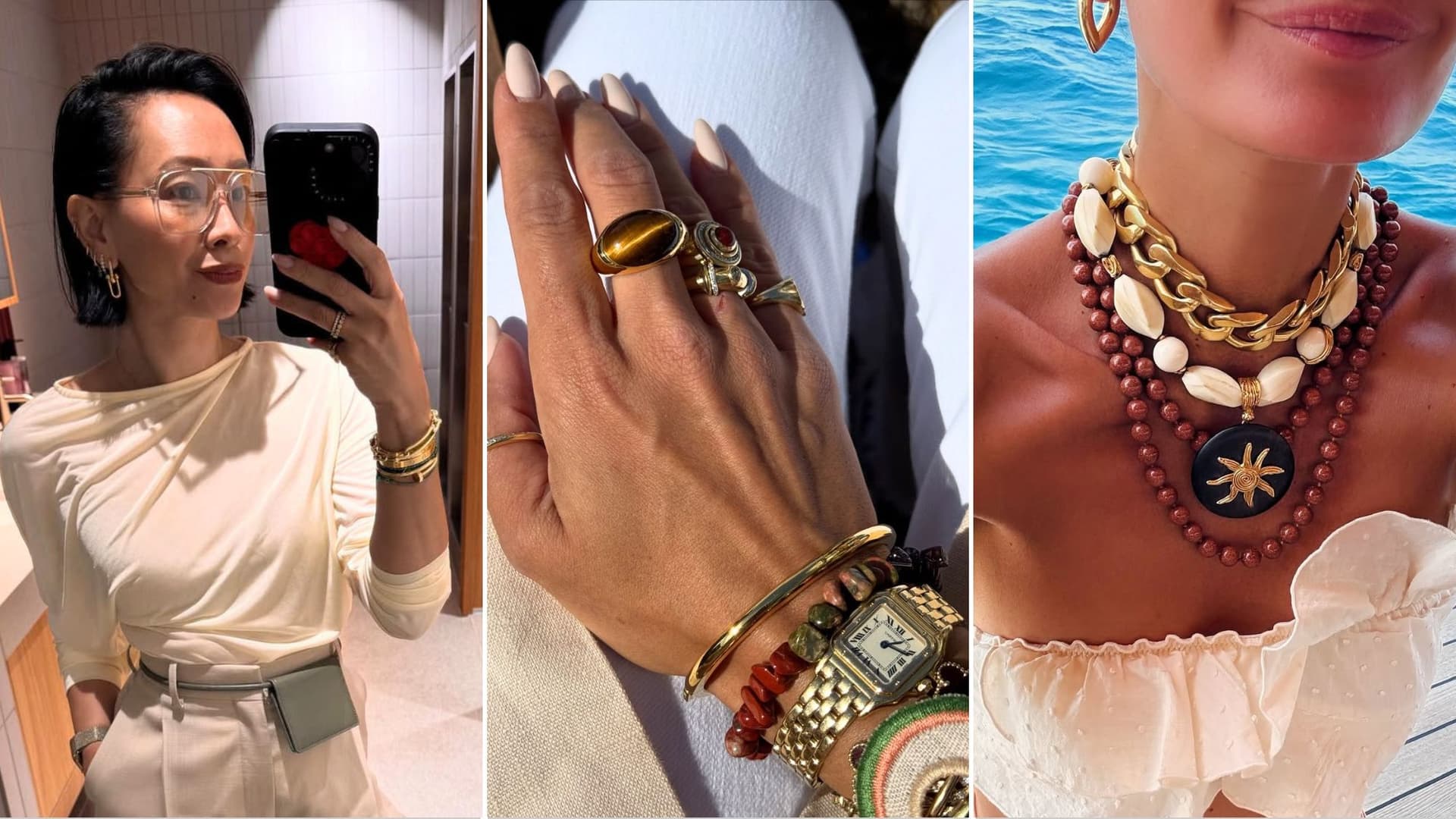
Who What Wear identified colorful gemstones as one of the clearest signals from the show, and that tracks with what buyers were responding to: jewelry that brings visual energy without requiring a rigid matching set. The appeal is less about one “correct” combination and more about building a look from pieces that can change with the wearer’s mood, neckline, or other jewelry already in rotation.
Color is replacing quiet coordination
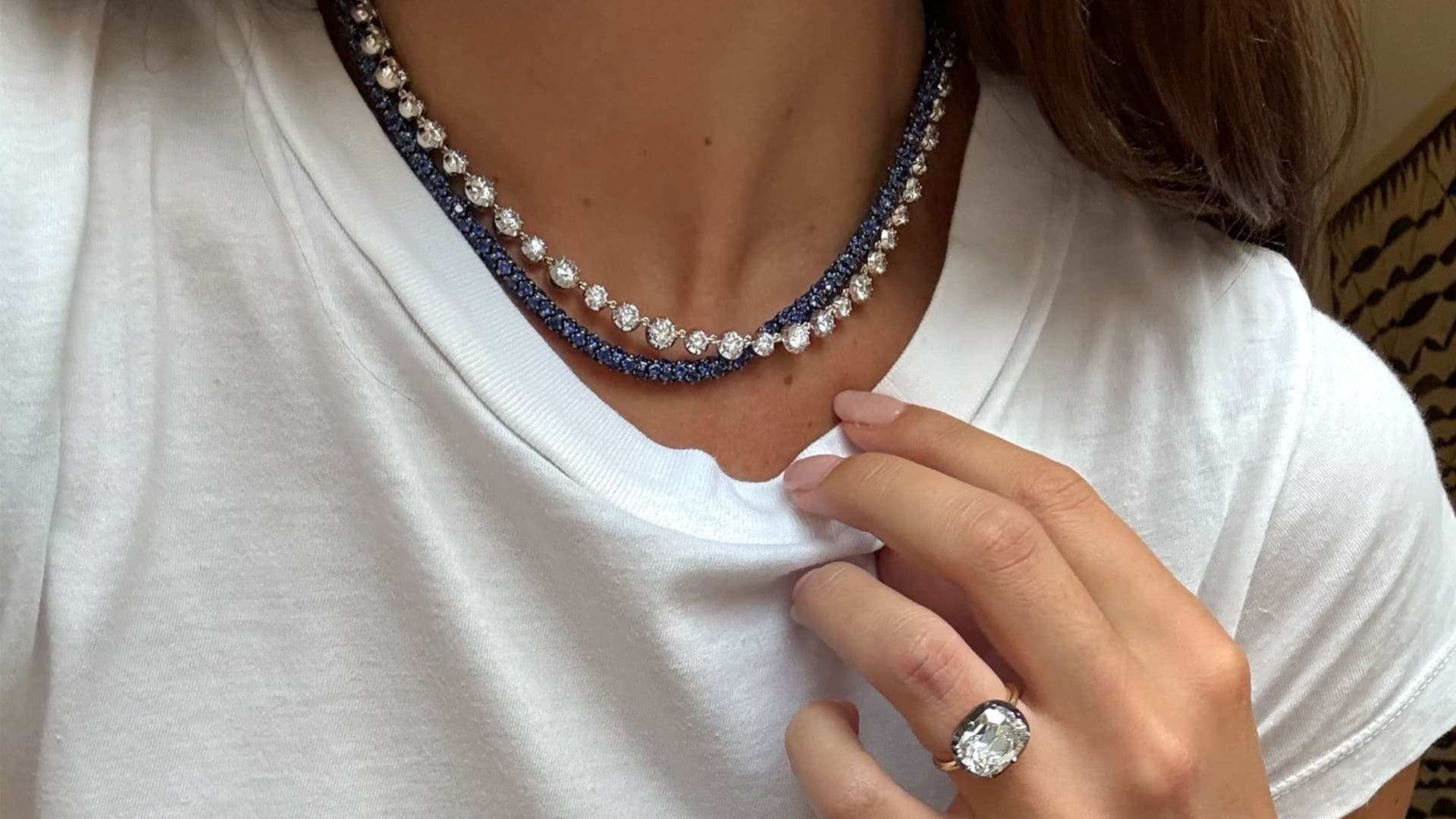
If the old language of luxury favored tonal restraint, this season’s Couture mood leans into color as a styling tool. Saturated gems give layered looks a focal point, especially when paired with cleaner metals or simpler forms. The result is not a loud stack for its own sake, but a look with clear emphasis, where one vivid stone can set the tone for everything else around it.
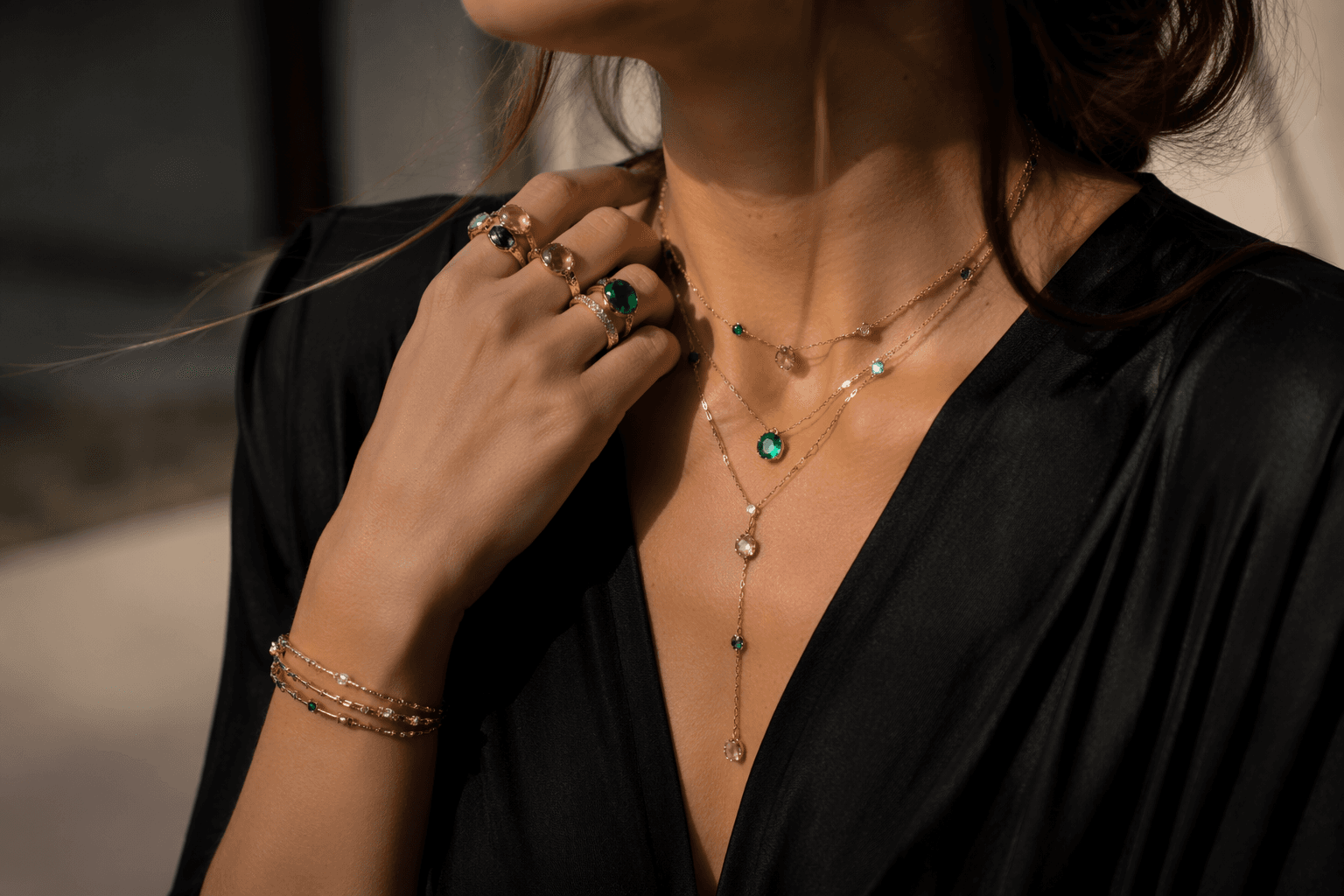
That is especially useful for readers who want layering to feel intentional. A bright gemstone pendant can anchor a chain mix, while smaller colored accents in rings or earrings echo the palette without becoming too matchy. The show’s emphasis on color suggests that next season’s most current layers will not all be built from identical gold links, but from pieces that create contrast and rhythm.
Lariats and dome rings are the silhouettes to watch
Long lariat necklaces were among the most important silhouettes coming out of the show. Their length makes them naturally adaptable, which is why they fit so cleanly into the broader layering shift. A lariat can run over a short collar, hang beneath a pendant, or be worn alone when the rest of the look needs breathing room.
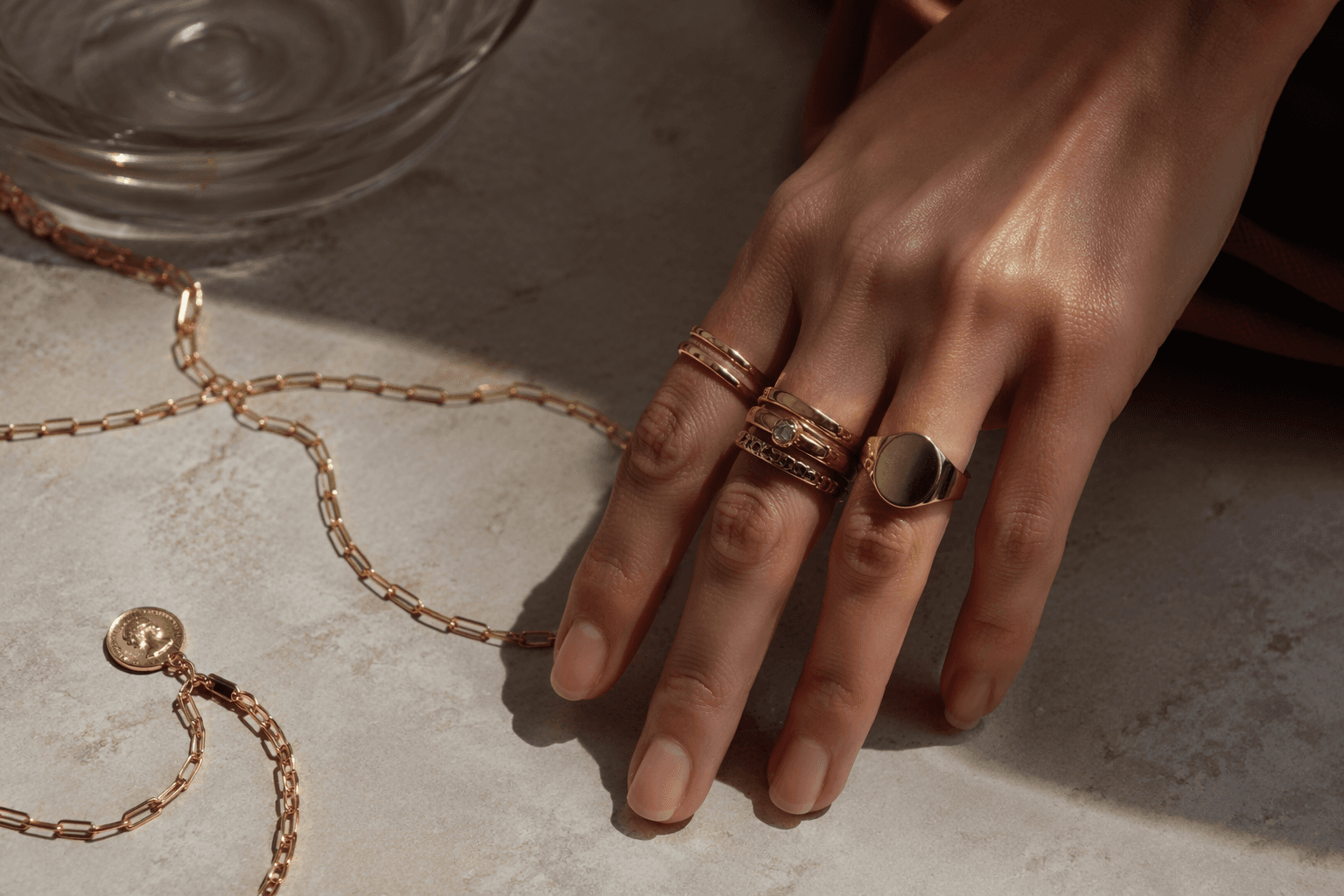
Dome rings played a similar role on the hand. Their rounded, substantial forms give the impression of presence and polish, but they also work well in a stack because they are graphic rather than ornate. When a ring has that kind of shape, it can hold its own beside slimmer bands, colored stones, or textured pieces without disappearing. That balance between statement and mixability is exactly why these silhouettes are likely to spread beyond the show floor.
The mood was creative, personal, and a little more experimental
WWD reported that buyers described the atmosphere at COUTURE 2026 as shaped by creativity, individuality, and personal expression. That matters because it helps explain why narrative-driven jewels, whimsical motifs, and kinetic designs kept surfacing. Jewelry is moving away from being purely decorative and toward pieces that say something, whether through movement, symbolism, or unexpected materials.
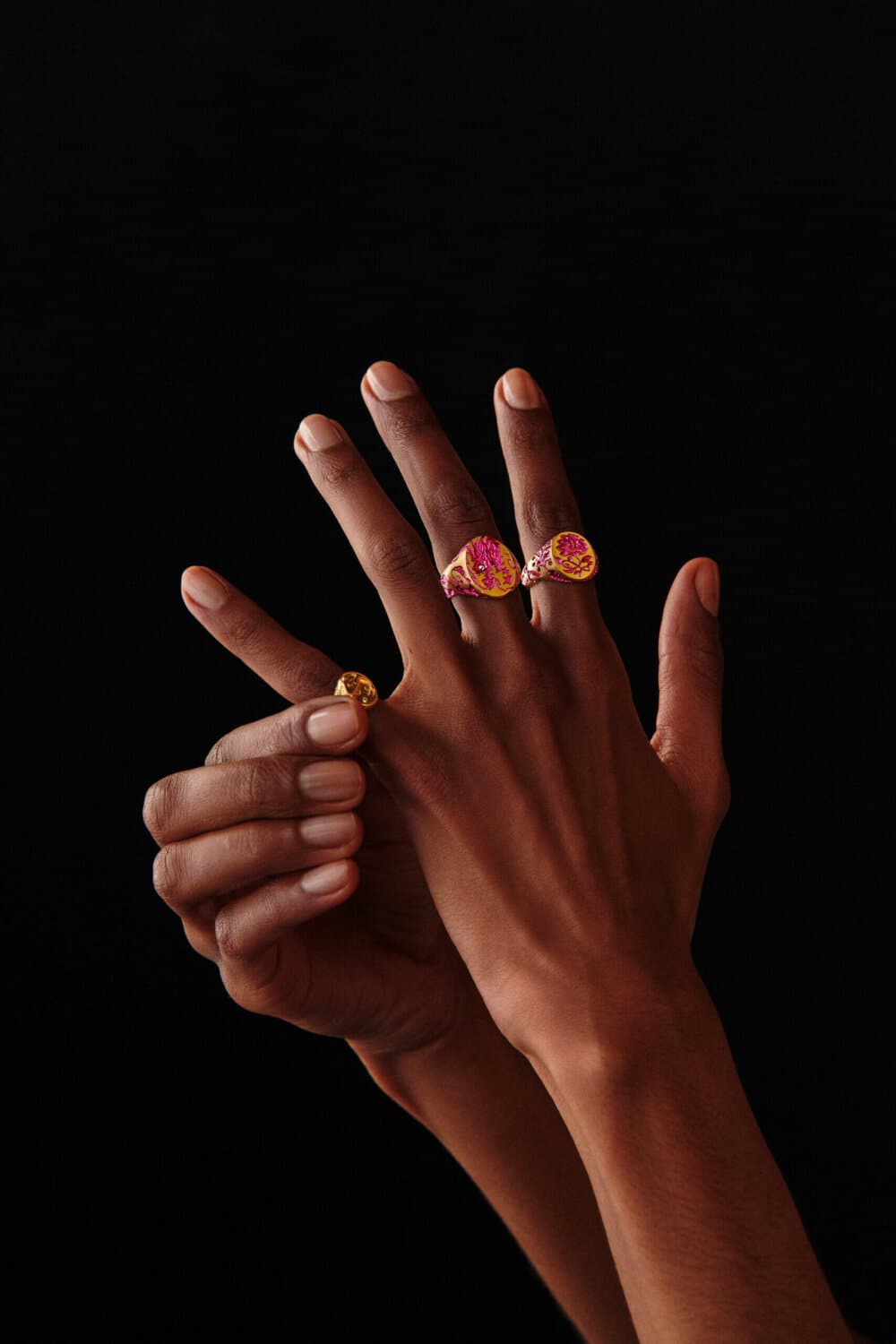
That same appetite for personality makes layering feel less like a formula and more like editing. A charm with a story, a ring with an unusual profile, and a colored gem with character can all coexist if they contribute to the same sense of self. The best layered looks from the show did not look assembled to follow rules; they looked composed to reflect a point of view.
Rising gold prices are pushing designers to think differently
One of the more practical forces behind the shift is cost. Retailers at the show discussed a K-shaped consumer, with demand still strong at the high and entry ends of the market while the middle is more selective. At the same time, rising gold prices are pushing designers toward alternative materials and less traditional constructions, which is opening the door to more interesting layered pieces.
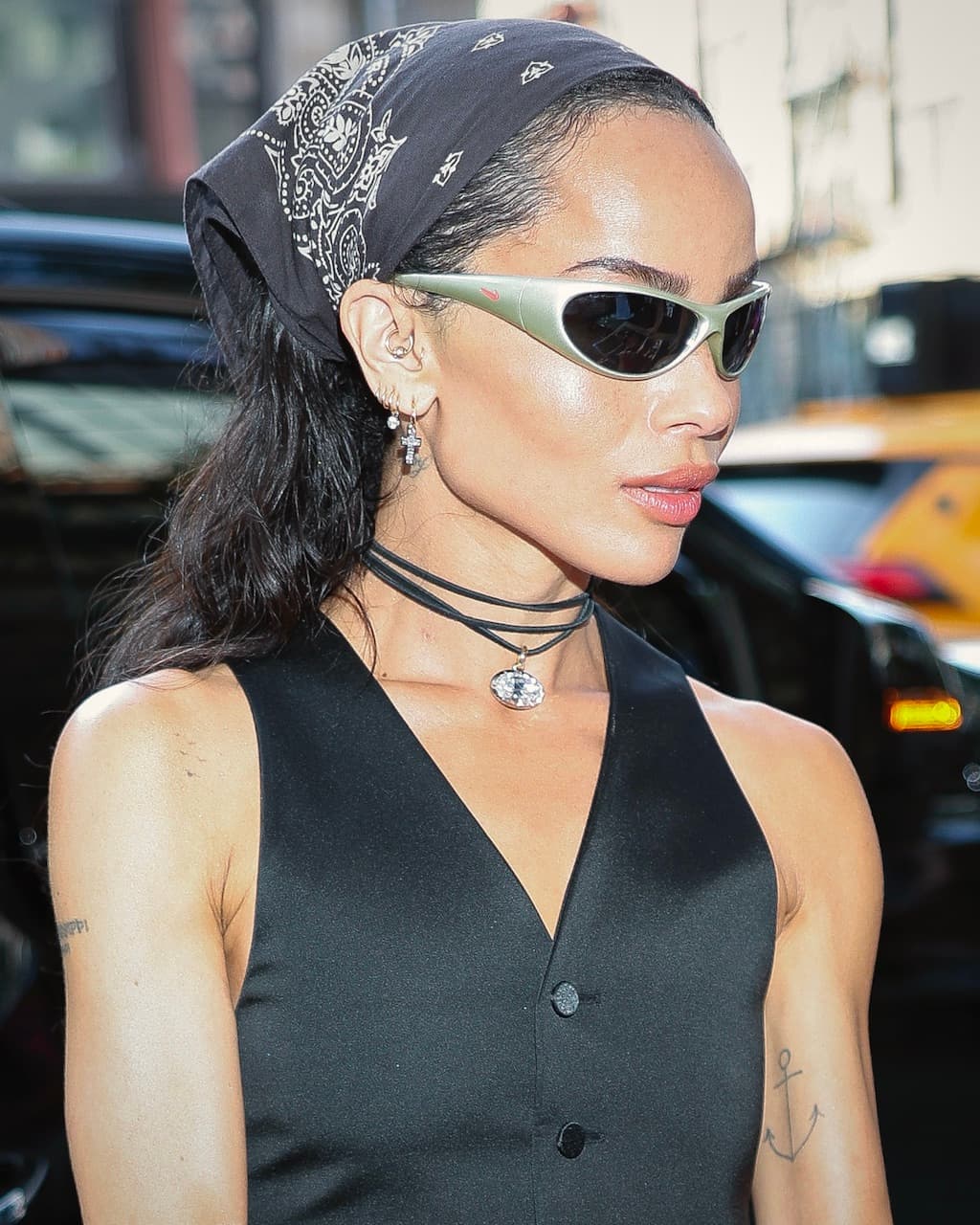
That helps explain why leather cords, shells, beads, and other organic elements appeared alongside the usual precious materials. These components make jewelry feel lighter, more tactile, and more flexible, both visually and in price. They also widen the layering vocabulary: a shell strand can soften a gold chain, a leather cord can ground a gemstone pendant, and beads can add texture without overwhelming the stack.
Why the best new jewelry looks less rigid
The move toward less rigid styling is visible in the materials as much as in the silhouettes. Vintage and archival references are still present, but they are being mixed with found objects, natural textures, and kinetic forms that move with the body. That combination gives jewelry a lived-in quality, which is part of why it feels right for layered dressing rather than formal matching sets.
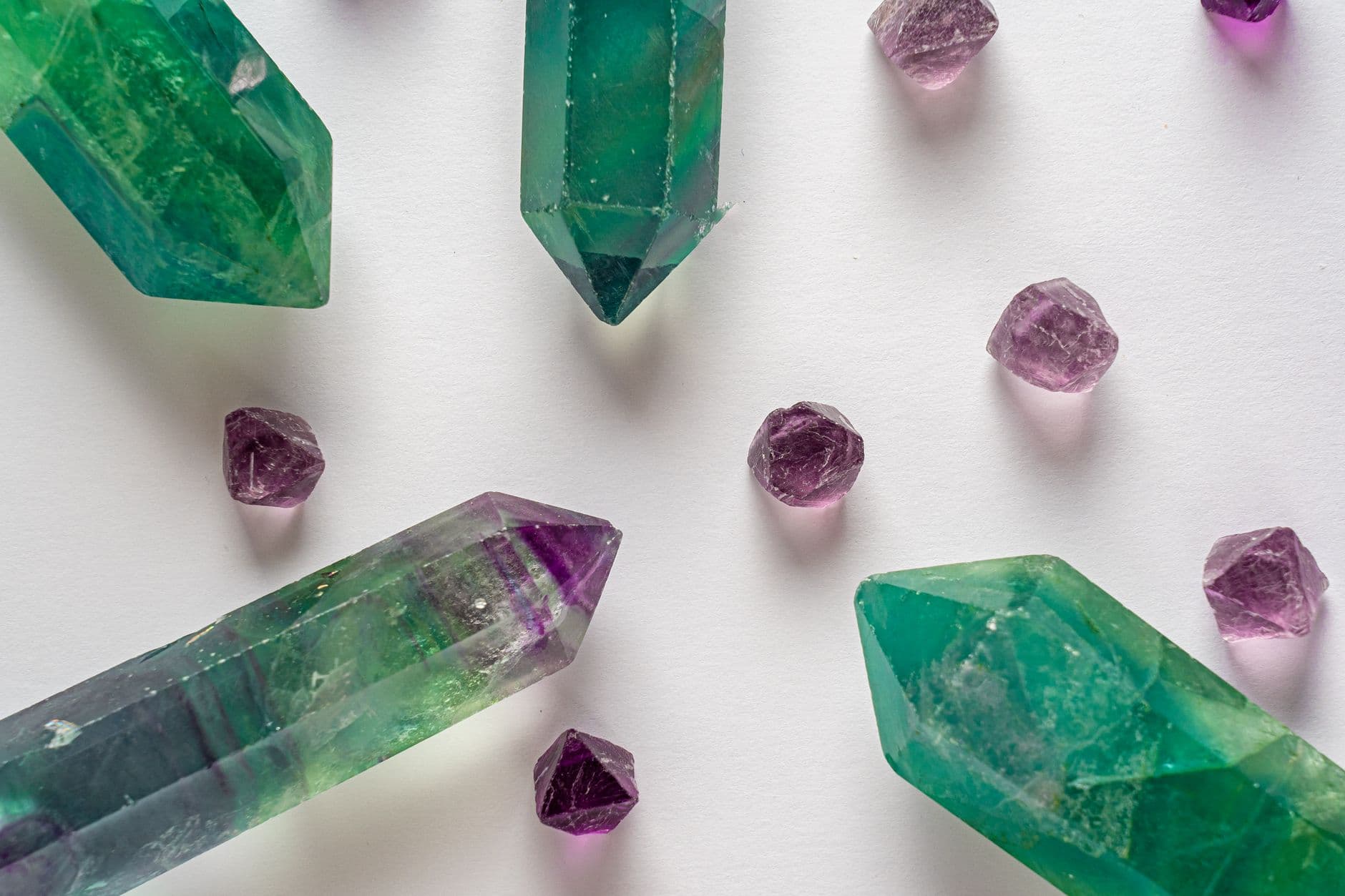
This is where the category gets interesting for readers who care about wearability as much as design. A piece that can be worn several ways is more useful than a piece that only works in one exact context. In a market shaped by selectivity, versatility reads as both aesthetic and practical value.
COUTURE still matters because it is where the trade tests ideas
COUTURE describes itself as an exclusive destination for designer fine jewelry and luxury timepieces, and the attendee list helps explain why its trends tend to travel. Heritage brands, emerging talent, top retailers, and global media all meet in the same room, with names such as Marissa Collections, TWIST, Reinhold Jewelers, and Borsheims regularly among the buyers.
The show’s annual Design Awards also reinforce that role. COUTURE is not only a marketplace; it is a stage for new design ideas, which is why the strongest trends there often feel like prototypes for what will soon appear in stores and on social feeds. With archived listings going back at least to 2007 at Wynn Las Vegas, the event has the kind of continuity that makes its seasonal signals worth taking seriously.
For readers building a jewelry wardrobe now, the takeaway is clear. The next wave is not about one perfect necklace or one signature ring. It is about pieces that can shift, layer, and recombine, with color, texture, and sculptural form doing the work that rigid coordination used to do.
This article was produced by Prism’s automated news system from verified source data, official records, and press releases, then run through automated quality and moderation checks before publishing. The system is built and supervised by the people who set the standards it runs under. Read our full AI policy.
Know something we missed? Have a correction or additional information?
Submit a Tip