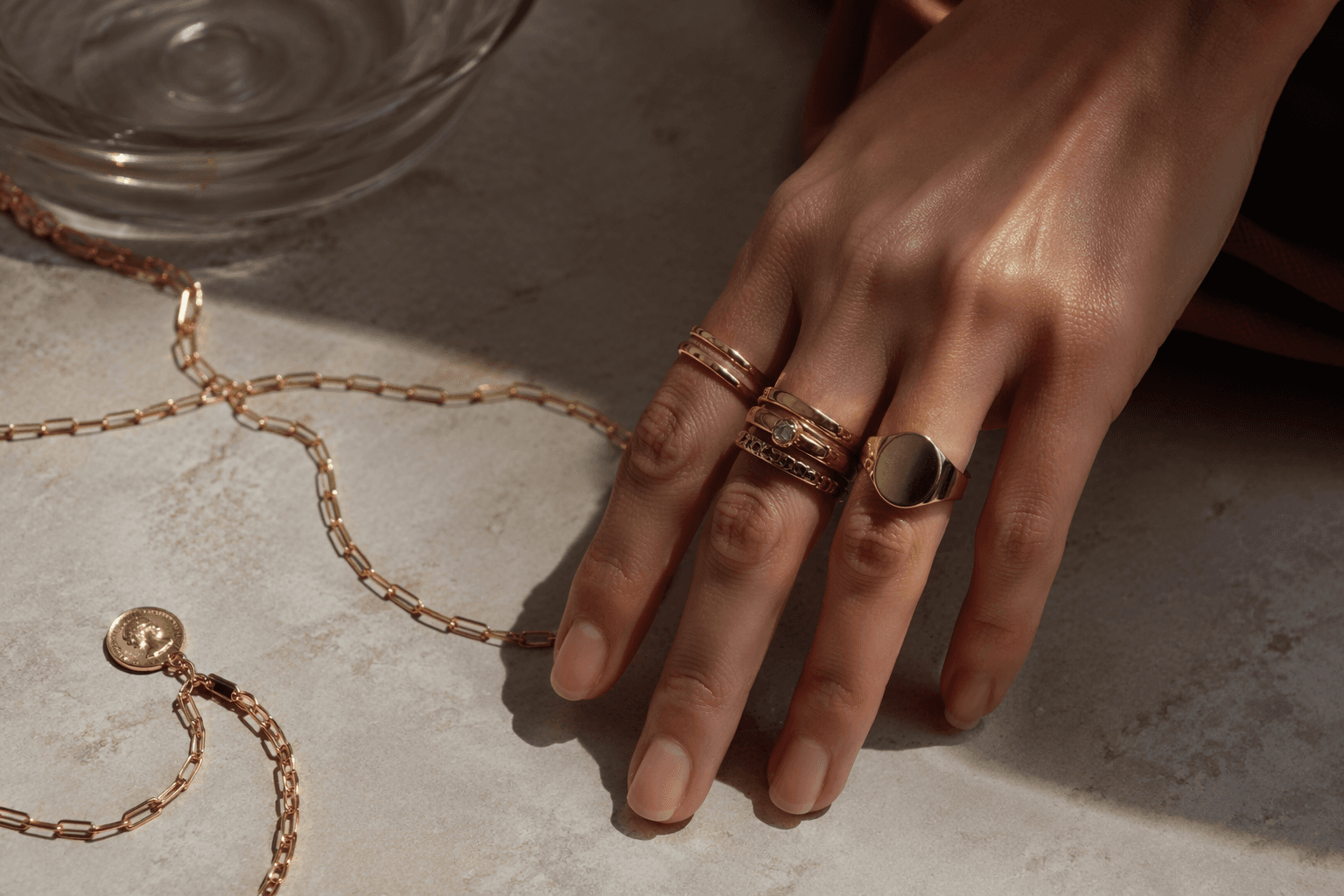
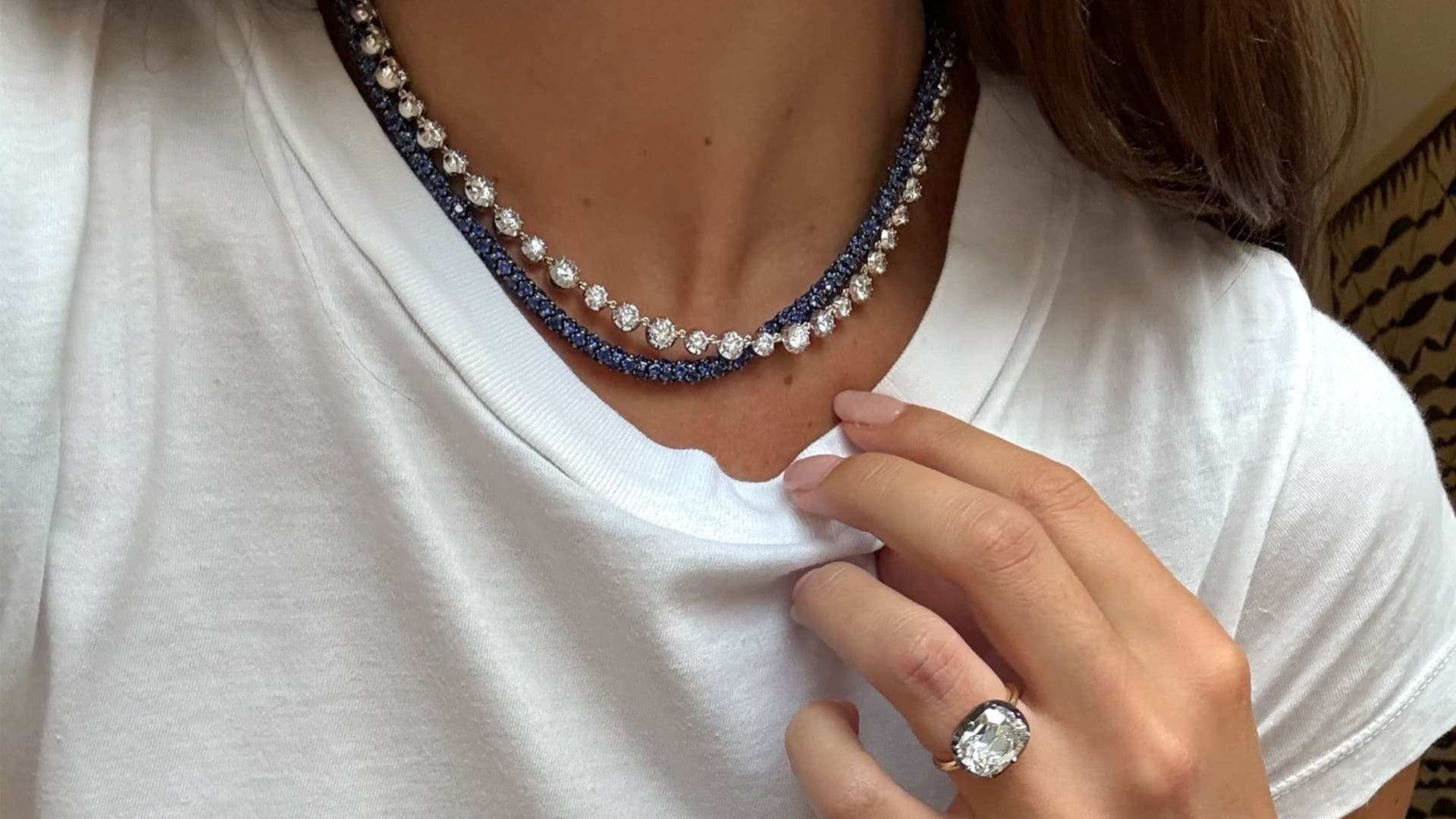
Layered jewellery returns with mixed metals and bold asymmetry
Layered jewellery is back because SS26 wants visible excess: mixed metals, clashing stones, and long, asymmetric stacks now read as the new luxury.
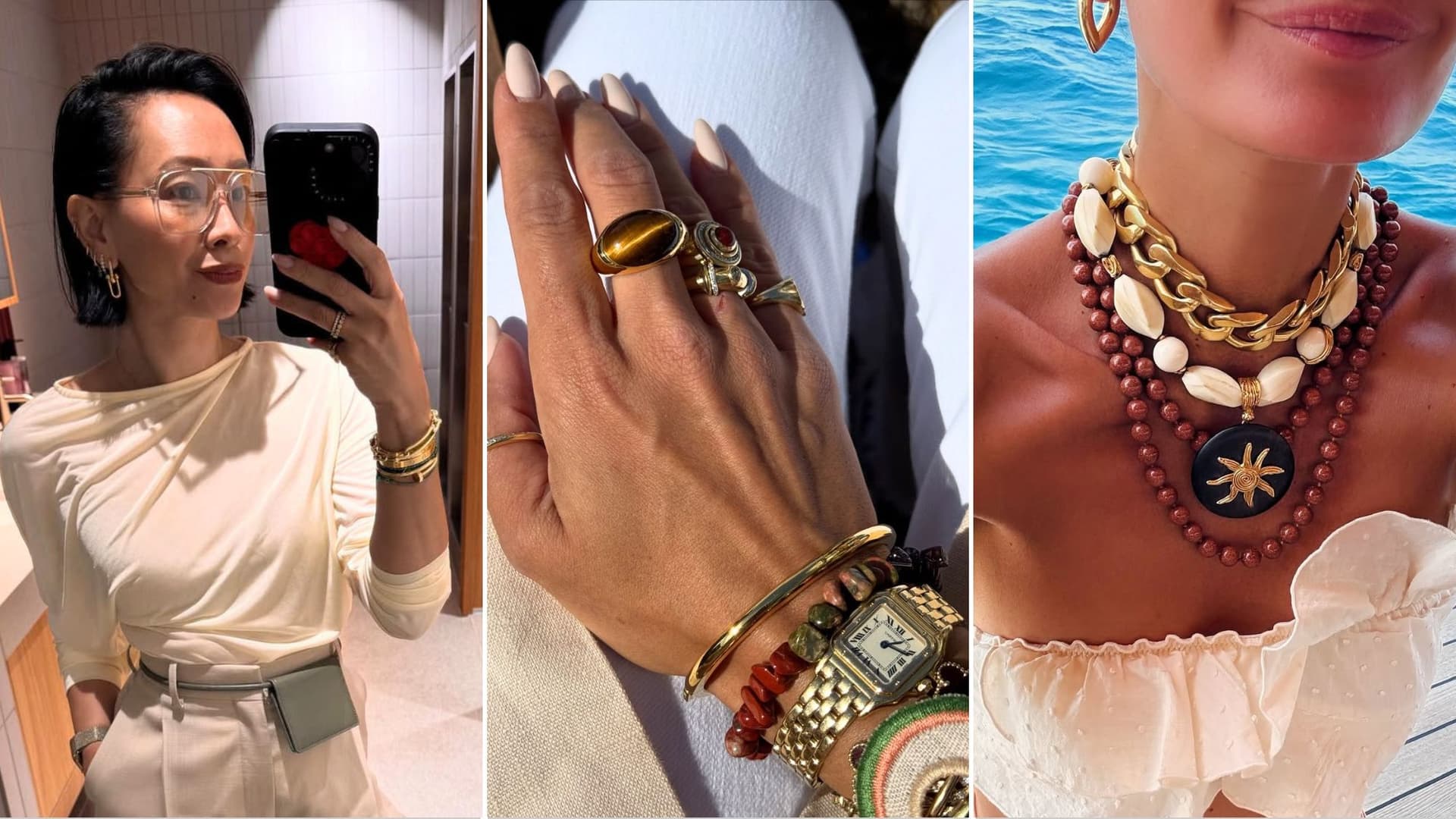
Layered jewellery is back because SS26 wants visible excess. The clearest signal is a yellow-gold pivot, sharpened by Chanel, Zimmermann, Saint Laurent, and Celine, where mixed metals, color-clashing stones, and off-kilter proportions make stacks feel deliberate rather than decorative. This is a richer return than the minimalist layering cycles of the last decade: the new formula favors longer lengths, bolder pairings, and cross-category piling that reads as fashion, not filler.
Why the comeback feels different now
The current layering mood is not about quietly building a tidy chain story. Marie Claire UK has pointed to necklace, earring, and bracelet styling moving into a more-is-more register for SS26, and that excess lines up with the broader runway language WWD identified in spring 2025: ’80s decadence, Saint Laurent’s mega-size earrings, Schiaparelli’s conversational necklaces, vibrant gemstones, and layered yellow-gold chains. The point is not restraint dressed up as personality. It is abundance with a point of view.
That shift matters because the old layering code was often about balance, symmetry, and light touch. The new one is more editorial. It allows one chain to sit lower than expected, another to interrupt the line, and a bracelet stack to spill into rings or earrings so the whole look feels lived-in and intentional. WWD has also linked jewelry’s maximalist swing to nostalgia-driven consumer behavior and social-media interest, which helps explain why the style now feels less like a niche trick and more like a shared visual language.
The runway data backs the mood
This is not a vague vibe change. WGSN’s S/S 26 Paris Fashion Week analysis processed 127 collections, 4,422 looks, and 7,075 items, which gives the season a scale that is hard to dismiss as a passing styling whim. Its broader catwalk analysis also leans on AI image recognition to compare runway trends across Paris, London, Milan, and New York, so layering is being tracked as part of a measurable fashion shift rather than a single celebrity moment.
That data matters because it shows how fully the industry has embraced the return of ornament. When a trend appears across major fashion weeks, it tends to settle into the market faster, moving from runway styling into everyday buying behavior. The modern appeal of layered jewellery is not just that it looks rich. It is that it looks current, and the current moment is being read through scale, repetition, and deliberate excess.
Why the market is ready for more jewellery, not less
The buying climate helps explain why layering has returned with such force. At the 2025 Couture Show in Las Vegas, WWD said about 300 brands exhibited and buyers were focused on quality, uniqueness, and value. That is the opposite of disposable fashion logic. It suggests that shoppers want pieces that feel personal and worth keeping, especially when gold prices and tariffs continue to pressure the industry.
The commercial case is visible in the numbers, too. Reena saw a 250 percent increase in average order value, a reminder that fine jewellery can still perform when it offers something special enough to justify a bigger spend. The Business of Fashion’s State of Fashion 2026 adds another layer to the picture: fashion brands are moving upmarket, while shoppers are shifting spending toward wellness and higher-value purchases. Jewellery sits neatly in that space, as a feel-good buy that can still carry long-term value. In other words, layering is thriving because it satisfies emotion, style, and investment thinking at the same time.
The new rules of 2026 layering
The strongest stacks now follow a few clear instincts. They are longer, bolder, and less matched than before. They also cross categories more freely, so a necklace story can echo into bracelet stacks, ring piles, and even earrings that do not need to perfectly mirror each other.
- Longer lengths are doing more work. A short chain is no longer the only anchor; lower-slung pieces create movement and give the eye somewhere to land.
- Mixed metals are no longer a compromise. Yellow gold, white metal, and silver tones can all live in one stack when the proportions feel intentional.
- Color-clashing stones are part of the point. Vibrant gemstones give the look energy and make the stack feel edited rather than repetitive.
- Asymmetry is the modern finish. One side can be heavier, a pendant can sit off-center, or an earring pairing can feel slightly mismatched without looking unfinished.
- Cross-category stacking keeps the look from going flat. The strongest jewellery wardrobe now treats necklaces, bracelets, rings, and earrings as one connected styling story.
That approach is why WWD described layering multiple chains, especially in yellow gold, as an easy way to catch the opulent mood without looking brash. It is also why ring stacking, one of 2025’s most visible jewellery habits, feels connected to the bracelet arm parties of the early 2010s. The category keeps reinventing the same instinct: more pieces, more personality, more visible decisions.
What matters when you choose pieces
The best layered look starts with pieces that have enough character to stand on their own. Saint Laurent’s mega-size earrings, Schiaparelli’s statement necklaces, and the broader runway return to vivid stones all point to the same truth: the stack works when every item has a reason to be there. Flat, interchangeable jewellery disappears fast in this kind of styling.
The other consideration is honesty. The current appetite for special, story-driven jewellery rewards clear materials and a real point of view, not vague luxury language. If a piece is made in yellow gold, let that metal be part of the story. If the stones are vivid, let their color do the work. And if the design is asymmetrical or oversized, it should feel purposeful, because the new layering mood has little patience for pieces that only pretend to have a point of view.
Layered jewellery is back because fashion has moved past the idea that less is always more. SS26 is rewarding excess with structure, and the most convincing stacks are the ones that look collected, directional, and just a little unruly.
This article was produced by Prism’s automated news system from verified source data, official records, and press releases, then run through automated quality and moderation checks before publishing. The system is built and supervised by the people who set the standards it runs under. Read our full AI policy.
Know something we missed? Have a correction or additional information?
Submit a Tip