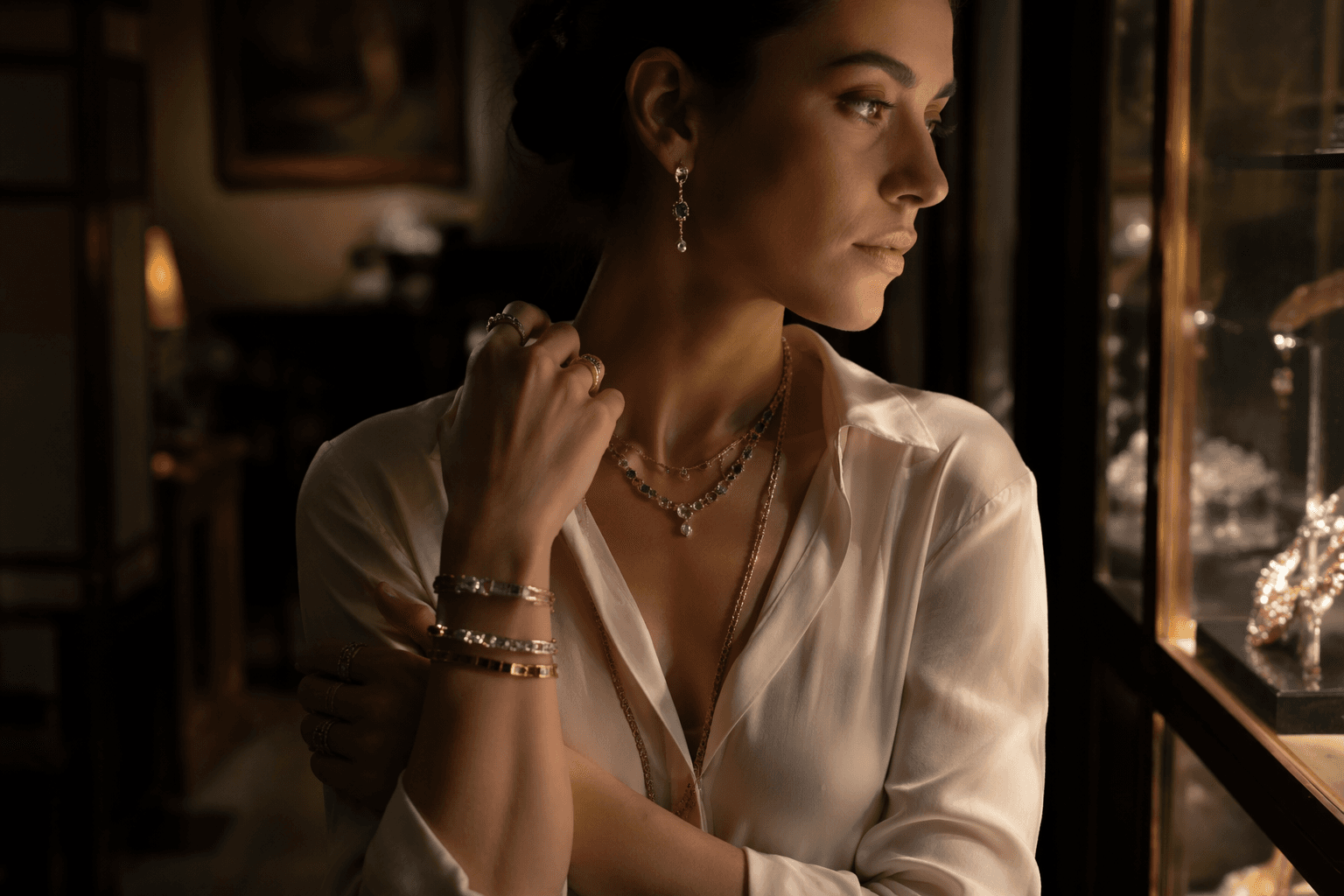
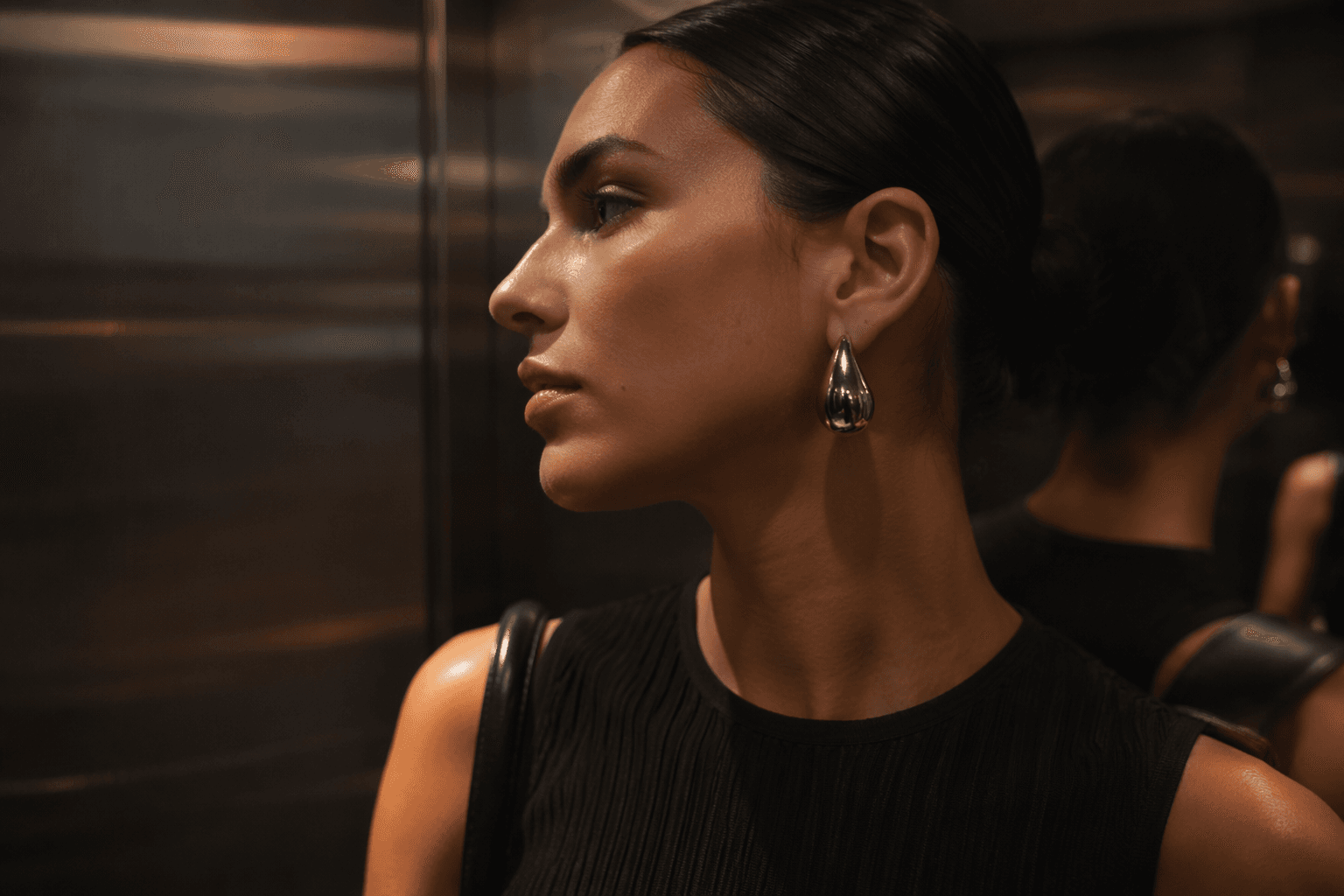
Damiani turns masterworks into high jewelry for statement layering
Damiani’s Art Maestra shows how one masterwork-inspired jewel can anchor a whole stack, with quieter pieces stepping back so the centerpiece stays luminous.

The new rule of polished layering is not to pile on more, but to let one piece lead. Damiani’s Arte Maestra collection makes that idea tangible: a high-jewelry jewel drawn from famous artworks, shown at Villa Pliniana on Lake Como, and designed to command attention before any necklace, ring, or cuff joins the conversation. In this kind of dressing, the statement piece is the anchor, and everything else becomes a supporting cast.
The art-as-anchor logic
Arte Maestra is built around eight art-historical touchstones, from Caravaggio’s Medusa and Botticelli’s Spring to Hokusai’s The Great Wave off Kanagawa, Jeong Seon’s A Leisurely Cat in Autumn, Kandinsky’s Gray Form, Klimt’s The Kiss, Monet’s Water Lilies, and van Gogh’s Sunflowers. That breadth matters because it moves the collection beyond a single motif and into the language of a cultivated wardrobe, where a jewel can read as sculpture, reference, and personal signature all at once.
Guido Grassi Damiani describes high jewelry as the place where the house can “fully express” its creative capacity and transmit the brand’s essence. That makes sense for a family company founded in 1924 in Valenza by master goldsmith Enrico Damiani, because the point is not novelty for its own sake. It is craftsmanship carrying memory, with the kind of presence that can hold its own against a minimalist chain, a plain band, or a slim cuff.
Eight masterworks, translated into wear
The most persuasive thing about Arte Maestra is that it treats art history as a design language rather than a costume theme. Floréa borrows from Botticelli’s Allegory of Spring and brings together emeralds with diamonds, sapphires, and rubies, so the effect is floral and chromatic rather than literal. Malìa turns to Caravaggio’s chiaroscuro and centers on a Pigeon’s Blood ruby, a choice that signals depth, tension, and drama rather than surface sparkle.
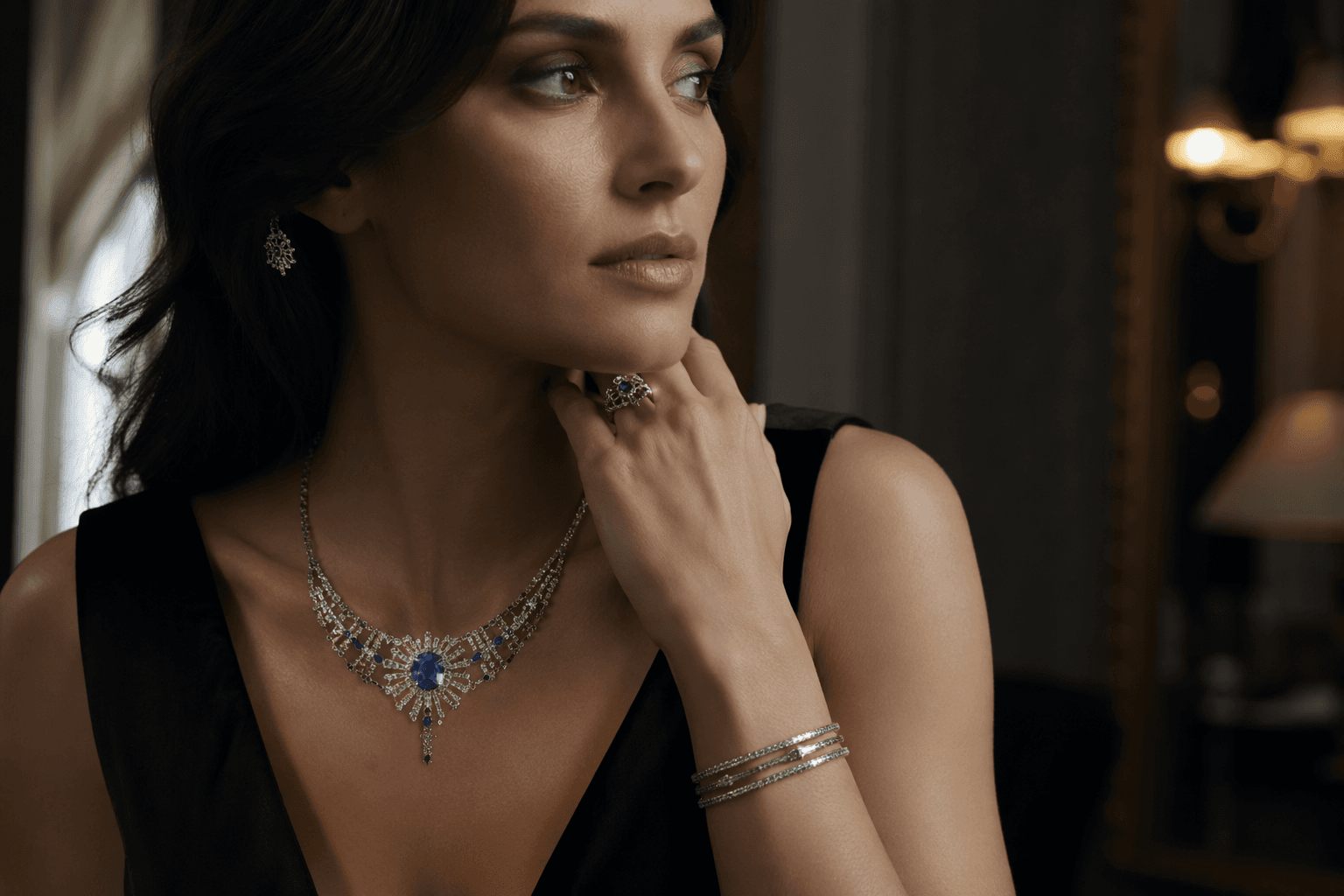
En-Plein-Air is the clearest example of a focal jewel built to lead a stack. Its center is a Colombian emerald of more than 10 carats, a stone that gives the piece weight and visual command before any supporting jewels enter the frame. In a layered look, that kind of centerpiece is the one you build around, not the one you try to outshine.
The collection also shows Damiani leaning on transformation, not just display. The house says some pendants can convert into brooches, and some pieces can be customized in size, which gives high jewelry a more practical life than a one-night-only spectacle. That flexibility matters because a serious statement jewel can move from gala to dinner to collection dressing if it can adapt to different necklines, lapels, and wrist pairings.
How to layer around a masterpiece
When a jewel already carries the weight of an artwork, the rest of the stack should stay calm. Think of Arte Maestra pieces as the visual climax, then build outward with simpler forms that do not compete for the same volume or color intensity.
- Choose one quiet chain if the focal piece sits at the collarbone, so the eye lands on the masterwork first.
- Pair a dramatic pendant with a plain band or one restrained ring, especially if the jewel already brings strong color through emeralds, sapphires, or ruby.
- Use a slim cuff or polished bangle to echo the statement piece without repeating its shapes or stone palette.
- Keep earrings minimal if the necklace is doing the heavy lifting, because the point is to frame the jewel, not create a second headline.
- If the focal piece converts into a brooch, let it anchor a jacket or dress and keep the rest of the jewelry architectural and spare.
That approach is especially useful with a collection like Arte Maestra, where the references are already rich. A Botticelli-inspired floral jewel does not need a second floral necklace beside it; a Caravaggio-driven ruby piece does not want a crowded wrist. The supporting layers work best when they are textural, clean, and deliberately quieter.
Why this launch fits the moment
Damiani’s presentation at Villa Pliniana on Lake Como continued a pattern the house set with Ode all’Italia, its June 12, 2025 high-jewelry project in Rome. That earlier launch unfolded at Corsie Sistine and included Achille Lauro performing while wearing the Aethernitas necklace, a reminder that Damiani likes to frame high jewelry as a cultural event, not just a product reveal. Arte Maestra carries that instinct forward, but with a sharper emphasis on art history as a styling cue.
There is also a commercial logic underneath the spectacle. Damiani says its high-jewelry clients are loyal, returning, and increasingly educated about craftsmanship and value, which suggests a buyer who wants more than flash. For that reader, the appeal of a masterpiece-inspired jewel is not only prestige, but the ability to wear something with enough authority to lead a whole look while still feeling considered, adaptable, and deeply made.
The real lesson for layering
Arte Maestra makes a strong case for a more disciplined kind of maximalism. The best stack is not always the fullest stack, but the one with a single jewel that knows how to hold the frame. Damiani’s masterwork-inspired high jewelry does exactly that, turning one conversation-starting piece into the center of gravity for everything around it.
This article was produced by Prism’s automated news system from verified source data, official records, and press releases, then run through automated quality and moderation checks before publishing. The system is built and supervised by the people who set the standards it runs under. Read our full AI policy.
Know something we missed? Have a correction or additional information?
Submit a Tip