Desert diamonds gain momentum as layered jewelry turns personal
Warm desert diamonds are turning into jewelry’s new neutral, stacked with yellow gold and texture for a softer, more personal look.

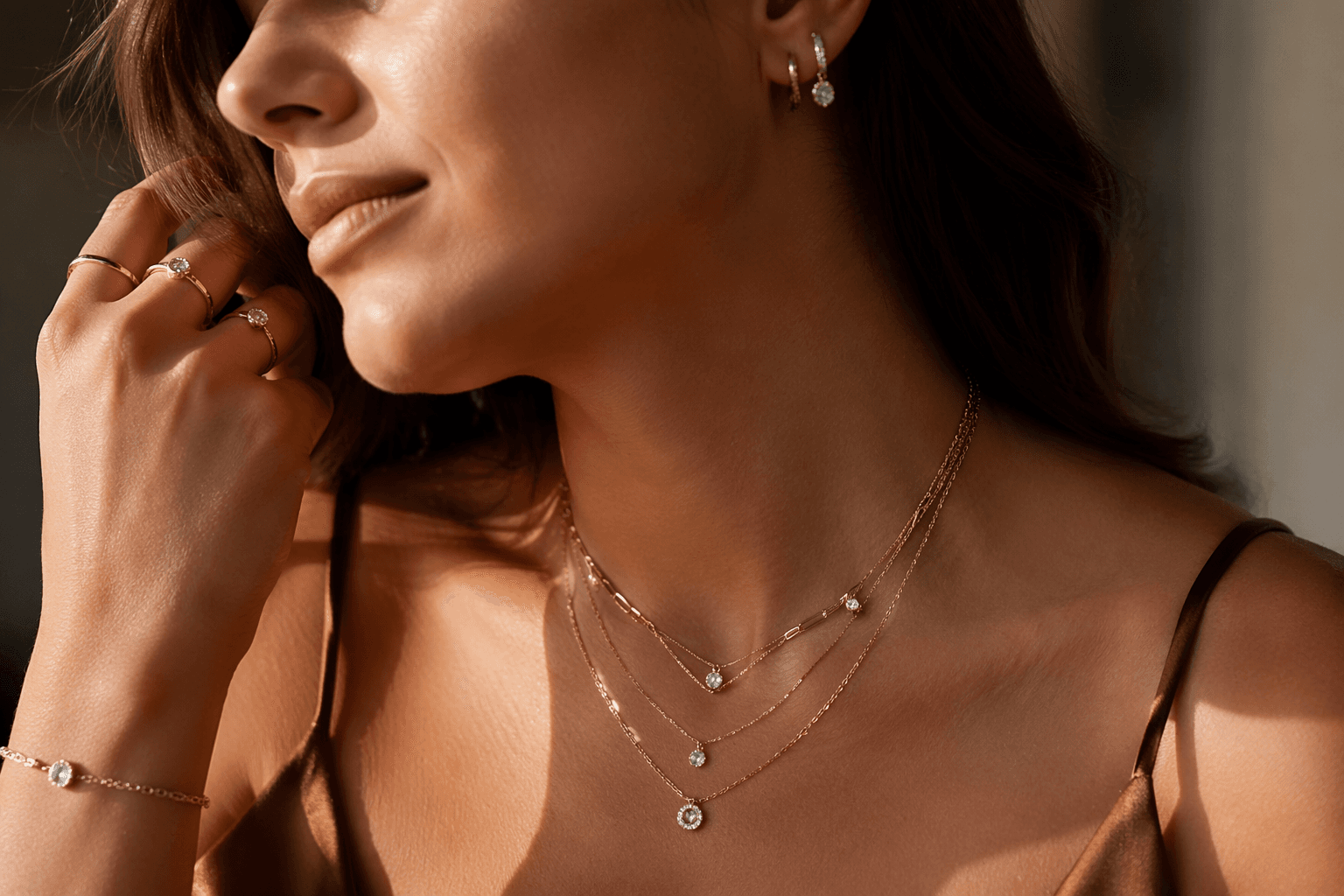
A Moritz Glik necklace shows how desert diamonds can soften a stack, pushing layered jewelry away from icy contrast and toward something warmer, softer, and more intimate. The appeal is not just color: it is the feeling that a bracelet, necklace, or ring can look collected over time, with champagne, amber, and brown tones acting as a quiet base beside gold and other earthier materials.
Why the warm spectrum is resonating
The category’s power starts with a simple gemological fact: brown is the most common fancy diamond color. About 98% of mined diamonds show at least some observable brown, by some expert estimates cited by the Gemological Institute of America, even though these stones were long treated as the least desirable fancy colors and often sent into industrial use. Marketing changed the conversation by reframing them as chocolate, champagne, and coffee, names that made the tones feel desirable rather than compromised.
That shift gives desert diamonds their styling range. Earthy diamond hues can feel more personal and less conventional than a row of colorless stones. In practice, the palette works because it sits in the middle of the color spectrum: warmer than white diamonds, but still neutral enough to anchor a stack.
How De Beers turned a color story into a category
De Beers pushed the term from trade shorthand into a consumer-facing idea. The company first unveiled Desert diamonds at the JCK Las Vegas Show in 2025, then launched them to consumers on October 3, 2025 as its first new “beacon” in more than a decade. De Beers called the launch its largest category marketing investment in more than 10 years.
The numbers show why the company leaned in. De Beers research and creative testing found more than 90% of consumers would like to own and would consider purchasing a Desert diamond. Over the previous two years, the company said, the category generated more than 250,000 mentions and 450 million views across digital platforms. Taylor Swift’s engagement ring drove a surge of conversation in August 2025, while layered Desert diamond looks worn by Kim Kardashian and Doja Cat, and Bad Bunny wearing Desert diamonds to announce his Super Bowl appearance, helped push the look into broader pop culture.
What designers are actually making
The strongest Desert diamond jewelry does not fight its color, it lets the warmth do the work. In October 2025, designer Stephanie Gottlieb said clients were asking for stones with more warmth, and she described deeper browns and warm tones as something that “really bring out something different from a design perspective.” Her example was a multi-row bracelet with ombré Desert diamonds alternating with white diamonds in bezel settings, a useful template for anyone trying to understand the category.
The category supports two different approaches at once. One is subtle gradient, where the eye moves from lighter to deeper tones and the piece feels almost tonal, like fabric. The other is bold solitaire design, and designers and retailers were also creating it. Desert diamonds can read restrained in a slim band or more dramatic in a wide cuff, but the color has to be visible.
How to layer them for a warmer wardrobe
Desert diamonds work best when you stop treating white diamond brilliance as the default. Use them as the neutral layer in a stack, then build around that base with yellow gold, brushed finishes, and textured surfaces that echo the stones’ natural warmth. The goal is dimension, not glare.
- Start with one desert diamond anchor piece, such as a solitaire, tennis bracelet, or pendant.
- Add yellow gold chains or rings to deepen the warmth instead of cooling the palette.
- Mix in mixed gemstones only if they stay in the same earth family, so the stack reads cohesive rather than busy.
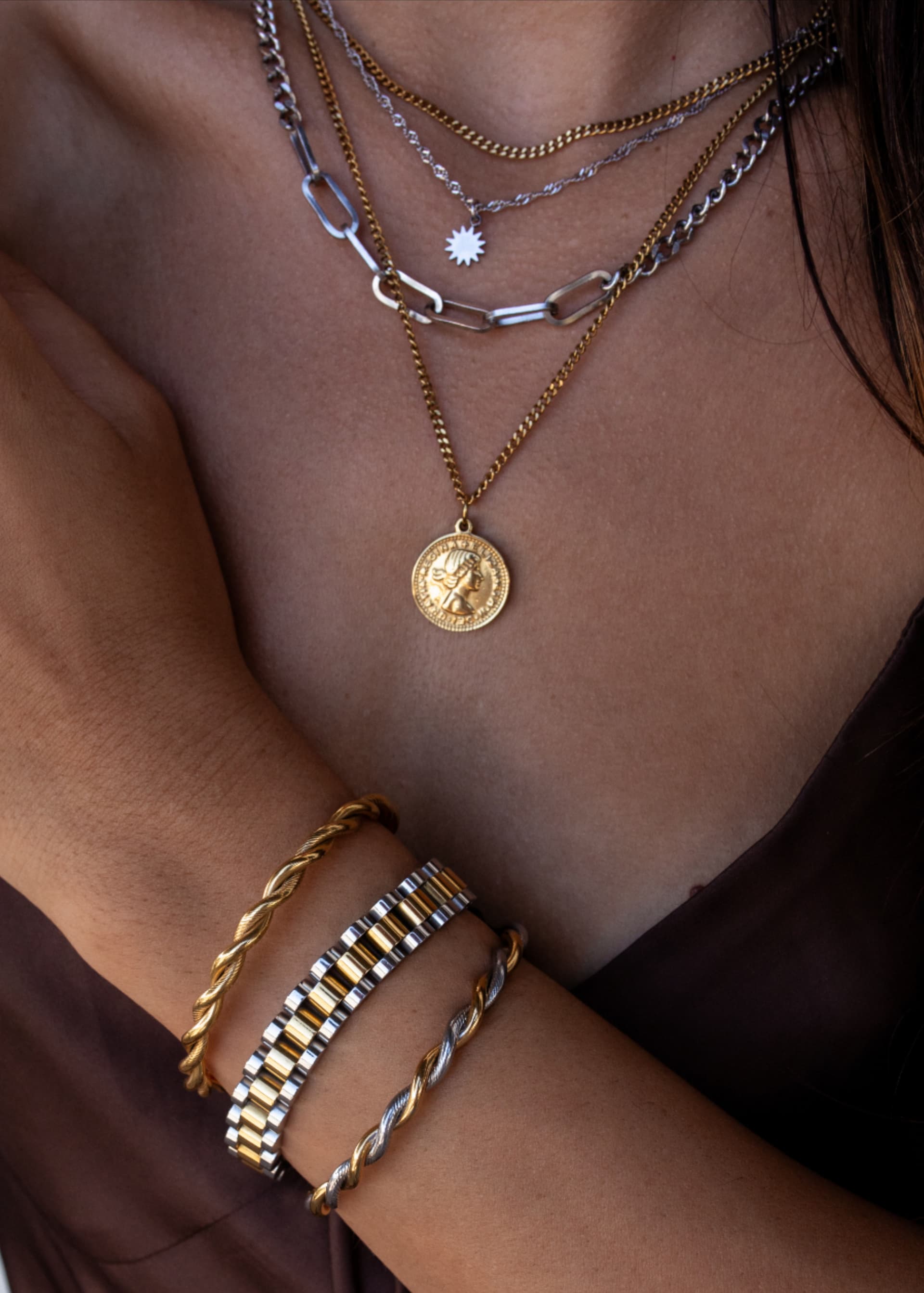
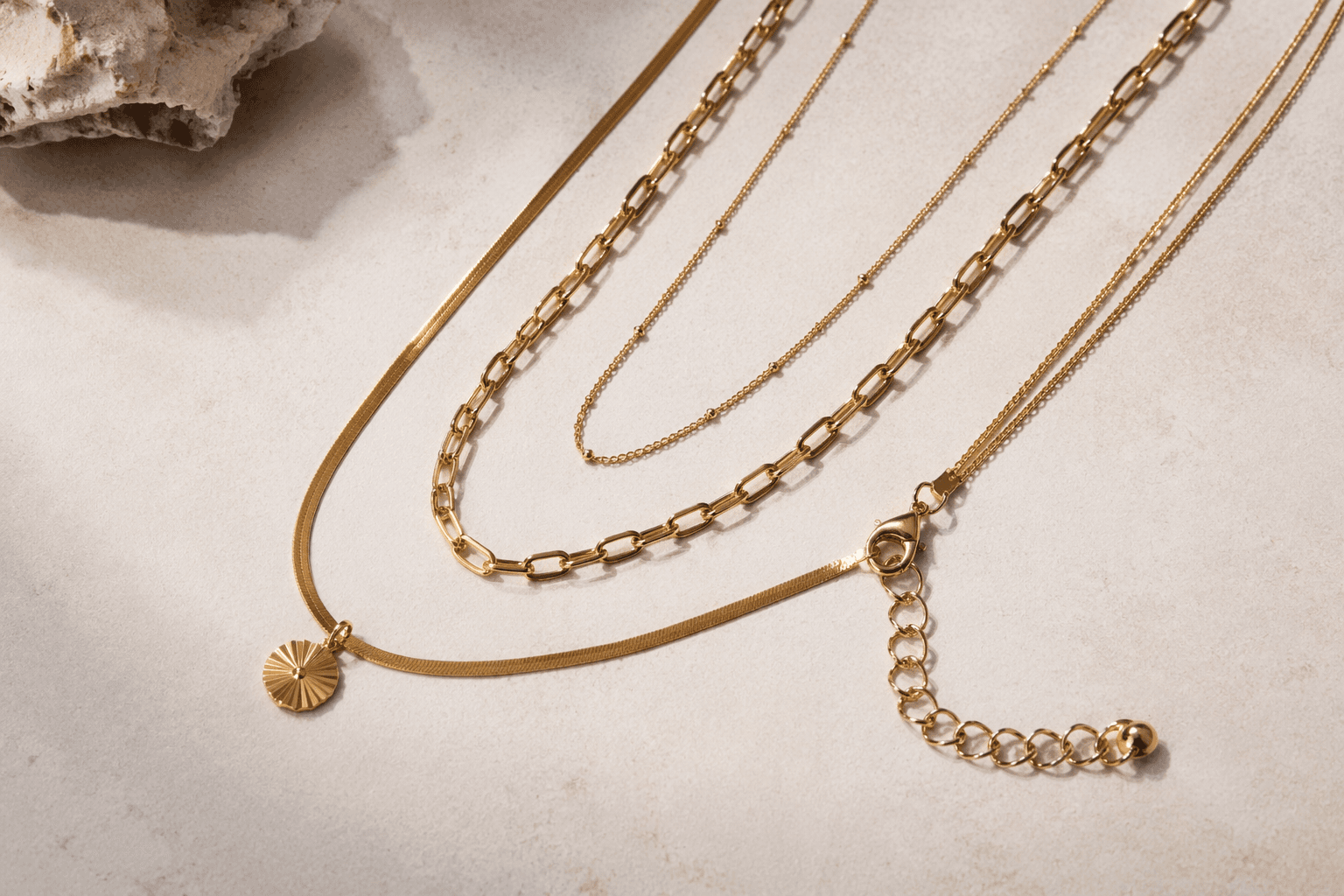
- Favor bezel settings, hammered gold, rope textures, and multi-row construction when you want the stones to feel integrated rather than separate.
A useful rule of thumb:
A cream-colored stone beside a satin-finish gold band reads differently from a white diamond next to polished platinum.
Why bridal is now part of the conversation
By April 14, 2026, De Beers had expanded Desert Diamonds into a bridal campaign, centering cream-, champagne-, and brown-colored stones for engagement rings. De Beers estimated the U.S. campaign would reach 25 million consumers.
The bridal lineup included Stephanie Gottlieb, The Clear Cut, William Goldberg Diamonds, Bijules, Casey Perez, Jade Trau, Briony Raymond, Jessica McCormack, Vanessa Fernández Studio, Reeds Jewelers, Harwell Godfrey, Pamela Love, Almasika, and Uniform Object. De Beers framed the campaign as a way to separate lab-grown diamonds, which are largely high color and clarity, from the broader spectrum of natural diamond colors. Desert diamonds are not a sustainability claim by default. They are a color story first, and any ethical purchase still deserves scrutiny around origin, traceability, and workmanship.
What to look for when the stone matters as much as the style
If the beauty of a Desert diamond is its natural variation, the buying criteria should be equally specific. Look for the exact color range described by the seller, whether the stone sits in the warm white, champagne, amber, or brown end of the spectrum, and ask how the piece is constructed. Bezel settings, ombré arrangements, and multi-row designs all change how the color reads on the hand and wrist.
This article was produced by Prism’s automated news system from verified source data, official records, and press releases, then run through automated quality and moderation checks before publishing. The system is built and supervised by the people who set the standards it runs under. Read our full AI policy.
Did this article answer your question?