Diamonds Move Beyond Solitaires, Layered Stacks Gain Red Carpet Appeal
Diamonds are leaving the solitaire pedestal and entering stacks, from red carpets to weddings and everyday layers.

The new diamond dress code
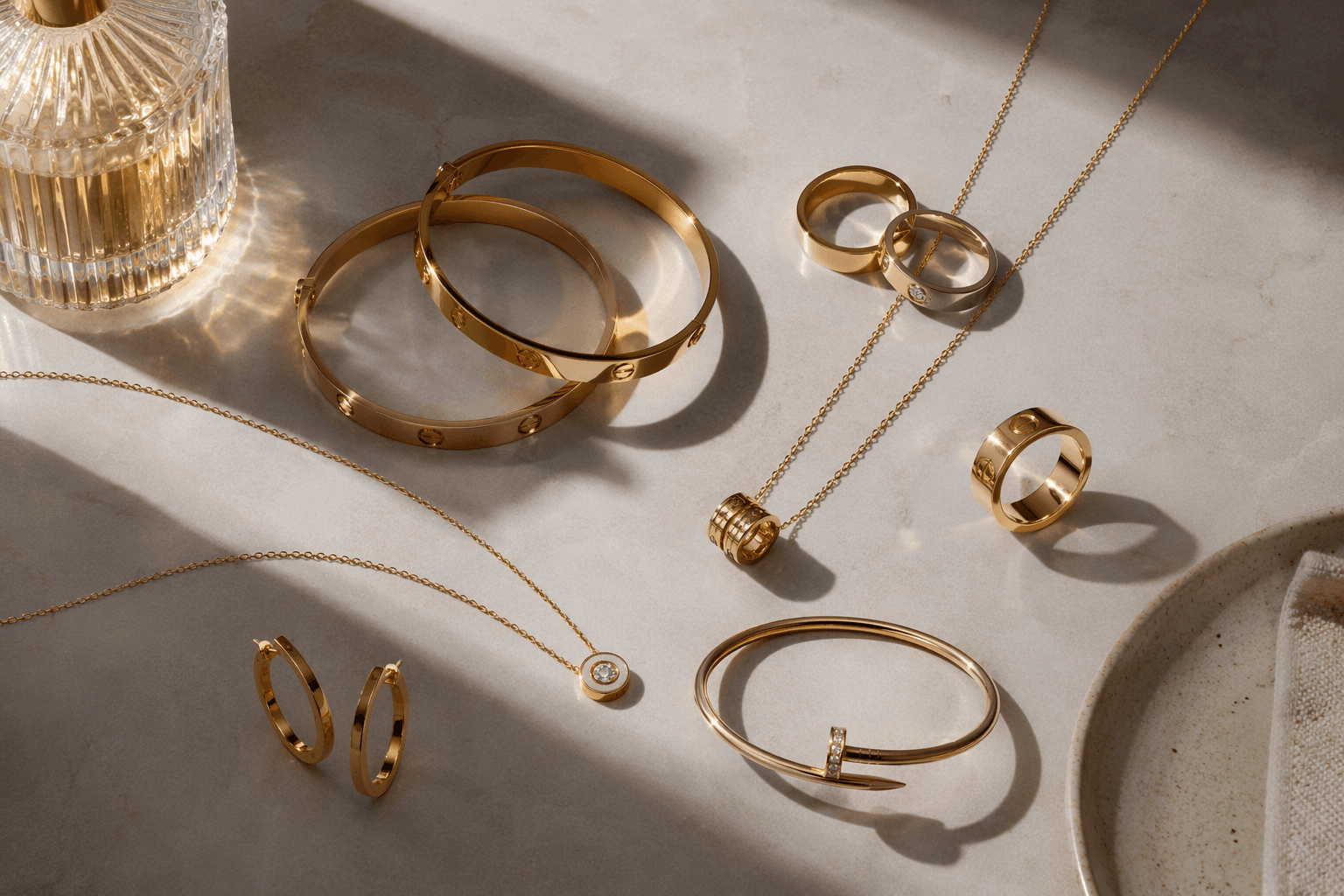
The diamond’s old hierarchy is collapsing. What once lived as a single center stone, carefully isolated in a matched setting, is now being worn in layered stacks on red carpets, at weddings, and in everyday combinations that feel more personal than formal.
That shift matters because the red carpet has always been jewelry’s most visible stage. Hollywood’s first red-carpet event took place in 1922 at the Egyptian Theatre in Los Angeles, and for decades the message was consistent: one spectacular piece, worn with precision. Today the message is looser and far more interesting. Diamonds are being mixed with vintage finds, modern settings, and multiple lengths or bands, so the stone reads less like a monument and more like a compositional element.
Why the stack feels so current
Layering gives diamonds a new kind of relevance because it changes the role of the stone itself. Instead of asking a diamond to carry the whole look alone, the wearer can let it interact with texture, metal color, and scale. A bezel setting, for instance, feels clean and architectural, while prongs keep a stone visually open to the light; together, those two approaches can make a stack feel edited rather than merely piled on.
WWD describes this as a move away from rigid solitaire thinking and toward assembled looks, and that language captures the moment well. The best diamond layering is not about excess for its own sake. It is about contrast: old with new, round with fancy shape, polished with antique, delicate with bold. When a diamond is one voice in a small ensemble, its clarity and cut often read more sharply, not less.
Bridal jewelry is driving the change
The bridal category remains the strongest proof that diamonds are no longer bound to the solitary center stone. The Natural Diamond Council’s 2024 overview with Tenoris found that bridal accounted for 33% of all natural diamond jewelry sales, a sizable share that explains why engagement and wedding jewelry continue to shape the category’s direction.
Just as notable, shoppers are moving beyond the 1-carat comfort zone. Larger center stones are gaining traction, and interest is rising in oval and marquise cuts, even as round diamonds still dominate. That is an important shift in taste: oval and marquise stones already carry more visual length, which makes them especially effective in layered or stacked compositions. They can sit elegantly beside bands, guards, or other rings without losing presence.
In bridal styling, the old idea of a perfectly matched set is giving way to something more expressive. A wedding ring can now be paired with a vintage-style band, a second diamond ring, or a slender pavé piece that changes the silhouette of the hand. The effect is less ceremonial, more lived-in, and often more luxurious because it reflects a personal collection rather than a preset package.
Red carpet jewelry is making the argument in public
Celebrities have helped normalize the new diamond language by wearing stones in less predictable ways. On the red carpet, diamonds are no longer confined to a single necklace, one pair of earrings, or a solitaire ring placed at the center of the frame. They appear stacked, mixed, and recomposed, often with different cuts or settings that make the whole look feel collected over time.
That matters because red carpet styling has always trickled down into how people think about fine jewelry in real life. If a diamond can anchor a gown and still feel contemporary beside layered chains, mixed metals, or multiple rings, it can also work on a weekday with a sweater, a button-down, or a bare wrist. The new aspiration is not simply owning a diamond. It is knowing how to let it join a wardrobe.
The business behind the beauty
This stylistic shift is happening against a complicated market backdrop. Boston Consulting Group says the natural diamond industry navigated a challenging 2023 after five years shaped by the rise in demand for lab-grown diamonds, COVID-19 disruption, catch-up demand after restrictions eased, and stock fluctuations across the value chain. That pressure has forced the category to defend desirability as well as price.
De Beers Group has responded by emphasizing distinction. The company says consumers in key regions are becoming more affluent and more clearly separating natural diamonds from lab-grown stones. It has also said that global supply is declining and that no new mines have been discovered in the past decade, a reminder that rarity is still part of the natural diamond story. Its Origins strategy is aimed at growing value and revitalizing desire for natural diamonds, and the numbers attached to that ambition are ambitious: natural diamond demand was estimated at $43 billion in 2023 and projected to reach $54 billion by 2030.
The same analysis also quantifies the lab-grown challenge. De Beers estimated a $7 billion impact on the natural-diamond market from lab-grown displacement in the United States. Without that displacement, natural diamond jewelry demand would otherwise have been $50 billion in 2023 and $55 billion in 2030. Those figures explain why the industry is leaning into distinctions in taste, provenance, and styling. If the stone itself has to justify its place, layering becomes part of the argument.
What makes a layered diamond look feel modern
The strongest diamond stacks share a few qualities:
- They mix scales, so a prominent center stone is offset by slimmer bands or smaller surrounding pieces.
- They use contrast in setting, pairing the crisp outline of a bezel with the openness of prongs or the sparkle of pavé.
- They borrow from different eras, which is why vintage pieces sit so naturally beside newer cuts.
- They let shape do the work, especially with ovals and marquises that lengthen the line of the hand or the neckline.
The result is a more flexible kind of luxury. Diamonds still carry their old power, but that power now comes from movement, accumulation, and the freedom to recombine rather than from a single perfect solitaire sitting alone at the center of the frame.
This article was produced by Prism’s automated news system from verified source data, official records, and press releases, then run through automated quality and moderation checks before publishing. The system is built and supervised by the people who set the standards it runs under. Read our full AI policy.
Did this article answer your question?