Fullord redefines fine jewelry with modular, transformable layering designs
A scarf ring born on the water has become Fullord’s modular signature, turning one jewel into multiple silhouettes from day to night.
Fullord’s new luxury is flexibility
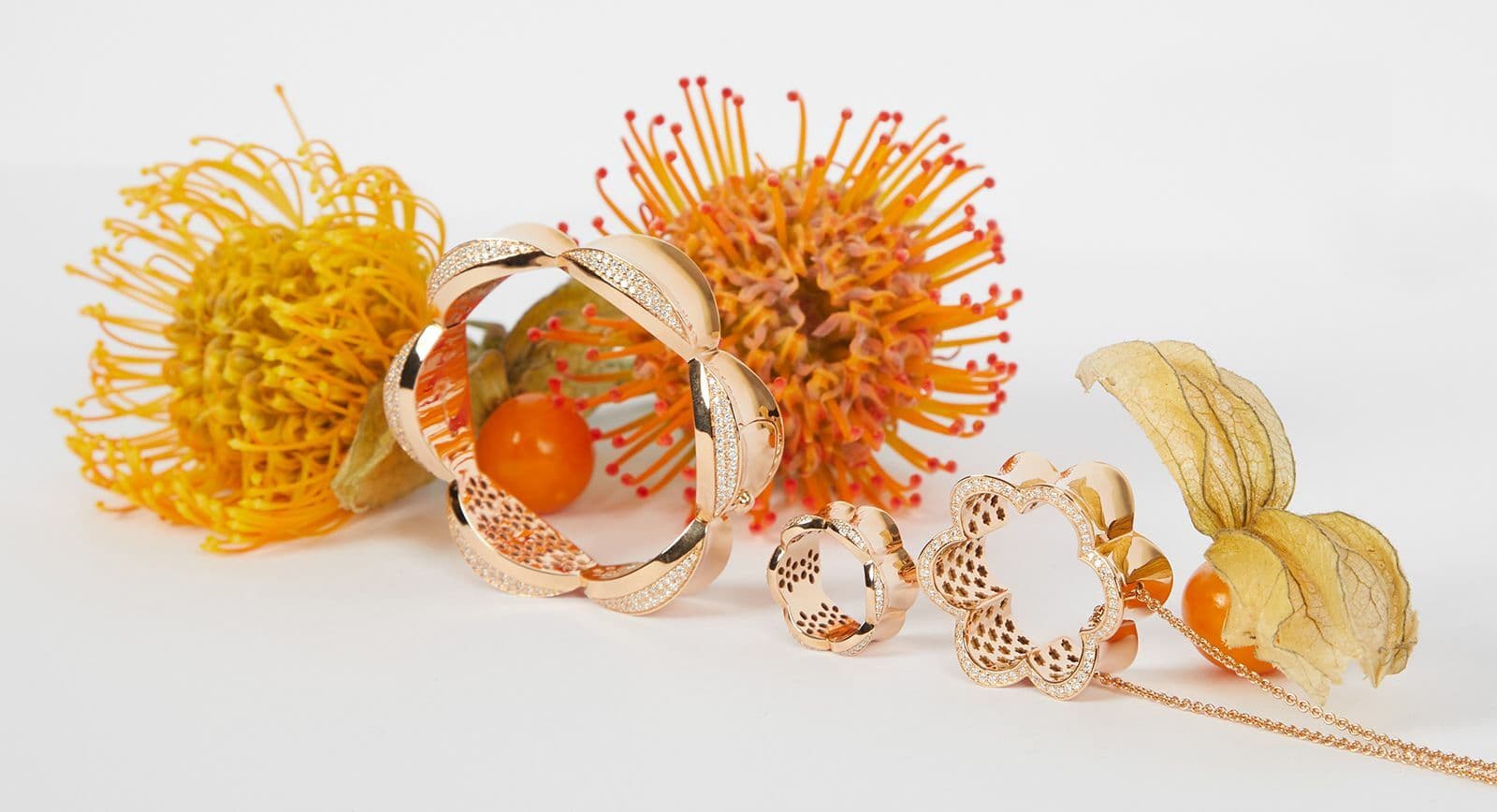
Fine jewelry has spent years learning how to be louder. Fullord’s answer is sharper: make it smarter. The Geneva-based house builds pieces that change shape across the day, so one necklace can be worn long, doubled, layered, or drawn into a vertical silhouette, then rethought again as the wearer moves from one moment to the next. In a market crowded with static statement pieces, that kind of modularity feels less like a styling trick than a new design logic.
What makes the idea compelling is its practical elegance. Fullord is not asking you to buy a piece for a single occasion and leave it in a box until the next one. It is building jewelry that can hold its own at breakfast, in a meeting, and at dinner, while shifting its proportion and presence without losing its sculptural character. That is the real innovation here: the silhouette does not just decorate the body, it adapts to it.
From a scarf ring to a signature system
Fullord says its story began in 2019 with founder Sandrine Thibaud and a problem many elegant objects ignore: how to keep a scarf in place on a boat. Her answer was a patented mechanism that turned a scarf ring into something more useful, then more beautiful, and finally more expansive, as the piece could also become a necklace. That origin matters because it explains the house’s entire language. The work is not built around ornament for ornament’s sake, but around transformation.
The brand has since expanded that first idea into a broader identity rooted in sculptural, transformable fine jewelry. Its signature scarf ring necklace is more than a debut design; it is the template for the brand’s point of view. Fullord’s pieces are conceived as objects with more than one life, which is why the brand’s jewelry feels closer to a system than to a single jewel category.
How the silhouettes change across the day
The beauty of Fullord’s approach lies in the mechanics of wearing. From a central point, the necklace can fall long, double back on itself, sit in layered form, or pull into a vertical line that changes the rhythm of the neckline. In certain configurations, a bracelet can be extracted directly from the necklace, which turns the piece into a miniature wardrobe of its own.
That ability to convert one jewel into several roles is what separates modular design from mere versatility. A conventional necklace may be adjustable; Fullord’s pieces are reconfigurable. They are designed to be restyled rather than simply re-clasped, and that distinction matters to anyone who wants fine jewelry to work harder without looking engineered. The line still reads as luxury, but its luxury comes from intelligence, not excess.
There is also a subtle consumer benefit embedded in the silhouette shifts. A long line changes the proportions of a tailored jacket. A doubled necklace creates density where a single strand might feel too spare. A vertical arrangement draws the eye in a different direction entirely. These are not just aesthetic choices, they are ways of making one object serve several moments of dress.
Why the materials matter as much as the mechanism
Transformable jewelry only feels convincing when the materials and construction can support the movement. Fullord says its pieces are crafted in Italy, and the brand positions its practice around ethical luxury and sustainably sourced materials, including RJC-certified sourcing in its broader story. That gives the modularity a more grounded foundation: the design is meant to be worn repeatedly, not treated as a novelty.
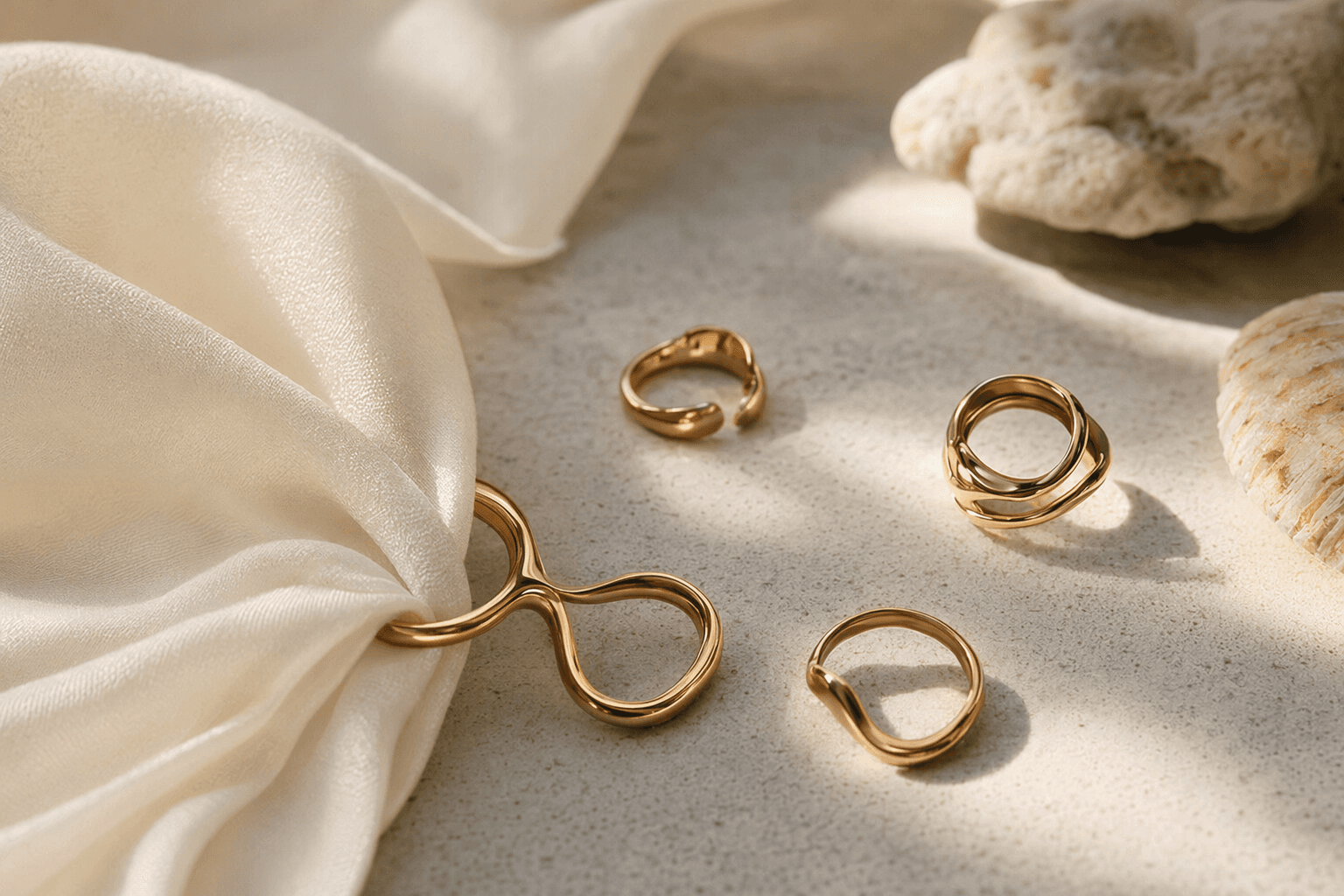
The craftsmanship is also what keeps the concept from tipping into gimmick territory. A necklace that changes form has to hold tension cleanly, sit properly when layered, and remain visually coherent whether it is worn long or close to the neck. That is a demanding brief, and it is one reason transformable jewelry is so often discussed as an engineering problem as much as an aesthetic one. Fullord’s appeal is that it makes that engineering look effortless.
A brand in step with the market shift
Fullord’s rise lands at a moment when jewelry is moving away from minimalist single-piece dressing and toward sculptural gold, modular stacks, and stackable designs. That broader shift makes the brand feel timely rather than eccentric. Consumers are increasingly drawn to pieces that can be recombined and reinterpreted, especially when a single purchase can deliver several visual outcomes.
In that sense, Fullord is part of a larger recalibration in fine jewelry. The most compelling pieces now do not simply announce themselves; they participate in the wardrobe. They answer a real styling tension: how to own fewer pieces while getting more range from each one. Fullord’s modular necklaces do exactly that, turning layering from a trend into a design proposition.
Industry validation and why it counts
There is also serious recognition behind the idea. Fullord was named among the top three finalists at Vicenzaoro’s inaugural awards in the Best in Icon: High Jewellery under €30,000 category, a useful signal that the industry sees more than a clever mechanism. For transformable jewelry, validation matters. It suggests that the craftsmanship, design discipline, and wearability are strong enough to compete in a category where technical ambition is expected but not always elegantly resolved.
That recognition also sharpens the brand’s positioning. Fullord is not presenting modular jewelry as a side note to a broader luxury offer. It is making transformability the center of the story. In a category that often prizes permanence, the house has built its identity around change, and that is precisely why it stands out.
The new value of one piece doing more
Fullord’s smartest achievement is not that it can turn a scarf ring into a necklace, or a necklace into a bracelet, though both are impressive. It is that the pieces make a persuasive case for jewelry as personal infrastructure, something you can wear, adjust, and reinterpret as your day changes. That feels especially relevant now, when the strongest luxury objects are the ones that earn repeated use without losing their poetry.
In Fullord’s hands, modular design is not about gimmickry or maximalism for its own sake. It is about giving fine jewelry the intelligence to move with life, and the restraint to remain beautiful in every form it takes.
This article was produced by Prism’s automated news system from verified source data, official records, and press releases, then run through automated quality and moderation checks before publishing. The system is built and supervised by the people who set the standards it runs under. Read our full AI policy.
Know something we missed? Have a correction or additional information?
Submit a Tip