How chain lengths and textures create perfect layered necklace stacks
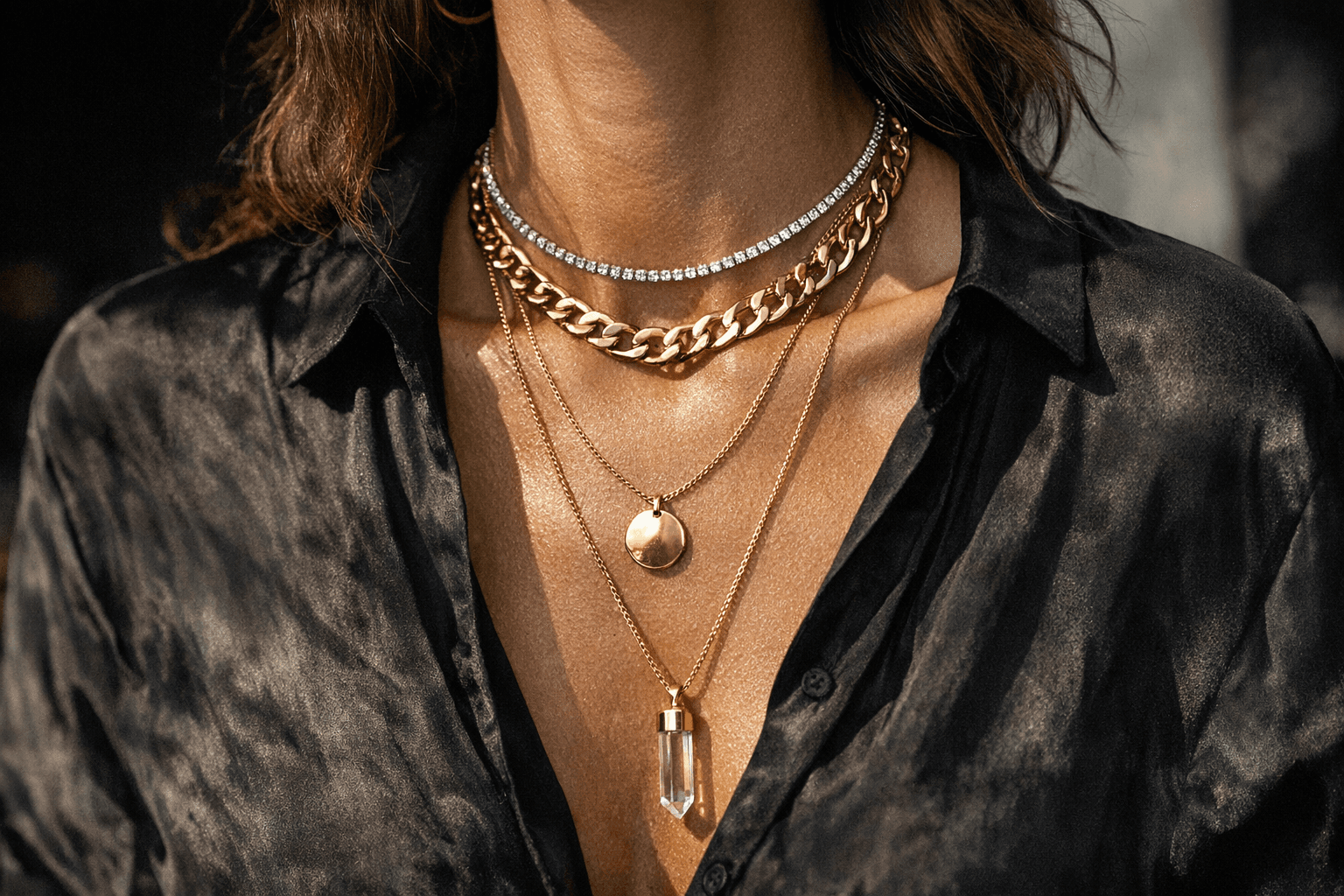
Layered necklaces work when length and texture are choreographed, short chokers, a mid‑length pendant, a long chain and a tennis or diamond strand create a conversation, not a crowd.
1. Short chokers
Short chokers (typically 14–16 inches) are the foundation of a layered stack: they sit high on the collarbone and set the visual starting point for everything that follows. Choose a choker with a clean silhouette, a smooth snake or herringbone for a sleek, reflective frame, or a fine curb or cable chain for a softer, textural contrast. Because chokers read as a near‑face piece, attention to finish matters: high‑polish liquids in gold or rhodium‑plated white metal catch light close to the jawline, while matte or brushed surfaces lend understated, modern restraint. When selecting a choker, favor a lightweight construction that rests flat to avoid twisting under longer pieces.
2. Mid‑length pendants
Mid‑length pendants, most commonly 16–20 inches, with 18 inches the standard “princess” length, are the narrative layer: they carry motif, gemstone, or a solitary diamond that becomes the stack’s focal point. For gemstone pendants, bezel settings provide a tidy silhouette and protect edges, ideal for daily wear in layered looks; prong settings lift a stone to increase brilliance, which can be advantageous when the pendant must compete with shorter chokers. Mix proportions: a modest solitaire or signet pendant in 18 inches balances a 14‑inch choker without crowding, while an elongated bar or locket at 20 inches gives length without eclipsing the top layer. Consider pendant bails and their movement, large bails or fixed mounts change how a pendant hangs relative to adjacent chains.
3. Long chains
Long chains, 20 inches and beyond, commonly 24–36 inches (matinee to opera lengths), provide vertical sweep and a sense of relaxed proportion in a stack, drawing the eye down the décolletage. Textures like paperclip, rope, or elongated link chains add rhythm; a wider paperclip or textured rope in a longer length becomes the counterpoint to finer, high‑shine pieces above. Use longer chains to introduce a secondary focal point, an open pendant, a coin, or a lariat drop, that moves and breathes with the body, or to simply elongate the torso when layered over high necklines. Be mindful of weight and balance: heavier long chains need sturdy clasps and often an extra jump ring to prevent slipping through pendant bails.
4. Tennis and diamond pieces
Tennis necklaces and delicate diamond strands function as luxury punctuation in a stack, their continuous light play elevating everyday chains into jewelry moments. A classic tennis necklace at 16–18 inches can replace or sit beneath a choker to add sparkle close to the throat; longer tennis styles extend the shimmer across mid‑chest when placed below pendants. Diamond pieces are about scale and setting, micro pavé and bezel‑set melee read as texture from a distance, while single larger stones, prong‑set, act as focal punctuation. Because diamonds are highly reflective, use them sparingly in a layered composition to avoid visual clutter: one tennis or diamond strand paired with mixed‑metal chains creates a sophisticated contrast rather than competition.
5. Textures and chain types: how they interact
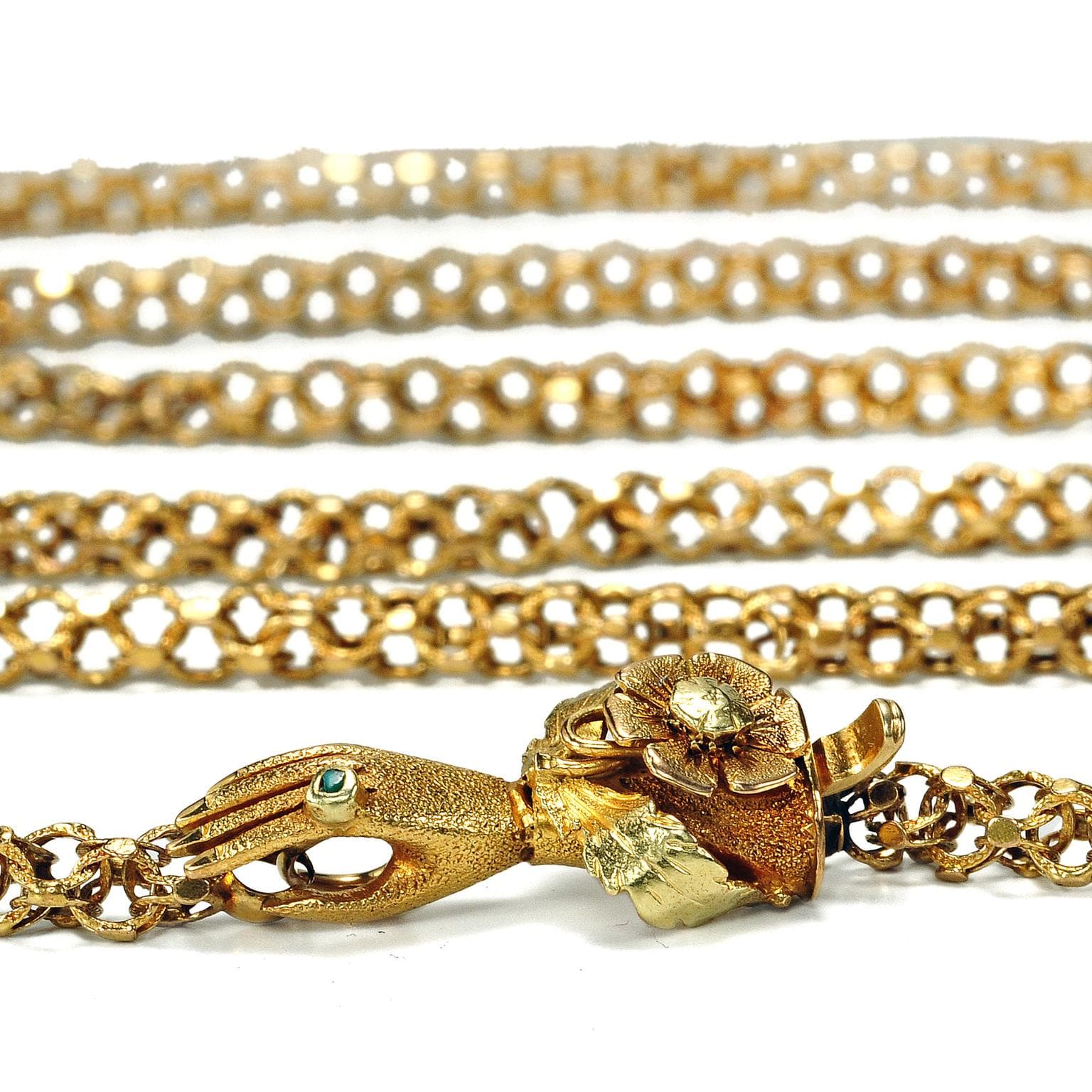
Texture is the language of a layered stack; each chain type has a distinct grammar that either harmonizes or creates friction with its neighbors. Fine cable and trace chains are discreet connectors, they disappear to highlight pendants, while box and snake chains offer a continuous polished surface that reflects light uniformly. Curb, figaro, and rope chains read heavier, providing mass and shadow; paperclip and elongated link chains introduce architectural negative space that feels contemporary. Practical rule: alternate densities, light (0.4–0.8 mm) then medium (0.9–1.5 mm) then bold (1.6 mm and up), so the eye can move from delicate to strong without muddiness. Also note that flexible, fluid chains (snake, box) are prone to kinking and benefit from careful handling, while open‑link styles are easier to repair and resize.
6. Building a stack: step‑by‑step practical sequencing
1. Select your anchor: begin with a choker or short chain (14–16 inches) that establishes the tone, sleek if you want minimalism, textured if you want warmth.
2. Add a mid‑length pendant (16–20 inches) to introduce motif and center of interest; adjust so the pendant sits 1–3 inches below the choker to avoid overlap.
3. Layer in a long chain (24–36 inches) or lariat to create movement and vertical balance; leave 3–6 inches between the mid and long layers for breathing room.
4. Place a tennis or diamond strand strategically, either directly beneath the choker for a concentrated sparkle or below the pendant for a luminous secondary line.
5. Fine‑tune spacing with small extenders or by using different clasp jump rings; if pieces tangle, swap one chain for a stiffer texture or add a weighted pendant to stabilize longer strands.
This sequence honors balance: short-to-long progression, alternating texture, and a single unifying element such as metal tone, motif, or stone to keep the composition coherent.
7. Practical details: clasps, extenders, maintenance and metal pairing
Clasps and adjustability are the unsung heroes of layering; lobster clasps and spring rings with multiple jump rings give 1–2 inches of adjustability, while 2–4‑inch extenders let you shift standard 18‑inch pieces to sit higher or lower. For mixed‑metal stacks, adopt one unifying thread, matching the pendant metal to one chain, or repeating bezel edges in other pieces, so the overall look reads intentional. Care: high‑karat gold softens and kinks more easily, so store layered sets flat and have box‑ or snake‑chains professionally inspected for kinks. For daily wear, avoid spraying perfume directly on necklaces; acid from cosmetics and salts from skin accelerate finish wear on plated pieces. When in doubt, a jeweler can solder a custom clasp or add discreet chain stoppers to prevent slipping.
8. Investment considerations and craftsmanship cues
A truly wearable stack balances design intent with durable craft: solid‑gold constructions and well‑set diamonds sustain daily wear far better than plated alternatives. Look for consistent solder work at links and a well‑engineered clasp, these small details predict longevity. In diamond strands, uniformity of color and clarity in melee stones, consistent bezel or prong work, and secure stone seats indicate quality; in chains, tight, even links and a smooth finish at jump rings signal good manufacture. When building a collection, prioritize one heirloom‑grade piece, a diamond strand or a heavy 14–18k gold chain, as the backbone, then layer lighter, trendier pieces around it to change the stack seasonally without compromising value.
Conclusion Layering is an exercise in choreography: lengths decide the movement, textures write the rhythm, and a single well‑chosen centerpiece, whether a pendant or a diamond strand, gives the ensemble purpose. By sequencing chokers, mid‑length pendants, long chains and the occasional tennis necklace with deliberate spacing, alternating textures, and attention to clasp and weight, you create a layered necklace stack that reads as both effortless and exquisitely considered.
This article was produced by Prism’s automated news system from verified source data, official records, and press releases, then run through automated quality and moderation checks before publishing. The system is built and supervised by the people who set the standards it runs under. Read our full AI policy.
Did this article answer your question?