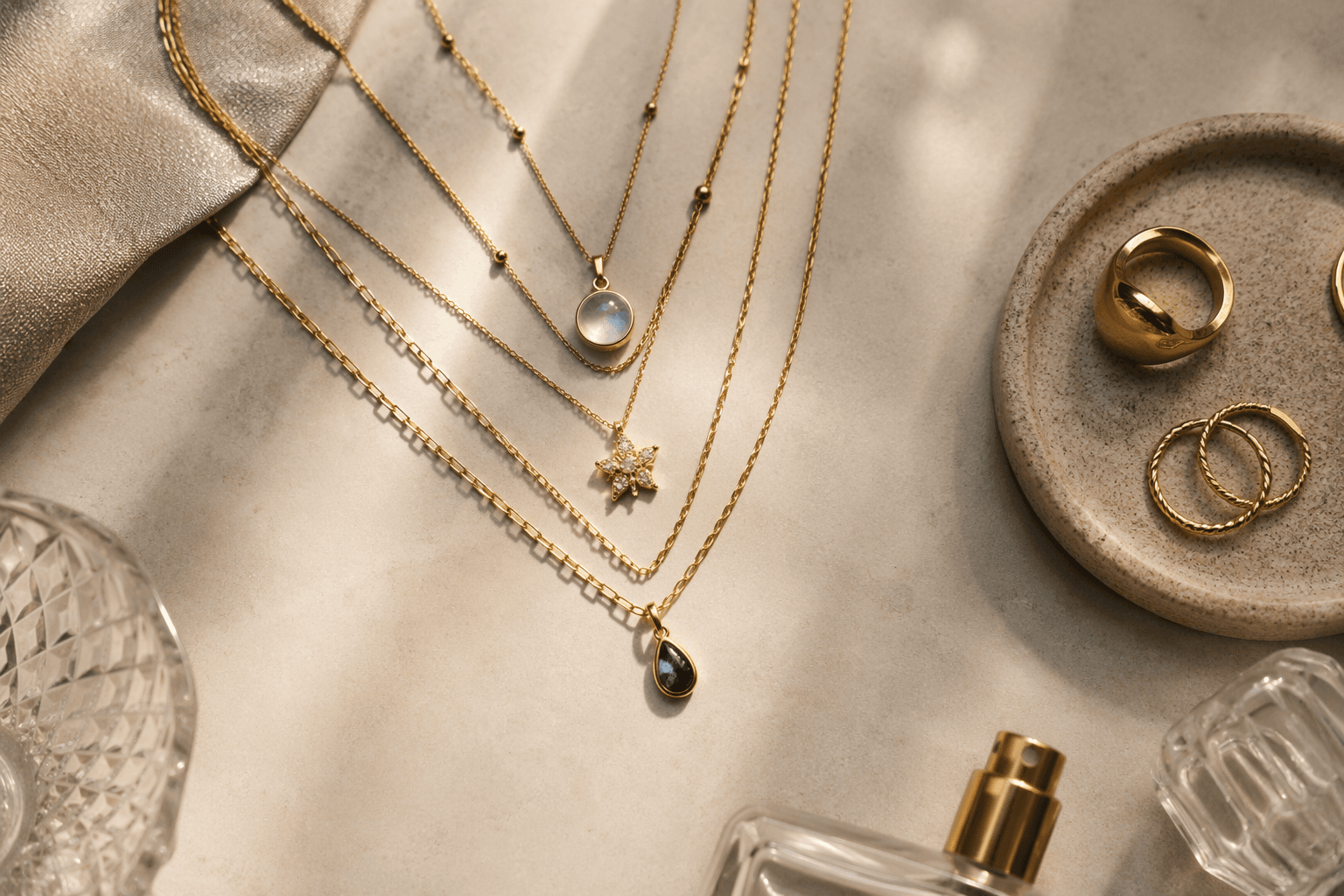
How chokers anchor layered necklaces with luxury appeal
The shortest necklace now does the hardest work. A choker sets the top line, organizes spacing, and makes every layer below it read as deliberate.
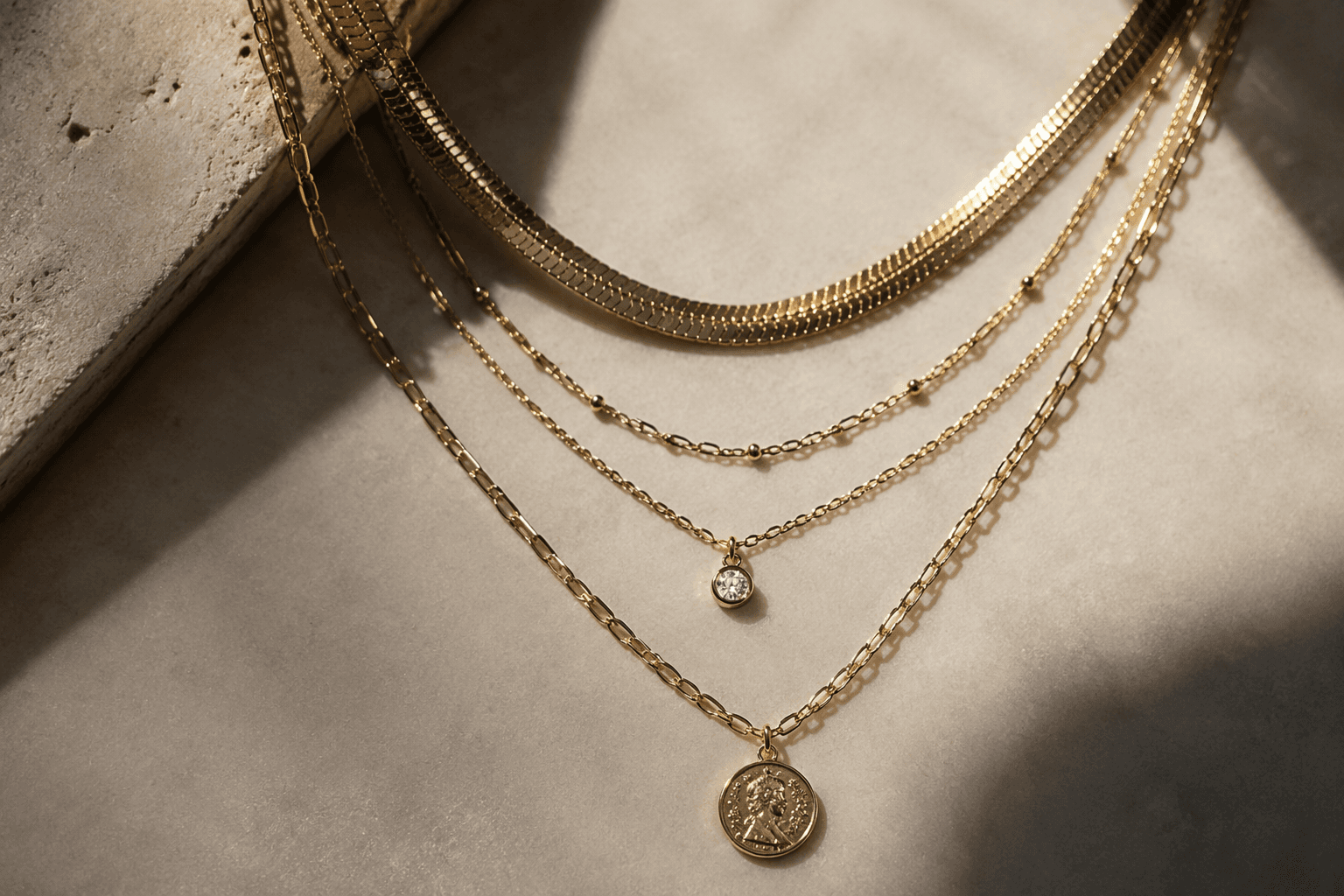
A choker sits close to the collarbone, and that single placement changes everything below it: the eye has an immediate top line, the spacing opens up, and longer chains stop looking accidental. In a season when luxury houses have treated the choker as a polished comeback rather than a costume reference, it has become the piece that gives layered necklaces their structure and their sense of intention.
Why the choker leads the stack
A layered necklace look can fall apart when the neckline starts too low or too empty. When there is too much blank space at the top, every chain has to compete for attention, and the result can feel unresolved. A fitted choker solves that problem by drawing a hard visual boundary just above the collarbone, which gives the rest of the composition a clear place to begin.
That is why the choker is not simply the shortest layer. It is the organizing principle. Once it is in place, the middle necklace, usually 16 to 18 inches long, can read as a bridge rather than a stray strand, while a longer 20- to 24-inch chain, pendant, or medallion becomes the final drop. The proportions are familiar because they work across crew necks, open collars, and deeper V necklines without losing balance.
The three-part formula that keeps layers from tangling
The most useful stack formula is also the cleanest: choker, mid-length necklace, long necklace. That sequence gives each layer a job to do, which is why professional jewelers treat layering as technique rather than whim. A third-generation jeweler in InStyle framed necklace layering as a matter of spacing and proportion, not just decoration.
The choker acts like the first line in a sketch. The 16- to 18-inch necklace sits where it can bridge the visual gap without crowding the throat, and the 20- to 24-inch piece finishes the composition with movement. This order matters because the shortest layer prevents the stack from collapsing into one dense cluster, especially when the lower chains carry pendants, medallions, or heavier metal links.
How luxury houses revived the silhouette
On March 26, 2024, The Jewellery Editor named Bulgari, Dior, Pomellato, Lalaounis, and Messika among the houses offering versions of the choker. The style sits firmly in the language of fine jewelry, not in the shorthand of Y2K nostalgia.
A diamond-set or gem-set choker can act as the most luminous point in the composition, while a rigid metal version can turn the necklace below it into something softer and more fluid by contrast. Even a sculptural choker does not need to dominate the entire neckline; it can anchor the arrangement without taking it over.
Materials and forms that change the mood
The old idea of the choker as black ribbon or clubwear shorthand no longer tells the whole story. Today’s versions can be diamond-set, gem-set, rigid metal, sculptural, or ribbon-like, and each one changes the hierarchy of the stack. A jeweled collar has enough presence to command attention on its own, while a polished metal band can feel almost architectural, letting fine chains and pendants below it provide movement.
If the piece is bold, the rest of the stack can soften around it. If the choker is minimal, it becomes the quiet anchor that allows a pearl strand, a fine chain, or a pendant to do more visible work.
Pearls, pendants, and mixed metal, made current by the top line
The choker is the difference between a necklace stack that looks collected and one that looks improvised. In a pearl composition, a short choker can keep oversized beads from drifting too low and losing impact, while a longer pearl strand becomes more refined when it hangs below a tighter collar. The same principle works with a pendant: the choker fixes the neckline so the pendant falls with purpose, rather than sitting in an empty field of skin.
Mixed-metal layering also benefits from a strong first layer. A yellow-gold choker can set a warm tone that makes silver or white-gold chains below it feel deliberate, while a white-metal choker can sharpen the contrast against a heavier gold pendant. When the top line is exact, the rest of the metals can vary without the stack feeling visually chaotic.
Why the comeback reads as more than nostalgia
Only Natural Diamonds traced the choker’s evolution in a July 26, 2023 piece on its history and modern elegance. The choker is not a one-season invention; it has returned in different forms often enough to feel like part of jewelry’s recurring grammar.
In April 2025, Only Natural Diamonds returned to the subject in a piece on layering necklaces with diamonds.
This article was produced by Prism’s automated news system from verified source data, official records, and press releases, then run through automated quality and moderation checks before publishing. The system is built and supervised by the people who set the standards it runs under. Read our full AI policy.
Did this article answer your question?