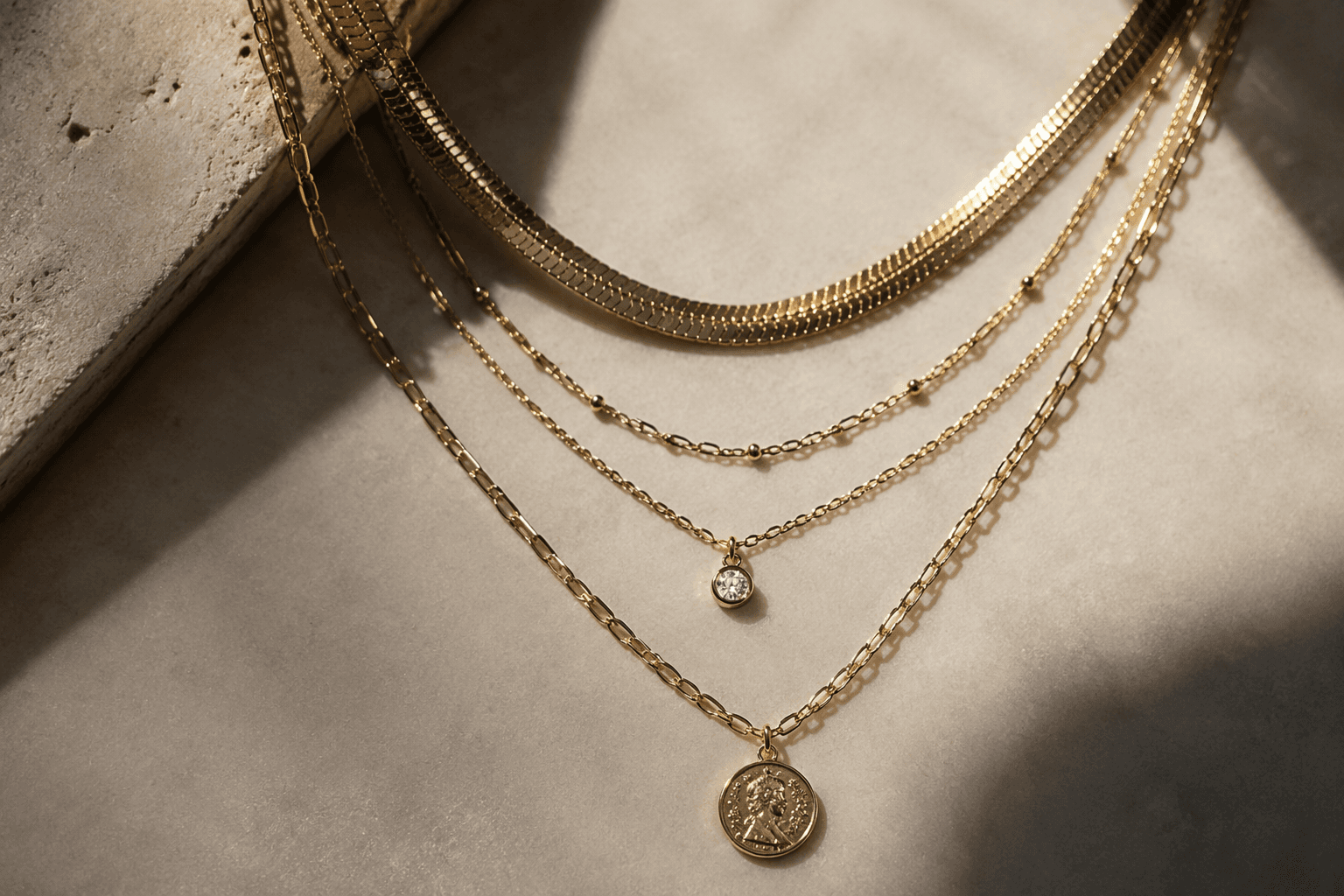
How to layer necklaces without damaging delicate gemstones
Moonstone can lead a necklace stack, but only if it sits in the safest slot. Use hardness, toughness, and cleaning rules to keep delicate gems from rubbing out their glow.
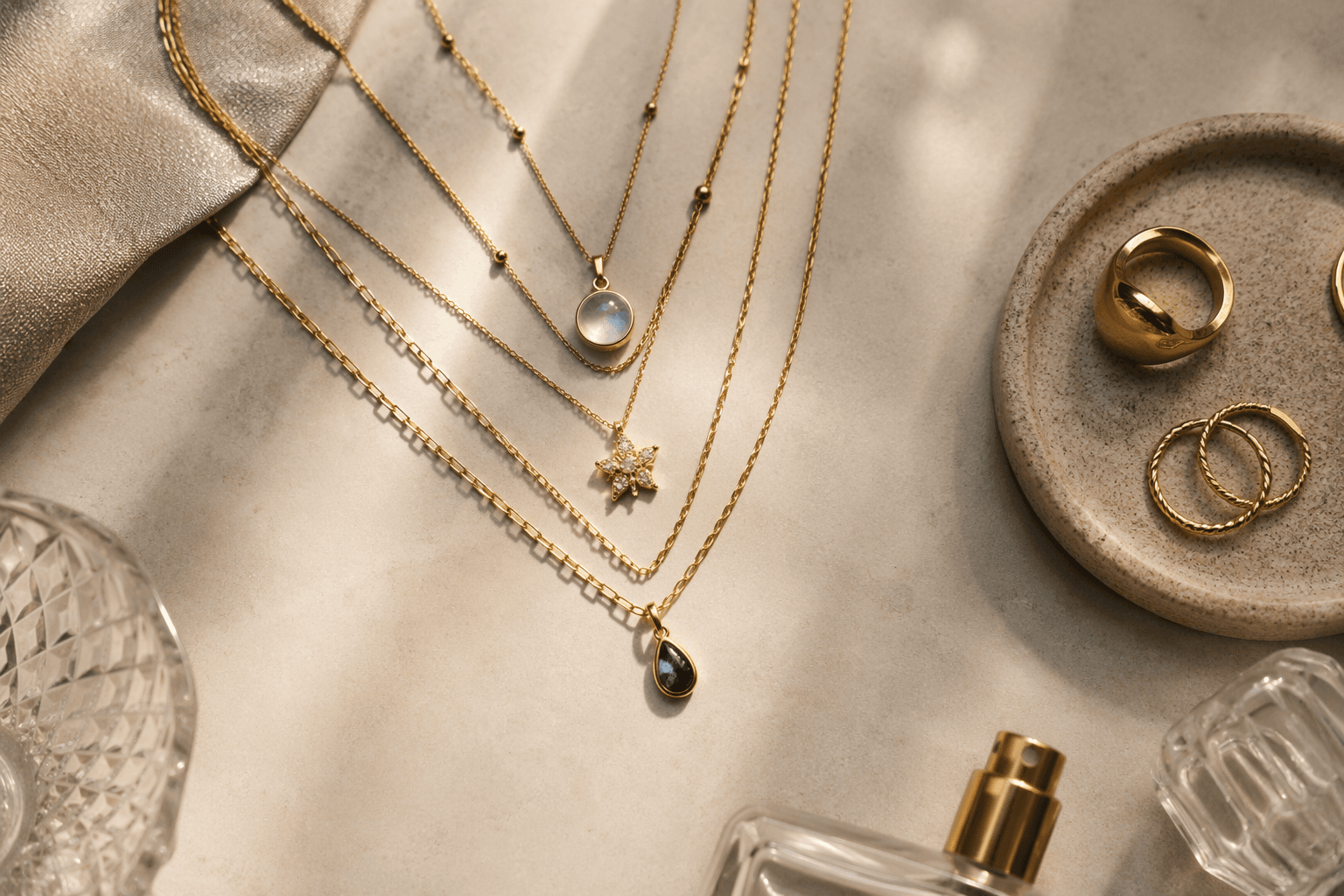
Henry Dunay’s moonstone pendant, made with 131 carats of moonstone set horizontally in 18k yellow gold, shows how powerfully the gem can command a finished jewel. That same beauty is exactly why moonstone does not belong anywhere in a necklace stack. When you layer necklaces, every extra clasp, chain end, and moving surface adds friction, so the softest gem often needs the most protected position, not the most exposed one.
Moonstone changes the architecture of a stack
Moonstone is a variety of the feldspar-group mineral orthoclase. During formation, orthoclase and albite separate into alternating layers, and when light falls between those thin layers it scatters into the sheen called adularescence. That optical effect gives moonstone its floating, milky light, but beauty and durability are not the same thing.
In a layered necklace, moonstone works best as a focal layer, not as the strand that takes the most abrasion. A pendant that lives near textured chains, heavy links, or constantly shifting lengths is more likely to pick up scratches and knocks than a single pendant worn alone.
Read the stone before you build the look
Hardness and toughness are different, and that distinction matters when you are deciding where a stone should sit. The Mohs scale measures how easily one mineral is scratched by another, but its steps are not evenly spaced. A stone that looks only a little softer on paper can behave very differently in real life.
Gem durability breaks into three properties: hardness, toughness, and stability. That matters in a stack because the metal closest to the skin, the stone in the middle, and the pendant hanging lower are all exposed to different kinds of wear. A hard gem can share space with stronger chains more comfortably than a stone that is prone to cleavage, internal fractures, or surface damage.
Pearls make that difference obvious. GIA lists pearls at about 2.5 to 5 on the Mohs scale, which means they need extra care even when they look substantial. Emeralds are harder, at about 7.5 to 8 on GIA’s scale, yet they still need more care than diamonds because of their internal characteristics, including fillers that can be removed or altered by ultrasonic cleaning, alcohol, and even jewelry repair.
Build the stack around the weakest stone
Let the most delicate gemstone occupy the safest zone in the necklace architecture. For moonstone, that often means a protected center or lower focal position where it is not constantly bumping against other strands. Smooth, less abrasive neighbors matter as much as the stone itself, so a plain gold chain or a clean pendant frame is kinder to moonstone than a noisy mix of textured links and hard, faceted companions.
Two stack formulas preserve the look without inviting damage:
- A short, polished yellow gold chain near the neck, a moonstone pendant one layer below it, and a longer plain metal chain beneath. This keeps moonstone visible while separating it from the most active points of contact.
- A pearl strand worn in a quieter position, paired with a lower chain in a harder material such as gold, sapphire, or ruby. Because pearls are delicate and sit in a Mohs range of about 2.5 to 5, they should not be the layer that bangs against clasps or the edge of a heavier pendant.
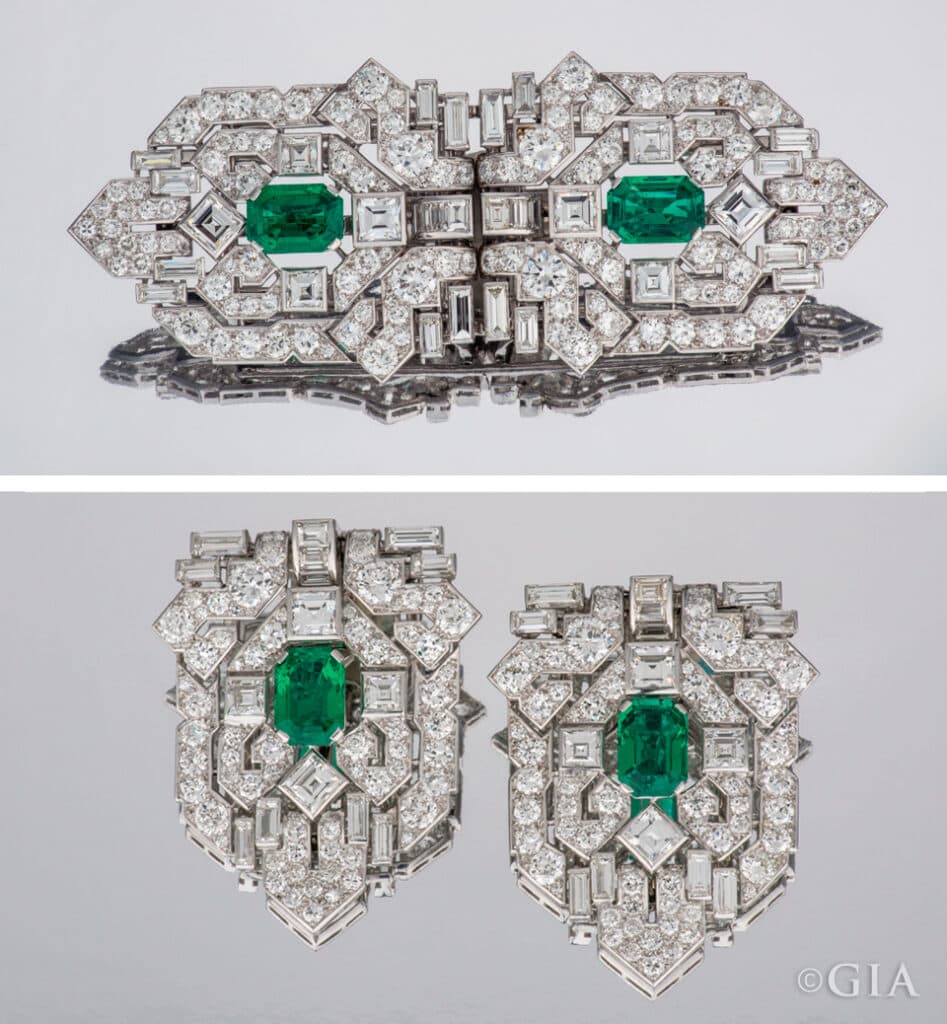
If emerald enters the stack, keep it out of the roughest daily-wear positions and away from harsh cleaning routines. Ultrasonic cleaning can compromise the stone’s internal fillers. A necklace that contains emerald should be assembled with the same caution you would use for any stone that has visible inclusions, oils, or treatments.
Think like a jeweler, not just a stylist
Omi Privé traces orthoclase containing moonstone in jewelry back almost as old as civilization. Moonstone gives depth, movement, and a pale flash that can soften yellow gold or temper a sharper link chain.
This article was produced by Prism’s automated news system from verified source data, official records, and press releases, then run through automated quality and moderation checks before publishing. The system is built and supervised by the people who set the standards it runs under. Read our full AI policy.
Did this article answer your question?