How to build a layered jewelry stack with chain contrast
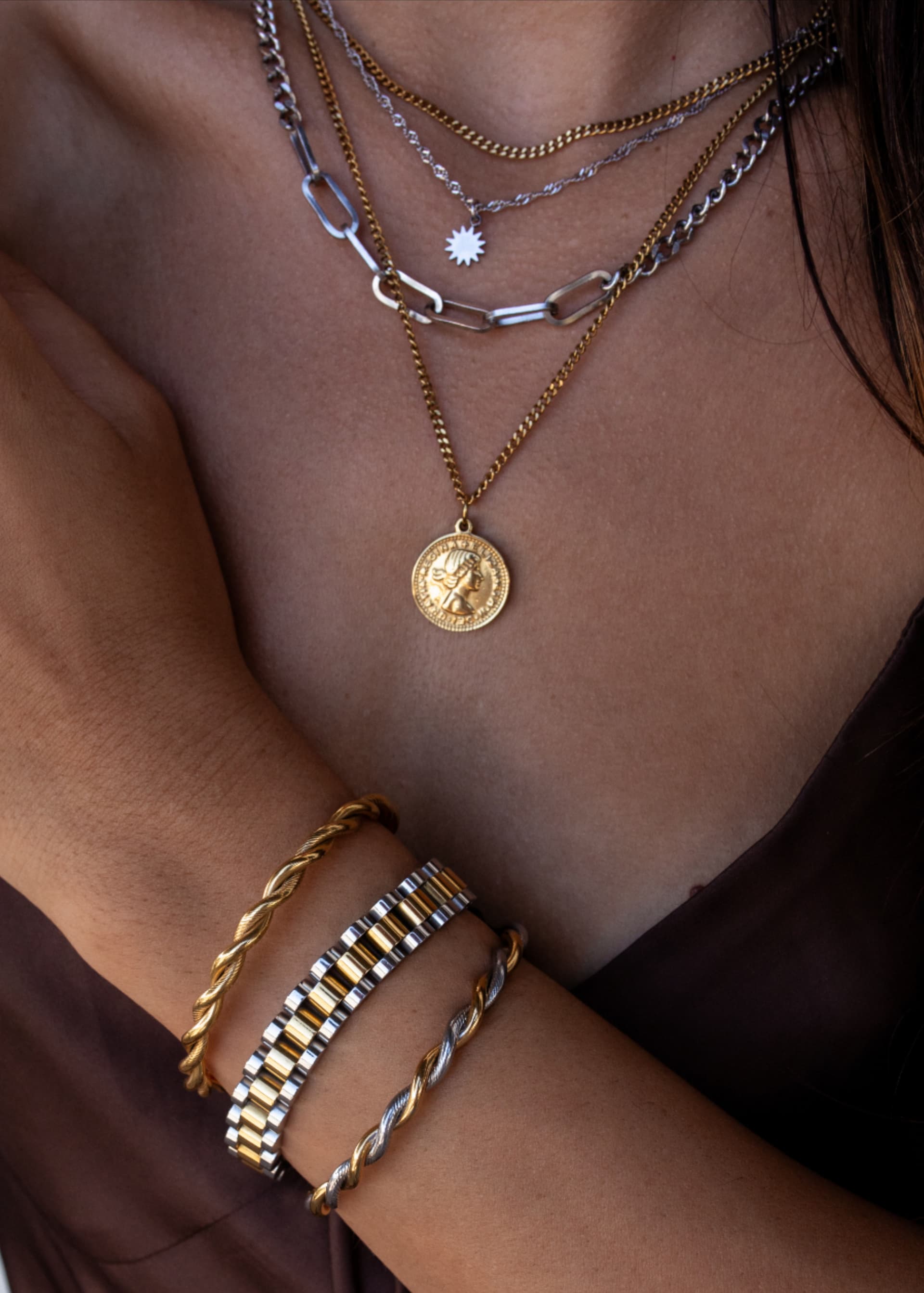
A convincing necklace stack depends on chain contrast, not just length. Cable, paperclip, rope, and herringbone each play a different role in the lineup.
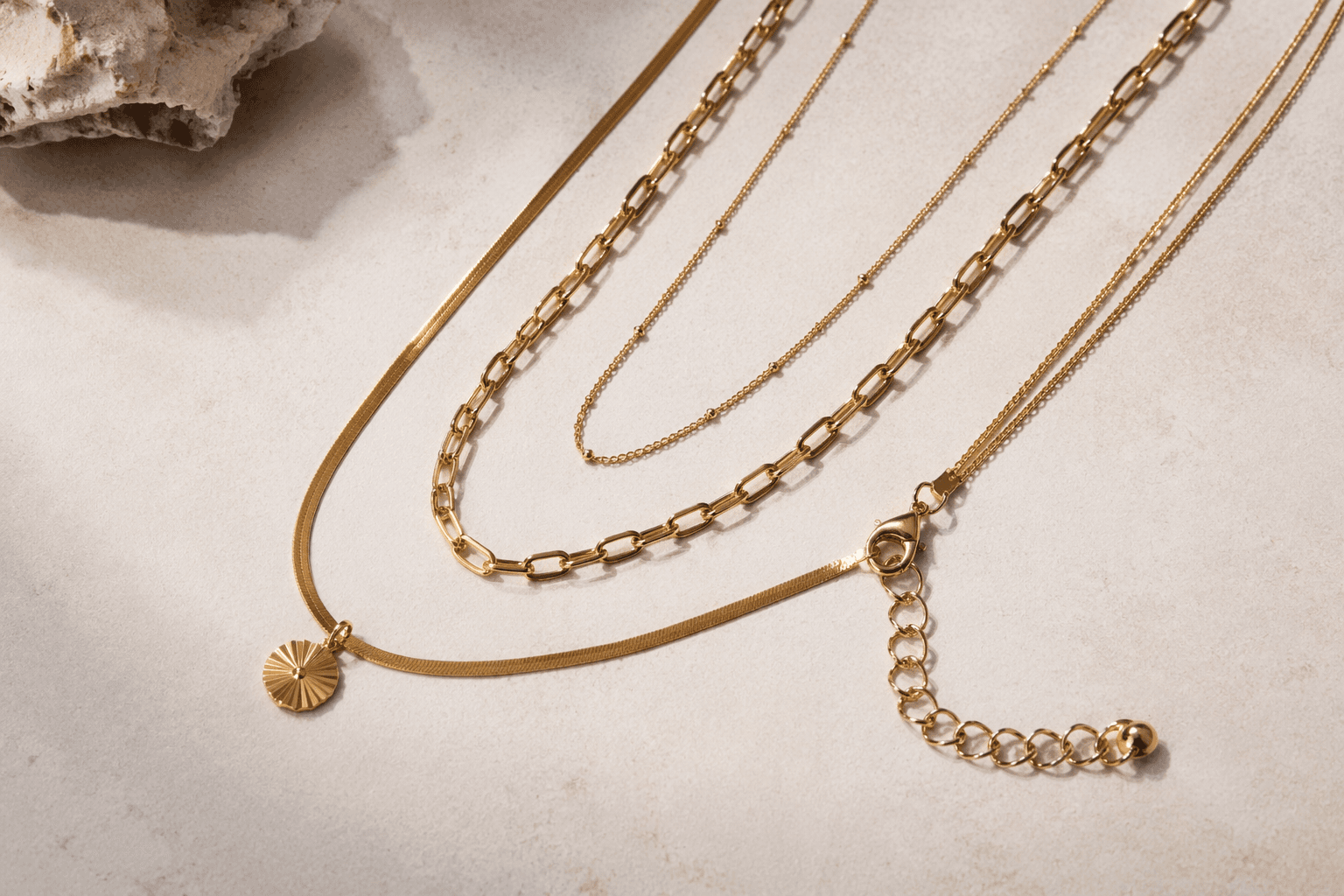
A 16-inch chain often becomes the anchor in a classic three-part stack. Build from there with contrast in link shape, texture, and weight so the eye can separate one line from the next.
Start with a chain that can hold the composition
The base layer should sit close to the neck and stay visually calm. Tiffany’s size guidance puts 16- to 18-inch necklaces at the collarbone. Cable chains are the safest starting point for that role because they use uniform round or oval links and make a dependable foundation for everyday wear.
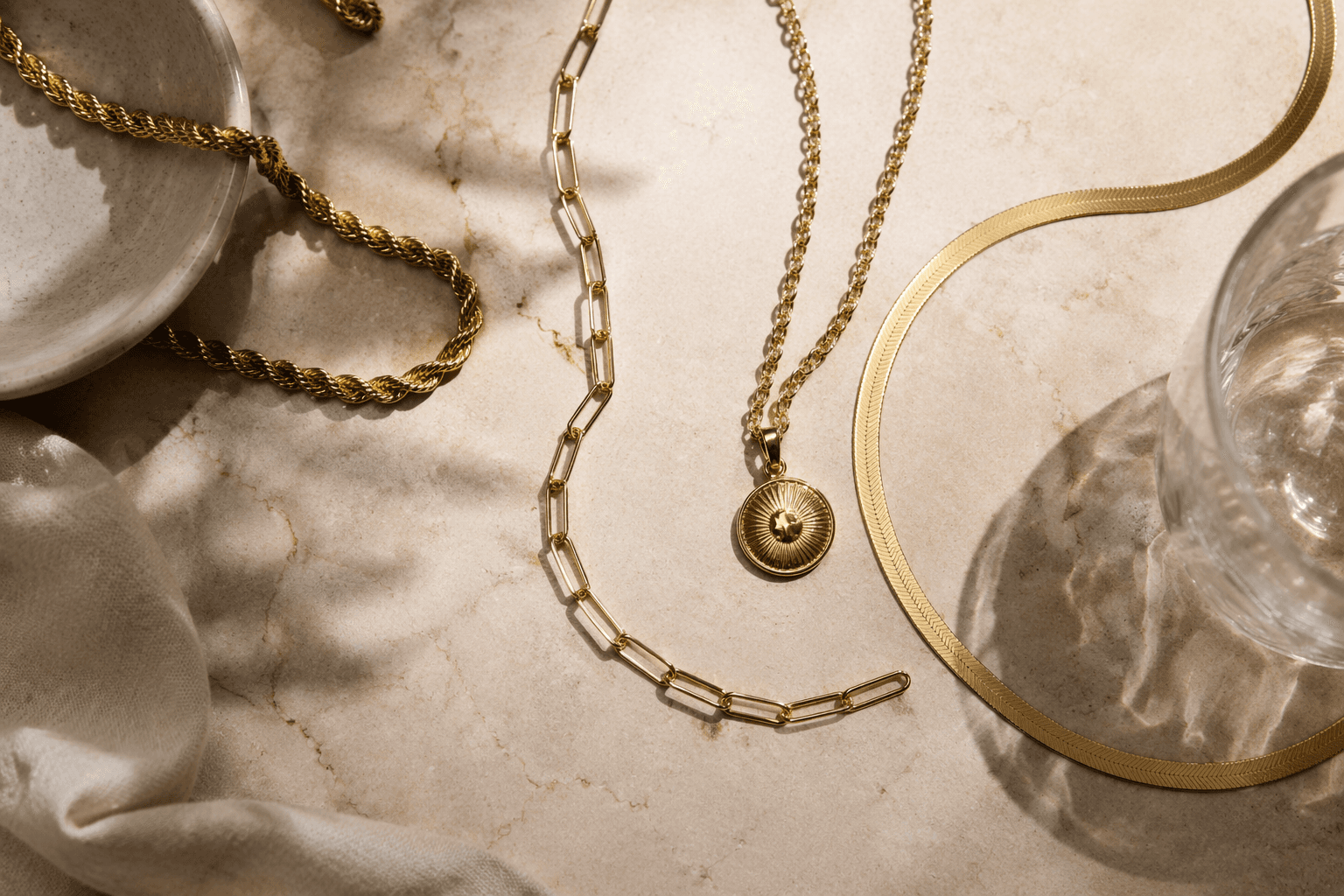
From there, shape the rest of the stack around the base instead of piling on more of the same. Box chains bring squared links and a sleek geometric look, and thin versions are especially useful with pendants. Paperclip chains loosen the silhouette, which makes them especially good for layering or adding charms, while rope chains add movement through intertwined strands that catch the light as you move.
Use length as separation, not decoration
A good stack needs breathing room. Tiffany lists chain necklaces from 16 to 36 inches, and a classic layered look often uses a choker or 16-inch chain, an 18-inch necklace, and a longer 20- or 24-inch piece. That spacing matters because 16- to 18-inch lengths sit at the collarbone, while 20- to 24-inch lengths fall at the chest and create the depth that makes the whole arrangement read as layered rather than crowded.
Keep the shortest chain closest to the neck, let the middle layer act as the transition, and reserve the longest strand for the visual drop. Keep 2- to 3-inch gaps between necklaces, though 1 to 2 inches of separation can also work, to give each chain enough room to stay visible and keep the stack from knotting into itself.
Let each chain type do a different job
Cable, rope, rolo, box, and paperclip chains are not interchangeable once you start layering them. Cable chains are ideal for showcasing pendants, which makes them useful when you want one focal point to hang cleanly in the stack. Rope chains can be worn on their own, layered, or paired with a pendant, and their reflective shine gives the composition a livelier surface than a plain link chain.
Rolo chains deserve a place in the middle of the lineup because they are thicker than traditional cable chains and are also known as belcher chains. That extra thickness gives them more visual presence, so they work well when you want one chain to act as a bridge between a delicate top layer and a stronger lower line. Box chains, by contrast, stay smooth and durable, which makes them useful when you want polish without much visual clutter.
Choose texture so the stack does not tangle
The most convincing layering does not rely on length alone. Think about a stack in terms of length, metal, durability, and wear: a smooth cable chain, a broader rolo, a looser paperclip link, and a reflective rope chain each behave differently once they sit on the body. The contrast between a tighter chain and a more open one helps the eye track each layer separately.
Paperclip chains are especially useful when you want lift without heaviness. Their intentionally looser construction makes them good for charms, and that open structure keeps them from disappearing under a denser chain. If you pair a paperclip chain with a cable or box chain, the stack gets contrast without needing excessive length, which is often the difference between a clean composition and a knotted one.
Mind repair, because the best stack has to survive wear
The prettiest chain is not always the smartest daily choice. Repaired chains are never as strong as they were before they broke, and Jewelers of America identifies rope, cable, and herringbone chains as more difficult to repair because of their complexity. Herringbone chains deserve extra caution because they tend to twist and kink, which makes them better suited to carefully worn looks than to constant layering.
That means sturdier chains belong closest to the neck and in the hardest-working positions. Use cable, box, or rolo as the base of the composition, then bring in rope or herringbone when you want texture but can give the piece a little more care.
Think beyond necklaces
Chains are not limited to necklaces and bracelets. They can also appear in anklets, earrings, and sometimes rings. Blue Nile’s broader necklace range extends beyond plain chains to tennis necklaces, lockets, Cuban chains, and diamond solitaire necklaces, all of which can change the rhythm of a stack.
A diamond solitaire pendant on a cable chain, a rope chain with a reflective surface, and a paperclip chain with a few charms can turn the neck into a controlled composition rather than a crowded one.
This article was produced by Prism’s automated news system from verified source data, official records, and press releases, then run through automated quality and moderation checks before publishing. The system is built and supervised by the people who set the standards it runs under. Read our full AI policy.
Did this article answer your question?