How to Layer and Stack Jewelry Like a Style Expert
Layering jewelry isn't about more — it's about balance. Master the cascade principle, metal mixing, and scale to build a stack that feels curated, not cluttered.
There is a particular confidence that comes from wearing jewelry well — not just wearing it, but composing it. A thoughtfully layered neck or a considered ring stack reads as effortless precisely because someone understood the rules before deciding when to bend them. The craft of layering and stacking jewelry is, at its core, an exercise in balance: between weight and delicacy, repetition and contrast, personal meaning and visual restraint.
The Cascade Principle: How Necklace Lengths Create Harmony
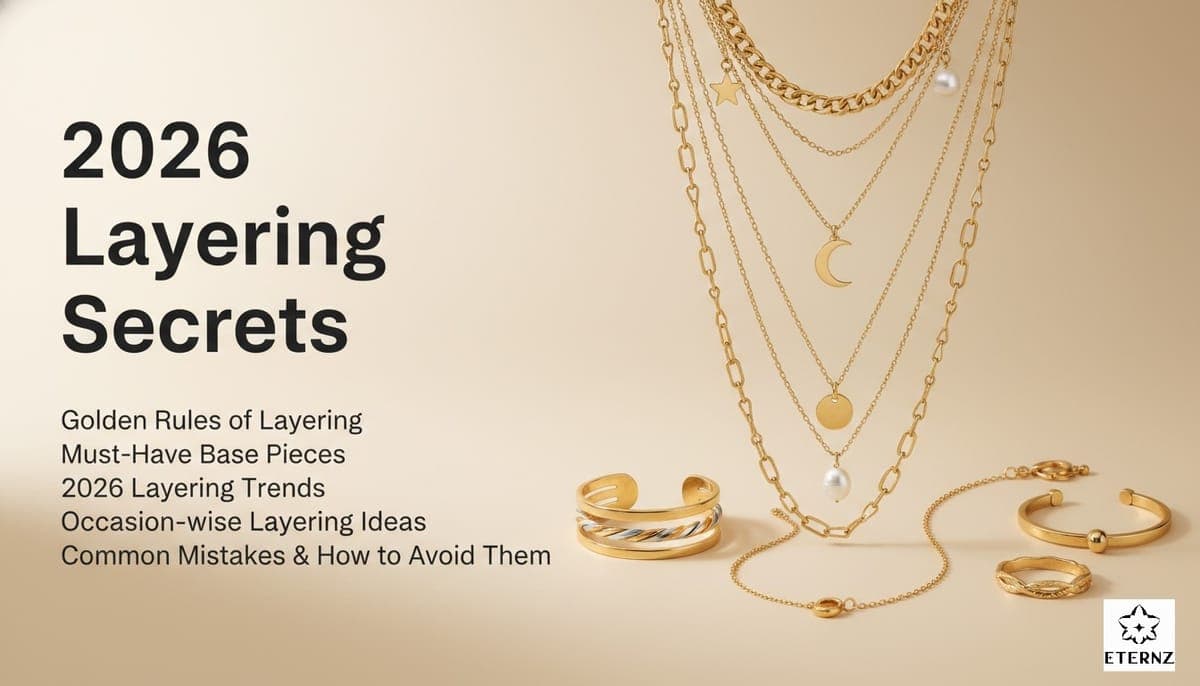
The foundation of any necklace stack is what jewelers and stylists call the cascade principle: using graduated lengths to build a tiered effect where each piece occupies its own visual register. The idea is not simply to wear multiple necklaces at once, but to let each one breathe. "Mastering the art of necklace layering is all about balance," as David Yurman puts it — a deceptively simple observation that carries real technical weight.
In practice, the cascade principle means anchoring your stack with three distinct length zones. A choker sits close to the collarbone, framing the neck. A mid-length pendant falls roughly at the sternum, creating a focal point. A longer chain descends toward the décolletage, drawing the eye downward and adding depth. VRAI's guidance is precise: "Try pairing a shorter choker or diamond station necklace with a mid-length pendant and a longer chain for depth and balance." Beyond aesthetics, varying lengths serves a functional purpose — it keeps chains from tangling, ensuring each pendant or chain can be seen on its own terms.
Building Your Stack: Start with a Signature Piece
Before reaching for a second or third necklace, identify your anchor. David Yurman's guiding principle is direct: "The ultimate trick for layering necklaces is to start with a signature piece, then build upon it with scale, texture, and color." This applies equally to women's and men's styles. The signature piece might be a pendant with personal meaning, a chain with distinctive weight, or a stone that establishes a color story. Everything that follows should complement it rather than compete with it.
VRAI frames this same principle through the lens of lifestyle: "Your jewelry stack should adapt to your lifestyle." The goal is not to replicate a look seen in an editorial, but to build something that makes sense on your body, with your wardrobe, in your daily context. "The goal is harmony: pieces that feel curated rather than competing."
Minimalist Layering: The Art of Restraint
For those who favor precision over abundance, minimalist layering rewards careful material selection. "Minimalist jewelry layering is all about understated elegance and thoughtful balance," according to David Yurman's framework. The recommended starting point: delicate chains in varying lengths, in 18K gold, sterling silver, or platinum. These metals offer distinct tonal personalities — the warmth of yellow gold, the cool neutrality of platinum — without requiring dramatic scale.
At the minimalist end of the spectrum, pendants should do subtle work. Simple pendants or pavé-accented bar details, for instance, add a hint of interest without overwhelming the look. The aim is clean lines, subtle textures, and just enough contrast to invite the eye without demanding it. VRAI echoes this approach: if you favor minimalist jewelry, alternate between sleek gold chains and subtle diamond details, letting the negative space between pieces be part of the composition.
Maximalist Layering: Chain Theory and Visual Drama
A maximalist stack is not simply more of everything — it requires its own internal logic. "Chain layering is an iconic way to execute a well-curated stack," and the architecture of that stack matters. Vary the thickness, weight, and length of each chain so that no two pieces read as identical. Mixing chain styles introduces both texture and structure: the classic Curb Chain, with its interlocked flat links, reads very differently from the elongated open ovals of the DY Madison® paperclip links, for example. Placing them in sequence creates movement and visual rhythm.
The metal question becomes more pointed at the maximalist end. David Yurman offers two viable strategies: stick to one metal for a streamlined look, or alternate different metals for a more statement-driven approach. For those who combine textures and shapes for visual drama, a maximalist approach might incorporate charms and pendants alongside chains of varying gauges, building a stack that tells a story rather than simply filling space.

Mixing Metals Thoughtfully
The conventional rule that metals must match has been largely set aside by contemporary styling, but that doesn't mean mixing them is without structure. VRAI's guidance is among the most tactically useful available: "Gold, rose gold, and platinum can coexist beautifully when layered with purpose. Choose one dominant tone and use the others as accents." A primarily yellow gold stack, for instance, can feel fresh with touches of white gold for contrast — enough variation to create visual interest, not so much that the eye loses its footing.
This principle of dominance and accent applies equally to texture. Smooth polished surfaces read differently from hammered finishes or woven chain structures. The goal is to give the eye a clear path through the composition, with points of contrast that feel intentional rather than accidental.
The Role of Diamonds and Gemstone Accents
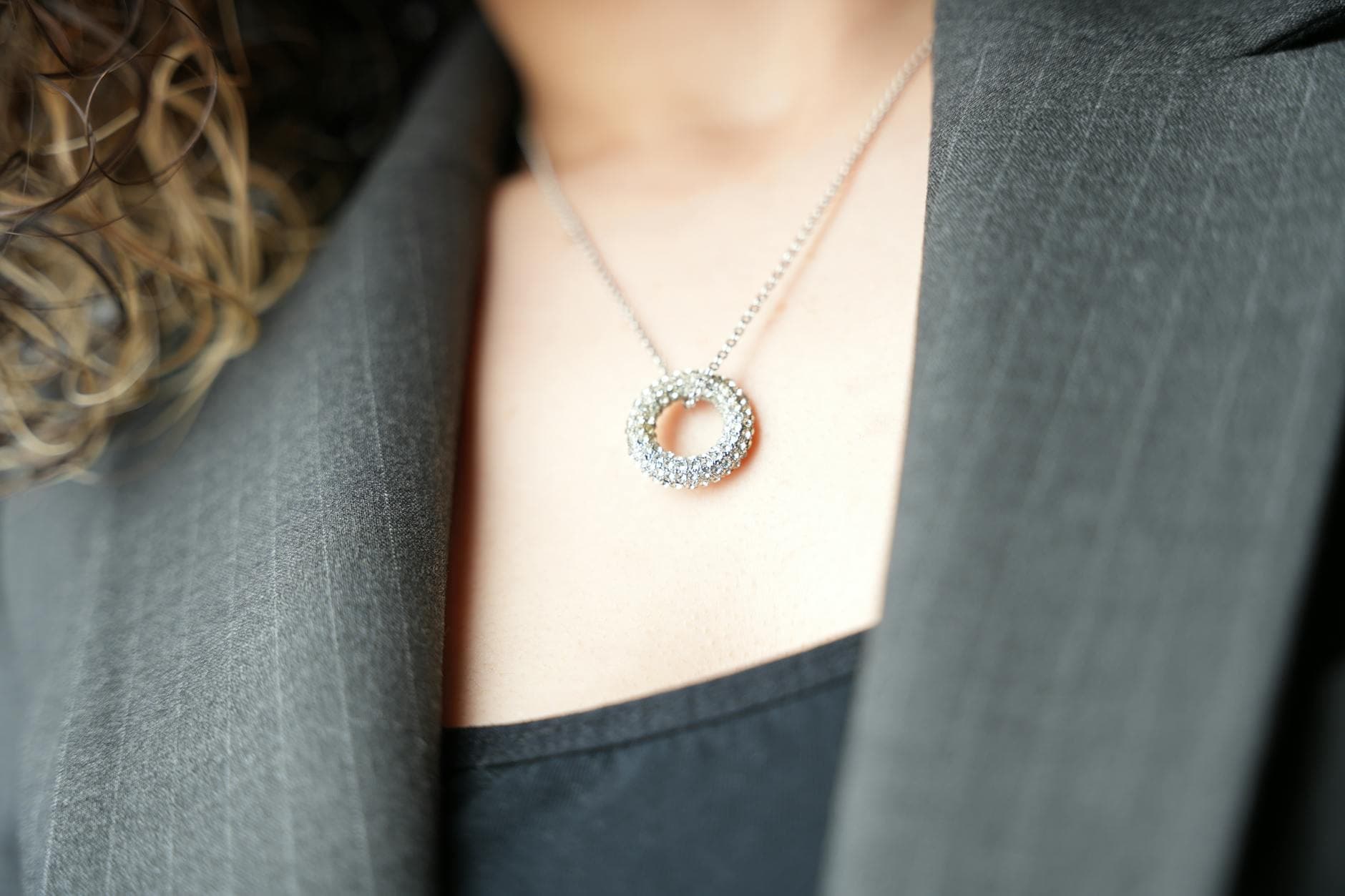
A single diamond element can shift the register of an entire stack. "Diamond jewelry instantly elevates any stack," and the key is in how it is deployed: as an accent rather than an anchor. A bezel-set pendant, a petite stud, or a pavé ring each introduce brilliance at different scales. The bezel setting, which encases the stone in a rim of metal, offers a sleek, low-profile look that integrates cleanly with delicate chain work. Pavé details, where small stones are set closely together across a surface, add texture and sparkle without the formality of a solitaire.
In minimalist necklace layering, pavé-accented bar details serve a similar function: a quiet shimmer that rewards a closer look. The principle across all these applications is the same — introduce brilliance without overpowering the composition.
Rings: The Logic of the Stack
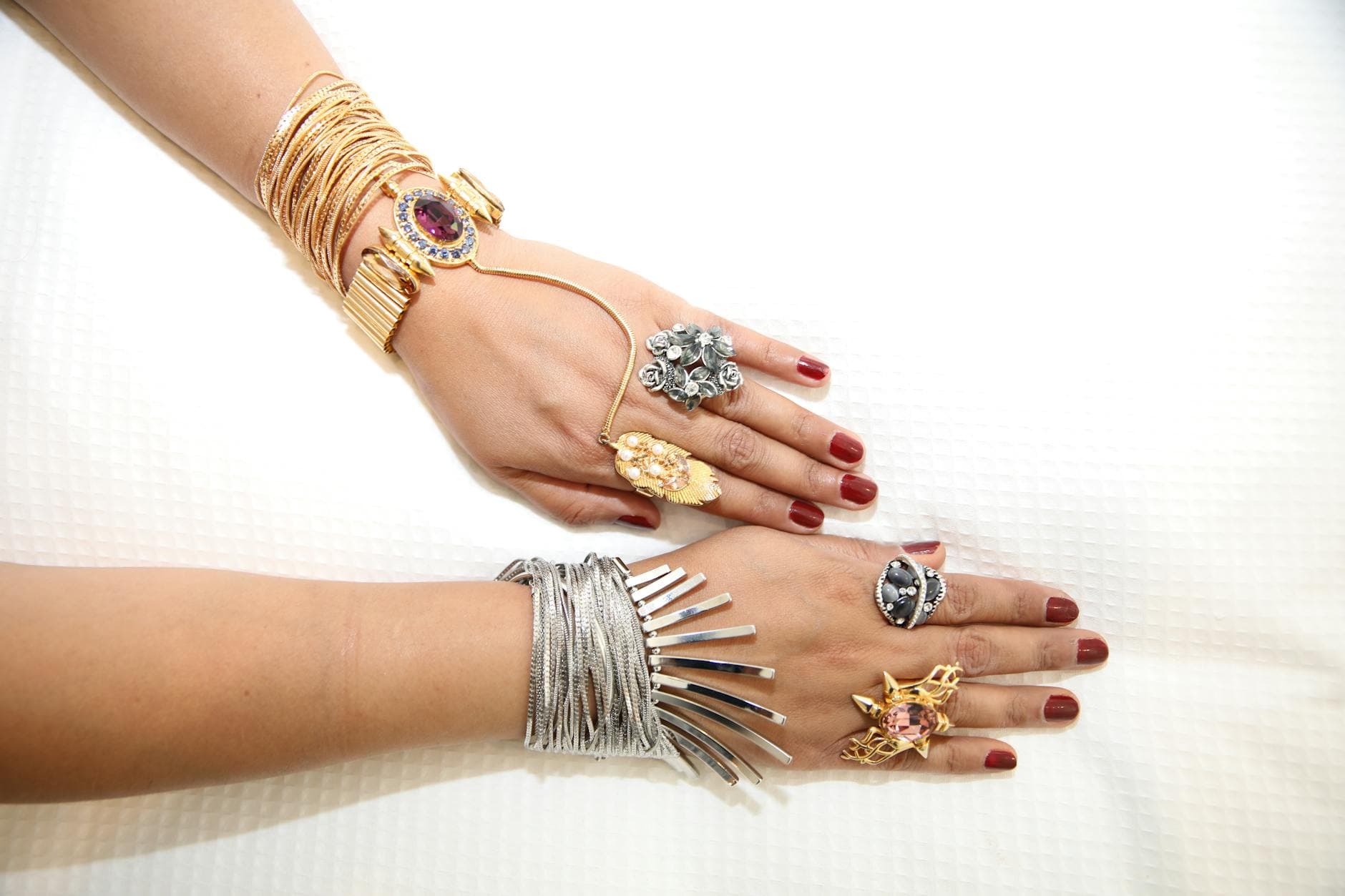
Ring stacking follows the same principles of scale and contrast that govern necklace layering, with the added dimension of architecture across the fingers. A pavé band, for example, introduces fine-grained texture that contrasts cleanly against a polished plain band or a bezel-set stone ring. The finger itself provides the structure; the challenge is varying the visual weight so that no single ring dominates unless that is the intention. Thin bands in the same metal can be stacked tightly for a unified look; mixing widths and textures creates a more editorial effect.
Bracelets: Extending the Logic to the Wrist
The wrist stack operates on the same cascade principle as the neck: vary scale, texture, and weight so that each piece occupies its own space. A delicate tennis bracelet in a bezel or prong setting reads very differently against the wrist than a cuff or a chain link piece. Mixing the two creates contrast that can feel intentional and modern. The same metal-mixing principles apply here: choose a dominant tone and allow others to appear as accents.
The Through-Line: Curation Over Accumulation
What separates a considered jewelry stack from a collection of pieces worn simultaneously is the editorial eye applied to the selection. Every element of scale, texture, metal, and brilliance should be weighed against what it contributes to the whole. The pieces that endure in a stack — the ones that feel as right in five years as they do today — are the ones chosen with intention. A signature piece, built upon thoughtfully and worn with confidence, is ultimately what the cascade principle, the metal hierarchy, and the texture mixing are all in service of: a composition that feels unmistakably your own.
Know something we missed? Have a correction or additional information?
Submit a Tip