How to layer jewelry without damaging pearls and treated gems
Layered jewelry looks effortless until pearls, opals, and treated stones start rubbing against chains, clasp edges, and chemicals. The smartest stack puts hard pieces closest to the body and fragile gems last.
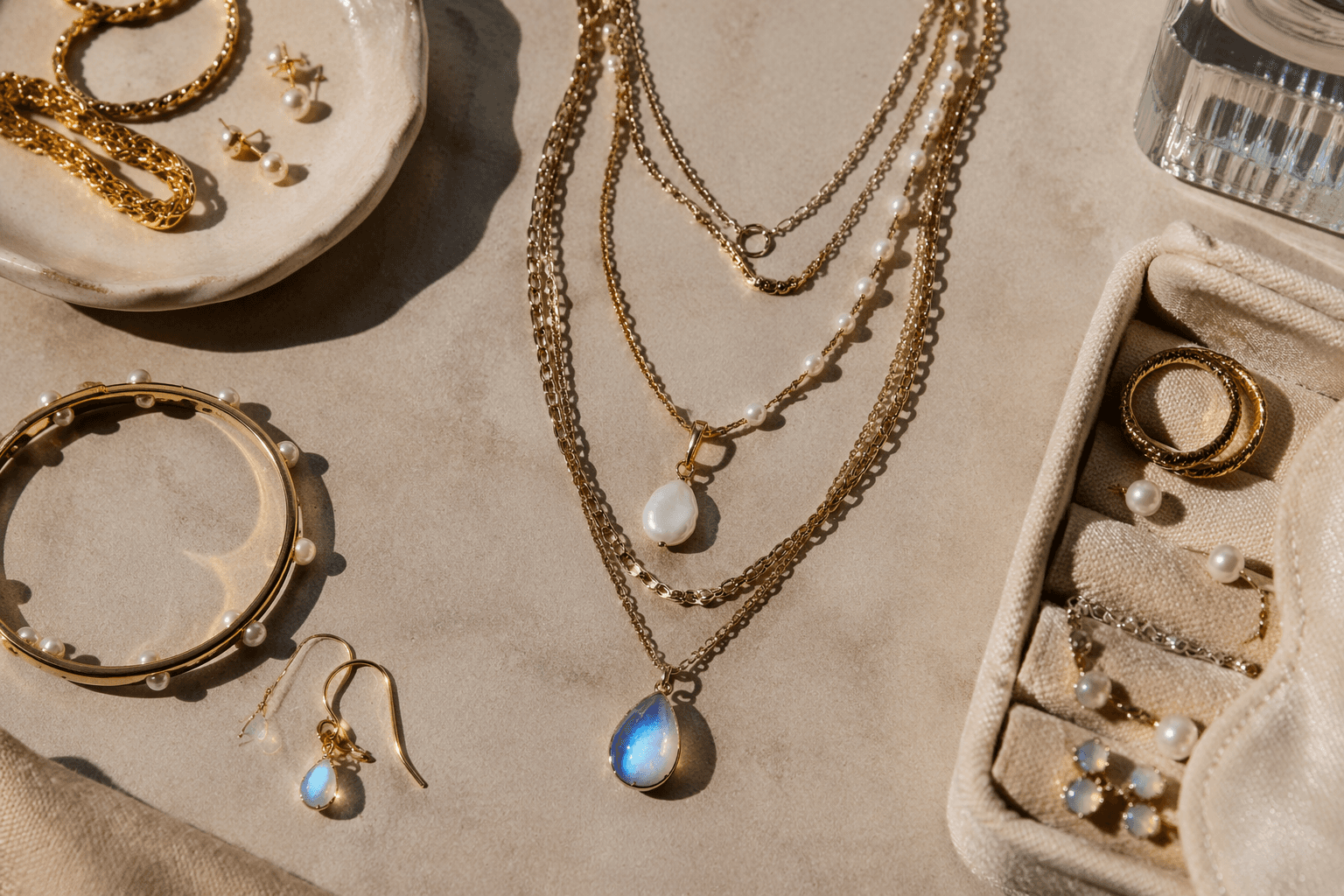
A pearl strand pressed against a chain, an opal sitting beside a hard signet, or a treated gem trapped under bracelets and lotion can pick up scratches, dullness, and hidden damage long before the stack feels worn out. GIA, founded in 1931, has spent decades treating jewelry care as consumer protection.
The stacks most likely to cause damage
Pearls are the first place where a layered look can turn rough. GIA rates pearl at 2.5 on the Mohs scale, which makes it very soft and easily scratched or abraded, and pearls are absorbent, so cosmetics, hairspray, perfume, ammonia, and chlorine affect their condition. Put a pearl strand in the middle of a necklace stack, or beside a bracelet with sharp links and a tight clasp, and the surface can start to lose its luster simply from daily wear.
Opals present a different kind of risk. Their hardness ranges from 5 to 6.5 on the Mohs scale, but their toughness is very poor to fair, which means they may be suitable for jewelry and still be poor candidates for hard contact. In a crowded wrist stack or a layered ring lineup, opal does not like being the stone that gets knocked, leaned on, or stored against harder gems.
Treated stones add a third layer of caution. Heat, solvents, steam, and ultrasonic cleaners can affect treatments, so a stone that looks stable in a pendant or ring may be far more vulnerable than its polished surface suggests. Layering makes that problem more acute because the pieces sit close together, collect residue from the skin, and often get cleaned as a group rather than individually.
Why softness matters more than sparkle
The Mohs scale is useful, but it can also be misleading if you treat it like a simple ranking of safety. The scale is not linear, so one step does not equal one step in hardness, and that means the distance between a pearl at 2.5 and an opal at 5 to 6.5 is more significant in practice than the numbers alone imply. An amethyst at 7 may be durable enough for many jewelry types, yet abrupt temperature changes can fracture it and steam cleaning is not recommended.
Toughness matters as much as hardness, especially in layered jewelry that gets bumped, packed, and worn for long stretches. Pearl toughness is usually good, but aging, dehydration, and excessive bleaching can make some pearls more fragile, while opal’s very poor to fair toughness makes it especially vulnerable to chipping or crazing.
Natural pearls once occurred in the wild in about one in 10,000 shells, a figure cited by the Smithsonian, and they became symbols of wealth and status.
A safe styling hierarchy
The cleanest way to layer is to think in levels of contact. Put the most durable metals and harder stones where they take the most friction, then move outward to the softer, more delicate pieces. Pearls and opals belong in gentler positions, with space around them and less chance of rubbing against chains, prongs, and clasps.
- Closest to the skin: sturdy chains, signets, and harder stones in settings that can take everyday wear.
- Middle layer: durable gems such as amethyst, especially when the setting protects the edges and the piece is not forced against another stone.
- Outer layer or focal point: pearls, opals, and treated gems, where they can read as intentional rather than crowded.
Pearls do best when they are the final step in the look. AGTA advises wearing pearl jewelry last and taking it off first, because the order keeps makeup, fragrance, and hair products from settling on the surface before you even leave the house. That advice applies just as well to layered necklaces and bracelets, where the more delicate strand should not be the one touching lotions and sprays all day.
Opals deserve similar breathing room. AGTA advises storing them so they will not be scratched by other jewelry. Most opals are cut as cabochons rather than faceted stones, which makes surface protection even more important.
Cleaning without collateral damage
Cleaning is where layered jewelry often takes its biggest hit. Rinsing jewelry directly in a sink risks losing loose stones or even an entire piece, so the habit of swishing a stack under running water is one to break immediately. A soft, lint-free cloth is safer for many pieces, and a pulsed-water dental cleaning appliance can be used for some jewelry, but not as a universal solution.
Pearls require the gentlest routine of all. Warm, soapy water works for occasional cleaning, the string should be dried thoroughly, and cultured pearls should be wiped with a very soft, clean cloth after each wear. High heat can burn cultured pearls or cause discoloration, splitting, or cracking, and pearls should never go into ultrasonic or steam cleaners.
Opals and treated gems need a similarly conservative approach. Heat and sudden temperature changes can cause opal crazing or fracture, and steam or ultrasonic methods are a poor fit for anything whose treatment might be compromised by temperature or solvents.
When disclosure should guide the buy
If you want a stack that stays beautiful, buy with treatment in mind, not just color. AGTA’s mission is to maintain ethical standards and the long-term stability of the natural-colored gemstone, natural pearl, and cultured pearl industries, and FTC jewelry guides require disclosure of gemstone enhancement.
A GIA report can verify whether a gemstone has been treated before it becomes part of a layered look. That matters most for stones you plan to wear against other pieces, because heat, solvents, steam, and ultrasonic cleaning can all become problems once a gem is living in close quarters with the rest of the stack.
This article was produced by Prism’s automated news system from verified source data, official records, and press releases, then run through automated quality and moderation checks before publishing. The system is built and supervised by the people who set the standards it runs under. Read our full AI policy.
Know something we missed? Have a correction or additional information?
Submit a Tip