How to Layer Necklaces for Balanced, Stylish Stacks
Layering necklaces well is about measured choices: start with a base piece, space chains 1–2 inches, mix textures, and use quality lengths to keep stacks elegant and tangle-free.

Layering necklaces should feel intentional, not accidental. Use measured lengths, deliberate weight distribution, and the right hardware so your stack reads as a designed look, whether you prefer two refined pieces for the office or five-plus statements for the weekend.
1. Start with a base necklace
Choose your shortest piece first, typically a choker or collar-length necklace that sits close to the neck. “Your base layer sets the tone for your necklace stack. Begin with a simple choker or a fine chain that sits close to your neck,” and use that as the anchor for scale, color, and texture decisions. For exact sizing, a choker or short chain typically sits in the 14–16 inch range.
2. Build outward gradually
Add progressively longer pieces, maintaining 1–2 inches between each necklace for a clean visual separation. Begin with a choker or 16-inch chain, then step up to something around 18 inches, and finish with a longer 20–24 inch piece for a graceful cascade; Goodstoneinc’s example of a 16", 18", and 22" combination is a useful starter formula. Small differences, sometimes even a one‑inch variance, can create distinction and help prevent tangling while keeping the stack readable.
3. Mix textures and chain types
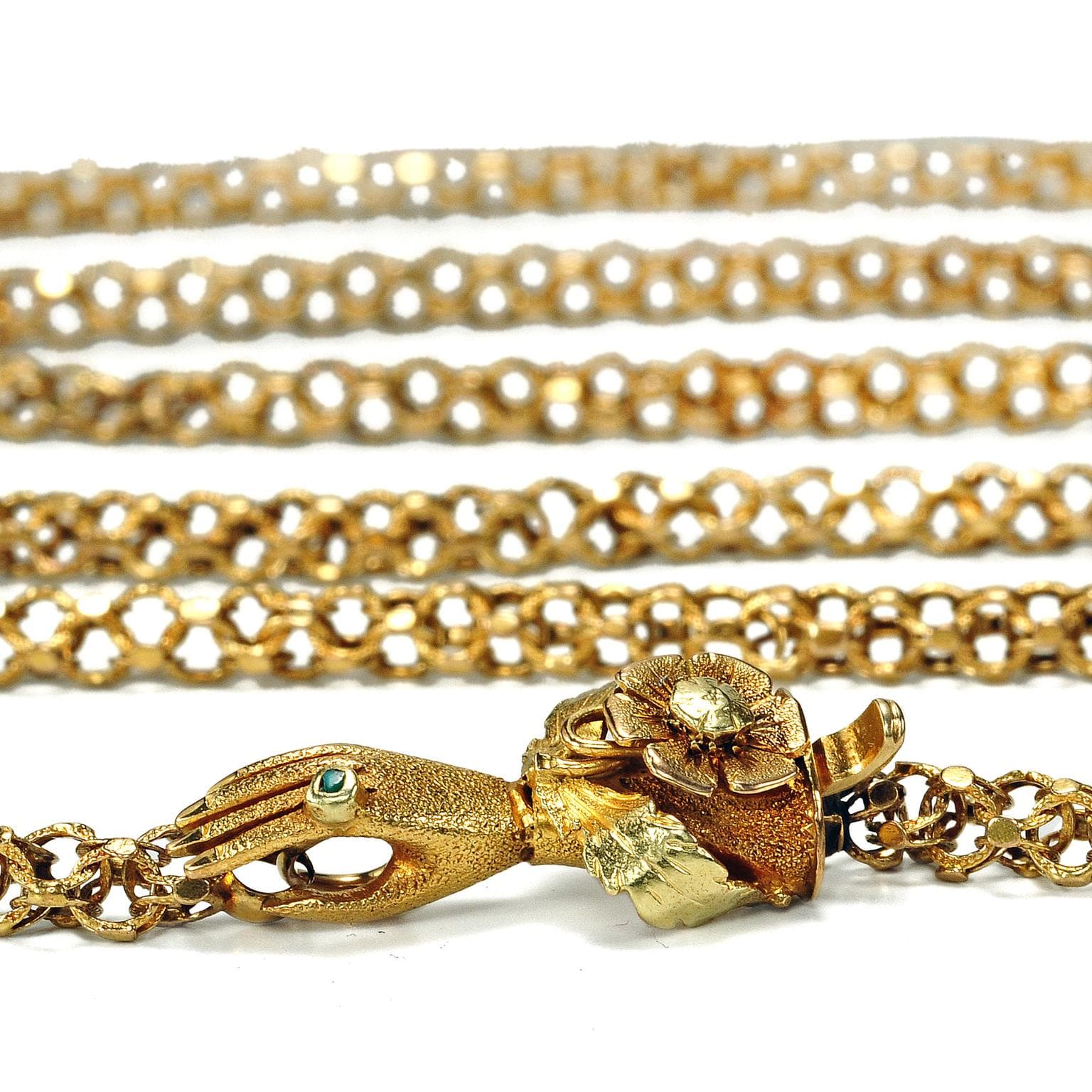
“Combine different chain types (like box chains, rope chains, and figaro chains) to create visual interest while helping prevent tangling.” Varied textures add both visual depth and practical separation: a delicate box chain sits differently from a rope chain, and a figaro or Curb Chain offers a heavier silhouette. David Yurman’s approach highlights mixing classic Curb Chain with DY Madison® paperclip links as a way to introduce structure and contrast within a stack.
4. Consider a focal point
“A pendant or statement piece often works best as the middle layer or as your longest piece to create balance.” Decide whether your focal object is a mid-layer pendant that anchors the eye or the longest piece that pulls the ensemble downward, both placements are explicitly recommended across guides. David Yurman advises to “start with a signature piece, then build upon it with scale, texture, and color,” using that signature as the stack’s organizing principle.
5. Harmonize metals or materials
“While mixing metals is trendy, consider keeping some consistency in either color, finish, or material throughout your stack.” Brands differ in guidance, Finks notes that “Mixing textures or metals, such as a warm gold layered necklace with a cooler silver tone, can add richness when done correctly,” while David Yurman offers both paths: “Stick to one metal for a streamlined look, or alternate different metals for a more statement-driven approach.” Decide whether you want cohesion (single metal/finish) or intentional contrast, and make that choice consistently across most pieces.
6. Balance weight distribution
Distribute visual weight evenly; heavier pieces typically work best as middle or bottom layers. Goodstoneinc explains the practical effect: when you pair a lighter chain with a heavier one, “the heavier piece stays lower and steadier while the lighter one floats above,” which helps keep separation and reduces tangling. Place chunkier chains or heavier pendants lower in the stack so they anchor rather than pull up the shorter pieces.
7. Maintain spacing to avoid tangles
Sources converge on measured gaps: roughly 1–2 inches between chains is the consistent rule, Brilliant Earth says “1-2 inches between each necklace,” Goodstoneinc suggests “about two inches between chains,” and some notes point out that “even a one-inch difference between chains can create distinction.” If necklaces still cling, use necklace spacers or connectors: “These clever devices attach multiple necklaces at the back, maintaining perfect spacing and preventing tangling.”

8. Match necklaces to necklines and body type
“Match your neckline: Consider how your neckline frames your necklaces. V‑necks complement V‑shaped pendant arrangements, while crew necks work well with shorter layered pieces that sit above the fabric.” Open necklines (V‑necks, scoop necks, off‑the‑shoulder) are canvases for tiered stacks; higher necklines and turtlenecks benefit from longer layers that lie on top of the fabric. Consider proportion too: “Shorter necks generally benefit from longer, more vertically oriented layering,” and adjust scale, delicate chains allow more pieces than heavy statement chains.
9. Prevent tangles with hardware and habits
Beyond spacers, practical habits cut knots: Goodstoneinc recommends that you “unclasp each necklace and hang or lay them separately at the end of the day” to prevent the knots that form when chains are tossed together. Weight differences, mixed textures, and connectors all reduce onsite tangles, while a quick mirror check when dressing, “If your necklaces bunch at the neckline or are hidden by fabric, adjusting the lengths or swapping a piece for something longer usually fixes the issue”, saves you from wearing a compromised stack.
10. Build a practical starter collection
“Starting with 2 to 3 quality pieces in different lengths gives you more options than buying many inexpensive chains.” For a flexible, durable base, aim for three lengths: a choker/short (14–16 inches), a mid/princess (17–19 inches), and a longer chain (20–24 inches). Goodstoneinc’s sample starter set, 16", 18", and 22", covers common outfits and gives room to add pendants and charms later. Work with quality metals and solid clasps; enduring pieces pay off more than a drawerful of cheap chains.
11. Use connectors, spacers and technical solutions
Spacers and multi-clasp connectors are more than conveniences, they solve the core technical problem of layered jewelry: tangling. Brilliant Earth highlights these tools as a direct way to “prevent tangling” and keep 1–2 inch spacing consistent without constant adjustment. For heavier stacks, consider multi-chain extenders or soldered multi-strand connectors if you want a permanently spaced look.
12. Play, then refine with consistency
“Layering necklaces is all about a balance of creativity and style,” and the final luxury of stacking is experimentation: mix a delicate chain with a bolder link, swap a pendant between mid and bottom positions, or alternate metals for a chicer edge. David Yurman sums the philosophy plainly: “Mastering the art of necklace layering is all about balance,” and whether you prefer understated elegance or high-impact statement, deliberate choices, spacing, weight, and storage, are what separate a polished stack from a jumble.
- Start with a choker/short (14–16"), a mid-length (17–19"), and a long (20–24") piece.
- Keep roughly 1–2 inches between layers; even 1" can be effective.
- Mix chain types, box, rope, figaro, Curb Chain, DY Madison® paperclip links, to add texture and prevent tangles.
- Place heavier pieces in the middle or bottom; use a pendant as your focal layer.
- Use spacers/connectors and hang necklaces separately for storage.
- When in doubt, follow the “rule of three.”
Practical checklist (quick reference)
A thoughtfully layered necklace stack is as much about small engineering choices as it is about style: measured lengths, intentional metal choices, and simple storage habits turn an attractive idea into a wearable, long-lasting look. The secret to effortless layering? Separate tracks, balanced weight, and intentional storage, those backstage details make the front-of-neck finish feel inevitable.
This article was produced by Prism’s automated news system from verified source data, official records, and press releases, then run through automated quality and moderation checks before publishing. The system is built and supervised by the people who set the standards it runs under. Read our full AI policy.
Did this article answer your question?