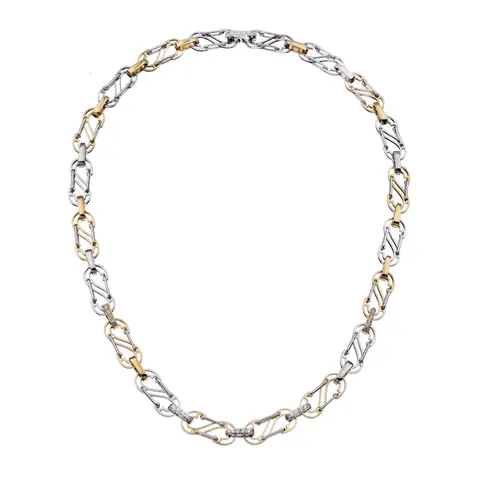
How to layer necklaces with balance, length and proportion
The cleanest necklace stacks are built like compositions: 16, 18, and 24 inches create space, while chain weight keeps the line from collapsing.
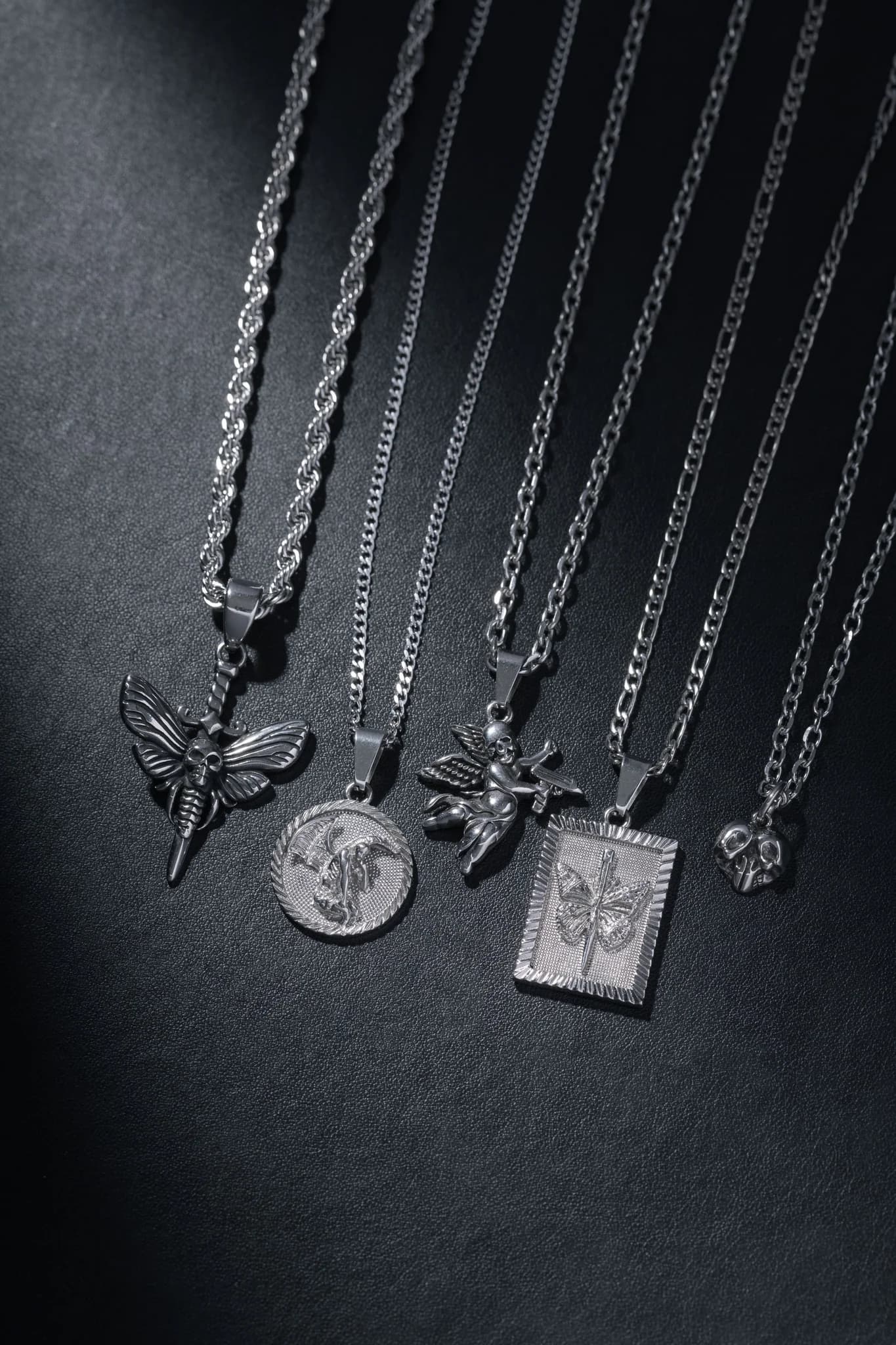
A 16-inch chain at the collarbone, an 18-inch strand beneath it, and a 24-inch pendant create the clearest necklace stack. The strongest stacks use the body like a canvas: one short chain sets the highest point, one mid-length strand opens the neckline, and one longer piece gives the eye a place to land. Mejuri presents the look as personal expression balanced between shine, shape, and simplicity.
The 16, 18, 24 structure
The 16-inch base sits near the collarbone and creates a clean visual line at the top. An 18-inch chain usually belongs beneath it, where it can frame the neckline without pressing into the first layer. A 24-inch strand then acts as the anchor, adding vertical movement and preventing the whole composition from reading as one dense band.
Spacing matters more than memorizing a number. Goldzenn advises varying widths, cascading lengths, and mixing textures, with 2- to 4-inch gaps between layers. When the space is too tight, even beautiful chains blur together; when the gap is too large, the stack can look disconnected and accidental.
Where stacks succeed, and where they fail
A polished stack often looks like a staircase: a fine 16-inch chain, a slightly heavier 18-inch chain, and a longer 24-inch piece with a pendant. That pendant works well at the lowest tier because its weight naturally pulls the eye downward and creates a focal point. The result feels deliberate, even when the pieces are simple.
The misfires are easy to spot once you know what to look for. Two delicate chains at nearly the same length collapse into a single shimmer, while one oversized chain can bully the rest of the stack and flatten the hierarchy. A good rule of thumb is not simply to add more necklaces, but to give each one a different job.
Chain weight does as much work as length
Length creates the architecture, but chain profile gives the stack its voice. Light cable chains read airy and quiet; curb, Figaro, and Cuban links bring more visual mass and hold their own against finer strands. AMYO’s layering guide, posted on October 6, 2023, advises choosing lengths that create a cascading effect and mixing delicate with chunky chains.
That is why the best combinations usually follow a one-two-three rhythm: one fine foundation, one mid-weight connector, and one bolder chain or pendant. If every strand has the same thickness, the stack loses contrast. If one piece is too heavy and the others are too light, the composition tips out of balance.
- A slim cable chain at 16 inches, a curb chain at 18, and a pendant chain at 24 gives the eye clear steps.
- A Figaro link can add rhythm without looking as dense as a Cuban chain.
- A heavy Cuban worn with two whisper-thin chains can overpower the whole look unless the other strands have real spacing and length.
Blue Nile, Brilliant Earth, and Jewelers of America publish chain-style or chain-buying guides. Chain type is a buying category in its own right, and the best layered looks depend on knowing the difference between a chain that vanishes and one that carries visual weight.
A length chart is a proportion tool, not a shortcut
Statement Collective’s necklace-length chart turns style into measurement. Inches and centimeters give you a repeatable framework for spacing, which matters when you want one strand to sit above another instead of collapsing into the same line. A 16-inch chain will not read the same way on every body, and a 24-inch drop will land differently depending on neck length, bust shape, and neckline.
In jewelry retail, length guides from Gabriel & Co. and Brilliant Earth help shoppers compare fit before buying, and they make clear that length is not a decorative afterthought.
The same logic applies whether you wear all gold, all silver, or a mixed-metal combination. If the hierarchy is clear, mixed metals can feel sharp and modern rather than chaotic. If the lengths are too close and the weights too similar, even the most expensive pieces can look like a tangle.
Why this look keeps returning
Layered necklaces have much older roots than any single social feed. Vogue’s coverage goes back at least to a 2006 photo, and its framing has stayed consistent: layered necklaces can make a plain tee feel like a fashion moment and add edge to dressier looks. Vogue has also described the appeal as a way to pile on sentimental, symbolic, and basic pieces. It can hold heirlooms, charms, and everyday chains in the same frame.
Capitol Hill Style published a how-to layering post on March 27, 2023.
Ana Luisa organizes its styling guide around choosing the right necklace lengths, layering by style, layered necklace sets, personalizing your necklace layers, mix and match, and materials and craftsmanship.
This article was produced by Prism’s automated news system from verified source data, official records, and press releases, then run through automated quality and moderation checks before publishing. The system is built and supervised by the people who set the standards it runs under. Read our full AI policy.
Did this article answer your question?