How to Layer Your Jewelry the Chanel Way
Chanel's runway jewelry isn't about wearing more. Matthieu Blazy's three-rule formula for theatrical, rhythmic stacking translates directly to any budget and any neckline.
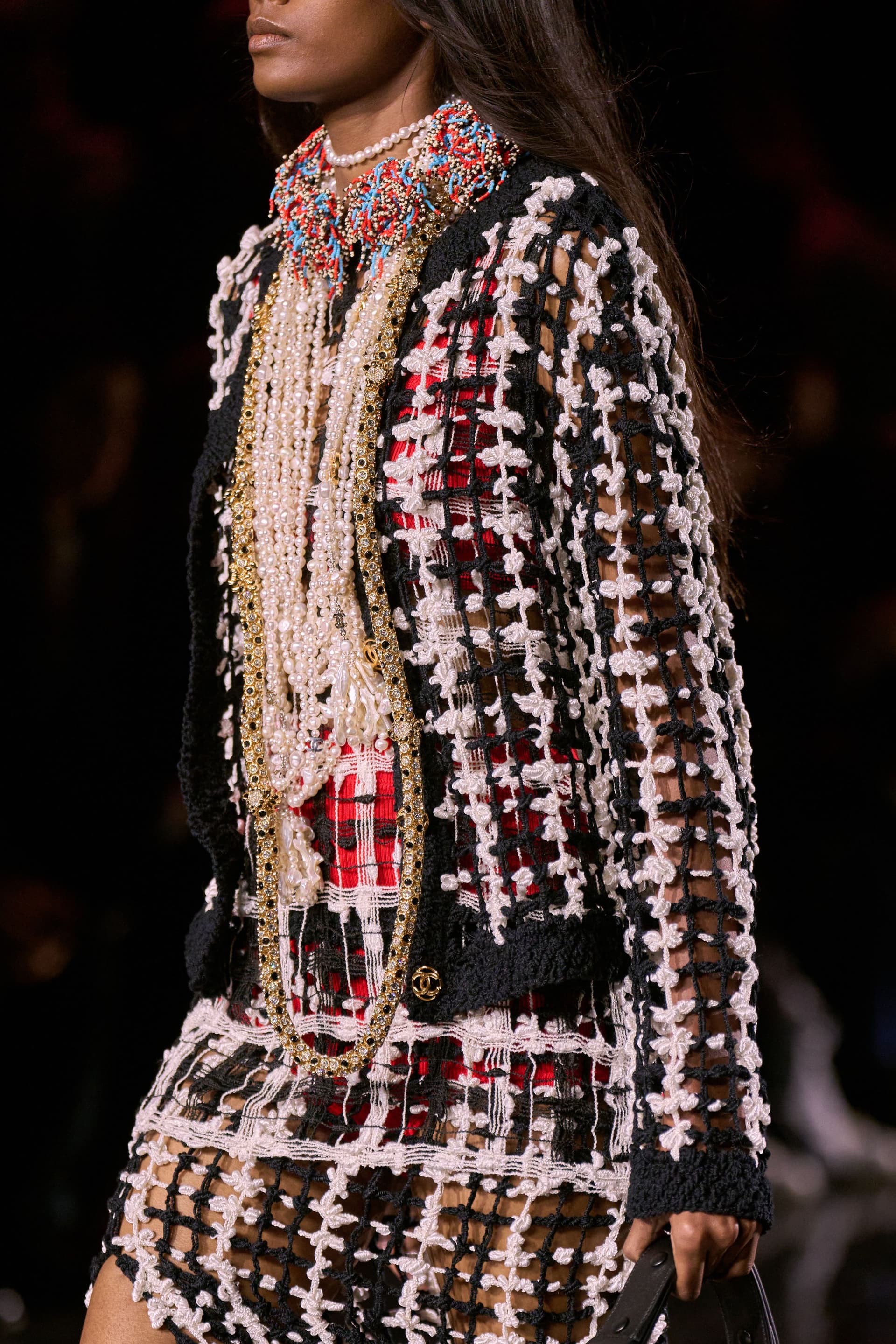
There's a specific anxiety that strikes every time you reach for a second necklace: too much, or not enough? Chanel's runway collections under Matthieu Blazy answer that question with unusual precision. The result isn't accumulation. It's architecture.
The Formula: Rhythm Over Volume
What makes Chanel's jewelry styling so immediately readable on the runway isn't the extravagance of individual pieces but the deliberate spacing between them. Blazy's direction across his Spring/Summer and Fall 2026 collections enforces a principle that the house has understood since Gabrielle Chanel first paired poured-glass beads with gilt chains in the 1920s: theatrical scale only works when it's balanced by careful rhythm. Random accumulation reads as noise. Controlled layering reads as intention.
The framework collapses into three rules, each practical enough to use this morning.
Rule 1: Anchor Everything with a Sautoir
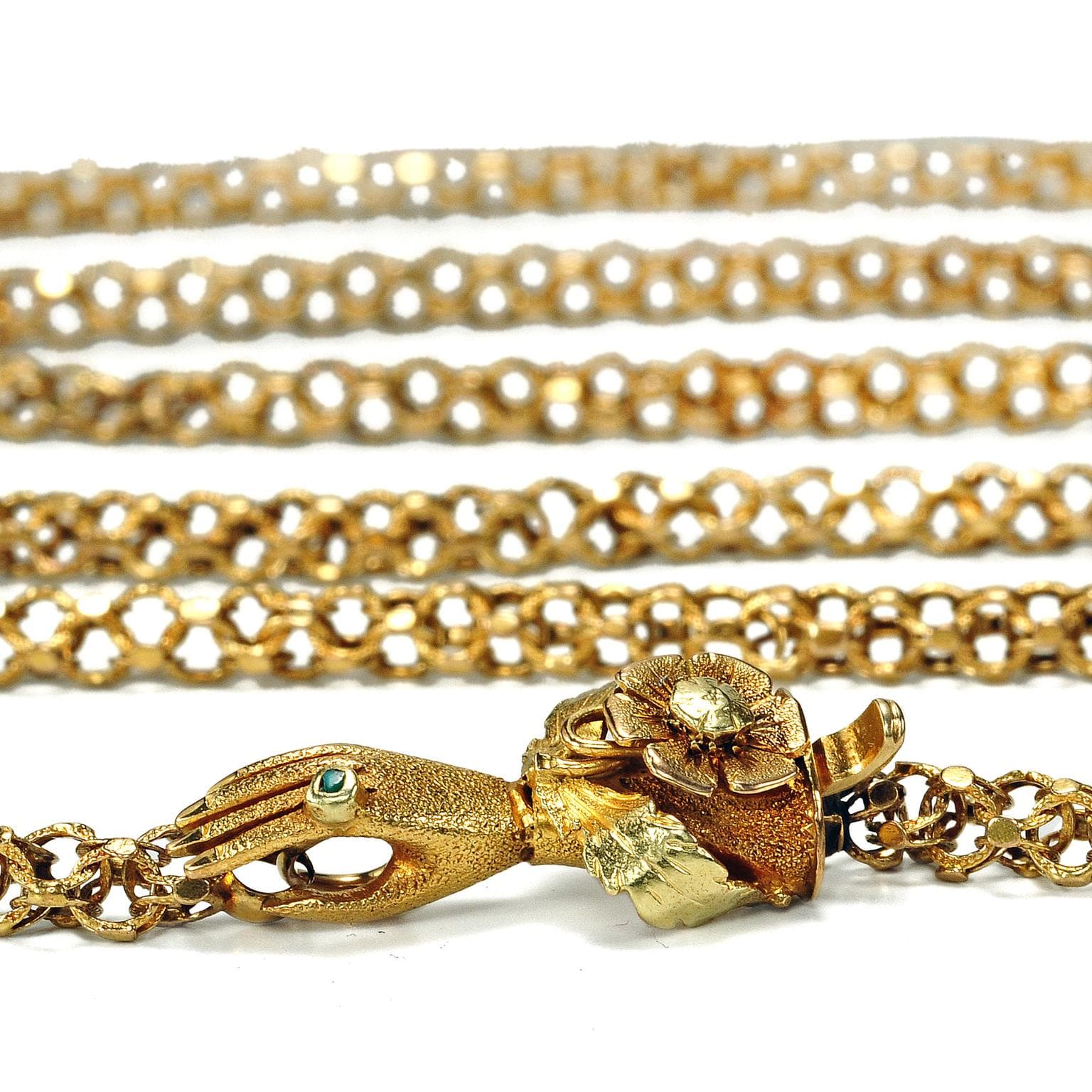
A sautoir is a long chain, rope, or beaded strand that typically falls past the waist, anywhere from 36 to 60 inches in length. Gabrielle Chanel made it a personal signature, wearing long ropes of faux pearls and gilt chains with the same audacity she brought to everything else. On Blazy's runway, the sautoir functions as a structural anchor: the longest, heaviest visual line from which all other pieces are calibrated.
The practical payoff is that a single sautoir yields three lengths in one. Worn at full drop, it creates that deep pendant line that defines the silhouette. Looped once, it settles around 28 to 30 inches as a mid-chest layer. Doubled tightly, it stacks close to the neck like a multi-strand choker. Chanel's own styling guidance has long recommended exactly this flexibility: wrap it, double it, or wind it around the wrist several times to wear it as a bracelet. The piece is designed to be restless.
When building a stack from scratch, find your sautoir first. Everything else orients around it.
Rule 2: Build Readable Tiers with a Near-Neck Statement
The second rule is about scale contrast, and it's the one most people skip. Layering three similar-length delicate chains produces a muddle rather than a stack. Chanel's solution is to anchor the collarbone zone with a large, near-neck piece, typically a wide choker or structured collar sitting at the 14 to 16 inch mark, then introduce one or two longer pendant pieces that drop to 20 or 24 inches. The choker grounds the upper chest; the longer pieces create downward movement and visual depth.
Readable tiers require breathing room. A 16-inch choker and a 17-inch chain will merge visually into a single indistinct layer. A 16-inch choker and a 22-inch pendant chain will read as two distinct statements. The general standard among jewelers is at least two to four inches between each piece, but Chanel's runway often pushes that gap further, creating a pronounced drop of eight inches or more between the choker line and the sautoir below it. That exaggerated spacing is precisely what makes the layering legible from across a room.
- For the office: a wide gold collar at 16 inches with a single fine chain at 24 inches gives you the tiered silhouette without the theatrics.
- For the weekend: let the sautoir drop fully and add a pendant at mid-chest for three distinct planes of depth.
Rule 3: Give Every Layer a Distinct Job
The third rule is where Chanel's costume-jewelry heritage becomes most instructive. Blazy's collections lean deliberately into the house's long tradition of mixing beadwork, chains, and bold charms, a tradition rooted in the collaboration between Gabrielle Chanel and Parisian glass artisan Augustine Gripoix. The Gripoix atelier has supplied poured-glass components to Chanel since the 1920s, producing stones through a pâte de verre process in which molten glass is poured directly into molds rather than kiln-fired. The result is a depth and luminosity distinct from both faceted rhinestones and genuine gemstones: richer, warmer, and unmistakably handmade. Chanel's Maltese Cross cuffs and the crimson and cobalt beaded necklaces from mid-century collections are the most recognizable expressions of this technique.
What made those pieces work in a layered stack was never that they matched. It was that each contributed something the others didn't: color, texture, or a specific silhouette note. Apply this directly to your own stack. A fine gold chain provides linear structure and negative space. A beaded or poured-glass strand brings color and organic weight. A charm pendant introduces a focal point with concentrated visual mass. When every layer performs the same function, they cancel each other out. When each earns a distinct role, the stack reads as deliberate rather than decorated.
Build This Look: Three Budget Tiers
The principles cost nothing. The pieces can cost almost nothing either.
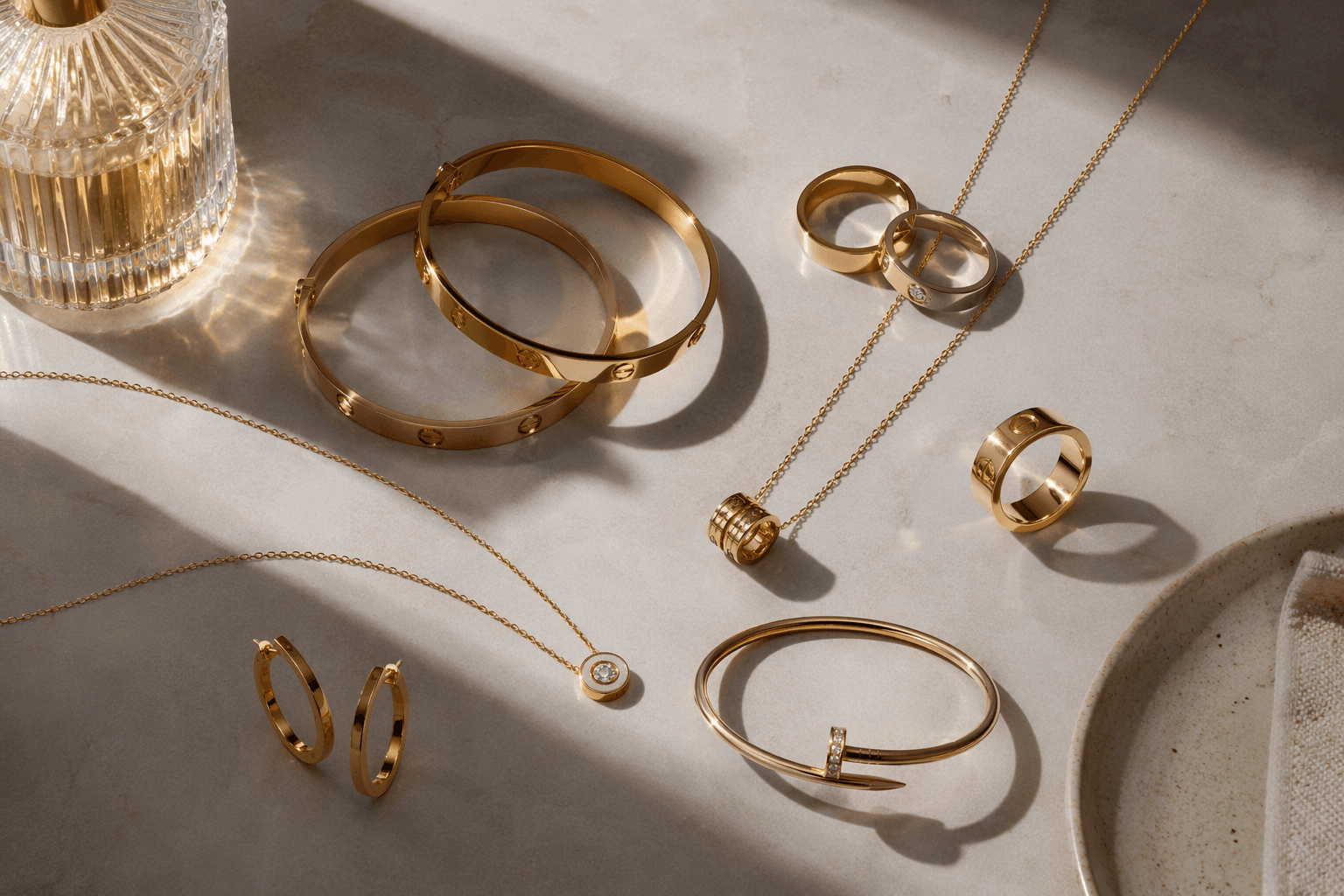
*Entry tier (under $100):* A boldly colored glass-bead strand worn at 20 to 22 inches as your anchor layer, paired with a fine gold-tone chain at 16 inches and a simple coin or disc pendant dropping to 24 inches. For ears, a single sculptural hoop or clean stud that doesn't compete with the neck. Wrist: one wide cuff and one fine chain bracelet. Total investment: under three figures, total effect: fully intentional.
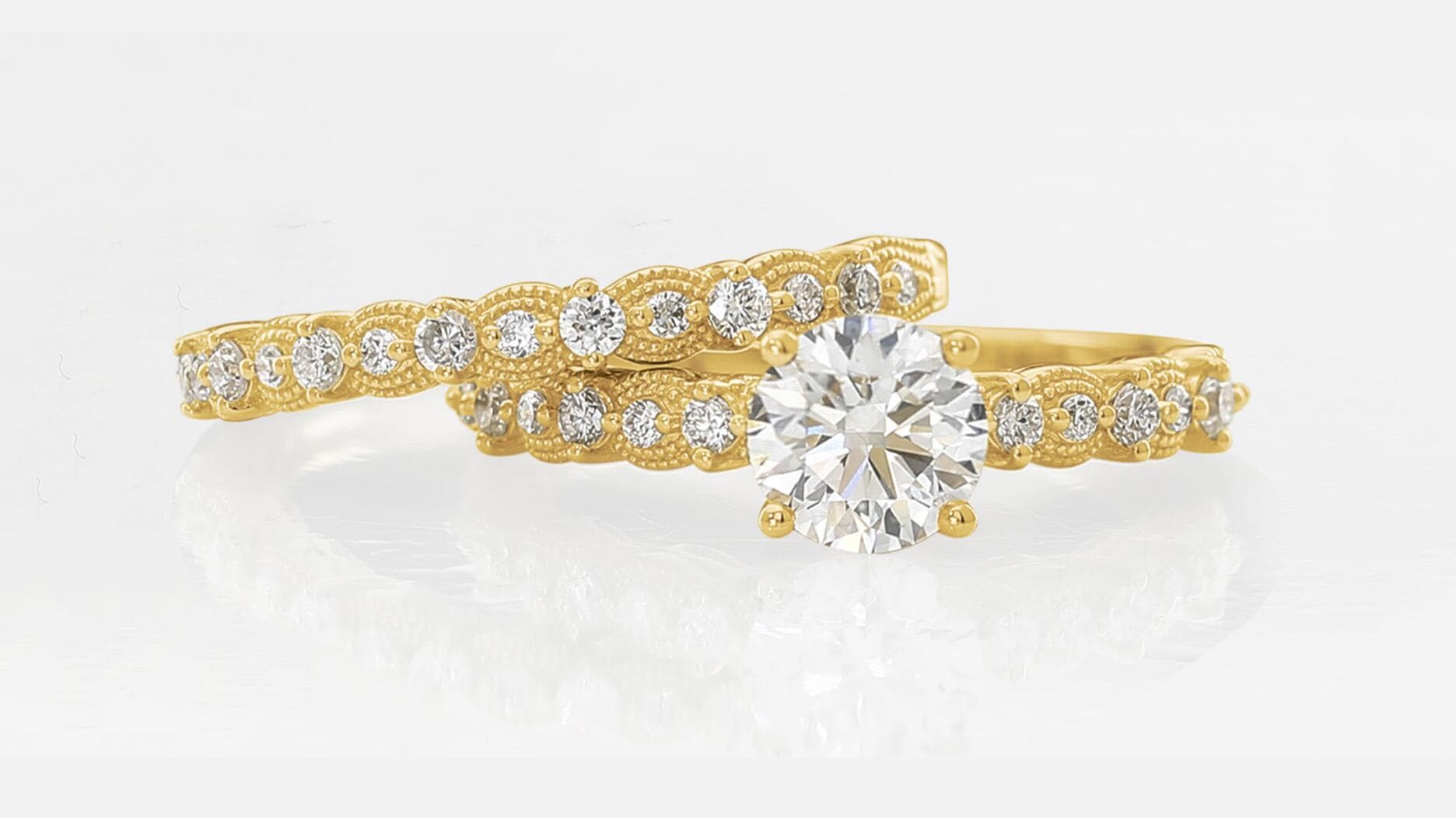
*Mid tier ($100 to $500):* A vintage-style pearl or gilt sautoir, doubled to sit around 28 inches, layered over a 16-inch structured collar in gold-plated brass or sterling silver. Add one pendant chain at 22 inches with a colored-stone drop, tourmaline, citrine, or deep garnet read particularly well against gold. For ears, a polished shoulder-grazing drop on one side only, a choice the Chanel runway has used repeatedly to break symmetry without chaos. Wrist: two stacked bangles and one fine chain bracelet.
*Investment tier ($500 and above):* A genuine vintage sautoir in mixed-metal chain or gripoix-style glass beads, sourced from resellers with clear provenance documentation and visible house markings. Pair with a contemporary 14-karat gold choker at 16 inches and a fine colored-stone pendant at 22 inches. At this tier, provenance matters: with vintage costume jewelry especially, authentication stamps, original paperwork, and reseller transparency all affect value, authenticity, and the ethics of the purchase. A beautiful piece with no documented history is a risk on two levels simultaneously.
The Underlying Logic
What Blazy's runway has surfaced is an idea Gabrielle Chanel built an empire on: costume jewelry is not lesser jewelry. The gripoix glass stones, the gilt chains, the mixed beads she wore alongside genuine gems were not compromises or shortcuts. They were a philosophy made wearable. She took materials considered humble and shifted them into something that looked, and felt, like luxury. Blazy referenced exactly this impulse when describing his approach to Chanel's archives: taking something ordinary and adding to it until it becomes something else entirely.
The runway version is always theatrical. The everyday version is always yours to calibrate. The three rules, anchor with a sautoir, build readable tiers through scale contrast, and give every layer a distinct job, hold across any price point and any neckline. Start with the anchor, and the rest of the stack tends to resolve itself.
This article was produced by Prism’s automated news system from verified source data, official records, and press releases, then run through automated quality and moderation checks before publishing. The system is built and supervised by the people who set the standards it runs under. Read our full AI policy.
Did this article answer your question?