Layered necklace sets: curated length guides and styling tips from top brands
Layer your necklaces with intention: start short, add progressively longer pieces, pick one focal pendant, and use spacers or extenders to keep the stack elegant and tangle-free.

Layering necklaces isn’t just a trend, it’s an art form that allows you to express your personality, elevate your look, and make a bold or subtle statement, whether you’re going to a brunch or a black tie event, a layered necklace can transform your entire outfit." Sazenice's declaration captures why this practice has become essential: a well-curated stack reads as personal narrative as much as ornament. Below is a practical, brand-informed manual that translates that idea into how-to steps, focal choices, chain chemistry, and maintenance.
1. Lead: why layering matters and what to aim for
Layering is about curation, not accumulation, "The art of layering necklaces lies in creating balanced and visually appealing layers. It's not just about stacking; it's about curating," as Sazenice puts it. Aim for a polished, lived-in look: mix lengths and textures, choose a clear focal point, and balance weight so the arrangement feels intentional on the body rather than accidental. This guide synthesizes advice and examples from brands including Sazenice, Mejuri, Jennifer Fisher, Martin Busch Jewelers and Astrid & Miyu to deliver actionable steps.
2. A step-by-step method you can follow
Follow Sazenice’s clear sequence: "Start with a base layer like our minimalist necklace." Then, "Add a medium-length pendant like the Sky Moon Necklace." Next, "Add drama to it with a long chain on top like our Y-Lasso Necklace." Finally, "Adjust each piece to lay flat and evenly spaced for editing." Use extenders or spacers as needed, "Use extenders or necklace spacers to keep things organized and avoid the ‘necklace-putting nightmare.’" Each step preserves proportion and encourages you to stop and edit, which is the difference between clutter and composition.
3. Choosing focal pieces and anchors
Begin with a single anchor: Sazenice suggests "Start with the focal point: Choose an attention-grabbing piece like our Sazenice gold coin pendant necklace," while Mejuri counsels, "Pro tip: Stick to one statement pendant at a time to avoid a cluttered neckline." Jennifer Fisher highlights lariat and pendant necklaces as "particularly noteworthy... ideal centerpieces for any stack." Anchors can be a coin, a locket, a birthstone charm, or a delicate pearl strand, Mejuri explicitly lists examples such as "zodiac charm, engraved locket, or your birthstone." Let the focal piece set tone and scale for the supporting chains.
- Curb chains with snake chains, the curb’s sculptural links play against the snake’s fluid surface.
- Paperclip chains with delicate rolo chains, the graphic paperclip offset by rolo’s round links creates rhythm.
- Beaded necklaces with polished links, beads introduce matte or faceted texture to gleamier metal.
4. Chains, metals and texture pairings
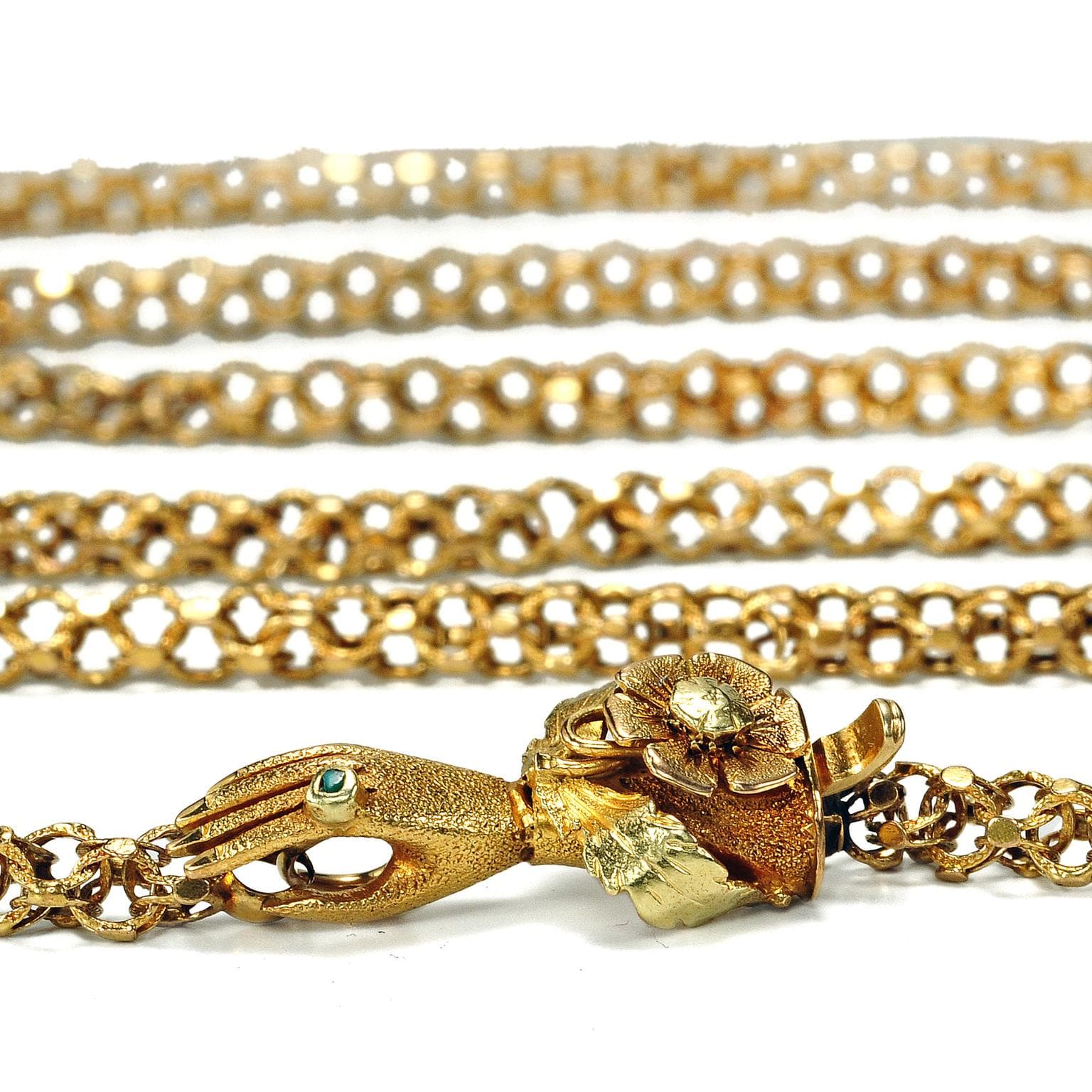
Varying chain types is where a stack earns its sophistication. Mejuri recommends specific pairings such as:
Sazenice offers mixed-metal examples, "try pairing our silver herringbone chain with a gold bar pendant" and "don’t be afraid to try a gold layer necklace and a 925 sterling silver multi-layer necklace", and Mejuri flatly states, "Should You Mix Metals? Absolutely." Martin Busch Jewelers underscores balance: vary lengths, textures and thicknesses so heavier pieces sit with finer chains rather than competing.
5. Matching necklaces to necklines and outfits
Let the neckline dictate your primary lengths. Martin Busch Jewelers suggests: "V-neck tops pair well with slightly longer chains or pendants," while "Round necklines can be accompanied by shorter necklaces that sit just above the collarbone." Astrid & Miyu adds practical styling direction: "If your outfit is simple, feel free to go a little more wild, Double up on the chokers and add a few embellished chunky chains. For an extravagant outfit, keep it simple with only a few dainty layered chokers and chains." For turtlenecks, she recommends wearing necklaces over the rollneck and "go statement with varied lengths!", a simple way to turn knitwear into a display plane for pendants.
6. Anti-tangle tactics and organization tools
Tangles are the enemy of polish. Both Sazenice and Astrid & Miyu urge use of extenders and spacers: "Use extenders or necklace spacers to keep things organized and avoid the ‘necklace-putting nightmare.’" Astrid & Miyu elaborates on spacers: "Necklace spacers are brilliant little clasps you add to the back of layered necklaces to help keep them apart. Instead of all the necklaces gathering in the once spot at the nape of your neck, they are spaced apart slightly to avoid tangling. The dream!" Invest in a couple of spacers and several extenders to fine-tune drop lengths; they are inexpensive insurance that keeps a stack readable.

7. Balance of scale, weight and the “three” rule
Layering is arithmetic: start short and add longer pieces so each chain occupies its own visual plane. The core rule repeated across brands is simple: begin with the shortest necklace and work longer. Astrid & Miyu offers a pithy sizing ethos: "Three is the magic number (sometimes)," which captures the editorial principle that most stacks read best with two to four layers that include a clear focal piece, a mid-length pendant, and a long line. Martin Busch Jewelers warns against overwhelming the neck, balance thickness and weight so metal sits comfortably without pulling.
8. Care, maintenance and longevity
The brands remind you that a great stack also needs to last: "The beauty of a well-curated necklace stack extends beyond its appearance; it's also about longevity and maintaining the sparkle of each piece. Proper care routines are essential to preserve the quality and luster of your necklaces." Sazenice’s statement frames maintenance as an essential part of curation; while specific cleaning protocols are not detailed here, the takeaway is to treat layered pieces as a small collection, store them separately, remove them for sleep and activity, and use gentle, metal-appropriate cleaning when needed.
9. Beginner solutions and product-first approaches
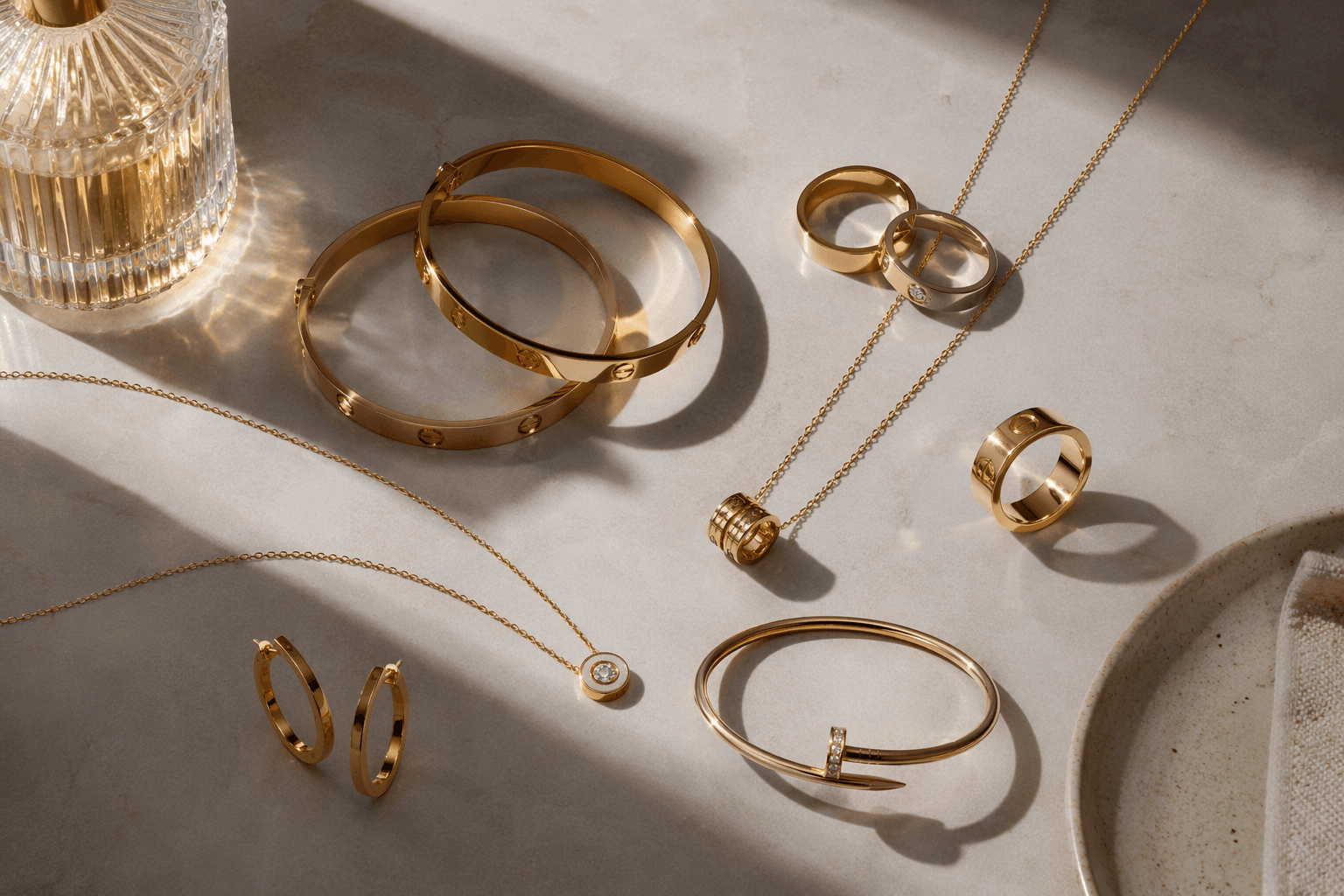
If you are new to layering, use pre-configured sets as a learning scaffold: Mejuri recommends, "If you’re new to layering, our pre-layered sets are a great starting point. From there, you can add, subtract, or mix in your own pieces." Missoma’s collection page, updated late February 2026, organizes layered necklace sets alongside styling tips and length guides, functioning as both a product showcase and a short styling guide; a supplied fragment of its copy reads "it recommen" (incomplete) but the intent is clear: brand-curated sets help you begin with good proportion and scale.
10. Editorial framing: wear it like a story
Layered necklaces should feel curated and personal. Mejuri encourages narrative adornment, "Don’t be afraid to tell your story. Pendants and charms give your necklace layers a personal touch." Across the brands, the recurring advice is to design with intent: one statement pendant, varied textures, coherent color palette, and mechanical aids (extenders, spacers) to make the look wearable. When you compose a stack this way it reads less like jewelry assembled and more like a chapter of your daily style.
Closing Layering is a practice of selection: choose a focal piece, vary length and texture, use spacers and extenders to preserve form, and let each chain have its place. When you approach stacks with the discipline the brands prescribe, and the small toolkit they recommend, a layered set becomes both practical and eloquent: a wearable archive of tastes, memories and meticulous craftsmanship.
This article was produced by Prism’s automated news system from verified source data, official records, and press releases, then run through automated quality and moderation checks before publishing. The system is built and supervised by the people who set the standards it runs under. Read our full AI policy.
Did this article answer your question?