Layered stones and marquise shapes define JCK's luxury trend shift
Natural diamonds are layering up in clusters, fishnet chains and stacked marquise forms, signaling a bolder luxury code for JCK in Las Vegas.
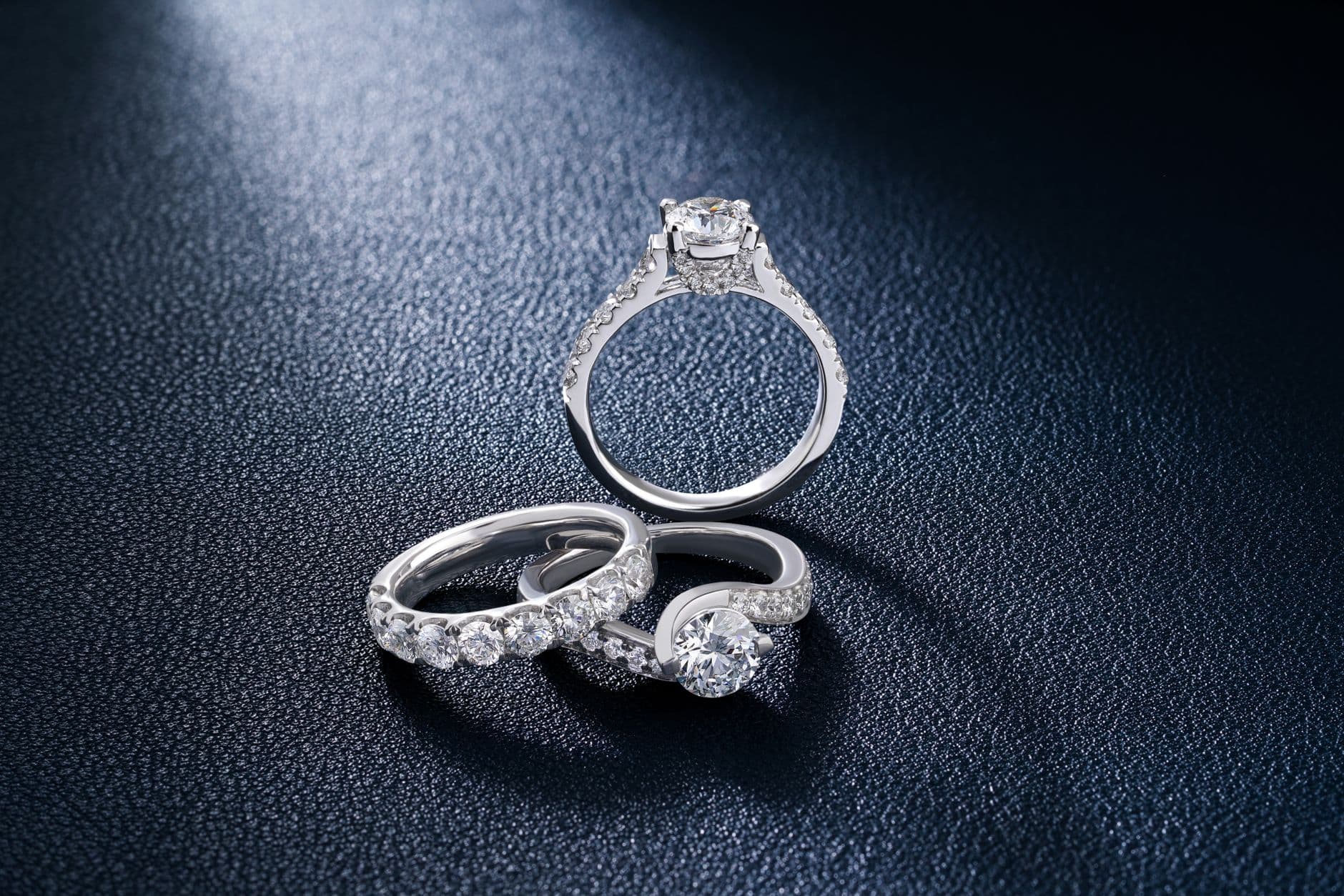
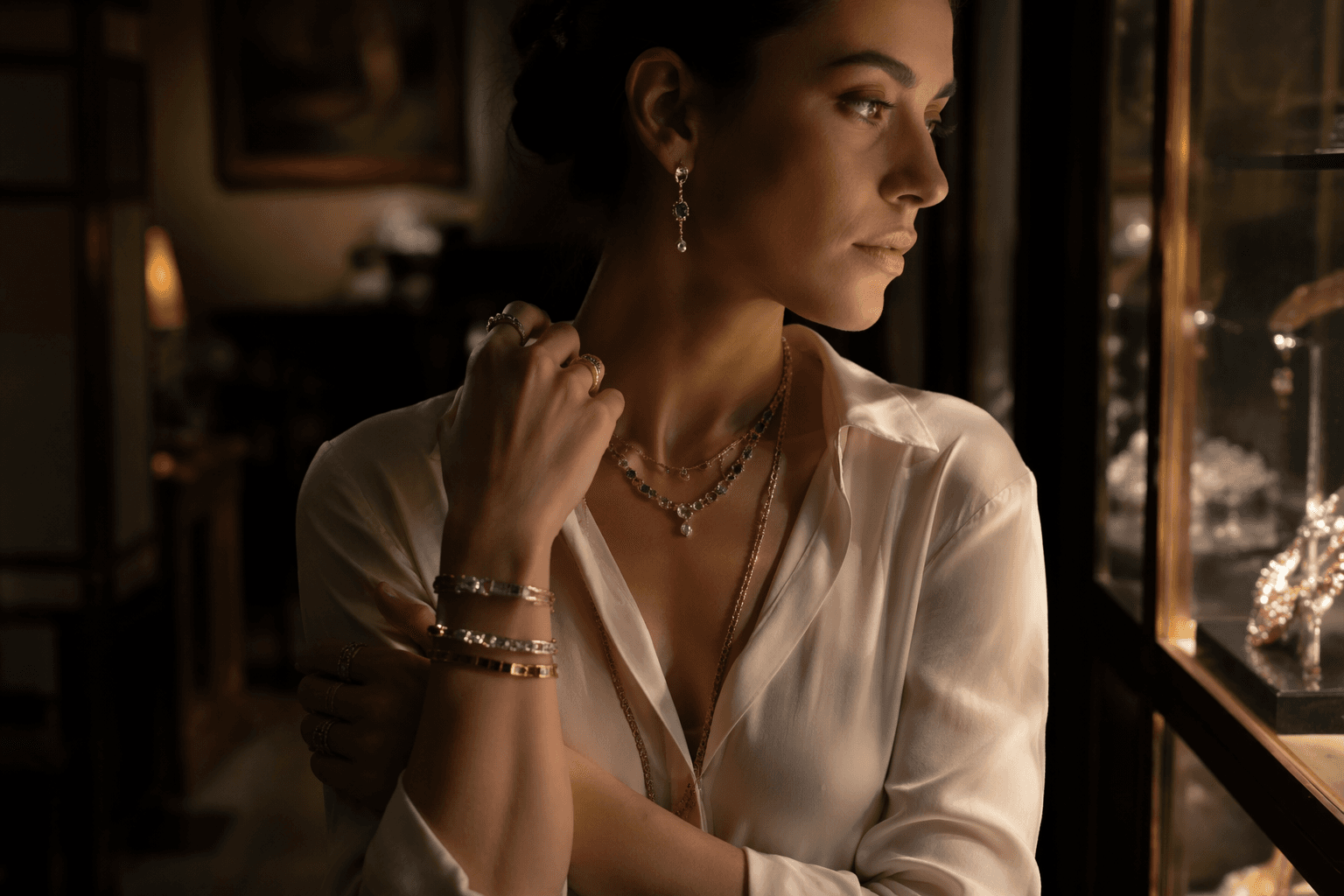
Layering at JCK’s Luxury show did not read as a return to delicate stacks. It came through as something far more assertive, with natural diamonds gathered into clusters, threaded into fishnet-style chains, and set into stacked marquise silhouettes that felt architectural rather than merely decorative. The message from the Las Vegas floor was clear: the new luxury layer is built to be seen, and to hold its own beside high-polish gold, color, and mixed shapes.
Layering turns sculptural
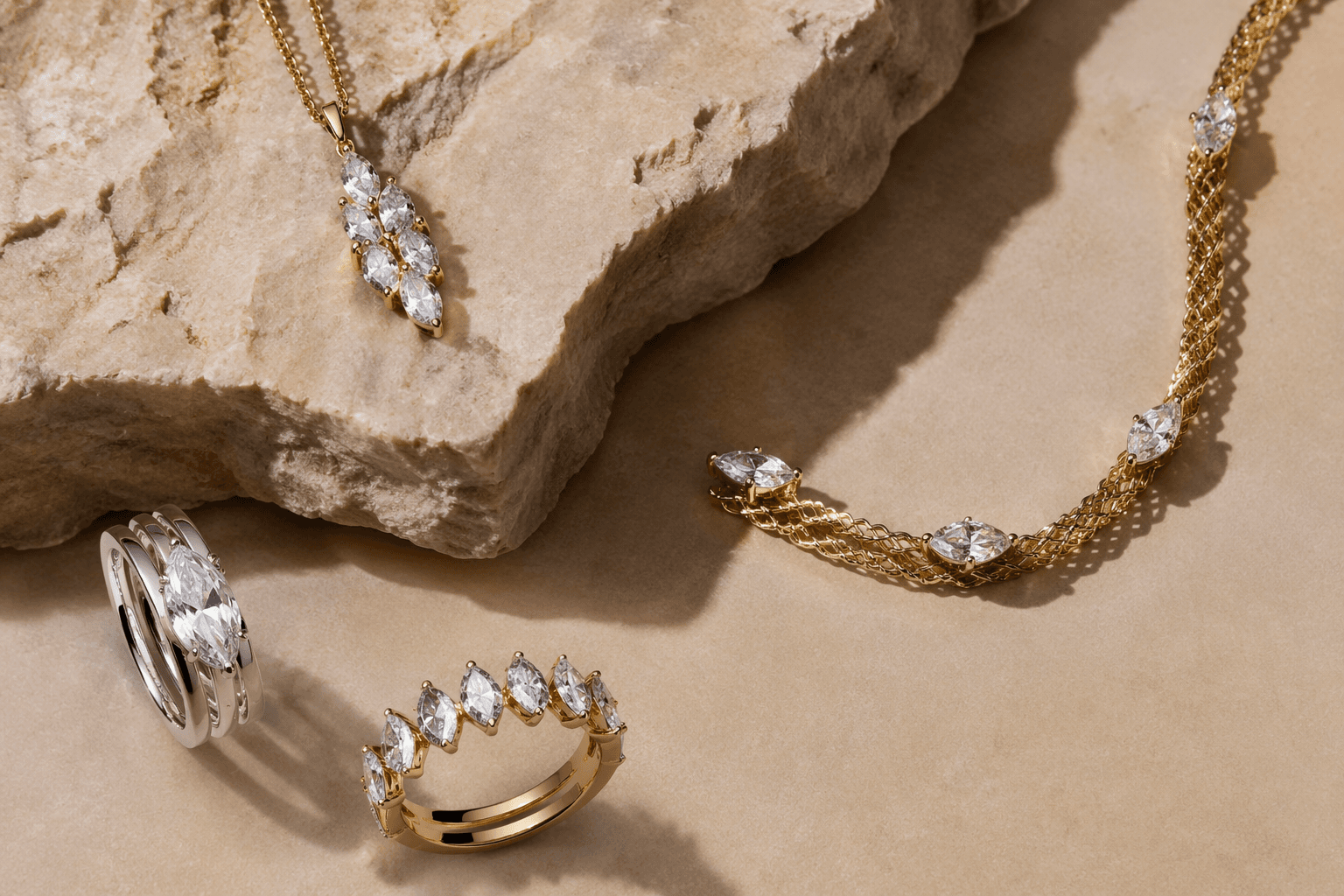
Victoria Gomelsky’s Luxury coverage captured the shift in a way that feels especially useful for 2026: natural stones were no longer acting like accents, but like structure. JCK described marquise-shape diamonds paired with high-polish 18k yellow gold, including a striking design with two stacked marquise-shape silhouettes, a detail that makes the marquise read less like a nostalgic cut and more like a modern module. That matters because the strongest layering now is not about quantity alone. It is about rhythm, proportion, and the tension between open space and density.
The most compelling pieces treated diamonds as forms to be arranged, not simply strung. Clusters gave surfaces a fuller, more tactile presence. Fishnet-style chains introduced movement and texture. Stacked marquise shapes, by contrast, gave the eye a clean directional line, which is exactly why they feel fresh in a category that can easily become repetitive.
Why the marquise is back
JCK’s broader jewelry-week coverage framed marquise shapes as a comeback cut, and that comeback is doing important cultural work. The silhouette once ruled 1980s and ’90s engagement rings, where its elongated outline signaled status in a more classic key. In 2026, the same shape has re-entered fine fashion with a sharper edge, especially when it is layered or doubled, as in those stacked marquise compositions.
That revival is part of a larger move toward fancy shapes that do more than sparkle. JCK’s coverage said natural diamonds were “sprinkled on earrings, hanging from rigid gold collars, and mixed in with all kinds of fancy shapes,” which is the right shorthand for where the market is heading. The stone is not disappearing into the background. It is being used to outline, punctuate, and animate the jewelry itself.
Las Vegas made the shift visible
The scale of the Las Vegas week helped make the trend feel less like a niche atelier idea and more like a market signal. Luxury ran May 27-June 1, 2026, at The Venetian Expo, with invitation-only days on May 27 and May 28. JCK Las Vegas followed from May 29-June 1, 2026. One trade-industry preview pointed to more than 1,900 exhibitors, more than 17,000 qualified buyers, and over 30,000 total professionals from about 100 countries, which is exactly the kind of audience that can turn a design instinct into a commercial direction.
That breadth matters because this is not a one-house flourish. When a layered look appears across a show of this size, it suggests that luxury players are aligning around the same equation: stronger forms, clearer silhouettes, and enough versatility to justify high-ticket buying. In a season shaped by high gold prices, the most persuasive pieces are the ones that make material feel intentional rather than merely abundant.
The vintage thread gives the trend its authority
Rosanna Fiedler of Wyld Box Jewelry added a useful layer of context with the Pietre collection, which she said was inspired by a 1970s vintage Saint Laurent necklace she found on Poshmark. That reference point does a lot of work. It connects today’s gold-forward, shape-driven layering to a period when jewelry carried more attitude and more visible construction, and it explains why these pieces feel collected rather than merely assembled.
The same lineage is visible in JCK’s 2025 Las Vegas coverage, which described diamonds and yellow gold as a “power coupling” and noted mixed cuts strung like lights on ’80s-esque chains. Read together, the two years show a trend that has been building, not erupting. The silhouettes have grown bolder, the chains have become more graphic, and the diamond presence has shifted from scattered sparkle to deliberate architecture.
What the 2026 layer is really saying
The strongest luxury layering now is not about mimicry, and it is not about adding more for the sake of more. It is about combinations that feel edited, structural, and slightly unexpected: clusters that behave like miniature landscapes, fishnet chains that loosen the formality of gold, and marquise shapes that turn a familiar cut into a modern graphic. Add the market’s interest in versatility, color, and mixed shapes, and the direction becomes unmistakable.
For 2026, the keyword is intentional. Natural diamonds are reasserting themselves not as solitary center stones, but as part of a more sculptural language of layering, one that makes room for nostalgia while looking squarely at the future of luxury.
This article was produced by Prism’s automated news system from verified source data, official records, and press releases, then run through automated quality and moderation checks before publishing. The system is built and supervised by the people who set the standards it runs under. Read our full AI policy.
Know something we missed? Have a correction or additional information?
Submit a Tip