Men's Spring 2026 Layering Trends Favor Long Necklaces, Stacked Bracelets
Long necklaces and stacked bracelets are reshaping men's jewelry this spring, signaling a shift toward considered, architectural personal style.

There is a particular kind of confidence required to wear jewelry well as a man in 2026 — not bravado, but deliberateness. The piece you choose, where it falls, how it sits against other metals and textures: these are compositional decisions, the same ones a stylist makes on a runway. What's emerging for spring 2026 is a vocabulary of layering that trades impulse for intention, and the results are reshaping what masculine adornment looks like at the mid-chest, the wrist, and everywhere in between.
The Long Necklace as Architectural Statement
The shift toward longer necklaces is less a trend than a reckoning with proportion. For years, men's necklaces sat close to the collarbone, functioning almost like ties — neat, minimal, easily dismissed. The spring 2026 direction pulls the focal point downward, to a mid-chest drop that changes the geometry of everything worn above it. A necklace that grazes the sternum creates a vertical axis, drawing the eye along the body and giving an open collar or V-neck something to answer to.
The practical genius of this approach is that it resolves one of men's layering's oldest problems: how to wear multiple pieces without visual clutter at the neckline. When the longest piece has room to breathe at mid-chest, shorter chains closer to the throat can coexist without competing. The result is a framing device rather than a pile-up, each layer occupying its own register. Think of it the way a photographer thinks about foreground and background: the longer necklace anchors depth, the shorter ones add texture at the surface.
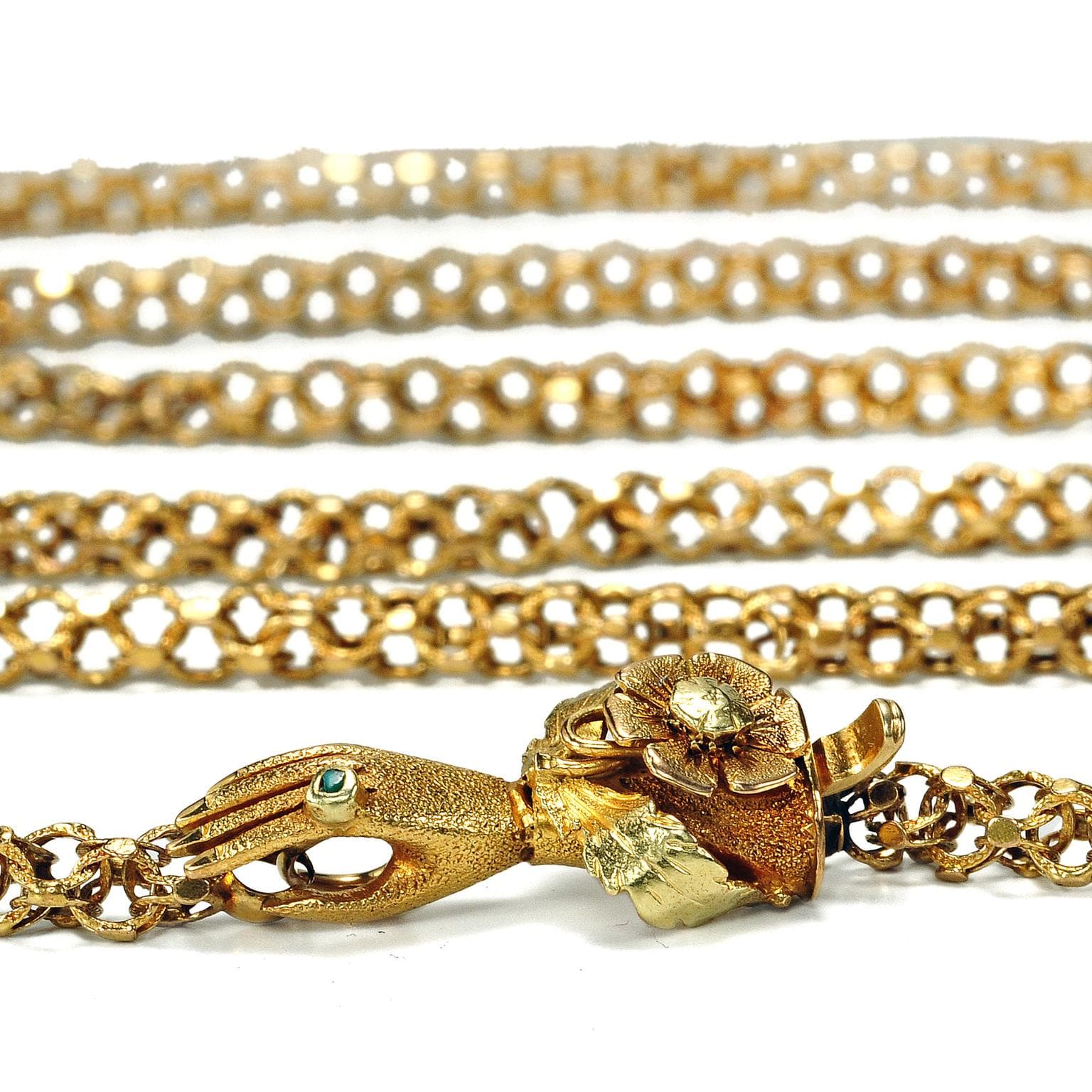
Material choices matter here as much as length. A heavier chain in oxidized sterling or yellow gold carries the visual weight the mid-chest position demands, while a finer rolo or cable chain at the throat adds lightness without disappearing. The contrast between gauges is as important as the contrast between lengths; without it, the layers read as an accident rather than a decision.
Bracelet Stacking: The Anchor Principle
Where necklace layering is about vertical architecture, bracelet stacking is about tactile contrast and rhythmic weight. The emerging framework for spring 2026 centers on what might be called the anchor principle: one heavier, more substantial piece that grounds the stack, supported by lighter companions that modulate rather than compete.
The anchor piece does the structural work. It might be a wide cuff in brushed silver, a beaded bracelet in substantial natural stone, or a chain link style with meaningful gauge. What defines it is presence: it has enough visual and physical weight that the wrist registers it as a considered choice rather than an afterthought. Everything layered alongside it should respond to that weight, not match it. A fine chain bracelet, a leather wrap, a slim enamel bangle — these are supporting elements, and their relative delicacy is what makes the anchor piece read as intentional rather than accidental.
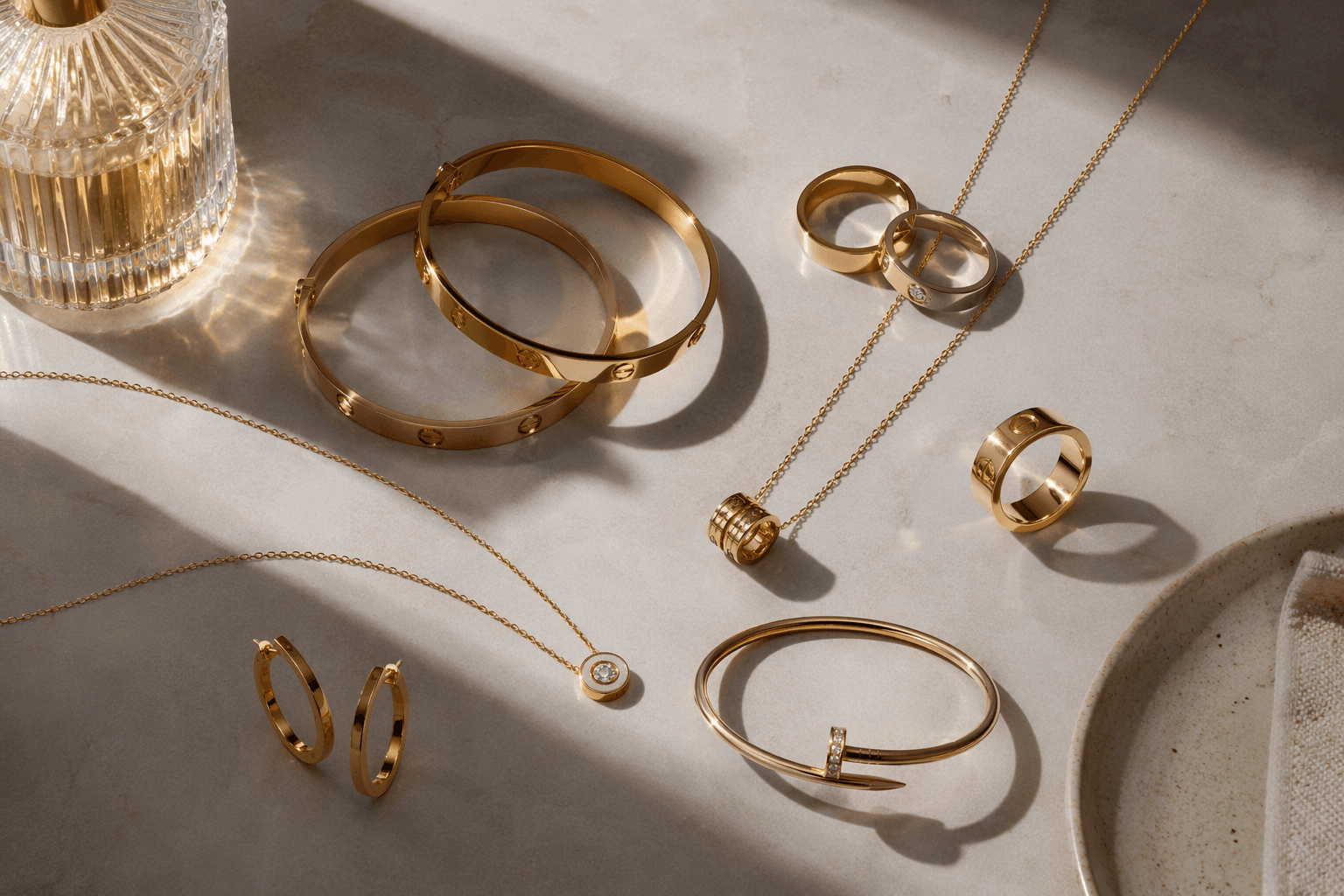
The temptation in bracelet stacking is symmetry, the instinct to match metals or repeat motifs. The more sophisticated approach works across textures and finishes. Mixing a matte stone bead bracelet with a polished metal chain creates the kind of tension that makes a stack look considered rather than curated from a single display. The wrist, unlike the neck, is constantly in motion; a stack that catches light differently at every angle rewards that movement.
Fit matters more on the wrist than almost anywhere else in jewelry. Bracelets that are too loose migrate and tangle; too snug and they cut into the visual line rather than flowing with it. The anchor piece, particularly if it's a cuff or a rigid bangle, should sit with enough room to move slightly but not slide over the hand without effort. The lighter layers can afford a bit more looseness, as their movement contributes to the overall effect rather than disrupting it.
Relaxed Masculinity as the Underlying Logic
Neither of these trends exists in isolation. They are expressions of a broader shift in how masculinity relates to personal adornment: a relaxation of the idea that restraint is inherently sophisticated. For a long time, the received wisdom was that men should wear as little jewelry as possible, and that what they did wear should be as understated as achievable. That logic is visibly unwinding.
What's replacing it isn't maximalism for its own sake. The spring 2026 aesthetic is deliberate, not loud. It favors pieces that have a reason to be there, whether that's a material story, a design lineage, or a personal association. A long necklace with a pendant that means something wears differently than the same necklace chosen because it was available. A bracelet stack built around an anchor piece with history, whether that's a piece passed down, bought on a specific trip, or made by a craftsman whose work you follow, has a coherence that a randomly assembled collection never achieves.
This is where the craft knowledge becomes practically useful. Understanding that a prong-set stone pendant will snag on finer chain layers while a bezel-set stone sits flat and cooperates with them is the difference between a stack that works and one that frustrates. Knowing that sterling silver oxidizes differently against the skin than gold-filled or solid gold means you can anticipate how a mixed-metal stack will age and plan for it rather than be surprised by it.
Building the Look
Approaching a spring 2026 men's layering look is a process of working from anchor to accent:
1. Establish the longest necklace first, choosing a piece with enough visual weight to read at mid-chest without disappearing under fabric.
2. Add a shorter chain at or just below the collarbone, in a complementary gauge and finish that creates contrast rather than repetition.
3. On the wrist, identify the anchor bracelet before adding anything else. Let its weight and finish set the tone for everything layered alongside it.
4. Introduce lighter bracelet elements one at a time, evaluating each addition against the overall composition rather than adding them all at once.
The principle that runs through each of these steps is the same: every piece should be answering a question the previous piece raised. Layering that follows this logic looks inevitable rather than assembled, which is the highest compliment you can pay a stack.
Spring 2026 makes the case that men's jewelry has moved past the moment when wearing it required justification. The conversation now is about how to wear it well, and the answer, it turns out, involves the same compositional thinking that governs every other considered form of dressing.
This article was produced by Prism’s automated news system from verified source data, official records, and press releases, then run through automated quality and moderation checks before publishing. The system is built and supervised by the people who set the standards it runs under. Read our full AI policy.
Did this article answer your question?