Pearl and Paperclip Chain Trio: Three-Length Formula for Balanced Layering
A simple three-length recipe, close pearl strand, mid paperclip chain, long fine cable, creates textural contrast and balanced layering for contemporary neckwear.

Pearl and paperclip chains are a modern pairing: the smooth, reflective surface of pearls plays against the angular, open links of a paperclip chain to create deliberate contrast. A short styling guide recommends a three-length formula, close pearl strand, mid paperclip chain, and long fine cable, to achieve that textural contrast while keeping visual balance, and the same guide notes it also covers mixed combinations. Below is a practical, craft-aware guide to building that trio so each layer reads clearly and each material earns its place.
1. Close pearl strand
Place a close pearl strand at the collarbone or slightly above so pearls read as the focal, refined layer. Pearls bring a soft, luminous plane that acts as an anchor for the rest of the trio; wearing the strand high keeps its curve visible against the neck and prevents longer chains from crowding it. Choose pearls with consistent luster and matched size so the top layer reads as intentional, an uneven top layer will destabilize the trio’s balance. If the styling guide’s goal is contemporary contrast, let the pearl strand remain predominantly uninterrupted (minimal pendants) so it can provide the smooth surface that offsets the paperclip links.
2. Mid paperclip chain
Use the paperclip chain as the middle layer to introduce scale and architectural rhythm between the high pearl strand and the long, delicate cable. The elongated links of a paperclip chain create negative space that visually separates the layers, and when worn mid-length they offer drama without overwhelming the pearls. Opt for a paperclip gauge that’s visibly larger than a fine cable but not so heavy it drags, this middle distance is where the contrast lives. Because the styling guide highlights mixed combinations, consider letting the paperclip be the place to introduce a complementary metal or a brushed finish for an intentional, modern alloy contrast.
3. Long fine cable
Finish with a long fine cable chain to add movement and a subtle vertical line that elongates the neckline. The fine cable should be the most delicate of the three elements, providing a whisper of metal beneath the bolder paperclip and the luminous pearl plane above. A long fine cable works well bearing a discrete pendant or left plain; when plain it acts as a light visual extension that keeps the trio from feeling top-heavy. In this three-length formula, the fine cable’s role is to restore equilibrium, its slimness stops the overall composition from becoming dense.
Why the three-length formula works The short styling guide’s three-length recipe, close pearl strand, mid paperclip chain, long fine cable, creates deliberate planes: a reflective top, an architectural mid, and a delicate baseline. That arrangement produces textural contrast while keeping visual balance because each layer occupies its own space and material character, preventing overlap that reads cluttered. The pearl’s continuous surface contrasts the paperclip’s open geometry, and the fine cable’s slenderness reasserts lightness at the bottom. Practically, this spacing prevents tangles and visual competition: when each layer has a clear role, the whole necklace reads as a curated trio rather than a pile of chains.
Mixing metals and materials (what “mixed” can mean) The styling guide also covers mixed combinations, which can be executed thoughtfully rather than haphazardly. If you mix metals, make one piece (commonly the paperclip) the visual pivot, either by changing its color or finish, while keeping the pearl layer and fine cable simpler to preserve unity. Mixing surface textures (high polish versus matte) can be as effective as mixing metals: a high-luster pearl, a brushed paperclip, and a polished fine cable will read cohesive because the contrast is planned. Keep proportions consistent, the visual weight of the mid paperclip should bridge the pearl and cable, so don’t over-scale the middle link if you want a subtle mixed-metal effect.
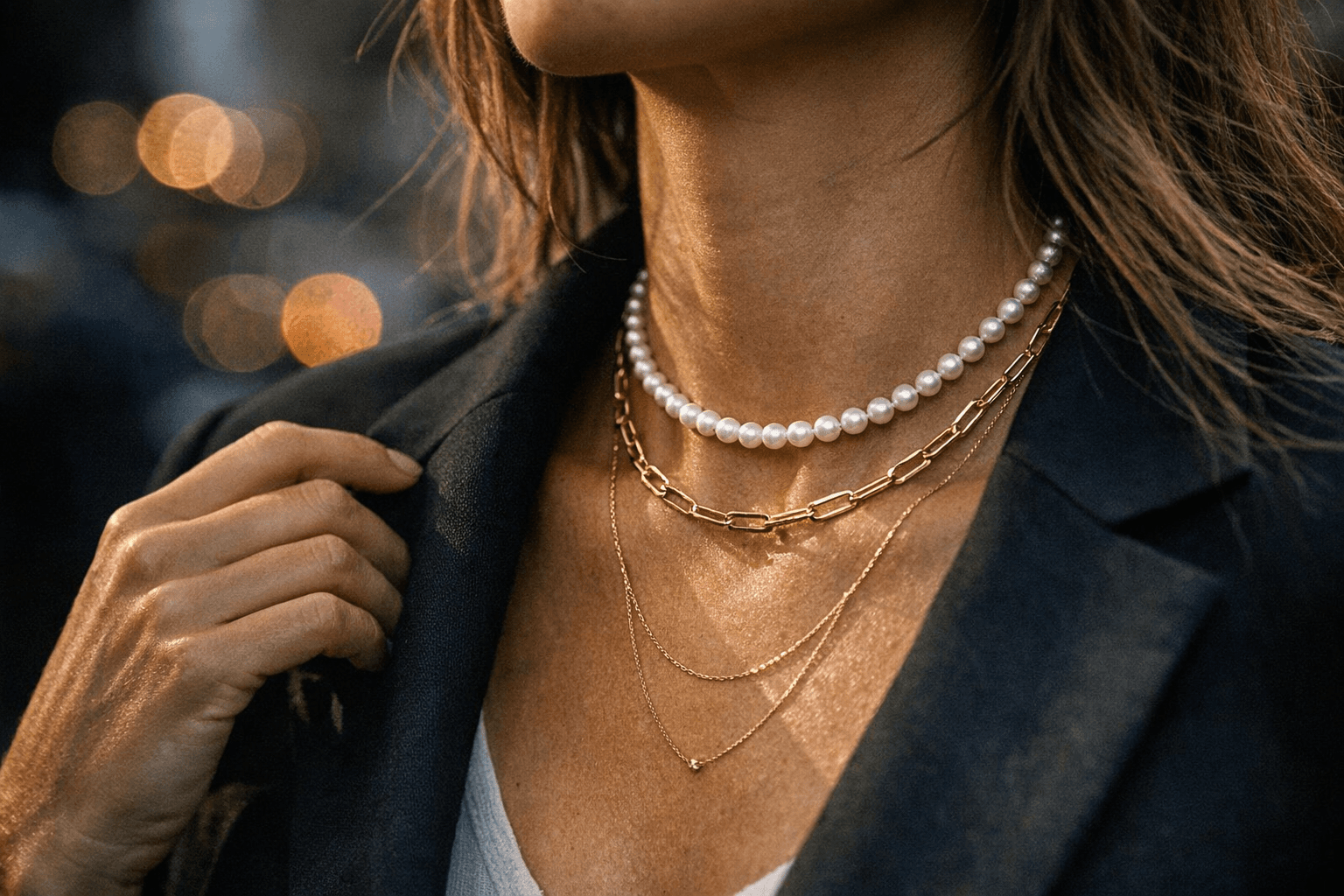
Practical fit and sizing guidance Because the guide emphasizes three distinct lengths rather than exact numbers, prioritize relative spacing over rigid measurements: the top layer should sit comfortably at the collarbone, the middle at mid-chest, and the bottom should extend beyond the décolletage. When trying combinations, drape each necklace on your bare neck and check how they fall when you move, walk, tilt, and sit; the ideal trio keeps the pearl visible and the mid chain free of the top strand’s edge. If you prefer precise starting points, begin with a pearl choker or short strand, a paperclip at roughly 18 inches as the middle, and a fine cable at 24 inches or longer for the third layer, adjust for personal proportions and neckline. Use extender chains or adjustable clasps to fine-tune spacing rather than forcing pieces that are too short or too long.
- Let the pearl layer be mostly uninterrupted by large pendants; it reads best as a plane of light.
- Use the paperclip link size to control visual weight, larger links equal stronger mid-visual emphasis.
- Keep the long cable thin to avoid competing with the paperclip; the goal is a taper from top to bottom.
- Try one metal change at a time, introducing two different metals in one look can work, but a single pivot point maintains cohesion.
Styling tips for clarity and contrast
Construction, settings, and clasp considerations Choose reliable clasps and sturdy jump rings for the paperclip chain: its open links can catch if hardware is undersized. For pearl strands, ensure the strand is knotted between pearls or finished with secure crimps; knotting protects individual pearls from friction and keeps the strand intact if it breaks. The fine cable can have lightweight soldered links and a small spring ring or lobster clasp; because it’s the longest, its clasp should sit comfortably at the back without pulling. These construction details ensure the trio behaves as intended on the body, balanced, comfortable, and resilient.
A mindful close: provenance and longevity The styling guide’s simple formula works best when the materials are chosen with care: check pearl origin, whether cultured freshwater or saltwater, and look for clear hallmarks on metal chains to confirm karat or plating details. Pearls and chains will last when cared for, store layered pieces flat when possible, handle pearls gently, and have delicate chains inspected for stretched links. The appeal of the pearl and paperclip chain trio is that it pairs classic material with modern silhouette; when materials and construction are specified and honest, the look becomes beauty without compromise.
This three-length approach, close pearl strand, mid paperclip chain, long fine cable, gives you a repeatable, adaptable recipe for contemporary layering that reads intentional on a variety of necklines and styles. Follow the formula, prioritize clear spacing and workmanship, and let each element keep its voice so the overall composition is balanced, tactile, and undeniably modern.
This article was produced by Prism’s automated news system from verified source data, official records, and press releases, then run through automated quality and moderation checks before publishing. The system is built and supervised by the people who set the standards it runs under. Read our full AI policy.
Did this article answer your question?