Ring layering leans into contrast, color and personal expression
Ring layering is shifting from matched sets to edited contrast, with cocktail rings, diamond signets and gem-set guards building a more personal hand story.
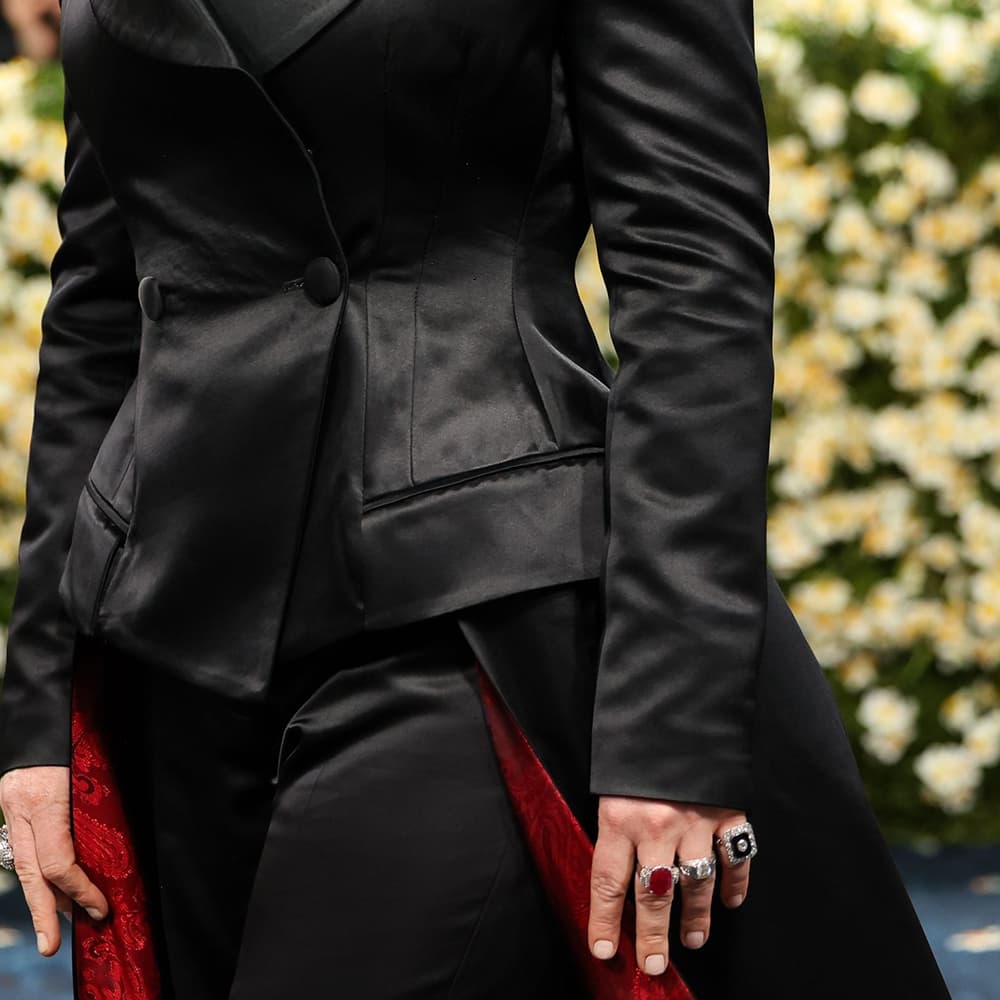
A single finger can now carry a cocktail ring, a signet with diamonds, a slim stackable and a ring guard, as long as the mix has clear spacing and a deliberate scale. INSTORE’s ring-guard gallery treats the hand as a small canvas, and that framing matches a wider appetite for jewelry that feels expressive, meaningful and individual.
Why the mixed stack feels current
By January 2026, Stuller described jewelry customers as increasingly drawn to pieces that feel current and rooted in individuality. JCK’s 2025 trend coverage highlighted opaque gemstones and saturated color among the year’s more design-forward rings. A hand no longer needs to read as a matched suite; a ring can work as a color note, a texture break or a personal marker.
A ring stack has become a form of editing, not just accessorizing, and the strongest versions use contrast on purpose. A matte stone beside a bright diamond-accented band feels considered; a heavy statement ring beside a narrow stackable feels balanced; two similar pieces worn too close together can flatten the effect.
How to build a stack that looks curated
A good ring stack usually starts with one focal point and builds outward from there. The trick is to give each piece a job: one ring leads, one ring supports and one ring changes the silhouette.
- A gemstone cocktail ring can serve as the anchor, especially when the stone has enough color or scale to hold the eye on its own.
- A diamond-accented signet adds structure without looking overly formal, especially because the diamonds soften the old crest-and-seal language of the signet.
- Gem-set stackables work best as a bridge, repeating one color or metal finish so the hand does not feel overworked.
- A ring guard changes the outline of an existing ring and is useful when a center stone needs framing rather than crowding.
Spacing matters as much as the stones themselves. Leave enough room for each ring to read separately, especially when a bold statement ring sits next to a slimmer band. If every finger carries maximum volume, the eye loses the rhythm that makes the stack feel edited.
The older history behind the new look
This way of mixing looks modern, but the underlying impulse is old. The Roman betrothal ring was a plain iron hoop, a reminder that engagement jewelry began as a simple band rather than a fixed luxury category. By the 4th century AD, inscriptions were already appearing inside bands, and medieval rings were sometimes set with sapphires or rubies.
Diamonds entered engagement-ring history in the 15th century, which means the bright, faceted flash that now anchors many stacks has been part of the story for centuries. Even the cocktail ring has a backstory built on theater: the name traces to the Prohibition era and speakeasies, when a large ring signaled a taste for glamour and defiance.
The stones and shapes that define the mood
JCK’s 2025 coverage singled out opaque gemstones and saturated color as major directions. Opaque stones change the visual balance of a stack. They do not rely on sparkle alone; they bring surface, depth and color block, which lets a hand read more like a composition than a checklist of carats.
Diamond accents play a different role. On a signet, they replace the severity of a plain seal or engraving with a softer, more luminous finish, turning a classic shape into something that works in a modern stack.
A public example of the direction
Sarah Snook’s 2025 Met Gala appearance offered a clear visual shorthand for the trend.
This article was produced by Prism’s automated news system from verified source data, official records, and press releases, then run through automated quality and moderation checks before publishing. The system is built and supervised by the people who set the standards it runs under. Read our full AI policy.
Did this article answer your question?