Ring Stacking Is the New Jewelry Trend Replacing Bold Statement Pieces
Searches for "stacking rings for women" have surged 5,000% — and according to PRYA's Arwa Hassan, it's less about one statement piece and more about the overall composition.
There is a particular tension that lives in every jewelry box: the pull between the one perfect ring and everything else you own. For years, the prevailing answer was restraint — choose your statement piece, let it speak, and leave the rest behind. That logic is unraveling fast.
The rising appetite for maximalism and individuality marks a genuine shift in the market. As Jillian Sassone, founder of Marrow Fine Jewelry, puts it: "A few years ago, the focus was on pieces that were minimal, clean and very polished. But now people want pieces that feel collected, expressive and a little unexpected." Nowhere is that shift more legible than on the hand. Ring stacking, the practice of layering multiple rings across one or several fingers, has moved from niche styling trick to one of the defining jewelry gestures of 2026.
The numbers are striking. Ring stacking is one of the biggest jewellery trends right now, and according to accessories brand PRYA, searches for "stacking rings for women" are up 5,000% this month alone, as more and more people look for pieces to layer, mix, and match. The figure points to something more than a seasonal spike: a fundamental rethink of how rings are worn and collected.
Arwa Hassan, co-founder and style director of PRYA, frames it precisely. "People are no longer stopping at one ring," she says. "They are building collections and styling them across multiple fingers depending on their outfit or mood. It is less about a single statement piece and more about the overall composition."
That word — composition — is key. Mastering maximalism in 2026 is about creating "curated chaos," a look that feels intentional and artistic rather than haphazard. The stack is not an accumulation; it is a considered arrangement.
The Architecture of a Stack
The difference between a ring stack that looks deliberate and one that looks like you raided your jewelry box before running out the door comes down to structure. Hassan's approach is sequential and logical, building from the ground up.
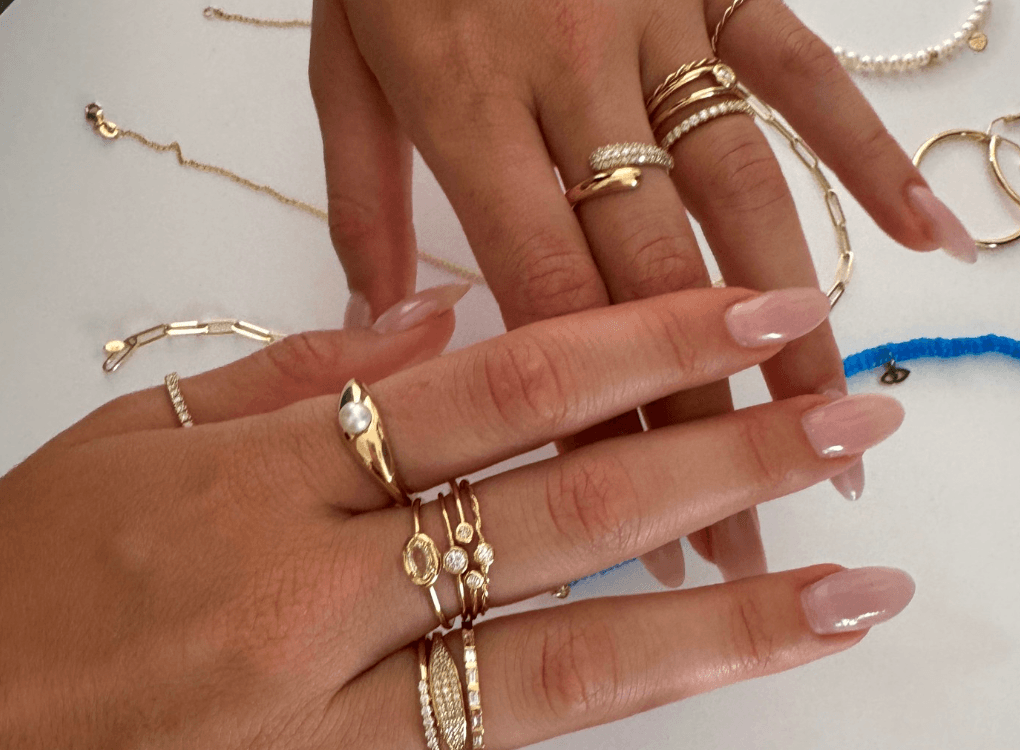
"The key is balance," she says. "Start with slim bands as a foundation, introduce something personal like an initial or birthstone, then add one bold, sculptural ring to anchor the look."
The foundation of any great ring stack is a selection of thin, versatile bands worn every day. These create structure and make it easier to build dimension without overwhelming your hand. Think of them as the sentence before the exclamation point: essential, unassuming, and structurally indispensable. Thin bands are the versatile essentials that make layering effortless. From sleek, polished metals to textured and diamond-encrusted designs, these slender styles are perfect for mixing, matching, and building your look from the ground up. Their understated profile means you can stack just a few for minimal elegance or pile on multiples for a bold, personalized statement.
The personal element — an initial band, a birthstone set in a bezel or prong — is what elevates a stack from stylish to singular. Personalised jewellery is playing a major role in the rise of stacking. Initial rings, name rings and birthstone rings allow you to combine sentiment with style. Layering meaningful pieces into your stack makes it feel intentional and personal rather than trend-led.
The final layer is the anchor: one sculptural piece with visual weight, whether that is a dome ring, a chunky signet, or a pavé-set band with real presence. This is the piece that commands attention; the slim bands around it provide the grammar that makes it readable.
Contrast as the Central Principle
Once the structure is in place, contrast does the creative work. "Contrast is what makes it work," Hassan explains. "Mixing delicate with chunky, pavé with plain metal, keeps the stack feeling intentional rather than overwhelming."
This is gemologically sound advice. A pavé band, with its surface of micro-set stones catching light from every angle, reads very differently against skin than a high-polish plain band. The interplay between those two surfaces — scattered brilliance against smooth metal — creates visual rhythm. Modern ring stacking is all about contrast: pairing smooth dome rings with twisted bands, layering pavé details beside plain gold or silver, and combining chunky silhouettes with fine minimalist pieces. Mixing gold and silver stacking rings adds a contemporary edge and makes your jewellery more versatile for everyday styling.
The old rule of "pick one metal" is officially gone. 2026 is about the friction and harmony of mixing cool silver with warm gold and romantic rose gold. The result, when handled with intention, feels like a collected wardrobe rather than a uniform — each piece with its own provenance, gathered into something that reads as coherent.
Placement and Proportion
Where rings sit on the hand matters as much as which rings you choose. Playing with proportion creates a look that is unique, while considering the placement of each piece makes the stack appear intentional rather than accidental.
"Balance delicate bands with one bold, sculptural piece to anchor the look," says Hassan. "Odd numbers create a more dynamic feel, while spreading stacks across multiple fingers keeps the look balanced."
The odd-number principle has roots in visual design: three or five elements create tension and movement in a way that even numbers, which tend toward symmetry, do not. Spread across the index, middle, and ring fingers, for instance, a seven-ring stack reads as a considered arrangement rather than excess. You do not have to limit stacking to one finger, and the most compelling stacks rarely do. Distributing weight and visual interest across the hand prevents any single finger from looking overcrowded while giving the overall composition room to breathe.
Why Now
As 2025 gave way to 2026, fashion's aesthetic pulse swung from quiet minimalism to unapologetic maximalism, especially in jewelry and accessories. As clothing silhouettes became more streamlined and refined, accessories stepped up to compensate, delivering bold, oversized pieces that demand attention. The ring stack fits neatly into that logic: outfits have grown quieter while the hand has grown louder.
Layering, stacking, mixing textures and playing with bold shapes is becoming the norm. Ashley Moubayed, creative director and founder of indie jewelry brand Don't Let Disco, echoes that people are "craving connection — to history, to touch, to process." A stack built around a birthstone inherited from a grandmother, a signet engraved with an initial, and a plain gold band worn since university is not a trend piece. It is a record. The trend simply gave people permission to wear it all at once.
That is the real story behind the numbers. The 5,000% search surge is not just about rings; it is about a generation reclaiming the idea that more can be more, that wearing everything you love is not greedy or excessive but compositional. The single statement piece asked you to choose. The stack asks you to curate — and there is a meaningful difference between the two.
This article was produced by Prism’s automated news system from verified source data, official records, and press releases, then run through automated quality and moderation checks before publishing. The system is built and supervised by the people who set the standards it runs under. Read our full AI policy.
Did this article answer your question?