Spinelli Kilcollin Champions Everyday Stacking With Wearable, Lived-In Ring Designs
Spinelli Kilcollin's "Live Now. Polish Later." campaign reframes fine jewelry as something to be worn hard, not handled carefully, shooting rings in motion across the steppes of Kazakhstan.

There is a particular kind of jewelry person who takes their rings off before doing the dishes, before the gym, before anything that might scratch or dull the surface. Spinelli Kilcollin has spent sixteen years building an argument against them.
The Los Angeles brand's newest campaigns, shot on location in Kazakhstan and Norway, make the case with uncommon visual force: rings worn on the hands of equestrians galloping across the icy plains of Central Asia, stacked and layered and very much not sitting safe in a velvet tray. The overriding message, distilled into four words, is the campaign's own tagline: "Live Now. Polish Later."
A Philosophy Forged in Motion
The "Live Now. Polish Later." campaign honors 2026 as the Year of the Fire Horse in the Lunar calendar, and it reads as a philosophical statement as much as a marketing one. The short film, shot on 35mm film in the countryside of Kazakhstan, explores themes of freedom, nomadic heritage, and movement, reinforcing the idea that jewelry should not feel precious or fragile, but lived in and carried through every experience.
The film opens with a close-up of equestrian Ansa Kuzenbayeva, the inspiration for the campaign, her hands gripping the reins and a Spinelli Kilcollin ring visible on her finger. It is a deliberate compositional choice: the hands first, before the landscape, before the horse, before anything else. Jewelry as the point of contact between person and world. Dwyer Kilcollin, co-founder and creative director, chose Kazakhstan as the campaign location, inspired by the freedom of horseback riding across vast stretches of open land without fences.
The Norway campaign extends the same visual logic into a colder, starker palette, placing stacks in motion against Scandinavian light. Together, the two locations emphasize that the brand's rings are designed for terrain, not showcases.
The Architecture of the Stack
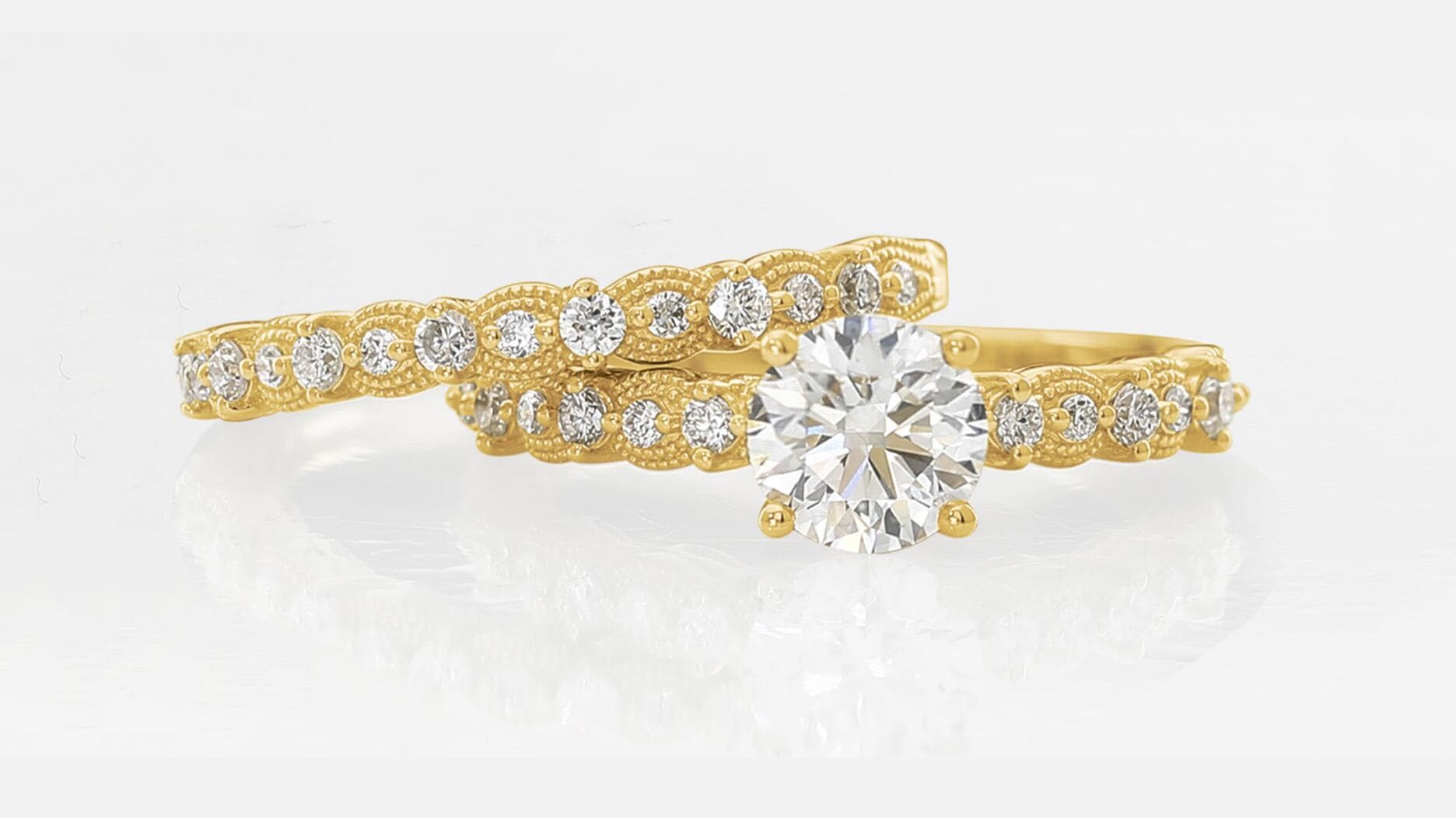
Spinelli Kilcollin was founded in 2010 by Yves Spinelli and Dwyer Kilcollin, launching out of their east Los Angeles garage with an innovative series of interconnected Galaxy rings. The Galaxy remains the brand's foundational object and its most instructive one: a set of interconnected rings that can be worn in multiple ways, stacked all on one finger for a bold, layered look, or spread across several fingers for a more delicate and unexpected style. That versatility is not incidental. It is the entire premise.
What makes Spinelli Kilcollin's approach to stacking structurally different from most ring-layering advice is that the architecture is built into the object itself. The linked construction means individual bands move in relation to each other, conforming to the finger's natural contour rather than stacking as rigid, separate units. The result is a stack that does not need to be curated from scratch each morning; it arrives as a composed set, adjustable in configuration but coherent in identity.
Ergonomics of the Everyday Stack
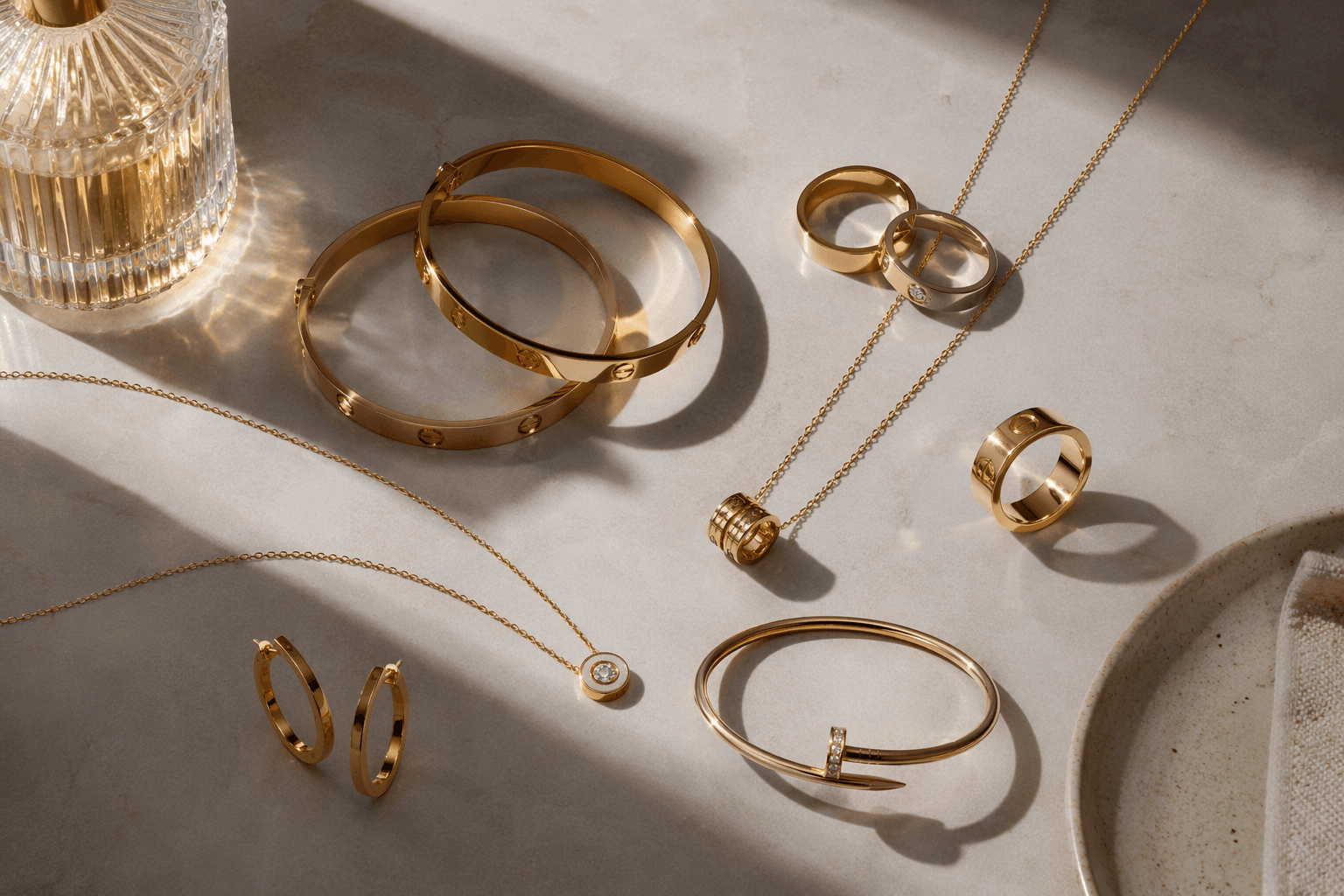
The brand's design vocabulary rewards close reading. The Sonny ring, with its 1.7mm bands, is explicitly described as built for stacking: its core band of micro pavé white diamonds is framed by two outer bands of 18k gold, linked by matching connectors. At under two millimeters per band, it sits close to the finger without bulk, which matters enormously when wearing multiple pieces across a full day's activity.
The Arc takes a different approach to the ergonomics of wear. Constructed from sterling silver with optional mixed 18k yellow gold, it features three multi-gauged bands linked by matching connectors, with three unfixed annulets orbiting the central band for a tactile experience, making it suited for everyday wear. The orbiting annulets are not merely decorative; they shift and settle as the hand moves, which means the ring behaves differently in motion than at rest. This is intentional design for the kind of wearer who does not take their jewelry off.
The Cyllene, at the lighter end of the range, features three of the brand's thinnest bands in solid 18k gold, linked by all 18k gold connectors, and is described as the lightest weight three-band ring in the collection, designed to be worn every day.
Mixing Metal and Finish
The brand's multi-tonal design language deserves particular attention for anyone building a lived-in stack. Spinelli Kilcollin routinely combines sterling silver (.925) with 18k yellow gold within a single piece, and this is not an aesthetic compromise but a considered structural and visual decision. Silver provides body and weight at a lower price point; gold connectors and accents introduce warmth and contrast. When worn together across a hand, the effect is less of a matched set and more of an accumulation, which is exactly the point.
The Leo ring illustrates this philosophy at the more elaborate end: three eternity bands of pavé-set diamonds embracing multi-tonal fine metals in a modular design. Multi-tonal construction also solves a practical problem for the everyday wearer: silver and gold worn against each other can cause galvanic wear over time in certain settings, but the linked construction keeps the metals in controlled, intentional contact rather than grinding against each other in a loosely assembled stack.
For those mixing Spinelli Kilcollin pieces with other brands or existing jewelry, the brand's approach suggests a few useful principles: vary gauge widths rather than using uniformly thin bands, allow for connected movement rather than rigid adjacency, and resist the impulse to match metals exactly. A yellow gold connector against a silver band is more interesting than either alone.
Founded on Irreverence, Built for Duration
Yves Spinelli's original idea came while working as a salesperson at Maxfield in Los Angeles: a connected ring that could be worn across three fingers. His father made the first one, and a client immediately asked to buy it. That origin story, a wearable object that attracted attention because it was being worn rather than displayed, prefigures everything the brand has since become.
The brand has grown from that garage origin to include flagship stores and a direct-to-consumer operation that now represents 73 percent of the business. The Kazakhstan and Norway campaigns represent the brand's most recent articulation of its central conviction: that fine jewelry earns its meaning through use, through accumulation of experience, through the particular patina that comes from never taking it off. A stack left unworn is just metal. A stack worn across the steppes, through the cold, over years, is something else entirely.
This article was produced by Prism’s automated news system from verified source data, official records, and press releases, then run through automated quality and moderation checks before publishing. The system is built and supervised by the people who set the standards it runs under. Read our full AI policy.
Did this article answer your question?