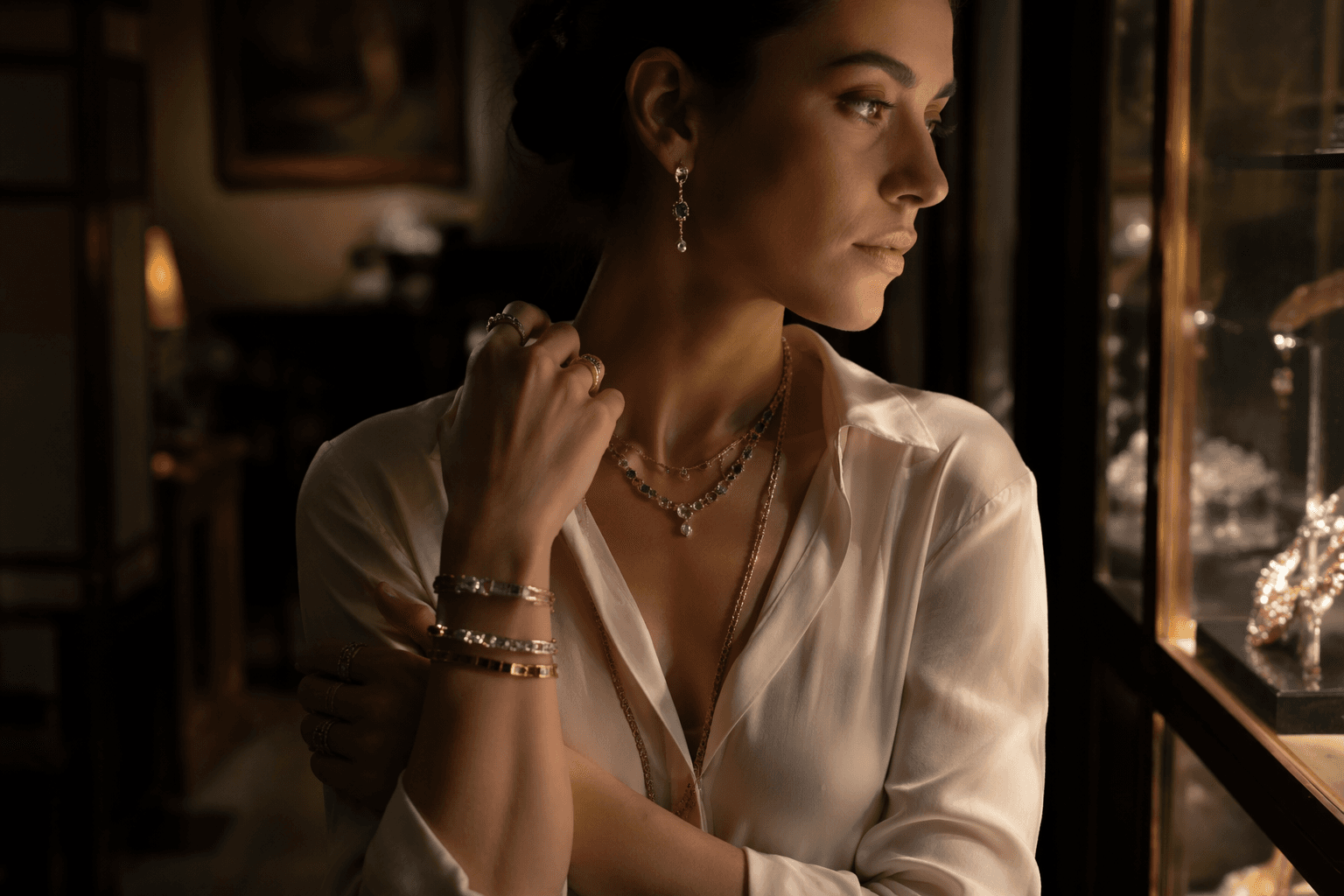
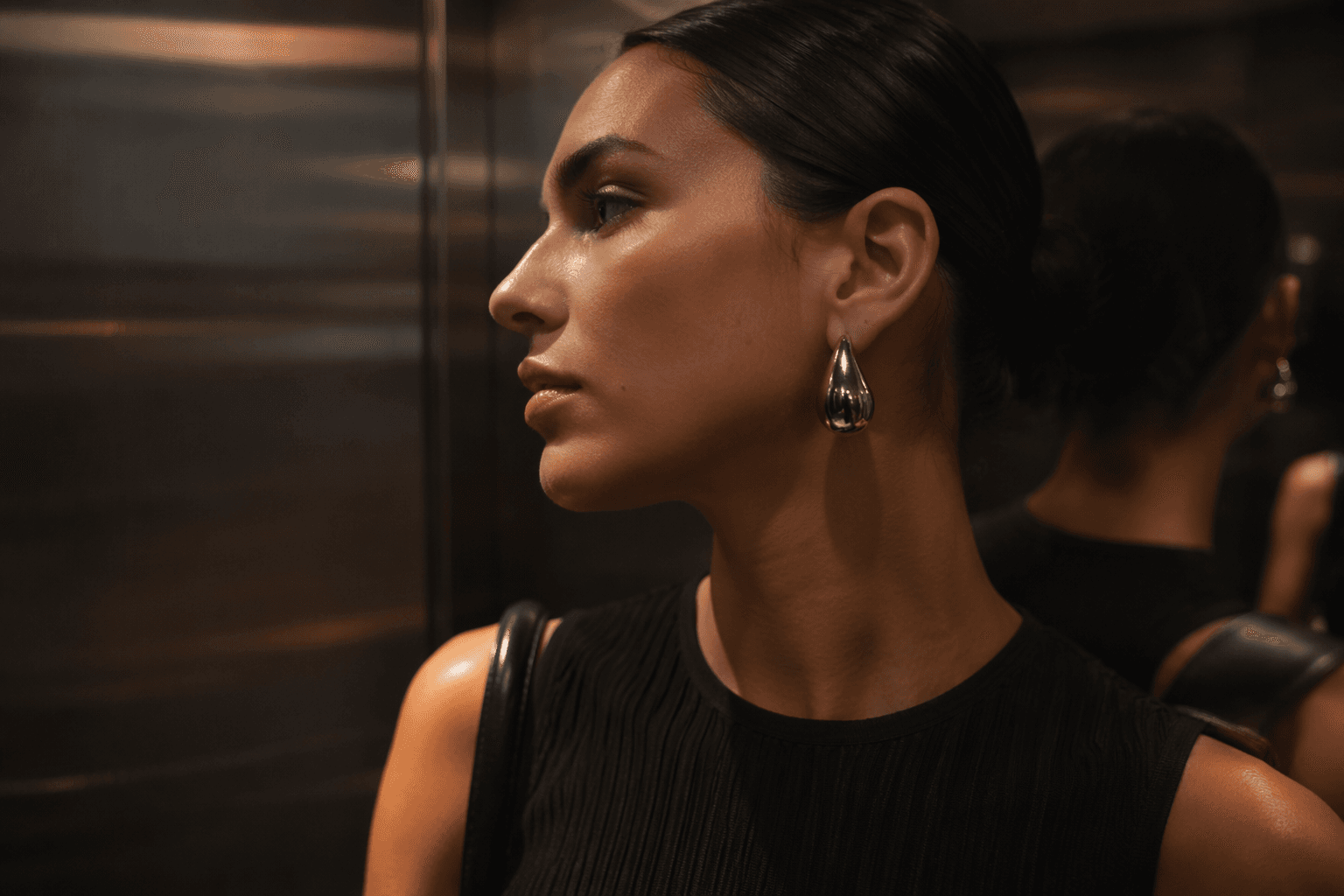
Street-style diamonds make jewelry layering feel personal and modern
Layered diamonds have moved off the carpet and onto the sidewalk, where Rihanna and Hailey Bieber make them feel personal, modern, and made for real life.
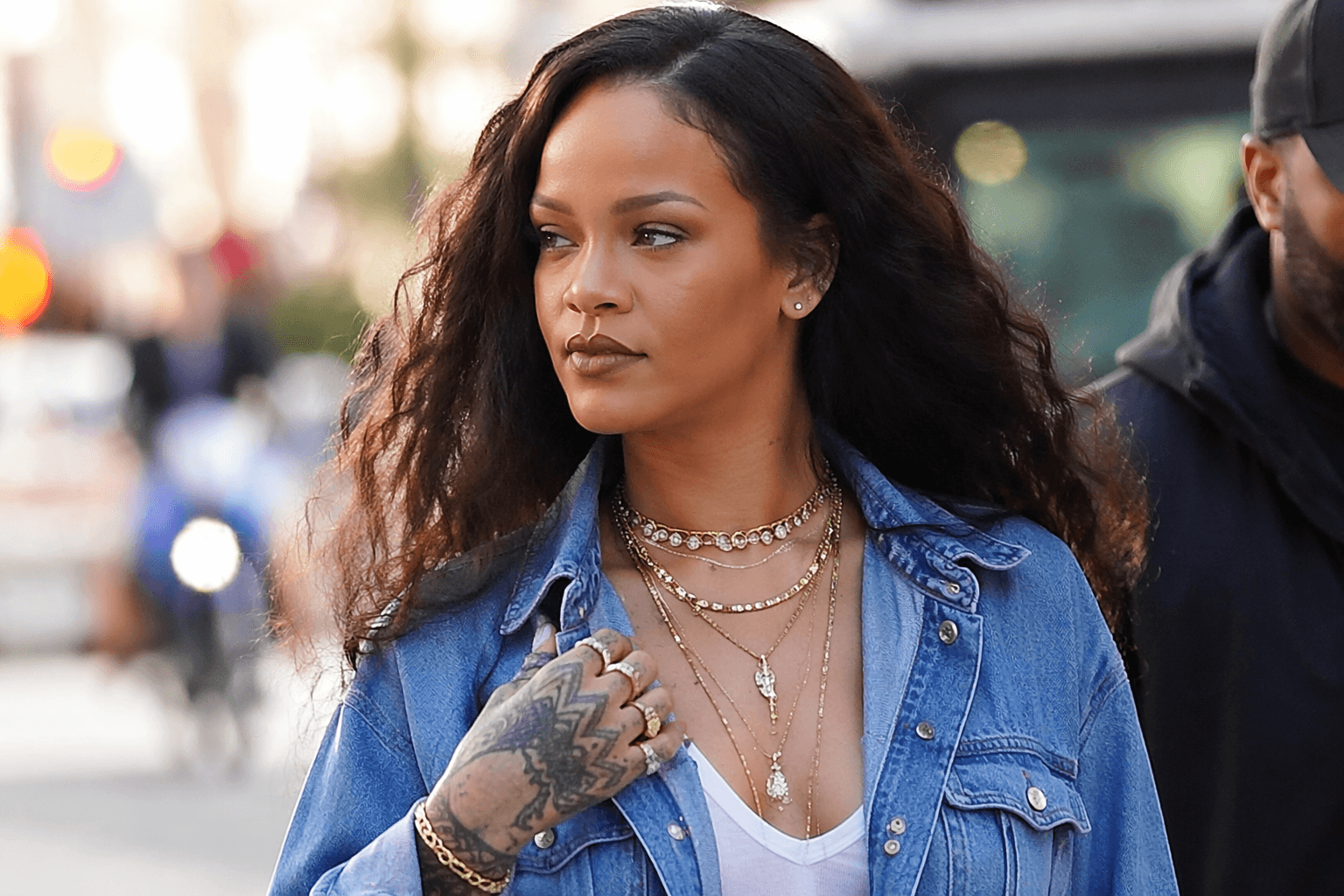
The most persuasive diamond moment right now is not staged under flashbulbs. It happens in passing, on a city sidewalk, where layered necklaces sit against a white tee, a blazer, a tank, or a leather jacket and suddenly feel less ceremonial, more intimate, and far more current. That is the real shift in taste: diamonds are no longer being saved for the exceptional moment, but worn into daily life as part of a personal signature.
Street style made the shift visible
Few images capture that pivot better than Rihanna in New York City on December 28, 2024, wearing layered diamond necklaces from Briony Raymond. The look was polished, but not precious in a museum sense, and that is exactly why it resonated. Hailey Bieber has also made the case repeatedly, folding her Alex Moss “B” initial necklace into street-style moments until it reads like part of her uniform rather than a special occasion flourish.
The same shorthand appears around Dakota Johnson and Zoë Kravitz, two of the most closely watched dressers in contemporary street style. Together with Rihanna and Bieber, they have helped move diamonds out of the red-carpet category and into the visual language of everyday dressing. In that context, the layered necklace is not an accessory afterthought; it is the point of the outfit.
The necklace stack became a narrative
Part of the appeal is emotional as much as visual. Parisian designer Marie Lichtenberg puts it plainly: “The street is where the soul shows.” That idea explains why layered diamonds feel different from a single formal pendant. They can look collected, lived-in, and idiosyncratic, which is precisely what makes them feel modern.
Jessica McCormack has described it as meaningful to see diamonds worn authentically in everyday life, and Cristina Ehrlich has said layered necklaces let people tell a story through jewelry. Those observations matter because the best stacks do not just decorate a neckline, they suggest biography. An initial, a small pendant, a longer chain, and a more substantial link or diamond strand can read like chapters rather than ornaments, especially when the mix feels deliberate but not overworked.
The industry even has a nickname for the phenomenon: the “neckmess.” Used well, the term captures the slightly unruly energy that makes layering compelling. It is not about perfection; it is about a stack that feels assembled over time, with enough polish to look intentional and enough looseness to feel human.
How the look works in real life
The strongest layered-diamond looks tend to start with restraint. Natural Diamonds’ styling guidance suggests 2 to 4 necklaces as a good starting point, and that range makes sense because it leaves room for contrast without collapsing into clutter. Mixing textures and weights gives the stack dimension, while keeping pieces proportional to the neckline prevents the jewelry from fighting the clothes.
That is why a V-neck can be ideal for a cascade of varying lengths, while a crewneck or open collar benefits from a cleaner, tighter arrangement near the collarbone. One piece should still act as the hero, whether that is a diamond pendant, an initial necklace, or a strand with a little more presence. The rest of the stack should support it, not compete with it.
The most successful versions often lean into visible contrast. A fine chain next to a chunkier silhouette, yellow gold against a white shirt, or a delicate diamond line paired with something slightly bolder all create the kind of visual rhythm that makes layering feel fresh. The goal is not symmetry. It is movement.
The market has been telling the same story
This styling shift is backed by the numbers. De Beers’ June 2026 US consumer research, based on a study of 18,500 women, found that natural diamonds are the most desired luxury jewelry product in the US. It also showed that average purchase prices for diamonds have increased 25 percent, Gen Z is now the second-largest generation buying diamonds, and non-bridal occasions account for three-quarters of overall US diamond demand.
Those figures explain why everyday diamond layering has momentum. Consumers are buying diamonds for self-purchase and for wear beyond engagement rings and anniversaries, from gym runs and coffee runs to office looks and nights out. In a luxury market that has faced pressure elsewhere, jewelry has remained notably resilient, and diamonds in particular have benefited from being emotionally legible and visually adaptable.
That resilience also helps explain the appetite for pieces that feel personal rather than prescriptive. A necklace stack can be built gradually, worn often, and adjusted to match the day. It gives fine jewelry a life outside the velvet box.
Maximalism gave layering its current shape
The broader jewelry mood has only amplified the trend. JCK’s trend coverage for 2025 points to a return of maximalism, with layering becoming more common alongside the comeback of long necklaces and multistrand chain layering from the early aughts. At Las Vegas Jewelry Week, natural diamonds were showing up in bolder, mixed-shape, mixed-cut designs that felt more adaptable to everyday wear.
That combination, louder styling and more wearable diamond design, is what makes the moment feel durable rather than decorative. Street style proved the point first, and the market has followed. Layered diamonds now sit comfortably between polish and ease, which is exactly why they read as personal, modern, and unmistakably of the moment.
This article was produced by Prism’s automated news system from verified source data, official records, and press releases, then run through automated quality and moderation checks before publishing. The system is built and supervised by the people who set the standards it runs under. Read our full AI policy.
Know something we missed? Have a correction or additional information?
Submit a Tip