Summer necklace layering adds instant polish to simple basics
The cleanest summer stack uses three necklace lengths, one strong focal point, and enough metal contrast to make a tank look finished.

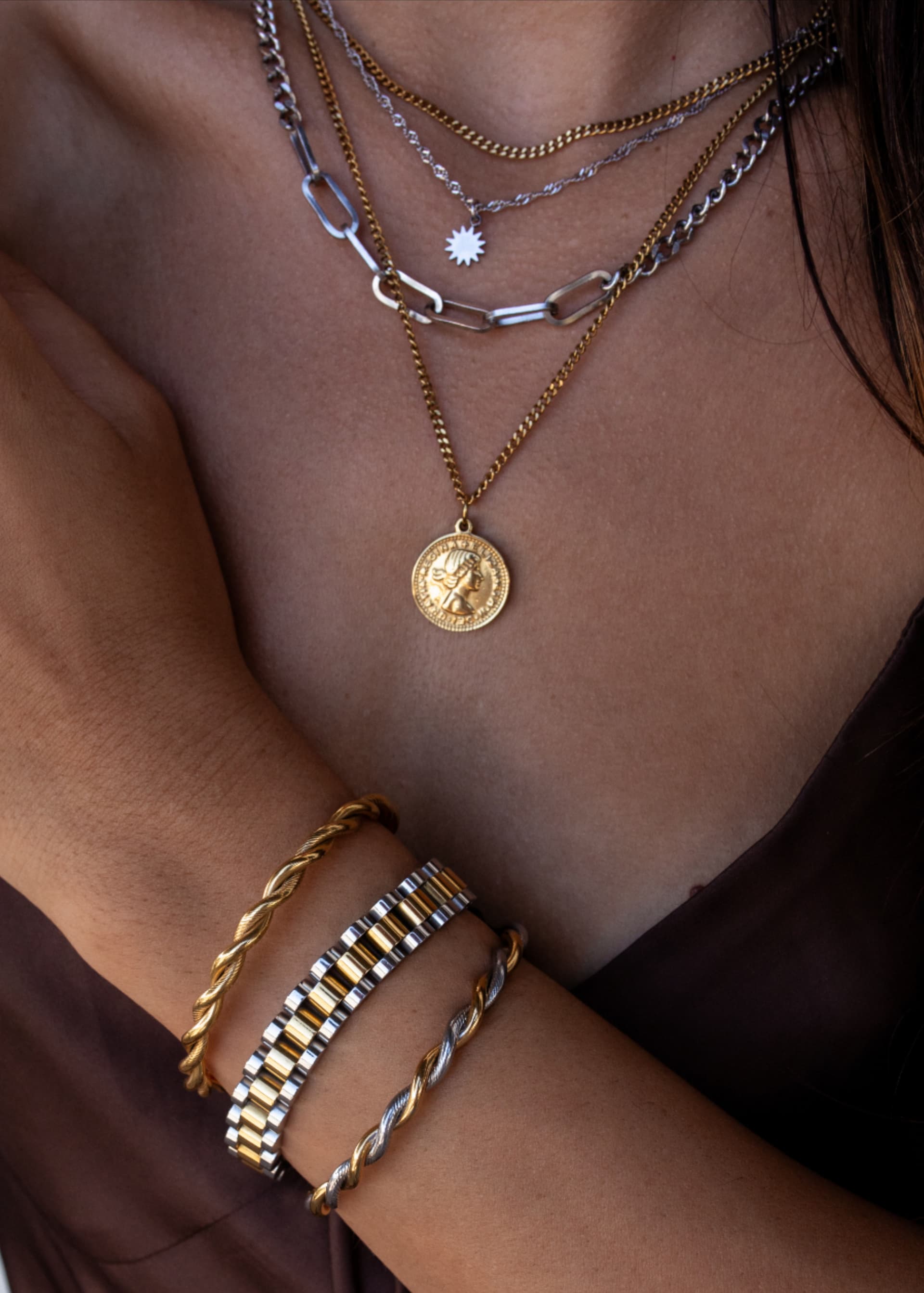
The fastest way to make a tank or T-shirt look finished is not more jewelry, it is better sequencing. In 2026, necklace layering is settling into a clearer formula: bold chains, mixed metals, and one distinct focal point, then the rest of the stack falls into place by length. ELLE Japan’s summer styling takes the same view, using different chain lengths and pendant shapes over simple basics to add polish without crowding the neckline.
Start with length, not quantity
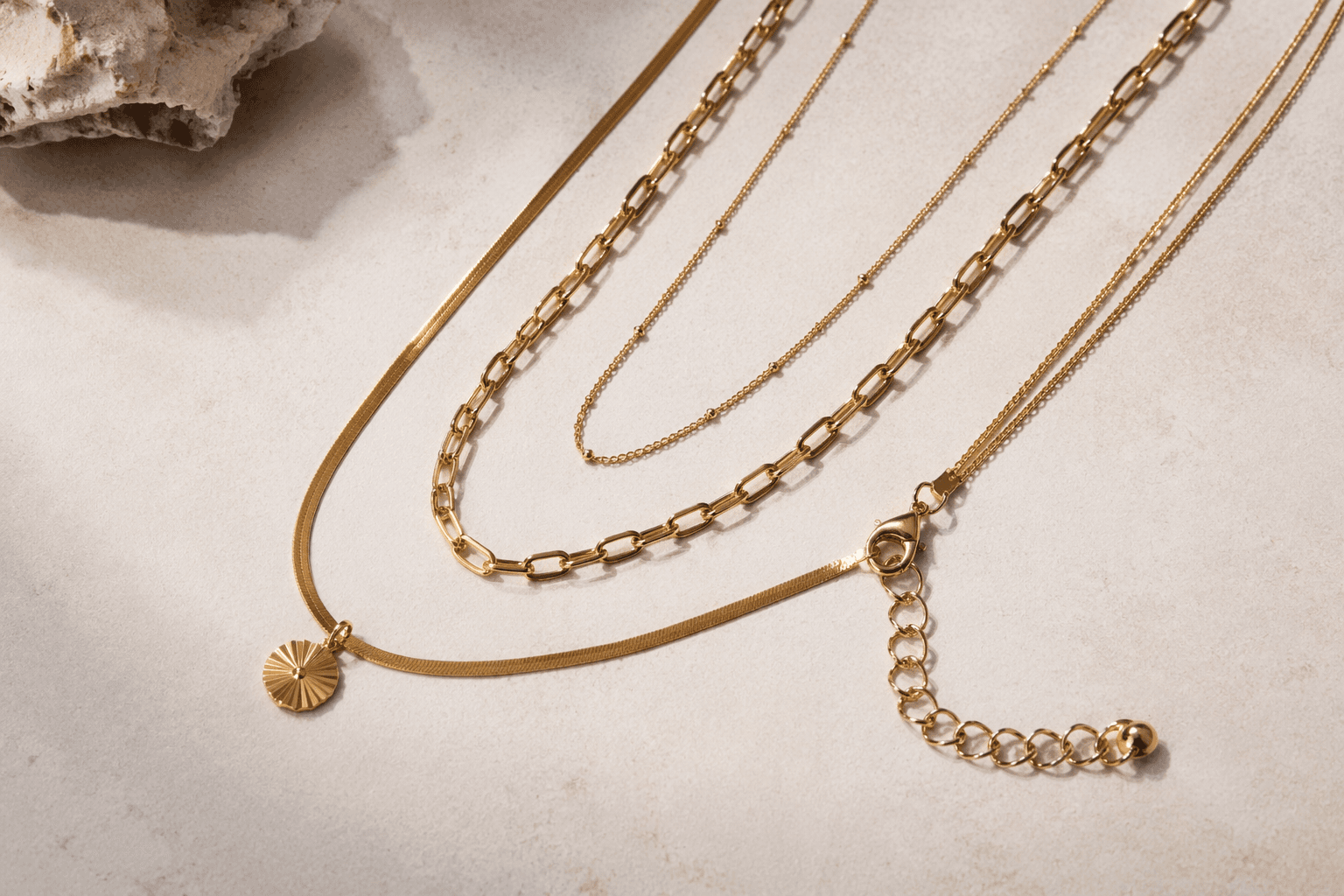
Tiffany & Co.’s layering guidance is blunt about the math: stack necklaces by length, and a trio creates a look that reads as timeless rather than improvised. That matters most against the clean surfaces of summer, where a plain white tee or a ribbed tank gives every chain room to show its own line. When the shortest necklace sits closest to the collarbone, the middle chain lands lower, and the third drops beyond it, the eye reads depth instead of clutter.
That spacing is what keeps layering from looking like a jewelry box spilled open. A stack with the same drop repeated three times flattens out quickly, but a measured progression creates movement even when the outfit is little more than cotton and denim. The point is not abundance; it is clarity.
Let one piece lead
ELLE Japan’s styling logic leans hard on gold-on-gold combinations, pearl strands, and a single bold motif balanced by finer chains. That is the cleanest way to keep a warm-weather stack from tipping into costume. One necklace can do the talking, but the surrounding pieces need to stay quiet enough to frame it.
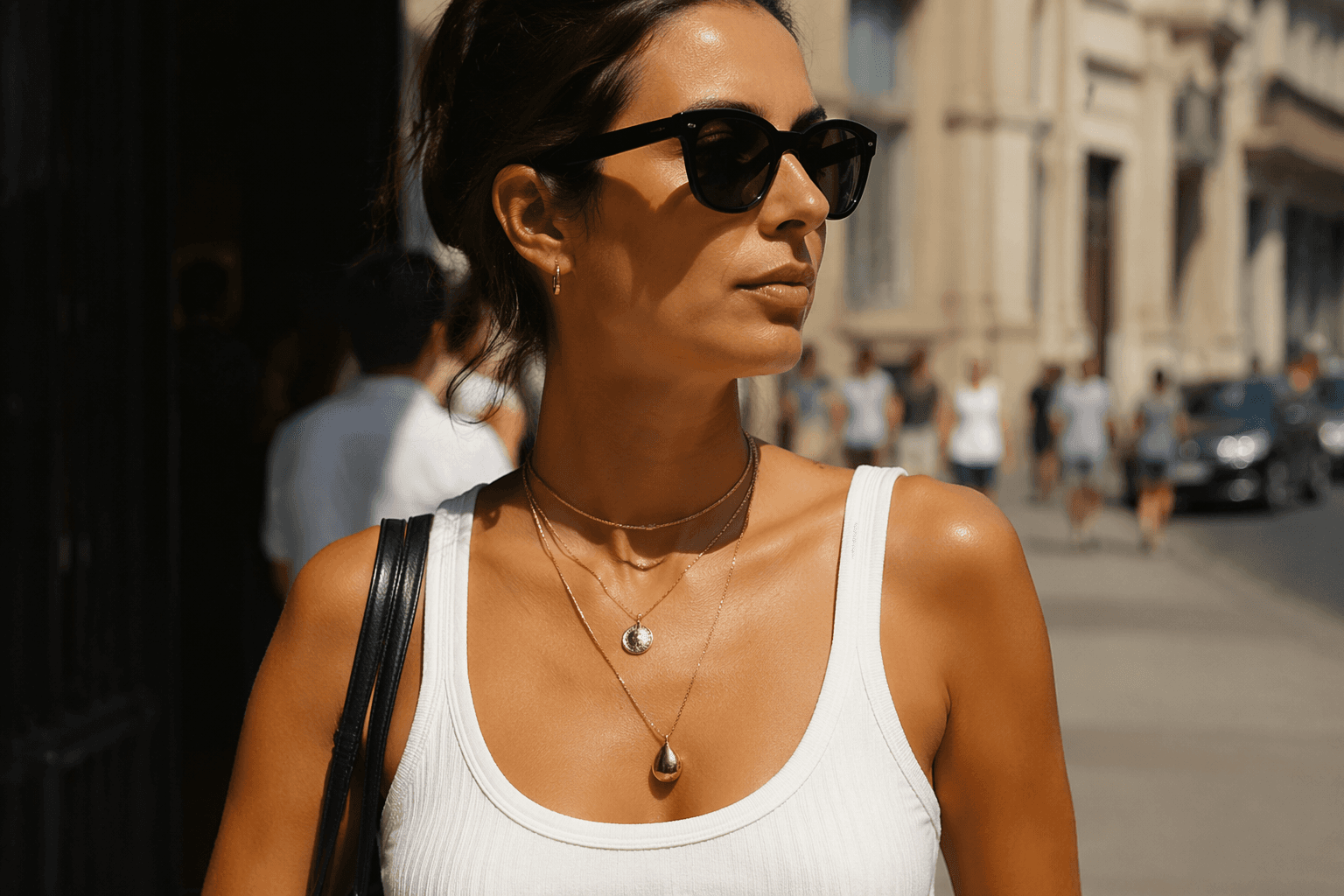
The most convincing versions use contrast in scale. A pendant with presence, whether it is sculptural, rounded, or simply larger than the rest, becomes the anchor, while slimmer chains soften the composition and keep it wearable. Pearls work especially well in that role because they change the texture of the stack without adding visual noise, and they bring a softer line that still feels polished over bare skin.
Mix metals with intention
Tiffany’s summer style guide puts bold chain styles, mixed metals, and elegant layering together with 18k gold and diamonds, which is a useful signpost for how the look is evolving. The stack does not need every piece to match perfectly, but it does need a relationship between finishes. Gold-on-gold reads warm and cohesive; a mixed-metal piece can keep the whole arrangement from looking too literal or too polished.
This is where expensive-looking layering usually succeeds or fails. When the metals are balanced, the stack feels edited, not assembled. The best combinations let one finish lead and another support it, so the eye travels smoothly from chain to pendant to chain again. That is especially effective with simple shirts, where a mix of finishes can do the work of a necklace and an accessory statement at the same time.
Why the look feels bigger than one season
Harper’s Bazaar built its 2026 necklace roundup by speaking with jewelry experts and founders, and the mood they described matches the wider turn in fashion jewelry toward pieces that are sculptural, maximal, and personal. Jillian Sassone, founder of Marrow Fine Jewelry, put it plainly: “Jewelry in 2026 feels sculptural, statement-making and personal.” That language fits the best necklace stacks right now, which feel chosen rather than decorative.
The market numbers show why necklaces keep taking up so much style oxygen. Grand View Research estimates that the global necklace segment generated USD 89,804.1 million in 2025 and will reach USD 141,492.5 million by 2033. The wider global jewelry market is projected to grow from USD 381.5 billion in 2025 to USD 578.5 billion by 2033. Necklaces are not a small corner of the category; they are a major engine of it, and that scale helps explain why so much styling attention lands on how they are worn rather than just what they are made of.
The long view behind the modern stack
This impulse toward layered adornment is not new. The Metropolitan Museum of Art notes that the Hellenistic period produced a wide variety of jewelry types, including necklaces and pendants, and its jewelry essays trace pearl and necklace styles across different eras and cultures. The current appetite for layered chains and pendant combinations simply updates a much older habit: building meaning and visual rhythm across the neckline.
That history matters because it gives the summer stack a little more authority than trend language alone can provide. A gold chain beside a pearl strand, or a bold pendant anchored by finer links, works because the composition follows rules that jewelry has used for centuries: variation, balance, and one clear point of emphasis. The most polished summer necklaces are the ones that look edited down to essentials, then worn with enough ease that a T-shirt feels deliberate.
This article was produced by Prism’s automated news system from verified source data, official records, and press releases, then run through automated quality and moderation checks before publishing. The system is built and supervised by the people who set the standards it runs under. Read our full AI policy.
Did this article answer your question?