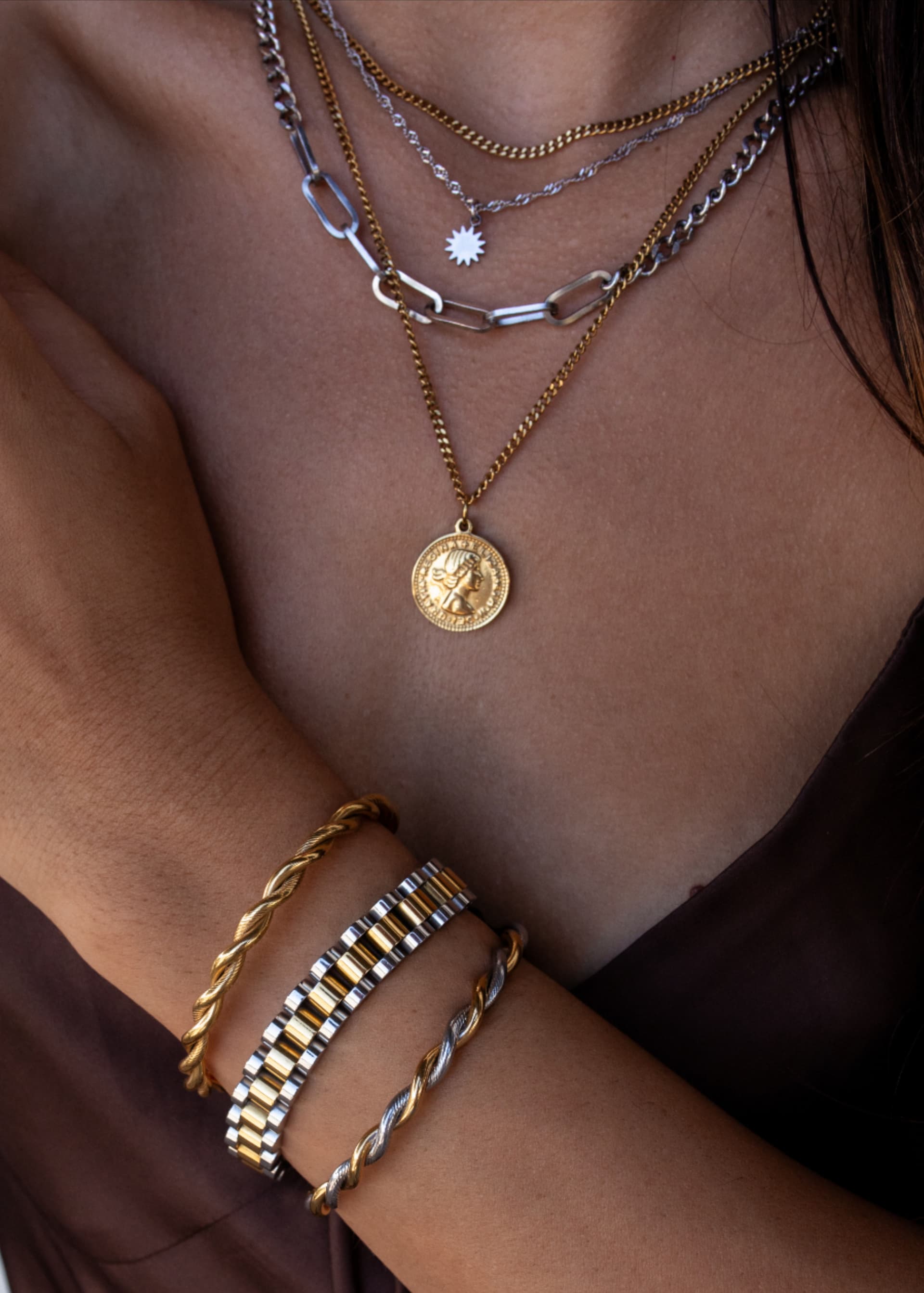
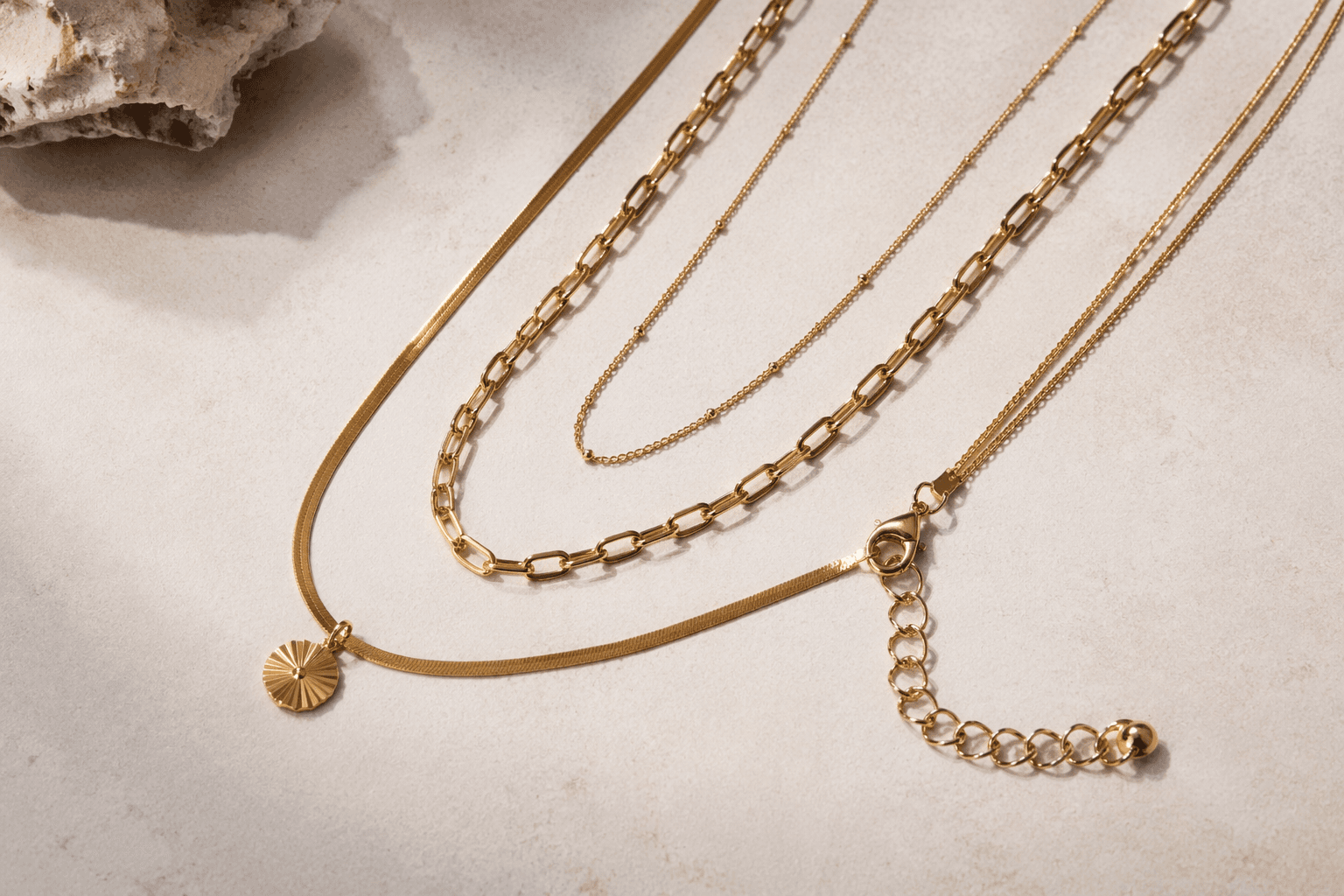
Summer necklace layering embraces fiber, leather and mixed textures
Texture is setting the pace for summer necklace layering, as fiber, leather, clay and metal combinations make stacks feel deliberate, not overloaded.
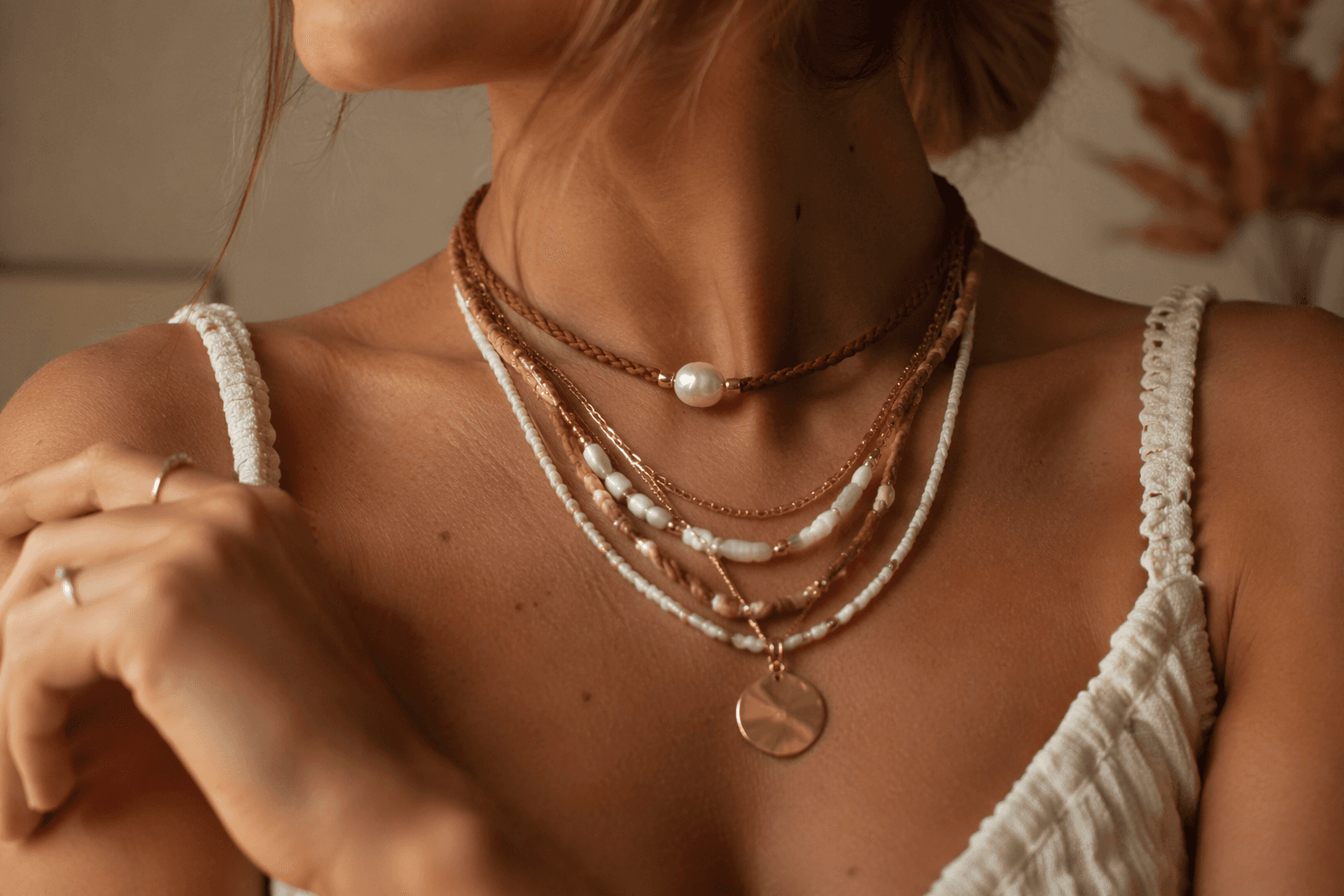
Fiber, leather, clay, resin, wood and even concrete are moving into the frame beside metal chains and finer pendants in summer necklace stacks. The result is a look that depends on contrast as much as on gemstone weight.
Texture is the new signal
Across 28 styles in INSTORE’s summer necklace gallery, alternative materials are no longer a novelty lane. What began as a workaround for high prices has become a design language with nearly limitless range, and that shift changes how a necklace is built from the first layer down.
The most convincing versions use one material to steady another. A fiber strand softens the hard gleam of a chain; leather adds a matte line that keeps a stack from feeling too polished; clay and resin bring a sculptural quality that sits easily with slimmer metal pieces. Wood and concrete push the idea further, giving a necklace a weight and surface that reads as intentional rather than merely decorative.
That change is also showing up in stores. Alternative materials are becoming more mainstream, and INSTORE’s mid-May 2026 retailer survey found that success with this year’s trends varies by market. Storytelling has emerged as the dominant sales strategy, which makes sense when a necklace is selling not only color or shape, but a material story.
The runway moved toward personality
JCK’s spring-summer 2026 trend report shows jewelry turning more expressive, more individualized and more openly stacked. Personalized layering is not about matching pieces so much as making them feel curated, and that is exactly where mixed textures have an edge. They let the wearer build a necklace that looks assembled over time, even when it is made in one sitting.
A utility-minded strand also ran through the season, where wallet necklaces and turn-lock pouches were worn as pendants. That detail matters because it widens the definition of what a pendant can be. A necklace no longer has to center a gemstone to feel complete; it can carry an object, a clasp, a cord or a structured form and still read as polished.
By July 2, 2026, National Jeweler’s view of the sales floor centered on a massive surge in multi-length necklace layering. Shoppers are curating personalized looks that mix delicate textures with substantial, eye-catching links, which explains why mixed-material stacks feel especially current. The eye wants movement, but it also wants anchor points, and a fine chain next to a larger link or a leather cord gives that balance.
How to mix materials without making the stack busy
The most elevated combinations use one tactile material as the lead and one metal element as the frame. Fiber and a slim gold or silver chain feel crisp together because the softness of the fiber keeps the metal from looking stiff, while the chain gives the fiber a finish. Leather works best when it has room to breathe, either as a single strand under a small pendant or as a longer layer that sits below a shorter chain.
- Pair fiber with a fine chain or petite pendant for contrast that still feels light.
- Use leather as a grounding layer, not a second statement competing for attention.
- Let clay, resin or wood play the sculptural role, then keep the rest of the stack restrained.
- Treat concrete as the one unexpected note in a stack, not one of several heavy textures.
- Keep at least one polished metal layer in the mix so the eye has a resting point.
The looks that feel overly busy are the ones that stack too many tactile surfaces at once. Fiber, leather, wood and concrete can all be compelling, but together they can flatten the silhouette if every layer is speaking at full volume. The cleaner formula is one organic texture, one metallic counterpoint and one smaller pendant or link that ties the whole composition together.
Resin can look playful next to a refined chain; wood can look architectural beside a delicate pendant; clay can bring warmth where high polish might feel too formal for summer.
Why the category matters beyond the styling moment
Statista projects worldwide jewelry revenue at US$408.64 billion in 2026, with about 75% of sales in the non-luxury segment, and it sees the market growing at a 5.10% annual rate from 2026 to 2031.
For retailers, mixed-material necklaces can carry more than aesthetic value. They sit comfortably in the non-luxury tier, where accessibility matters, but they also give a sales associate something concrete to tell: where a material comes from, why it was chosen, how a leather cord changes the feel of a pendant, or how resin and wood create depth without requiring a heavier stone budget.
This article was produced by Prism’s automated news system from verified source data, official records, and press releases, then run through automated quality and moderation checks before publishing. The system is built and supervised by the people who set the standards it runs under. Read our full AI policy.
Did this article answer your question?