Taylor Hill Channels More-Is-More Jewelry Layering for Jared Campaign
Taylor Hill’s stacked wrists trace a family legacy, turning today’s jewelry maximalism into something inherited, not merely styled.

A stack with family roots
Taylor Hill’s case for maximalist jewelry begins at home. She says her mother is the source of her obsession, and the image she recalls is wonderfully specific: eight to 10 bracelets on both wrists and a ring on every finger. That kind of abundance does more than explain Hill’s taste. It reframes today’s stacked-jewelry moment as something older and more intimate, a language of adornment passed from one generation to the next.
That perspective matters because the current return to layering is not just about trend optics. It is about memory, inheritance, and the pleasure of wearing pieces that feel accumulated over time. Hill’s wrists do not read as a costume of excess; they read as evidence that jewelry has always been a form of autobiography, built one bracelet, one ring, one small declaration at a time.
Why the new maximalism looks familiar
Jewelry layering is having a broader cultural moment, and the appeal is easy to see. A 2024 Yahoo style roundup pointed to jewelry’s growing visibility on runways and in wardrobes, noting that people are now wearing earrings, necklaces, rings, and bracelets every day with a stronger appetite for more-is-more styling. In that light, Hill’s campaign work feels less like a one-off celebrity push and more like a recognizable signal within a larger cycle.
This shift away from strict minimalism toward louder, more personal stacks is part of what makes the trend resonate. A single polished chain still has its place, but the current mood favors combinations that feel lived-in and expressive, especially when metals, stones, and textures are mixed with intention. The strongest stacks look collected rather than coordinated, and that subtle tension is what gives them life.
Inside Jared’s Dear Summer vision
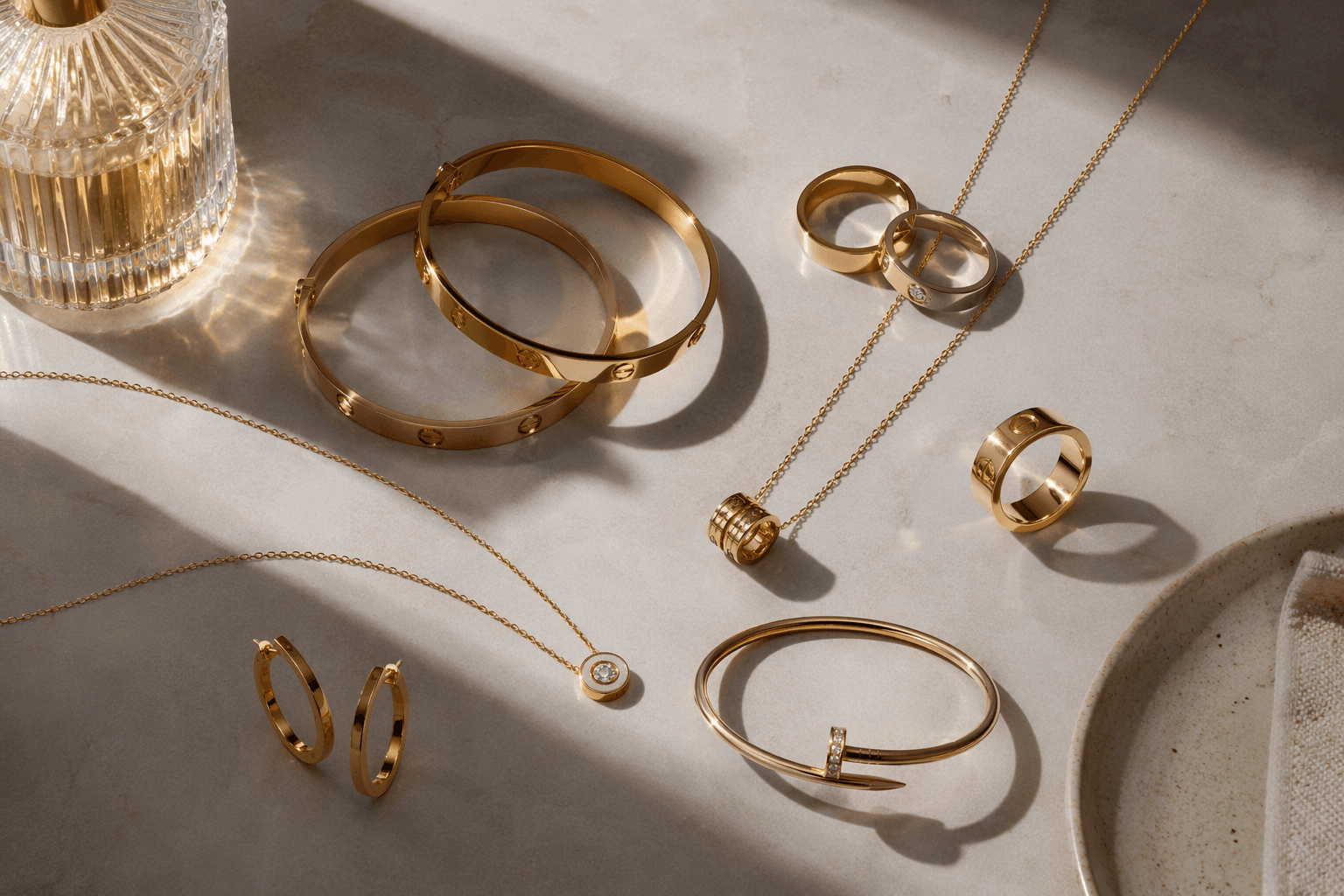
Jared’s Dear Summer campaign leans directly into that sensibility. The jewelry is presented as a curated selection of fine pieces built around enduring gold, brilliant diamonds, cultured pearls shaped by time, and mixed metals designed to move with you. That mix is telling. Instead of treating layering as a styling trick, the campaign treats it as a material story, one that brings together the hardness of gold and diamonds with the softer luster of pearls and the visual energy of mixed metals.
The layered looks in the campaign combine metals, diamonds, gemstones, and pearls in a way that feels distinctly contemporary, but not disposable. That balance is what separates fine-jewelry layering from costume stacking: the pieces still need to hold their own individually, whether through a bezel-set stone, a bright diamond line, or the smooth weight of a gold bracelet. In that context, Dear Summer reads as a case study in how accessible luxury can still feel personal, tactile, and emotionally charged.
Jared Jewelers sits within Signet Jewelers as the company’s high-end, accessible luxury brand, and that positioning helps explain the campaign’s tone. It is designed to feel aspirational without drifting into intimidation, a useful middle ground for a generation that wants polish but also wants meaning. The brand’s use of layered jewelry signals not just a product mix, but a point of view about how modern fine jewelry should be worn: openly, daily, and with a sense of self-recognition.
The setting helps tell the story
The campaign visuals were shot in Palm Springs at Frank Sinatra’s house, with David Lipman directing. That setting is not incidental. Palm Springs carries a built-in shorthand for glamour, leisure, and a certain midcentury confidence, while Frank Sinatra’s house adds a layer of old-Hollywood symbolism that suits a story about inheritance and style memory. The result is a backdrop that makes the jewelry feel both sunlit and cinematic, as if the pieces have stepped out of a family archive and into a modern fashion frame.
That visual language also fits the campaign’s title, Dear Summer. It suggests warmth, ease, and a kind of polished spontaneity, but the real point is structure: the jewelry is meant to move with the body, not sit rigidly on it. In layered dressing, that distinction matters. Bracelets should articulate the wrist rather than immobilize it; rings should create a rhythm across the hand; necklaces should vary in length so each line has room to register. The most compelling stacks do not flatten the body. They follow it.

Why Taylor Hill keeps returning to jewelry campaigns
Hill is an especially apt face for this moment because she has become a recurring presence in fine-jewelry advertising. In 2021, she appeared in a David Yurman campaign with Joan Smalls, another model whose jewelry pedigree lends instant credibility to a brand’s styling choices. That history matters. It tells readers that Hill is not simply wearing jewelry for one campaign cycle; she is part of an ongoing visual conversation about how luxury adornment should look now.
Jared’s broader Summer 2025 campaign, Love Highway, reinforces that strategy. Launched on June 18, 2025, it stars Hill and her husband, Daniel Fryer, who she first met in 2019 and married in 2023. The pairing adds a romantic dimension to the brand’s storytelling, but it also reflects a larger move toward emotionally driven luxury marketing. The message is clear: jewelry is not only about material value. It is about relationship, memory, and the way objects become markers of life stages.
How to read the comeback of layered jewelry
The return of maximalist layering feels persuasive because it connects the present to a recognizable visual lineage. Hill’s mother wearing bracelets on both wrists and a ring on every finger is not merely a charming detail; it is a proof point that abundance in jewelry has long been part of real wardrobes, not just fashion editorials. That is why the trend lands now. It feels inherited, not invented.
What makes the current cycle especially strong is its openness to combination. Gold, diamonds, gemstones, and pearls can all coexist when the proportions are right and the craftsmanship is solid. The best stacks are not about proving restraint. They are about letting pieces accumulate meaning, shine, and contrast. In that sense, Taylor Hill’s campaign work does more than advertise a season’s jewelry. It restores layering to its proper status as a cultural habit, one that moves between generations and keeps finding new ways to look relevant.
This article was produced by Prism’s automated news system from verified source data, official records, and press releases, then run through automated quality and moderation checks before publishing. The system is built and supervised by the people who set the standards it runs under. Read our full AI policy.
Did this article answer your question?