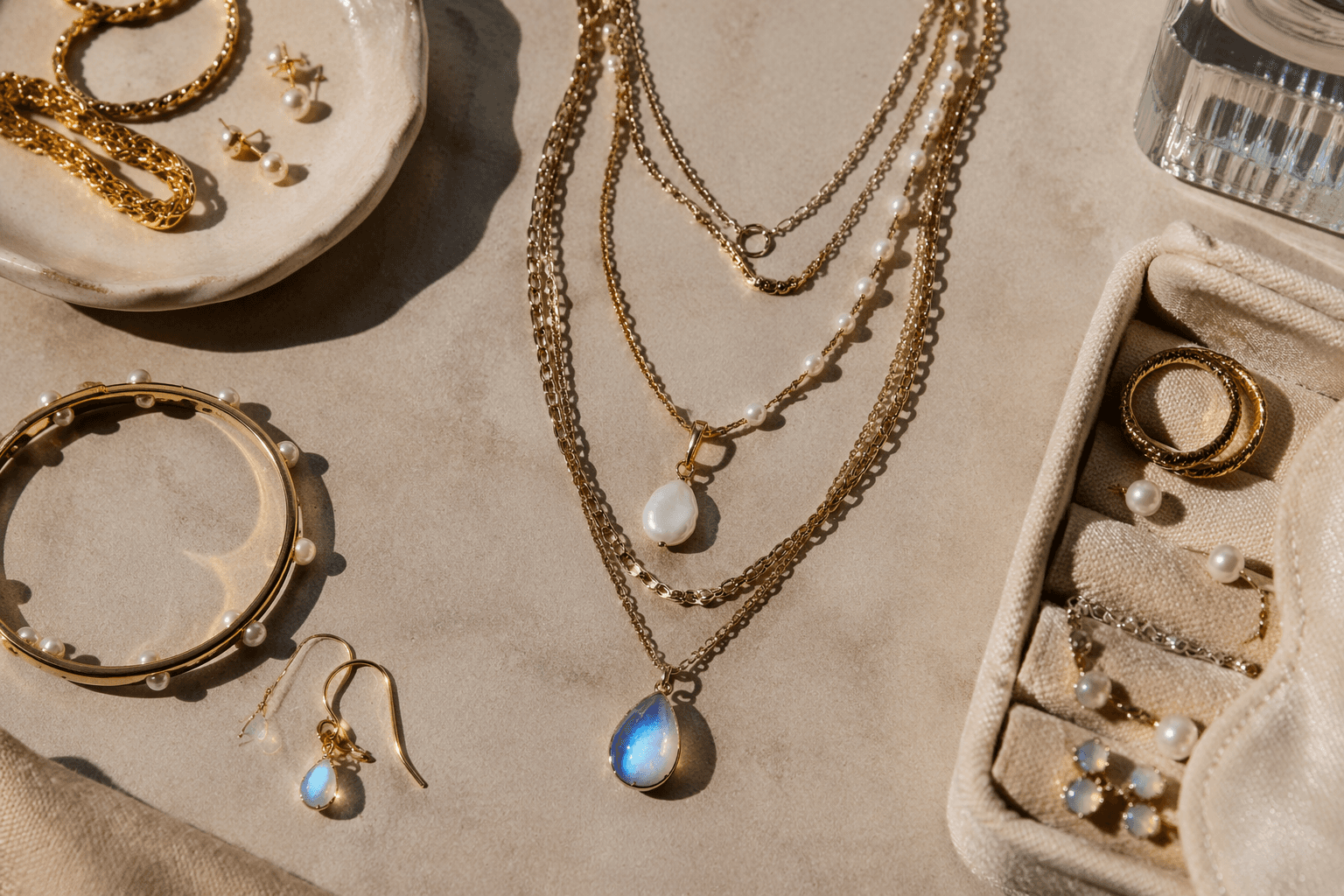
Tiny charms add a personal touch to layered jewelry stacks
Tiny charms are becoming the easiest way to refresh a layered stack, turning high gold prices and nostalgia into room for more personal stories.
Tiny charms are giving layered necklaces a new kind of intelligence: less volume, more meaning. In a market where gold remains costly and shoppers still want personalization, these miniature accents are the easiest way to make a stack feel current without making it feel crowded.
Why tiny charms are suddenly doing more
Amanda Gizzi’s latest style file for National Jeweler puts charms at the center of summer layering, and the timing makes sense. The new wave is scaled down, with smaller pendants also being worn in a charm-like way, so the look feels collected rather than overbuilt. That shift matters because the most interesting jewelry stacks now read less like coordinated sets and more like edited biographies, built one symbol at a time.
Nostalgia is part of the appeal, but so is restraint. Tiny charms let initials, symbols, and sentimental motifs enter the conversation without overpowering the chain line or competing with other pieces already at the neck. The effect is subtle but deliberate: one small object can change the tone of an entire stack, especially when the rest of the necklace layers are lean, varied, and intentionally mixed.
How the styling works
The smartest charm necklaces make room for breathing space. National Jeweler points out that spacers allow collars to display pendants and charms without piling everything onto one charm holder, which keeps each element visible and prevents the look from collapsing into clutter. That detail may seem small, but it is exactly what separates a thoughtful stack from a tangle of jewelry.
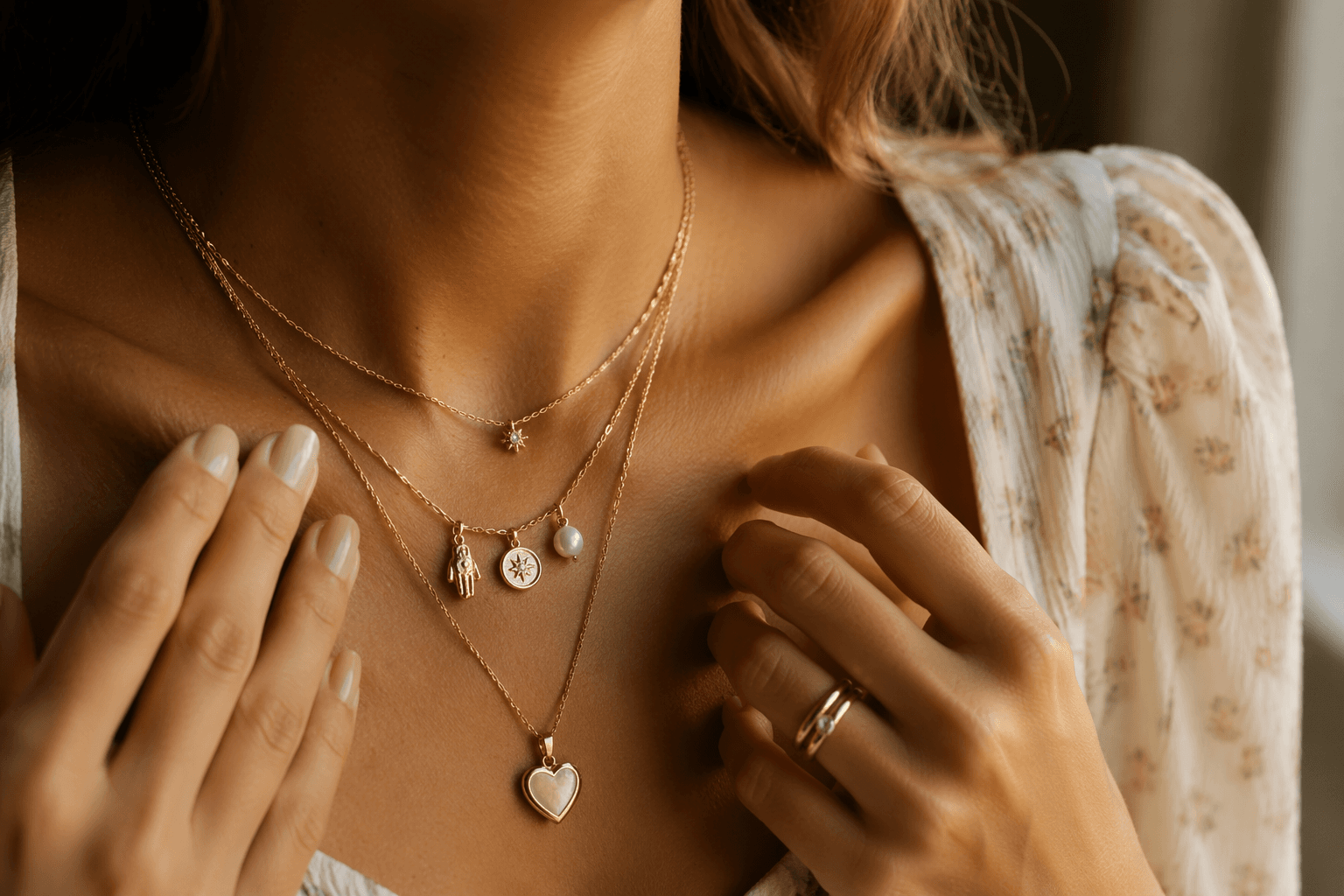
This is where micro-charms become especially useful. They act like punctuation marks in a layered composition, breaking up long chains, softening heavier links, and giving the eye a place to land. A charm does not need to be large to matter; in fact, the smaller the scale, the easier it is to use more than one motif without losing clarity or elegance.
There is also a practical elegance to the format. When layered jewelry is meant to be worn often, tiny charms are less committal than a large statement pendant and more adaptable than a matched suite. They can shift between solo wear, a minimal chain, and a fuller stack, which makes them an efficient way to refresh a look that already has a necklace wardrobe in rotation.
Why the market favors smaller scale
High gold prices are doing as much to shape the trend as aesthetics are. The World Gold Council said Q1 2026 jewelry demand volumes were down 23 percent year over year, even as spend increased 31 percent, and its outlook says high prices are likely to keep taking their toll on jewellery demand in 2026. That pressure is visible in the market itself, where gold in June 2026 was still trading around $4,300 to $4,500 an ounce after an earlier peak above $5,600 an ounce.
Those numbers explain why tiny charms feel so right now. When metal is expensive, smaller pieces become a smarter way to participate in the category without sacrificing style or story. They offer the emotional payoff of personal jewelry, but in a format that is easier to add, easier to layer, and often easier to justify than a larger pendant or a full statement necklace.
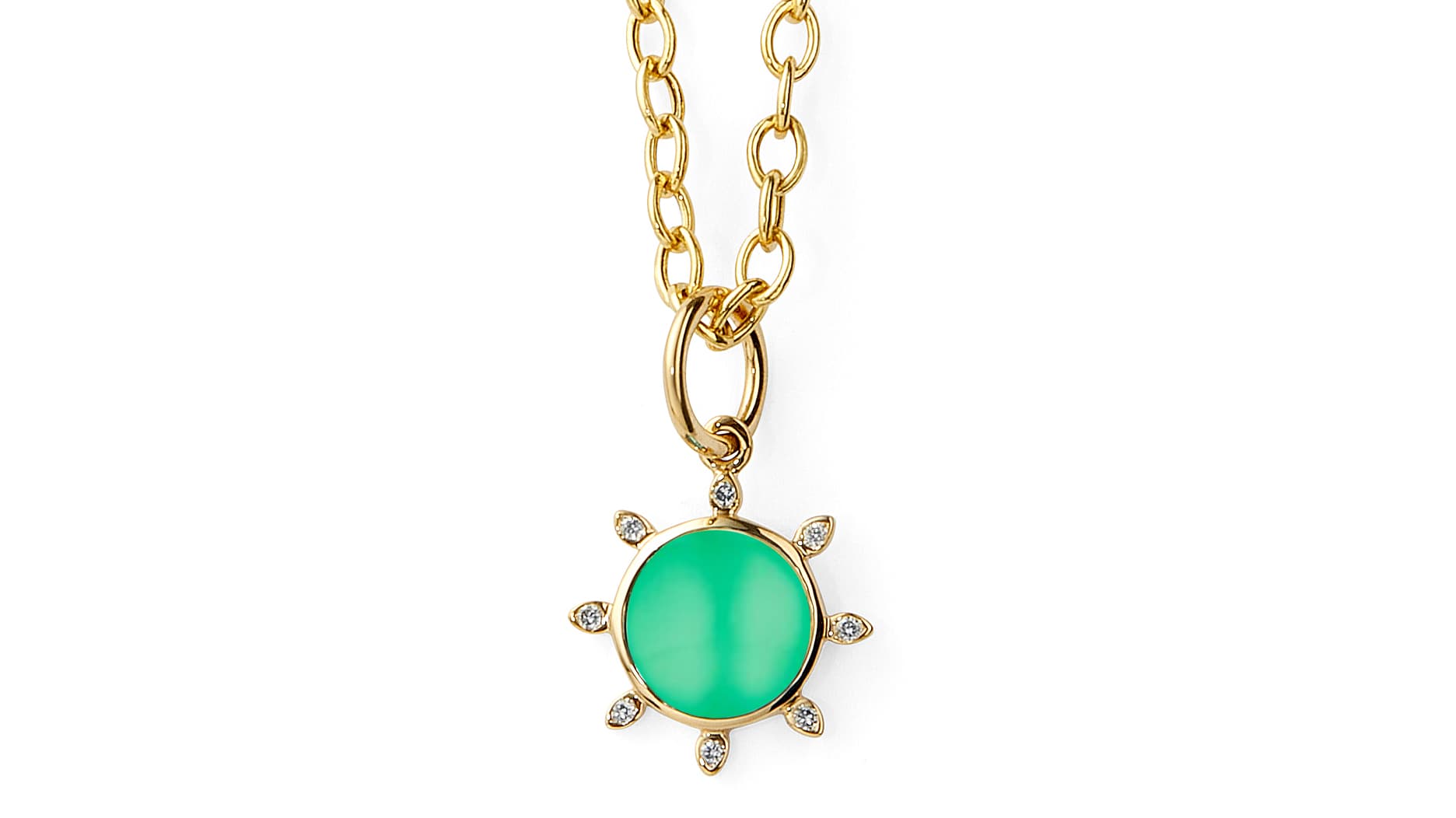
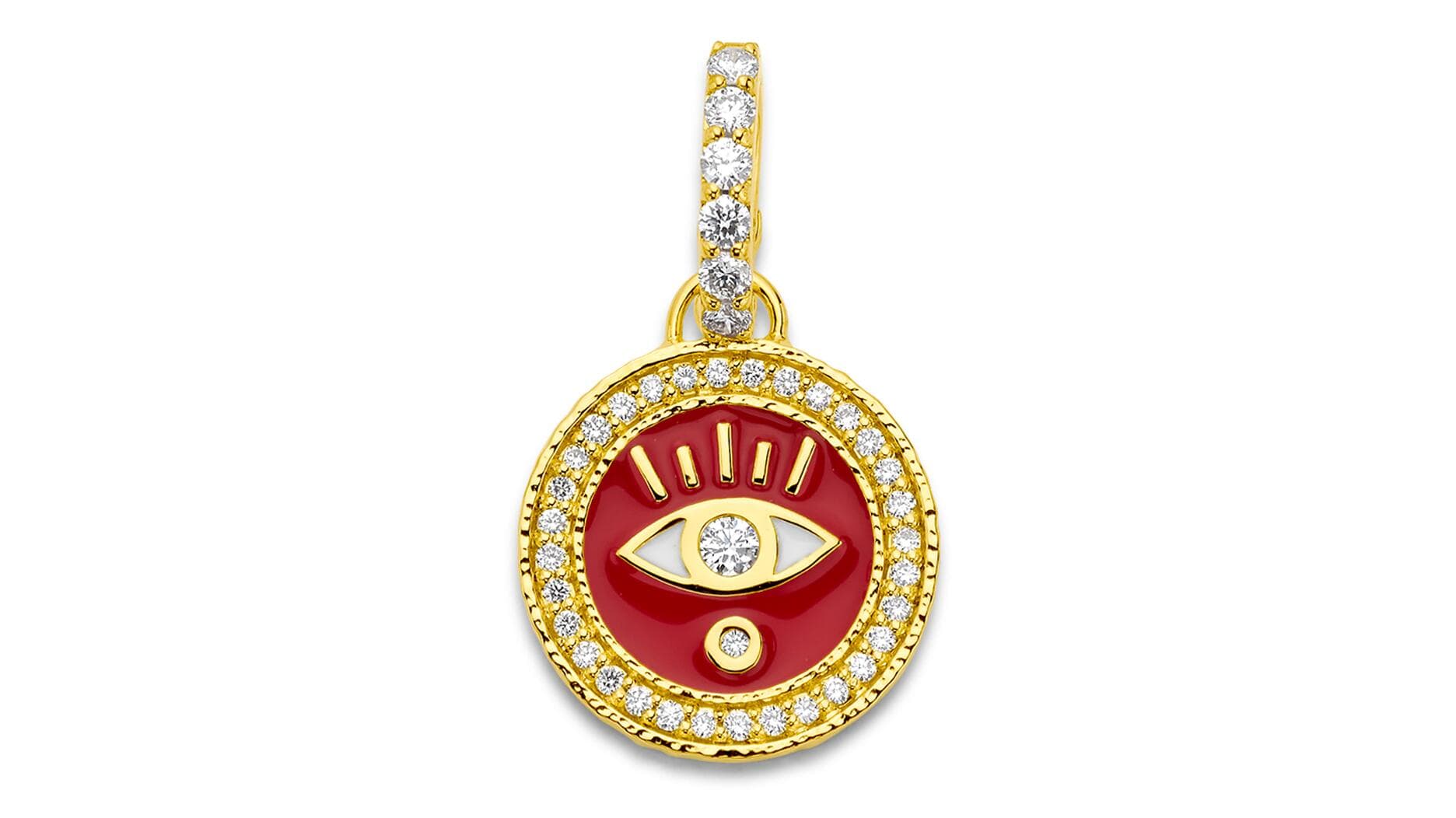
Price can also tell a more nuanced story about what a charm really is. National Jeweler’s image of Buddha Mama’s Evil Eye charm, priced at $4,050, shows that tiny does not automatically mean accessible. In the right hands, a charm becomes a collectible object, not just a decorative afterthought, and its value comes from design as much as from material.
A revival with deep roots
The current charm moment may feel fresh, but the impulse behind it is ancient. Stuller notes that charm jewelry has a history stretching back thousands of years, with evidence from the Neolithic era, which places today’s miniature motifs in a very long line of personal adornment. That history helps explain why charms continue to resonate: they condense meaning into a small, wearable form.
What is new is the way that ancient instinct is being styled. Instead of hanging isolated from the rest of the neck, charms are now being woven into broader layers, paired with smaller pendants and arranged with enough spacing to let each piece breathe. The result is less about matching and more about authorship, a stack that feels assembled over time rather than bought all at once.
How to wear the look now
The most successful charm stack usually starts with a clear base and builds from there. A simple chain can anchor a small pendant, then a second layer can introduce a micro-charm or a symbol with personal weight, while spacers keep the arrangement legible. That approach preserves the beauty of each piece and prevents the eye from getting lost in too much metal at once.
A few principles make the mix feel polished rather than busy:
- Keep scale varied so each charm has visual space.
- Let initials, symbols, and nostalgic motifs do the storytelling, not the chain count alone.
- Use spacers when the necklace structure allows it, especially if you want the charms to read individually.
- Treat one well-chosen charm as a focal point, not an accessory afterthought.
The charm trend is compelling because it solves two problems at once: it gives shoppers a way to personalize a layered look, and it does so in a season when gold is asking for more discipline. Tiny charms make that discipline look expressive, which is why they are becoming the most persuasive accent in modern jewelry stacks.
This article was produced by Prism’s automated news system from verified source data, official records, and press releases, then run through automated quality and moderation checks before publishing. The system is built and supervised by the people who set the standards it runs under. Read our full AI policy.
Know something we missed? Have a correction or additional information?
Submit a Tip