Top Stackable Choker Necklaces to Build the Perfect Layered Look
Chokers aren't just a standalone statement — they're the anchor every layered necklace stack needs to work.
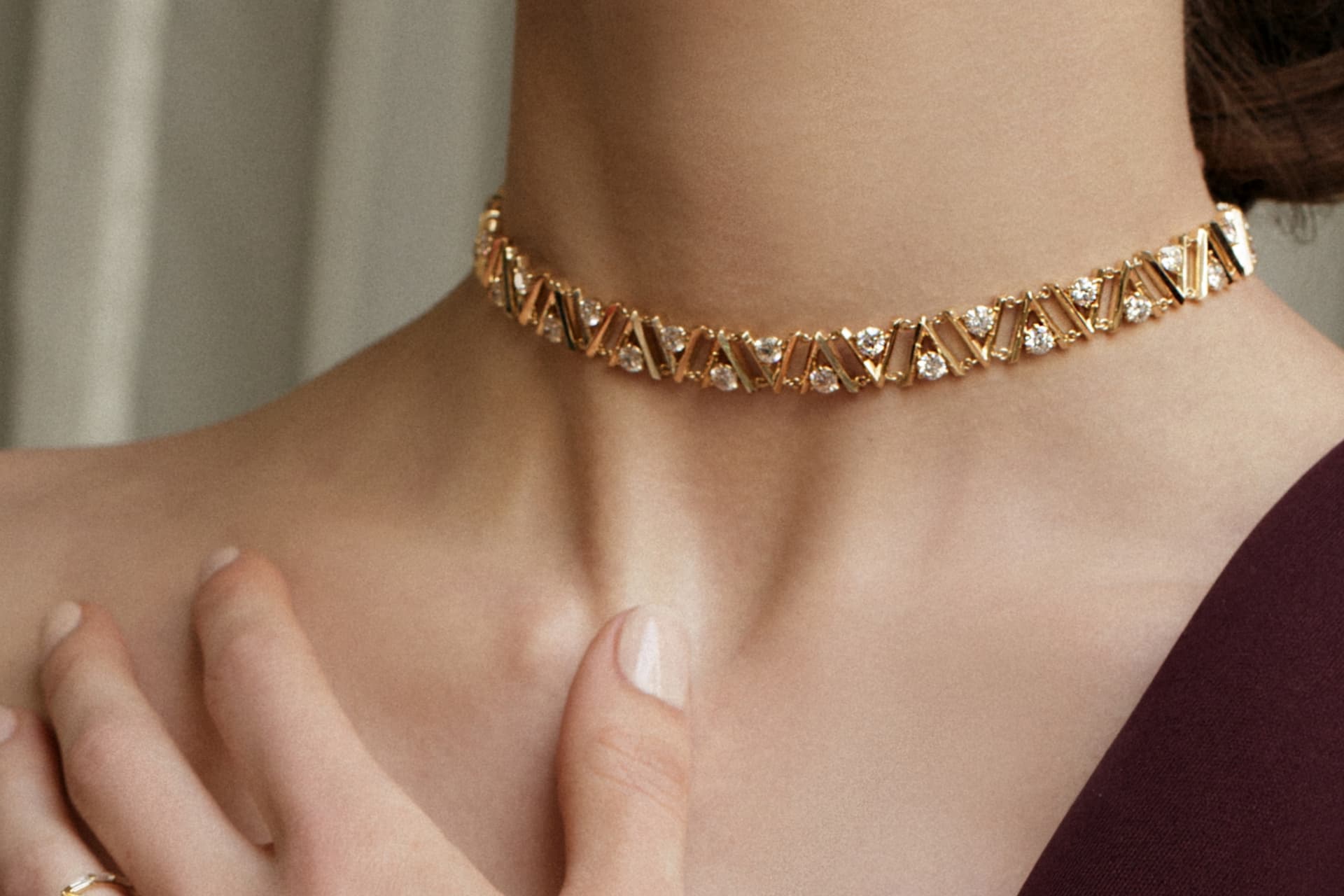
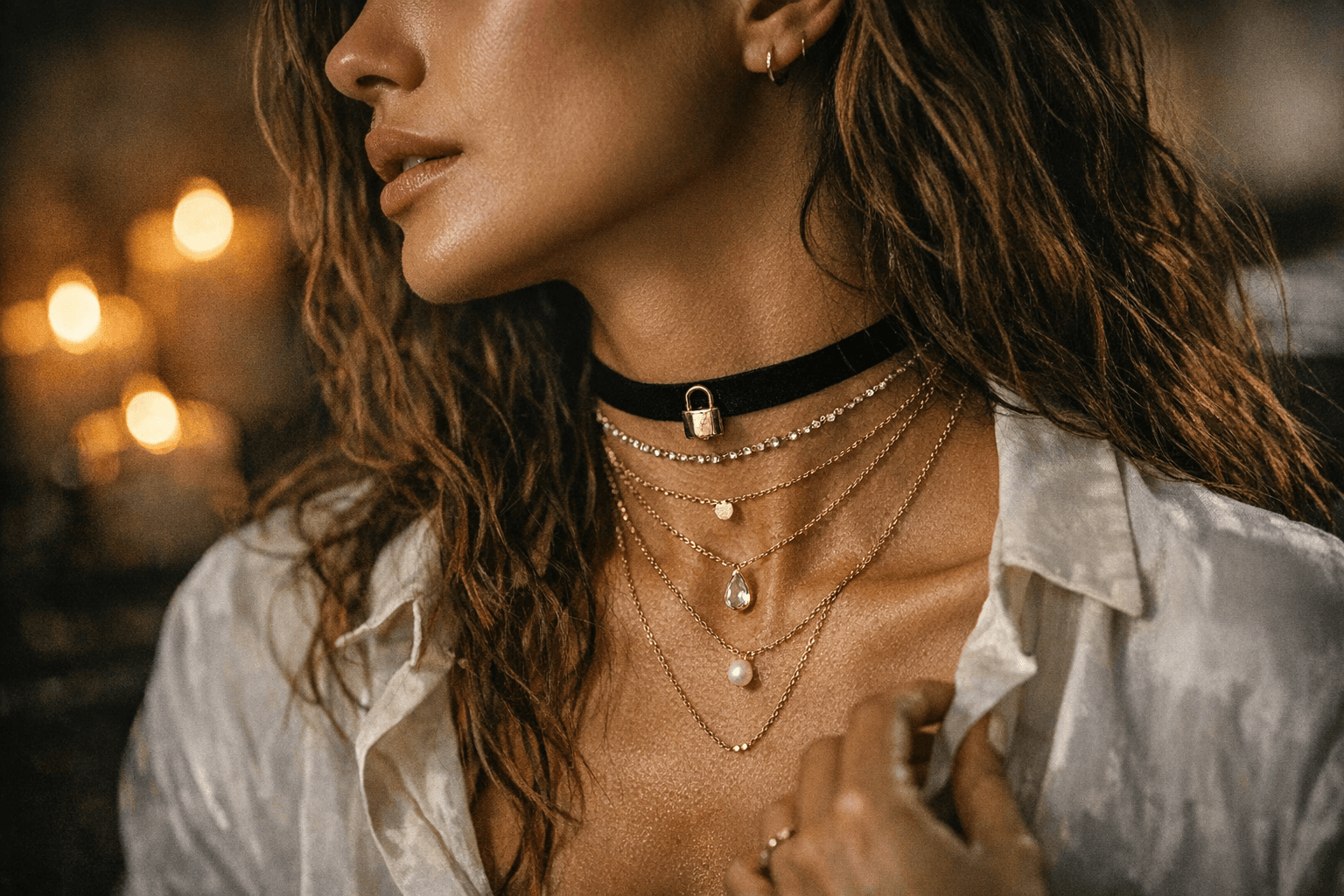
There's a tension most jewelry lovers know well: the impulse to pile on every necklace you own, followed immediately by the chaos of tangled chains and competing pendants. The choker, worn snugly at 14 to 16 inches, solves that problem before it starts. It anchors the eye at the collarbone, creates a clear visual baseline, and gives every piece above or below it room to breathe. Getting that architecture right, though, depends less on which choker you buy and more on understanding the geometry of layering itself.
The single most important rule is length separation. Aim for at least two inches of difference between each piece to prevent tangling and create distinct visual layers. The classic three-tier stack follows a precise logic: a choker or collar at 14 to 16 inches sitting snugly at the base of the neck, a princess-length piece at 18 to 20 inches falling just below the collarbone, and a matinee chain at 22 to 24 inches resting at the center of the chest. This graduated approach ensures each necklace gets its moment to shine without competing for attention.
With that framework in mind, here are six essential choker types to anchor a layered stack, ranked by their versatility as a foundation piece.
1. Simple chain choker
The simplest choker is also the most indispensable. A fine chain at 14 to 16 inches, whether in yellow gold, white gold, or sterling silver, functions as the shortest layer and style foundation for any stack. Its visual neutrality lets every piece above it read clearly, and its minimal profile works under crew necks as easily as it does against a deep V.
2. Diamond or gemstone pendant choker
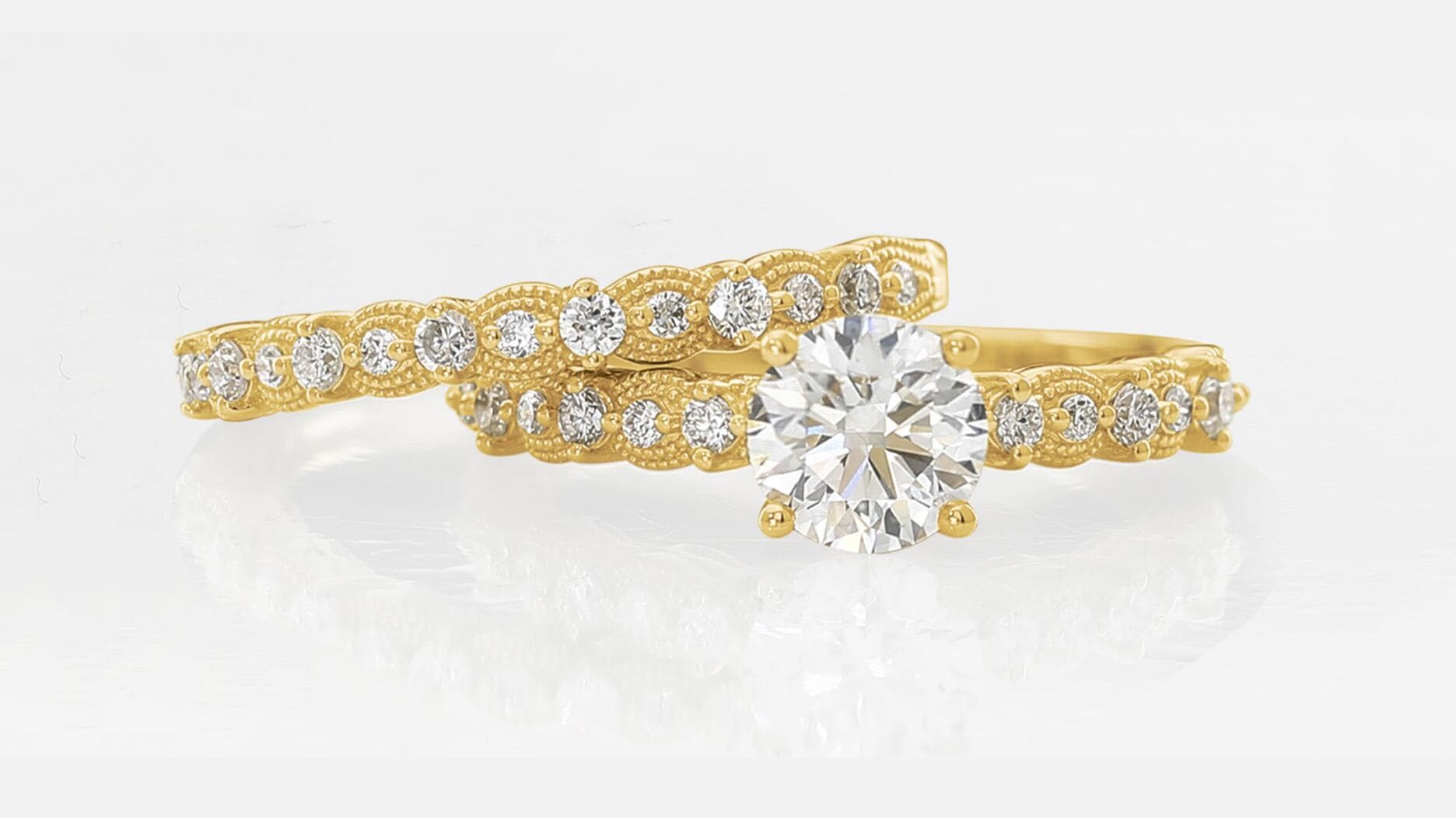
A choker set with a single diamond or colored gemstone introduces focal weight right at the collarbone, where the eye naturally lands first. The stone does the talking at the shortest layer, which means longer chains above it can stay cleaner and more linear. For shoppers weighing their options, lab-grown diamonds offer the same optical and chemical properties as mined stones and carry stronger provenance transparency — a meaningful consideration when a piece is meant to last.
3. Delicate chain at princess length
Strictly speaking, the princess-length piece at 18 to 20 inches isn't a choker, but it is the middle tier that makes a choker-led stack function. It falls just below the collarbone and bridges the visual gap between the snug choker and a longer chain below. A delicate chain here, without a pendant, keeps the mid-layer airy and prevents the stack from reading as cluttered. This is your most versatile piece: it works alone on a bare-neck day and disappears seamlessly into a three-layer arrangement.
4. Lariat or Y-necklace
The lariat earns its place as the longest layer in a V-neck stack specifically. V-necklines naturally draw the eye downward, making them ideal for layered jewelry trends: the longest necklace should follow the V-shape, with shorter layers complementing rather than competing with the neckline. A lariat or Y-necklace works beautifully as that longest layer, its drop echoing the angle of the neckline and extending the visual line down the chest. At 22 to 24 inches or longer, it provides the drama a choker-anchored stack needs to feel complete.
5. Mixed metal accent chain
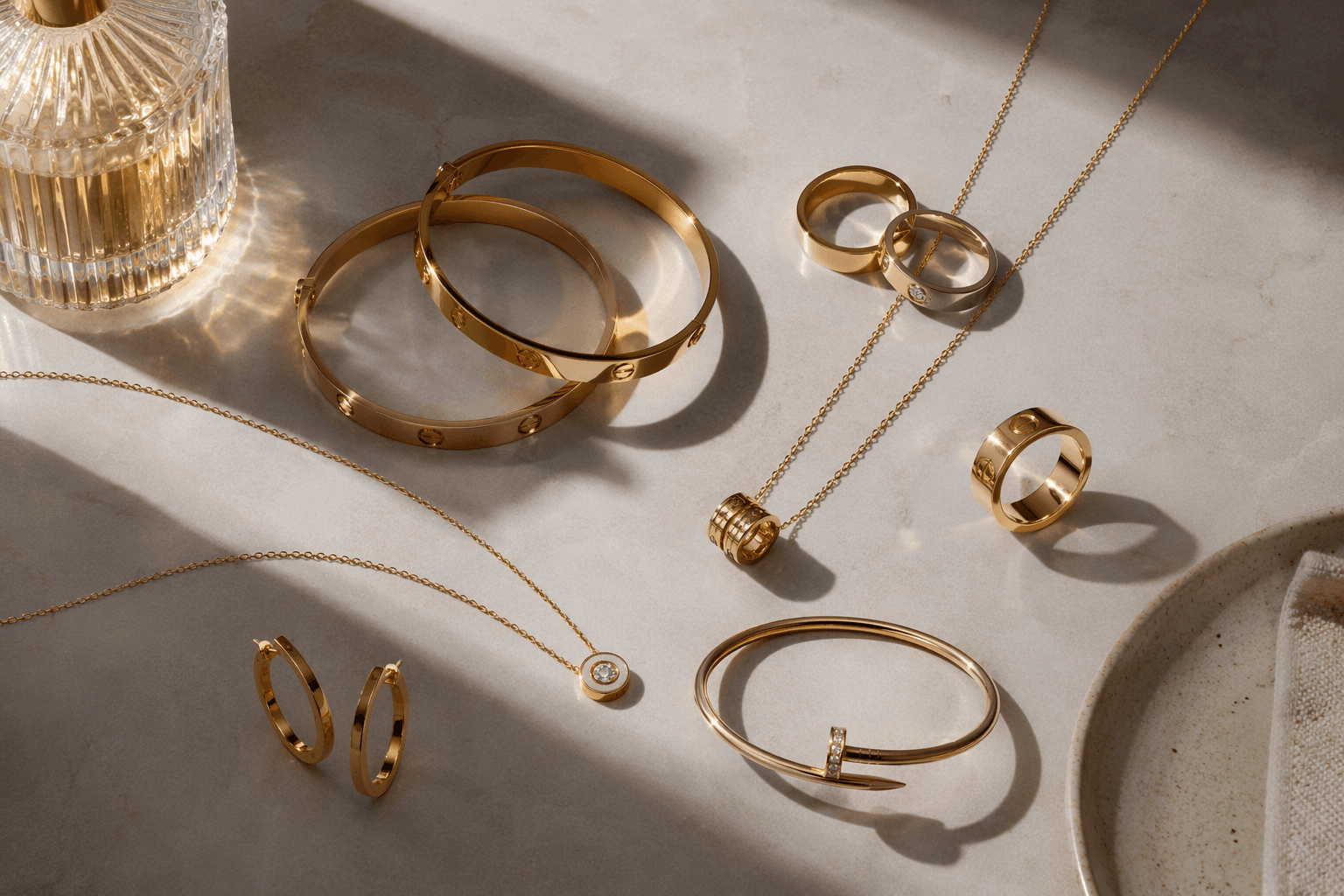
Introducing a second metal tone into a layered stack is one of the most effective ways to add depth without adding bulk. A mixed metal accent chain, say a rose gold rolo alongside yellow gold links, creates contrast that makes each individual piece more legible. The key is keeping the accent chain fine enough that it reads as texture rather than a competing statement. Crew neck wearers benefit most here: with layers concentrated between choker and princess lengths to stay visible above the neckline, subtle metal variation does the work that length variation cannot.
6. Investment-grade statement piece
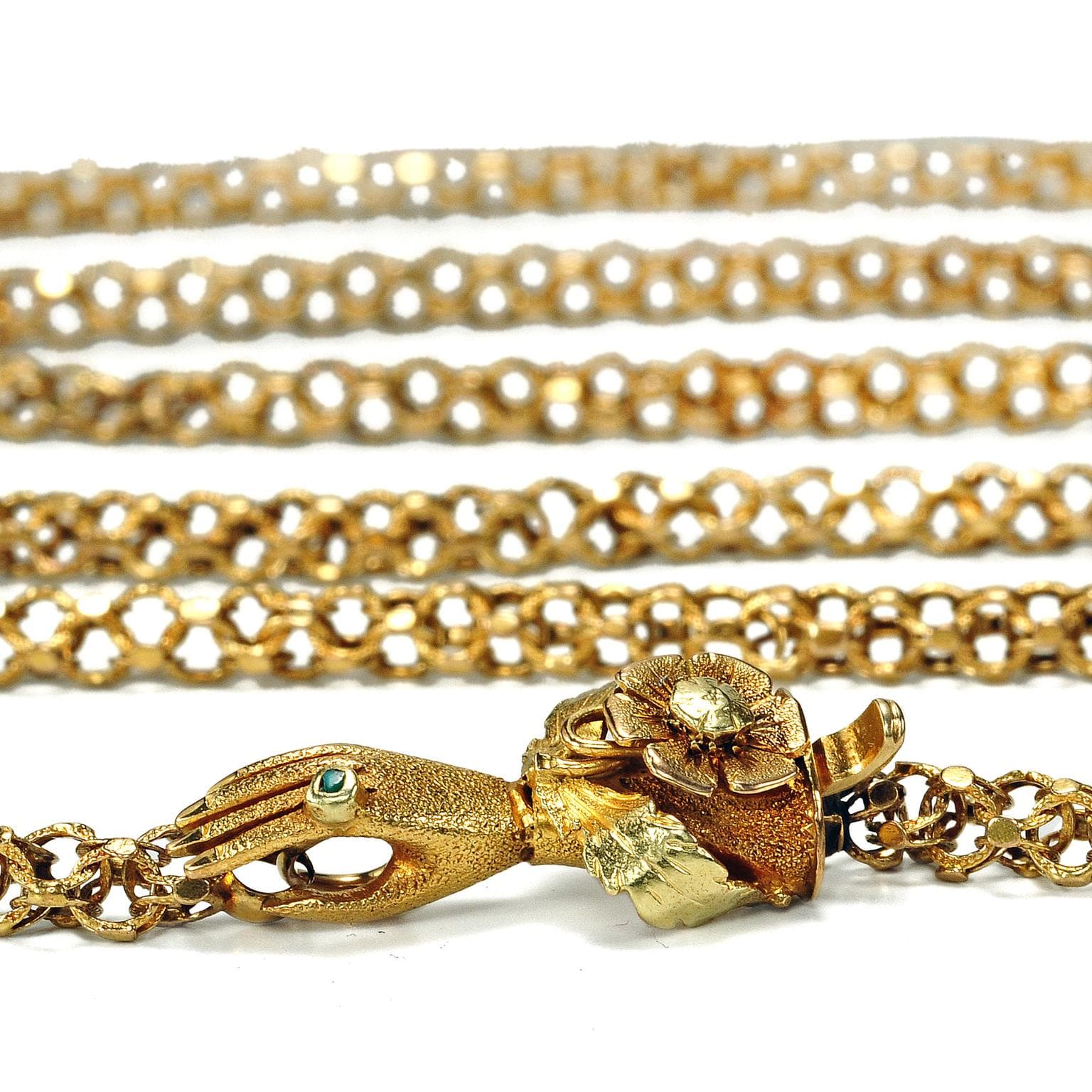
Every layered collection eventually needs one piece that anchors the others in value and craftsmanship, not just length. That might be a hand-fabricated gold chain with a distinctive link structure, a choker set with pavé diamonds across its full width, or a signed piece from a maker whose work holds its value. What distinguishes an investment piece from a trend purchase is construction: look for solid gold rather than gold-fill, prong or bezel settings that protect stones securely, and a clasp mechanism robust enough to survive daily wear. This is the piece worth researching carefully — certifications, hallmarks, and a transparent supply chain matter as much as aesthetics when the price point is significant.
Neckline strategy matters as much as the pieces themselves. For crew necks and high necklines, the guidance is direct: keep all layers between choker and princess lengths so everything remains visible above the fabric. Delicate chains with small pendants excel in this configuration, creating interest without bulk. For V-necks, the architecture inverts slightly, with the longest piece following the neckline's downward angle and the choker serving as the visual counterpoint at the top. Off-shoulder necklines open up the collarbone entirely, which is where a well-chosen choker can function as the sole piece rather than the foundation of a stack.
The provenance question is worth raising directly. The recommendation to choose lab-grown diamonds for a gemstone pendant choker reflects a genuine shift in how fine jewelry buyers are thinking about their purchases. Lab-grown stones are not a compromise in quality — they are physically identical to mined diamonds — but they do offer a cleaner chain of custody at a lower price point, which means the savings can go toward a better setting or a stronger metal weight. That trade-off is worth understanding before committing to a statement choker that will live at the center of every stack you build.
The choker's durability as a layering anchor comes down to one fact: it occupies the one length on the body where the eye always returns. Build from there with intention, and the rest of the stack tends to fall into place.
This article was produced by Prism’s automated news system from verified source data, official records, and press releases, then run through automated quality and moderation checks before publishing. The system is built and supervised by the people who set the standards it runs under. Read our full AI policy.
Did this article answer your question?