Trendy Layered Necklace Sets to Shop This Season
Layering necklaces is less about owning more and more about knowing which two chains belong together. Here's how to build a stack that actually says something.
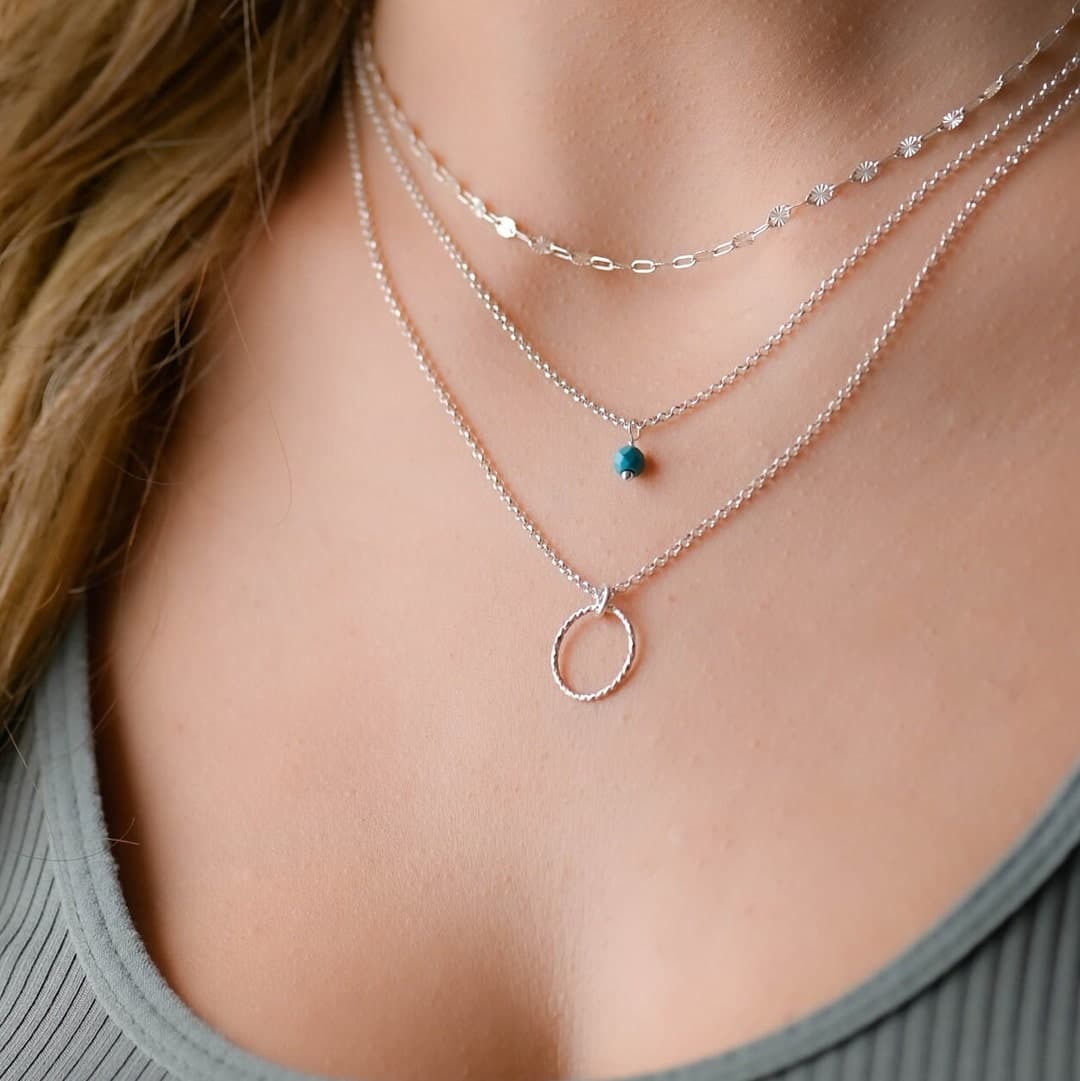
Every awards season carries its own sartorial tension, but the quiet revolution happening at the neckline is less about red carpets and more about the everyday decision of which chains to reach for in the morning. Necklace layering has moved well past trend status into something closer to a personal language, and the pieces available this season make that conversation easier and more considered than ever.
Jetset Journal's March 21 shopping roundup zeroed in on a specific category of that conversation: affordable, multi-chain sets that do the editorial thinking for you, combining snake chains, curb links, and paperclip chains into a single layered product or coordinated set. The appeal is immediate. Rather than spending years acquiring individual pieces that may or may not harmonize, these sets offer a structured starting point, a composed sentence you can then annotate with your own punctuation.
Why the Stack Works
The case for layering is both aesthetic and personal. As Mejuri articulates in their guide to the practice: "Layered necklaces let you tell your story. Each chain, charm, or pendant can carry personal meaning, a memory, or just great design. When worn together, they create a look that feels polished but lived-in, refined but relaxed." That tension between polish and ease is precisely what makes a layered neck so difficult to replicate with a single statement piece. A solitary pendant, however exquisite, reads as a choice. A considered stack reads as a life.
The versatility compounds from there. The mood of a two-chain combination shifts depending on whether you're pairing it with a worn linen shirt or a structured blazer, and that mutability is its own form of value. You can switch up the mood depending on the day, outfit, or season, which, from a cost-per-wear perspective, makes a well-chosen set a considerably smarter investment than a single equivalent-priced piece worn the same way every time.
Mixing Chain Types: Where the Craft Lives
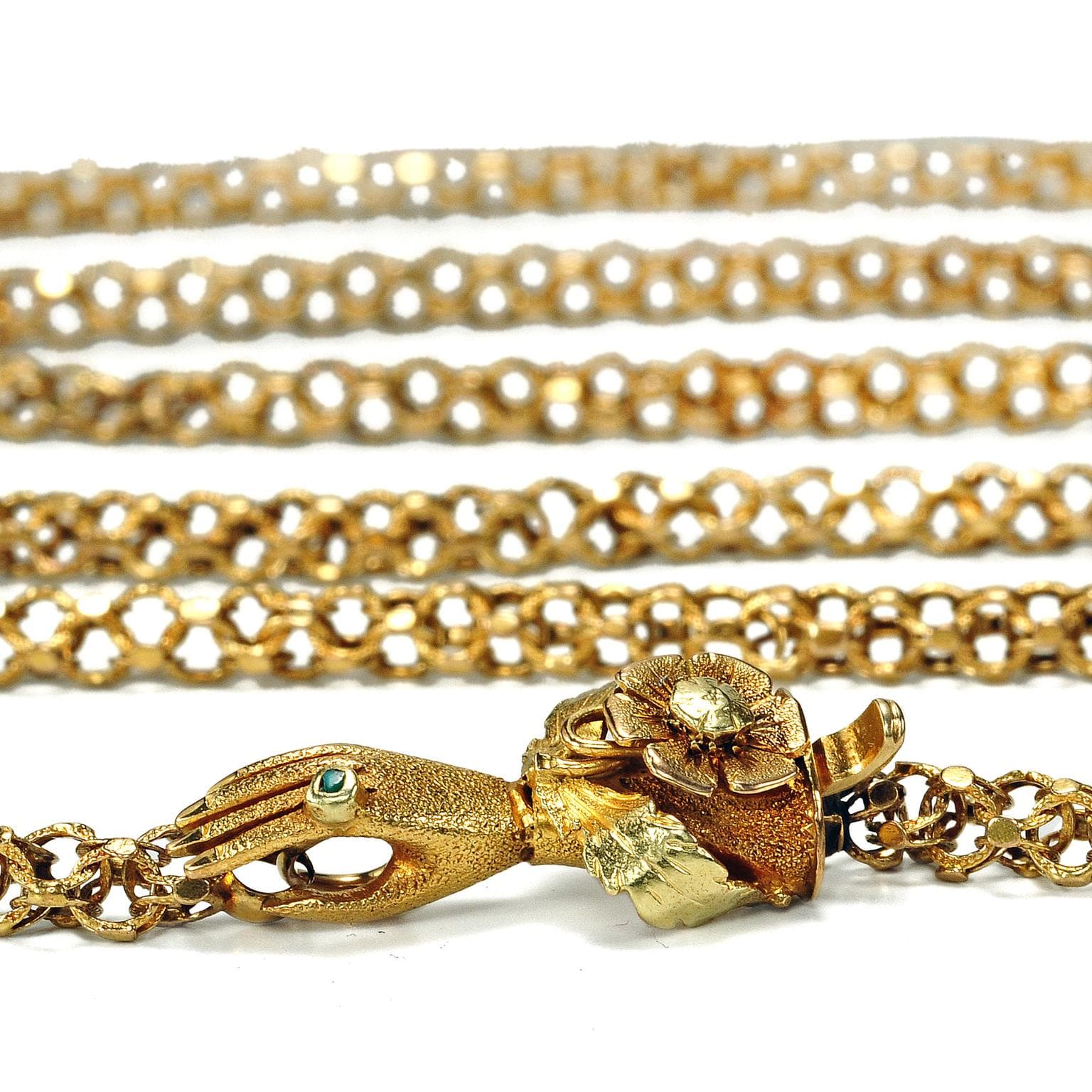
Understanding why certain chains work together requires knowing what each one actually does on the body. A snake chain has a smooth, cylindrical profile, almost liquid against the skin, with a reflective surface that catches light evenly. A curb chain presents flat, interlocked links that lie uniformly against the collarbone, heavier in both appearance and weight. A paperclip chain, with its elongated rectangular links, sits somewhere between graphic and delicate depending on its gauge. A rolo chain, with its round uniform links, offers a softer, rounder counterpoint to the linear rigidity of a paperclip.
Mejuri's recommended pairings account for exactly these structural differences:
- Curb chains with snake chains: the weight and flatness of the curb grounds the liquid shimmer of the snake
- Paperclip chains with delicate rolo chains: the graphic geometry of the paperclip softens against the rolo's rounded links
- Beaded necklaces with polished links: organic texture against machined precision, a contrast that reads immediately as intentional
"Different textures play off each other, making your stack feel intentional and styled," Mejuri notes. The key word is intentional. The difference between a layered neck that looks curated and one that looks accidental is almost always whether the chain types are in genuine conversation with each other or simply coexisting.

Building a Stack for Every Occasion
One of the most useful principles Mejuri offers is also the most counterintuitive: "You don't need five necklaces to make a statement. Sometimes two well-paired pieces are all it takes." In a category where maximalism often gets celebrated, the restraint of a two-chain edit is genuinely radical, and it tends to produce the most wearable results.
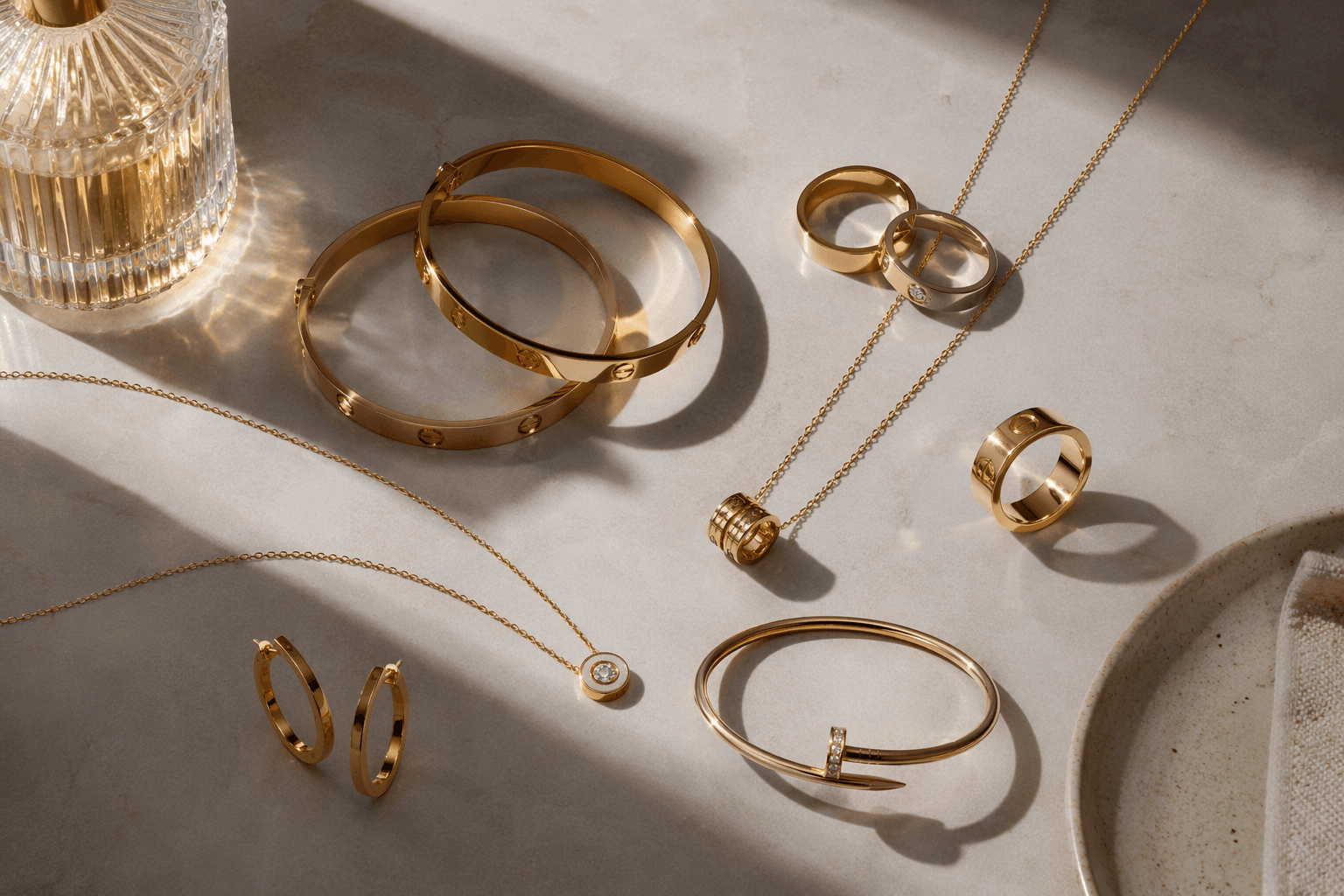
For daily wear, a delicate diamond pendant layered over a solid gold chain is the formula that requires the least recalibration as the day shifts from desk to dinner. The pendant anchors the look; the chain provides texture without competing. For a more deliberate evening moment, a chunky curb chain worn alongside a long lariat introduces length contrast, the two pieces operating at different registers of the neckline and creating movement the eye wants to follow.
The third combination Mejuri identifies is perhaps the most compositionally interesting: a pearl choker paired with a zodiac charm. Here you have two distinct material languages, the organic luster of cultured pearl against the often etched or cast metal of a charm pendant, and two distinct symbolic registers, the classic against the personal. That friction between soft and bold, between heritage and identity, is where the most memorable stacks tend to live.
The Architecture of a Good Set
What the current season's multi-chain sets get right, when they get it right, is that they approach layering as a design problem with a structural solution rather than as a styling afterthought. The Jetset Journal roundup's emphasis on pieces that combine chain types within a single product or coordinated set reflects a broader shift in how jewelry brands are thinking about accessibility. Rather than requiring the buyer to possess either an existing collection or significant styling intuition, these sets encode the pairing decision into the product itself.
That said, a pre-composed set is a starting point, not a ceiling. The more interesting approach is to use the set's architecture as a foundation and add or subtract a single piece that carries personal meaning, a charm inherited from someone, a pendant bought in a specific city, a birthstone drop in a metal that doesn't quite match. That calculated imperfection is where a stack stops looking like a product and starts looking like yours.
Mejuri's closing principle holds for any combination, pre-set or self-assembled: "There's no wrong way to layer, just your way. The right mix tells the world something about you, whether it's minimalist and meaningful or bold and boundary-pushing." The chains available this season make it easier than ever to find that right mix, but the meaning you give them is still entirely your own to determine.
This article was produced by Prism’s automated news system from verified source data, official records, and press releases, then run through automated quality and moderation checks before publishing. The system is built and supervised by the people who set the standards it runs under. Read our full AI policy.
Did this article answer your question?