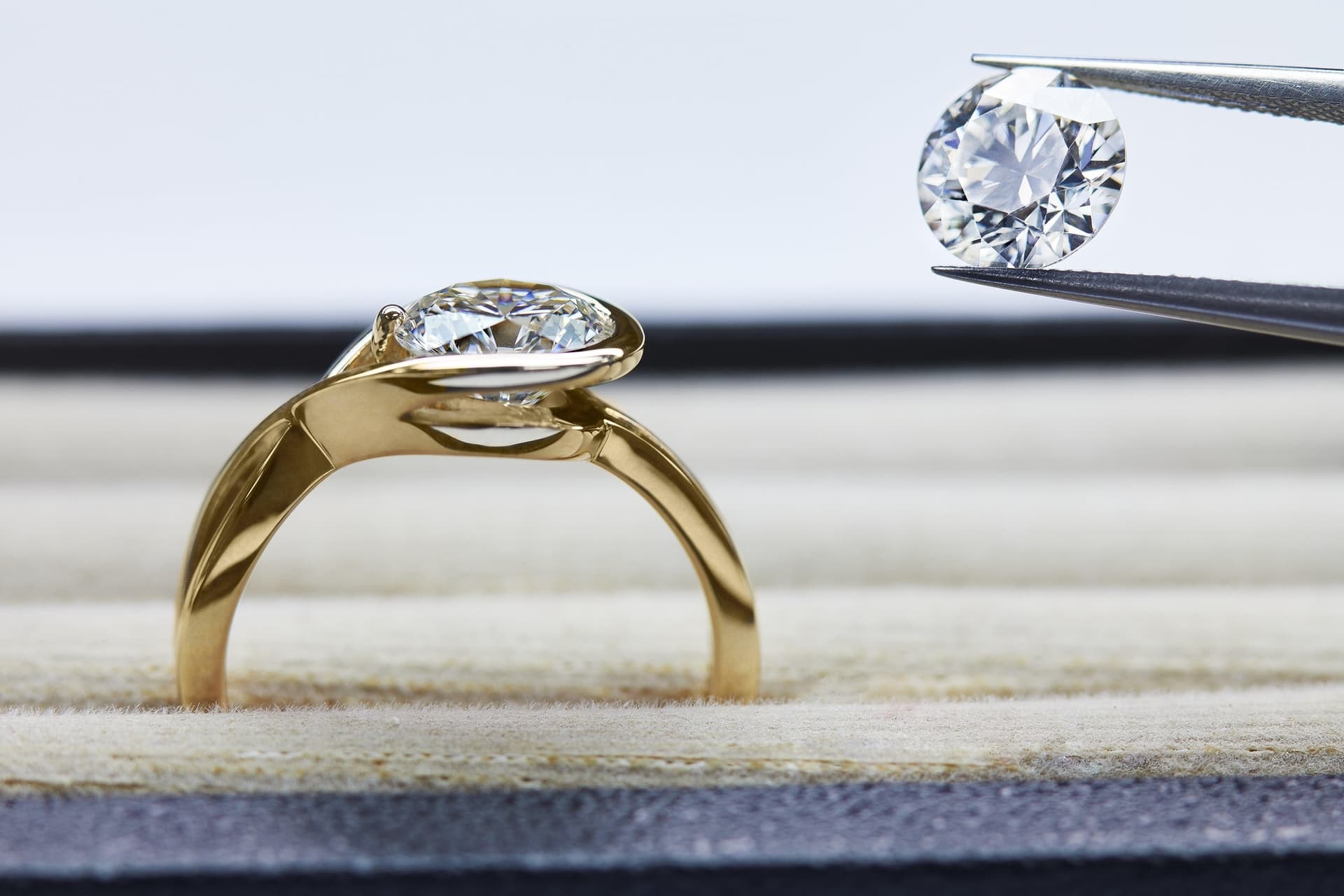
Zendaya's button-back ring revives Georgian-era stacking style
Zendaya’s east-west button-back ring has pushed a Georgian-era setting back into the spotlight, and its real appeal is how naturally it stacks.

The button-back is back because it solves a modern layering problem
Zendaya’s ring has done more than spark engagement-ring chatter. It has revived attention on the button-back, a closed-back Georgian-era setting that makes a center stone feel architectural enough to stand alone, yet measured enough to sit inside a stack. In a market where couples are rethinking classic matching bands, that balance matters: the silhouette reads antique, but the styling feels current.
The setting is also known as the Georgian cut-down setting, cut-back collet, or closed-back collet. However it is named, the point is the same: a substantial, enclosed construction that once helped jewelry catch the light with more force and color. That historical logic still explains why the design feels so persuasive now. It creates a ring that looks intentional from the side and front, which is exactly what layering needs.
Why Georgian-era construction still feels fresh
Georgian-era Britain, from 1714 to 1837, favored closed-back and foiled gemstone settings because they intensified brilliance and deepened color. The foil and the closed back worked together to make stones glow, especially in candlelight, and that sense of inner fire is part of the button-back’s modern draw. The ring does not look delicate in the minimal sense; it looks finished, designed, and visually self-contained.
That matters for stacking because a strong center ring changes everything around it. A button-back setting gives the hand a clear focal point, but it also leaves room for contrast. Slim wedding bands, vintage-inspired guard rings, or mixed-era pairings can all sit beside it without the stack collapsing into visual noise.
Zendaya’s ring turned the silhouette into a talking point
Zendaya’s engagement ring has been identified in reporting as an approximately 5-carat elongated cushion-cut natural diamond set east-west in a Georgian-inspired button-back setting on a yellow-gold band. Other descriptions put it at 5.02 carats and note a mixed white-and-yellow gold construction, which only reinforces how hybrid the look can be. Tom Holland proposed during the 2024 holiday season, and the engagement was publicly confirmed the next day.
The ring’s reported value, roughly $100,000 to $150,000 and possibly higher depending on the exact stone size, places it in the realm of serious fine jewelry, but price alone is not what makes it interesting. The east-west orientation softens the vertical authority of a classic solitaire and turns the center stone into a horizontal stroke. In stack terms, that is significant: it behaves less like a crown and more like a line, making it easier to build bands above and below it.
Jessica McCormack’s version shows the style was always meant to stack
Jessica McCormack has helped turn the button-back from antique reference into a recognisable modern signature. Her button-back rings are explicitly positioned as stackable, with the brand noting, “The hard part is choosing a favourite; all the more reason to stack them high.” That framing is the key to why the style has caught on beyond celebrity visibility. It is not just a look, it is a system for building a hand.
McCormack’s bridal settings can also be recreated around a client’s chosen diamond, from 0.20 carat to 20.00 carats. That range is telling. It means the button-back is not locked to one scale or one kind of buyer; it can be translated across sizes while keeping the same Georgian-inspired profile. For the layering audience, that flexibility is the story. A ring like this can be worn as the anchor in a small, precise stack or as the center of a more dramatic bridal composition.
What this means for engagement-ring layering now
Statement engagement rings are pushing couples to rethink traditional wedding bands and pairings, and the button-back is a strong example of why. A bold center stone no longer has to dictate a matched, symmetrical band. Instead, it can invite contrast: a plain band beside an ornate mount, a vintage-style contour ring against a cleaner line, or mixed metals that echo the ring’s white-and-yellow gold descriptions.
The appeal is partly visual and partly practical. A center ring with a distinct profile changes how bands sit flush, how much negative space remains, and whether the stack feels formal or collected over time. That is why the button-back reads as more than a celebrity novelty. It offers a new-old silhouette that can make an engagement ring feel less like a single object and more like the beginning of a composition.
The ethical question is still the important one
Heritage styling does not answer provenance on its own. A Georgian-inspired setting may carry the language of old-world craftsmanship, but the stone still deserves scrutiny: where it was mined, how it was cut, what traceability is available, and whether any origin documentation is supplied. The button-back’s comeback is aesthetically compelling, but fine jewelry buyers should still separate romantic historical references from actual sourcing transparency.
That distinction is where the style either earns its keep or slips into mood-board marketing. The best version of the button-back revival is not just that it looks antique on a red carpet. It is that it gives modern bridal jewelry a more flexible, more layered silhouette, while leaving room for the harder questions about materials, craft, and traceability that should follow any diamond worth stacking around.
Know something we missed? Have a correction or additional information?
Submit a Tip