Bonhams Boucheron tiara sale shows demand for historic jewels
A 1924 Boucheron tiara sold for £508,400, showing how signed historic jewels still command premiums for provenance, design, and a documented past.
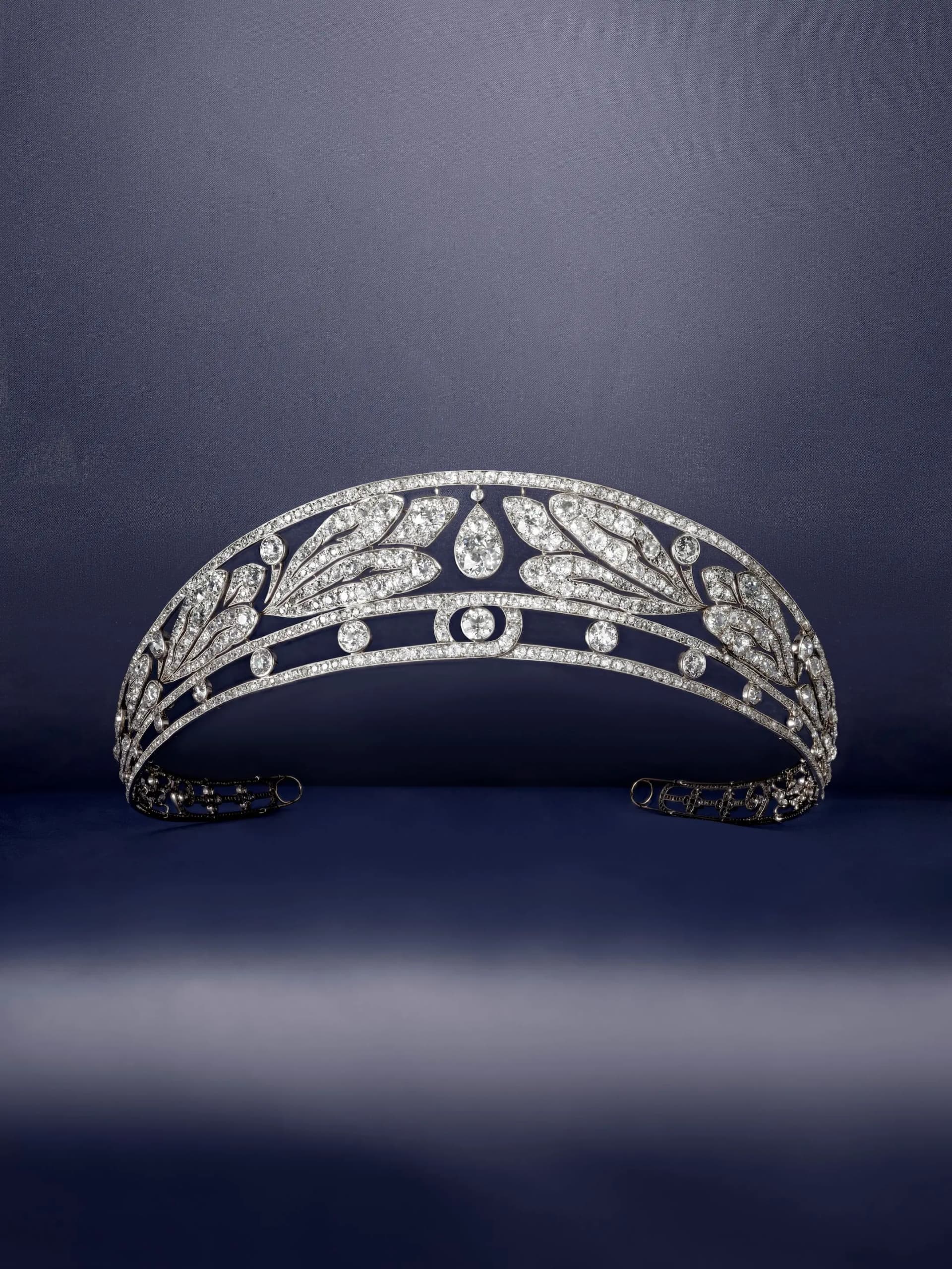
A 1924 Boucheron tiara turned a London sale into a case study in why historic jewels still matter. The Harcourt Diamond Bandeau Tiara was estimated at £200,000 to £300,000, then sold for £508,400 at Bonhams, a result that put a hard number on the pull of a jewel with a maker, a date, and a named family history.
The tiara as a document of its time
Bonhams identified the piece as the Boucheron: The Harcourt Diamond Bandeau Tiara, 1924. That date places it squarely in the Art Deco era, when jewelers favored cleaner lines, precise construction, and forms that could move between ornament and evening wear. The tiara was described as a diamond bandeau with scrolling foliate motifs and a detachable element, details that matter because they show both design ambition and practical engineering.
The Harcourt name adds another layer. A tiara tied to a specific family is not just a beautiful object, but a traceable object, with a social life that extends beyond the display case. That kind of documented past is what separates a signed historic jewel from a generic antique: one carries a story that can be named, not merely imagined.
Bonhams scheduled the Exceptional Jewels sale for 11 June 2026 at New Bond Street in London, placing the tiara in a setting built for period and antique pieces rather than only contemporary luxury. That context matters, because auction houses continue to use these sales to show that historic jewels can sit comfortably beside modern high jewelry and still attract intense bidding.
Why collectors keep returning to signed historic jewels
The demand around this tiara was not only about diamonds or age. It was about authorship. A Boucheron signature links the jewel to one of the great Paris houses, and a signed piece carries the reassurance that design, workmanship, and brand pedigree were all part of the object from the start.
That combination is rare enough to create emotional force. A signed jewel gives the wearer or collector a tangible connection to another era, and the better the documentation, the stronger that connection feels. Provenance turns beauty into evidence: the jewel can be placed in a period, tied to a house, and in this case connected to the Harcourt family.
The market also rewarded that clarity. A tiara carrying a £200,000 to £300,000 estimate later realized £508,400, which shows that collectors will pay beyond expectation when a piece delivers the right mix of maker, condition, and story. In historic jewelry, price often follows a simple rule: the more specific the history, the more convincing the object.
What the Harcourt tiara reveals about craftsmanship
The tiara’s construction tells you as much as its provenance. A bandeau design sits low and close to the head, which gives it a different presence from a tall, arching tiara; it reads as elegant, adaptable, and modern even when made in 1924. The scroll and foliate motifs soften the geometry with natural forms, a balance that is typical of early 20th-century high jewelry when makers were refining older courtly shapes for a new century.
The detachable element is especially revealing. Removable components are one of the quiet pleasures of historic jewelry, because they show that the maker was thinking about use, not just spectacle. In practical terms, that kind of adaptability gives a piece more than one life, and collectors notice that immediately.
- Signed maker’s marks matter because they anchor authorship.
- Detachable construction adds flexibility and usually signals thoughtful, high-level workmanship.
- Named ownership, such as the Harcourt connection here, gives the jewel a verifiable social history.
- Period details, like the Art Deco date and foliate scrolling, help place the design in its proper context.
Those features are not decorative footnotes. They are the reasons a historic jewel can feel more intimate than a modern showpiece, even when both are set with diamonds.
Why Boucheron remains such a potent name
Boucheron’s own history helps explain why the tiara landed so strongly. The house says it was founded in 1858, and in 1893 it became the first jeweler to open a boutique on Paris’s Place Vendôme. That address still carries enormous weight in luxury jewelry, and Boucheron’s early presence there helps frame the brand as part of Parisian high jewelry history rather than a later arrival.
For collectors, that pedigree does real work. A jewel signed Boucheron is not only about the materials in the setting, but about a house that helped define how French luxury jewelry presents itself: polished, technically exact, and confident in line. When that signature appears on a dated Art Deco tiara with a family name attached, the result is a piece that sits at the intersection of design history and personal memory.
Bonhams has used sales like Exceptional Jewels to show that period and antique jewels still occupy a serious place in the market. This tiara made that argument vividly: the appeal was not merely its value in diamonds, but the certainty of its origin and the romance of its survival. Historic jewels endure because they let a collector hold a known past, and that is still one of the most persuasive luxuries in jewelry.
This article was produced by Prism’s automated news system from verified source data, official records, and press releases, then run through automated quality and moderation checks before publishing. The system is built and supervised by the people who set the standards it runs under. Read our full AI policy.
Did this article answer your question?