Brooches regain prestige as collectors prize history and provenance
Brooches are back, but the pieces that matter are the ones with history, craftsmanship and a traceable life, not novelty pins on denim.
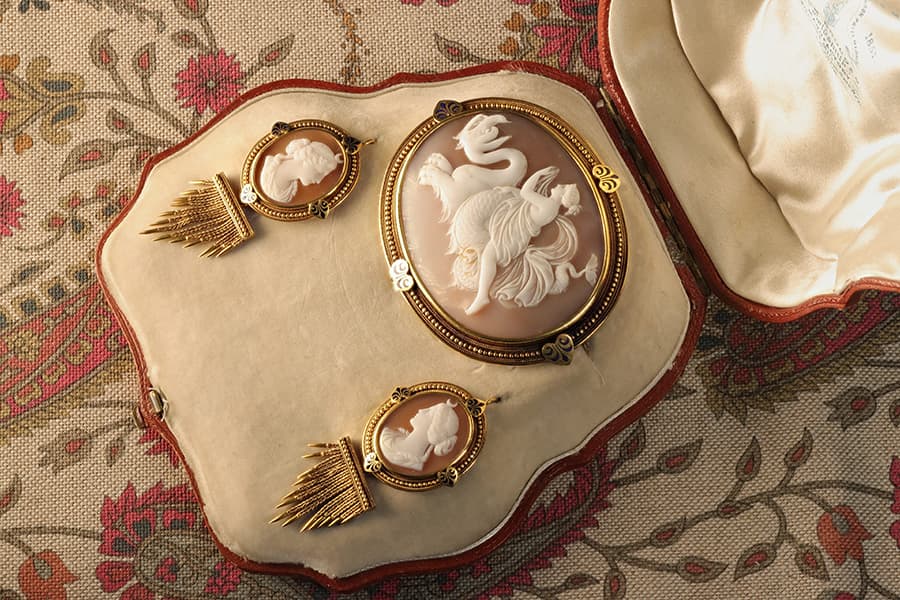
Brooches are back, but the best ones are not trying to be cute
Berganza says brooch sales jumped 125 percent over the past year in the United Kingdom, and that kind of surge explains the current mood around the category: brooches are being rediscovered, but collectors are not responding to them as gimmicks. They want objects with presence, with age, with proof that someone cared for them before they ever reached a lapel.
That distinction matters. JCK has shown how pins and brooches have returned to the runway in the wake of minimalism, styled on lapels, hats, scarves, coats, waistbands and even bags. But the most persuasive brooches are not the ones pinned on denim for a wink. They are the ones that feel anchored to a person, a period, and a purpose.
Provenance is what turns a brooch into a story
In jewelry, provenance is not a decorative extra. It is the chain of evidence that gives a piece weight beyond its materials. That can include original purchase records, ownership history, estate documentation, exhibition history and publication history. When a brooch can be tied to a known person, a specific era or an archive, it gains a narrative that a purely anonymous object cannot match.
Museums understand this instinctively. The Metropolitan Museum of Art lists provenance and exhibition history on object pages for brooches dating to the 13th and 14th centuries, which is a quiet but powerful reminder that context is part of the object’s value. One of its most compelling examples is a ring brooch from the first half of the 14th century, while another is an Anglo-Saxon disk brooch dated to the early 600s and associated with Faversham, England, in Kent. That level of specificity does more than satisfy scholarship. It lets the wearer or collector see the brooch as a surviving witness.
The Cloisters in New York, with its medieval focus, reinforces the same lesson: brooches are best understood not as detached ornaments but as objects that lived on clothing, in households and in history. A brooch with provenance is never just metal and stones. It is an artifact with memory.
The form was functional long before it was fashionable
The current tendency to treat brooches as playful accessories can make them seem newly invented, but the form is ancient. The British Museum notes that dragonesque brooches were both functional fasteners and decorative objects, and that they could be worn as a pair. In another example, a brooch is described as originally a bodice fastener or lacing ring, which is a useful correction to the modern habit of seeing brooches only as embellishment.
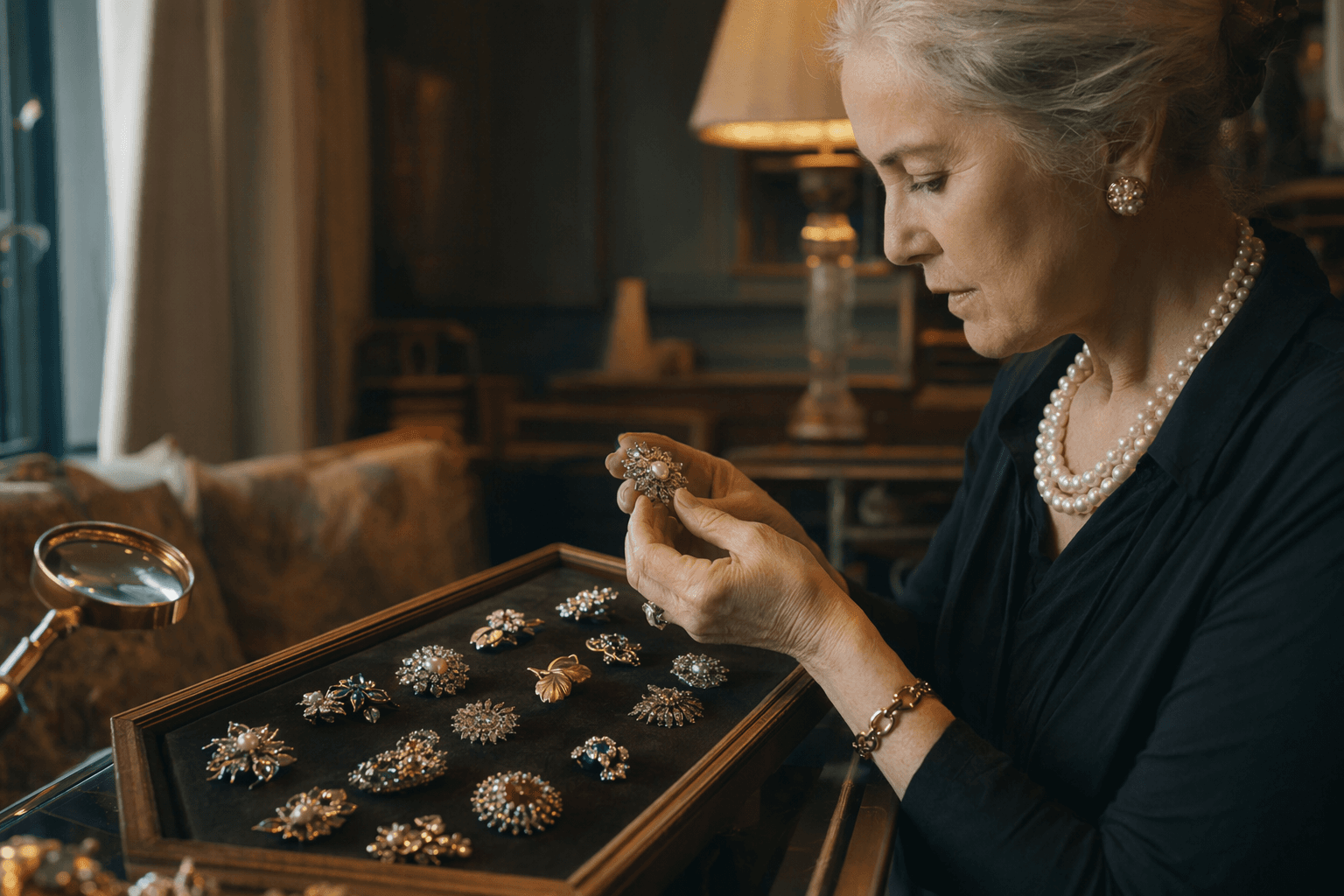
That functional origin still shapes how the best brooches feel today. A well-made brooch is not an afterthought applied at random. It has engineering: a pin, a catch, a balance point, a front and a back that all need to work together. Some objects also carry the evidence of later life, as when a British Museum brooch is described as silver-gilt and fitted with a later brooch fitting. That kind of adaptation does not diminish the piece. It reveals how jewelry survives by being used, repaired and reimagined.
The old language of fastening is what gives brooches their modern force. They do not merely decorate clothing. They intervene in it.
Why casual styling so often flattens the category
The fashion industry loves a quick revival, and brooches are especially vulnerable to being turned into accessories with a joke attached. A pin on denim, a brooch on a sneaker, a cluster of them crowded onto a bag strap: these can read as irreverent, but they can also drain a piece of its gravity. When a brooch becomes just another trend token, its symbolism, craftsmanship and scale are reduced to a visual punchline.
That is why the strongest brooch styling remains deliberate. On a lapel, a brooch can shape the line of a jacket. On a scarf, it can hold fabric in place while signaling intention. At the waist, it can redirect the eye and alter proportion. On a coat, it can work like punctuation. These placements do not trivialize the brooch. They let it do what it has always done: organize dress while carrying meaning.
JCK’s 2023 coverage of the pin revival described a return of maximalist, dramatic jewelry as a response to minimalism, and that helps explain why brooches are surfacing again now. In a stripped-back wardrobe, a brooch can supply a note of wit or theater. But wit should not replace substance. The best brooches still read as heirlooms, even when they are contemporary.
What collectors should look for
A meaningful brooch usually reveals itself through details rather than declarations. Look for craftsmanship that matches the object’s claimed period. Look for a motif that has some symbolic charge, whether floral, heraldic, animal or abstract. Look especially for documentation that places the piece in a real chain of ownership or exhibition.
- Original purchase papers or estate records can strengthen the historical trail.
- Exhibition or publication history can place a brooch in the public record.
- A clearly described origin, such as Faversham in Kent or a medieval European workshop, gives the object specificity.
- Visible alterations, like a later brooch fitting, can be part of the story rather than a flaw.
That is where serious collecting and elegant wearing meet. A brooch with provenance does not need to shout. It needs to be legible, well made and placed with intention.
The revival is strongest when it respects the object
The current brooch revival will likely keep producing playful images, and not every pin needs to behave like a museum piece. Still, the category’s real prestige comes from its oldest strengths: survival, repair, documentation and the way a small object can carry a larger human history. The market is rewarding that seriousness, from Berganza’s sales spike to the museum-backed fascination with early brooches from Kent to medieval European examples with full provenance histories.
Brooches regain their power when they are treated as jewelry, not costume. The more clearly they show where they came from, and why they were worn, the more vividly they speak now.
This article was produced by Prism’s automated news system from verified source data, official records, and press releases, then run through automated quality and moderation checks before publishing. The system is built and supervised by the people who set the standards it runs under. Read our full AI policy.
Did this article answer your question?